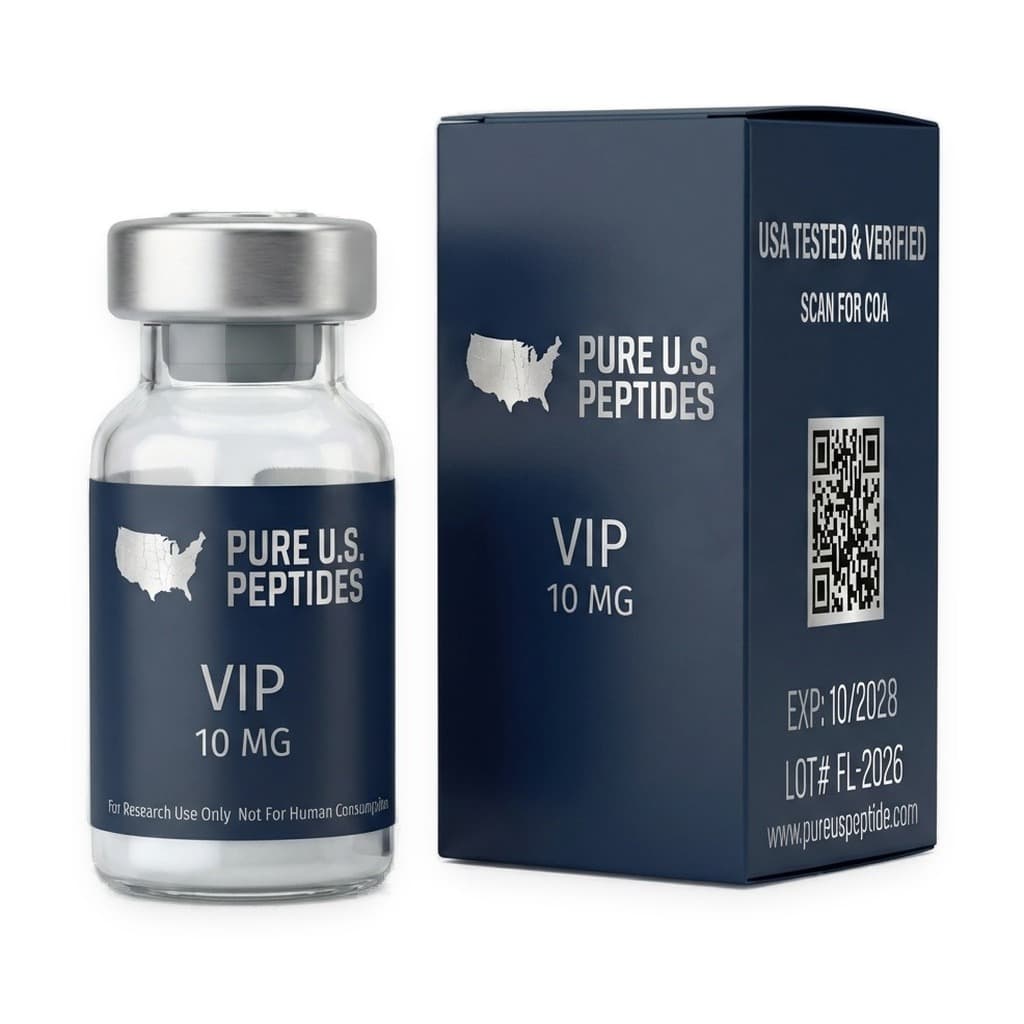
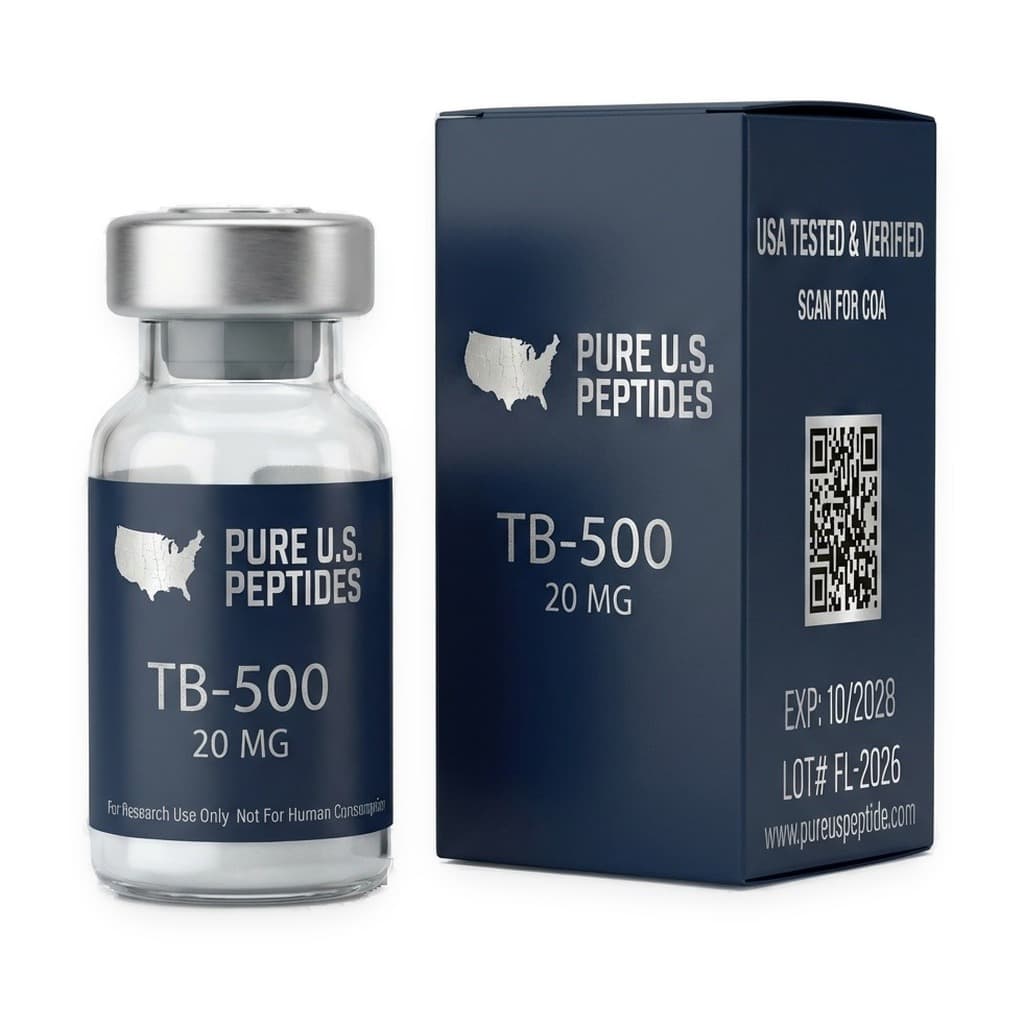
TB500 20mg
Em Estoque e Pronto para Envio dos EUA
Frete GRÁTIS em todos os pedidos nos EUA
Checkout seguro via processador de pagamento criptografado


 +2.9k
+2.9kApenas para Uso em Pesquisa
Estes produtos sao destinados exclusivamente a pesquisa laboratorial e nao se destinam ao uso medico. Nao sao aprovados pela FDA para diagnosticar, tratar, curar ou prevenir qualquer doenca. Ao adquirir, voce certifica que os produtos serao utilizados exclusivamente para pesquisa e nao para consumo humano ou animal.
Resumo da Pesquisa
29 Citacoes PubMedVisao Geral TB-500 (tambem conhecido como Fequesetide) e um heptapeptideo sintetico correspondente a sequencia de aminoacidos N-acetilada 17–23 da proteina natural Timosina Beta-4 (Tβ4). Sua sequencia e Ac-LKKTETQ.[1][2] A molecula parental, Timosina Beta-4, e um polipeptideo ubiquo de 43 aminoacidos originalmente isolado da glandula timo. E encontrada em altas concentracoes em plaquetas sanguineas, globulos brancos e fluido de feridas, e pertence a familia β-timosina de proteinas sequestradoras de actina.[3] O TB-500 foi desenvolvido com base na descoberta de que a sequencia especifica de sete aminoacidos (17–23) dentro da Tβ4 e responsavel por suas propriedades de ligacao a actina, que sao criticas para a migracao celular e o reparo tecidual. O fragmento mais curto mantem as atividades essenciais angiogenicas e de cicatrizacao de feridas da molecula parental, sendo mais economico de sintetizar.[6][8] A FDA dos EUA classificou o TB-500 como uma Substancia Farmaceutica a Granel de Categoria 2, citando informacoes de...
TB500 — Dados de Pesquisa em Resumo
| Propriedade | Valor |
|---|---|
| Citacoes PubMed Referenciadas | 29 |
| Pesquisadores Colaboradores | 3 |
| Condicoes de Armazenamento | Armazene o pó liofilizado a -20°C para estabilidade a longo prazo. |
| Padrao de Pureza | Certificado pendente |
| Apenas para Uso em Pesquisa | Nao destinado ao consumo humano. Apenas para uso em pesquisa. |
Compare TB500 com Outros Peptideos
Research guide
What is TB500? Read the full research guideVisao Geral
Visao Geral
TB-500 (tambem conhecido como Fequesetide) e um heptapeptideo sintetico correspondente a sequencia de aminoacidos N-acetilada 17–23 da proteina natural Timosina Beta-4 (Tβ4). Sua sequencia e Ac-LKKTETQ.[1][2]
A molecula parental, Timosina Beta-4, e um polipeptideo ubiquo de 43 aminoacidos originalmente isolado da glandula timo. E encontrada em altas concentracoes em plaquetas sanguineas, globulos brancos e fluido de feridas, e pertence a familia β-timosina de proteinas sequestradoras de actina.[3]
O TB-500 foi desenvolvido com base na descoberta de que a sequencia especifica de sete aminoacidos (17–23) dentro da Tβ4 e responsavel por suas propriedades de ligacao a actina, que sao criticas para a migracao celular e o reparo tecidual. O fragmento mais curto mantem as atividades essenciais angiogenicas e de cicatrizacao de feridas da molecula parental, sendo mais economico de sintetizar.[6][8]
A FDA dos EUA classificou o TB-500 como uma Substancia Farmaceutica a Granel de Categoria 2, citando informacoes de seguranca insuficientes e risco de imunogenicidade. E proibido de ser manipulado por instalacoes de terceirizacao.[4] TB-500 e Tβ4 tambem sao explicitamente proibidos pela WADA sob a Secao S2.3 em todos os momentos.[5]
Mecanismo de Acao
Mecanismo de Acao
Alvo Primario: Sequestro de G-Actina
O alvo molecular fundamental do TB-500 e a actina globular monomerica (G-actina). O motivo LKKTETQ liga-se a G-actina em um complexo estequiometrico 1:1, sequestrando a actina monomerica e prevenindo sua polimerizacao descontrolada em actina filamentosa (F-actina).[6] Ao regular a polimerizacao de actina, o TB-500 modula a organizacao do citoesqueleto — pre-requisito para a motilidade e migracao celular essenciais para o reparo tecidual.[9]
Interacao com ATP Sintase
A Tβ4 (e potencialmente seus fragmentos ativos) interage com a F1-F0 ATP sintase na superficie de celulas endoteliais, ligando-se a subunidade beta com uma constante de dissociacao (KD) de aproximadamente 12 nM. Essa interacao aumenta os niveis de ATP na superficie celular, necessario para a sinalizacao de receptores purinergicos envolvidos na migracao celular.[10]
Via ILK-PINCH-Akt (Sobrevivencia Celular)
O TB-500 forma um complexo funcional com a Quinase Ligada a Integrina (ILK) e PINCH (Particularmente Interesting New Cys-His protein). Este complexo leva a fosforilacao e ativacao da Akt (Proteina Quinase B), especificamente Akt2 em celulas endoteliais, promovendo sobrevivencia celular e protecao de cardiomiocitos apos lesao isquemica.[11][12]
Via NF-κB (Anti-inflamatoria)
O TB-500 modula a inflamacao interrompendo a via de transduc
ao de sinal do NF-κB. Ele bloqueia a fosforilacao e a translocacao nuclear da subunidade RelA/p65, suprimindo a transcricao de citocinas pro-inflamatorias IL-8, IL-1β e TNF-α.[13][14]
Suprarregulacao de Metaloproteinases de Matriz (MMP)
O peptideo aumenta a producao de Metaloproteinases de Matriz (MMP-2 e MMP-9), enzimas necessarias para degradar a membrana basal e facilitar a migracao celular durante a angiogenese e o reparo de feridas.[15]
Suprarregulacao de Enzimas Antioxidantes
O TB-500 suprarregula a superoxido dismutase de manganes (Mn-SOD), SOD de cobre/zinco e catalase, fornecendo citoprotecao contra o estresse oxidativo.[16]
TB-500 vs. Timosina Beta-4 de Comprimento Total
Uma distincao critica: as propriedades antifibroticas da Tβ4 sao em grande parte atribuidas ao tetrapeptideo N-terminal Ac-SDKP (aminoacidos 1–4), que nao esta presente no TB-500. O Ac-SDKP inibe a proliferacao de celulas-tronco hematopoieticas e reduz a fibrose interferindo na sinalizacao TGF-β. Portanto, o TB-500 mantem as propriedades de ligacao a actina e migratorias, mas pode carecer da sinalizacao antifibrotica especifica da proteina de comprimento total.[7]
Alem disso, pesquisas recentes (Rahaman et al., 2024) sugerem que o metabolito do TB-500 Ac-LKKTE pode ser o principal impulsionador da cicatrizacao de feridas, e nao o peptideo parental em si.[17]
Aplicacoes de Pesquisa
Aplicacoes de Pesquisa
Na pesquisa laboratorial, o TB-500 e sua molecula parental Tβ4 sao investigados em multiplos paradigmas experimentais:
- Cicatrizacao de Feridas Dermicas — Reparo acelerado de feridas dermicas de espessura total em modelos de camundongos diabeticos (db/db) e idosos. Promoveu a migracao de queratinocitos, a deposicao de colageno e a reducao da formacao de tecido cicatricial.[8][18]
- Modelos Corneanos — Migracao de celulas epiteliais corneanas e inflamacao ocular estudadas em modelos de queimadura quimica e exposicao a etanol.[19][20]
- Modelos Cardiovasculares — Estudado em modelos de isquemia miocárdica em roedores (Tβ4 completa); foram relatados desfechos de tamanho do infarto, função cardíaca, angiogênese e progenitores epicárdicos.[11][21]
- Modelos Musculoesqueleticos — Migracao de mioblastos e proliferacao de tenocitos em modelos de transeccao tendinea.[22]
- Modelos de Lesão do SNC — Estudado em modelos de roedores de lesão cerebral traumática, acidente vascular cerebral e desmielinização; foram relatados desfechos histológicos, de diferenciação de oligodendrócitos e de sinalização de receptores Toll-like.[23]
- Modelos de Fibrose Hepática e Renal — Estudado em modelos de lesão hepática por etanol/CCl₄; foram relatados desfechos de fibrose, estresse oxidativo, NF-κB e células estreladas hepáticas.[24][25]
Caracteristicas Bioquimicas
| Propriedade | Valor |
|---|---|
| Molecular Formula | C₃₈H₆₈N₁₀O₁₄ |
| Molecular Weight | 889.018 g/mol |
| CAS Number | 885340-08-9 |
| Sequence (3-Letter) | Ac-Leu-Lys-Lys-Thr-Glu-Thr-Gln |
| Sequence (1-Letter) | Ac-LKKTETQ |
| Amino Acids | 7 (N-acetylated heptapeptide) |
| Parent Molecule | Thymosin Beta-4 (fragment 17–23 of 43-aa protein) |
| Structural Type | Linear heptapeptide with N-terminal acetilacao |
| Synonyms | Fequesetide, Thymosin β4 fragment (17-23), N-acetylated LKKTETQ |
| Plasma Half-Life | ~2.5–3 hours |
Identificadores
| PubChem CID | |
|---|---|
| InChI Key | |
| Isomeric SMILES | |
| IUPAC Name |
Resumo da Pesquisa Pre-clinica
Resumo da Pesquisa Pre-clinica
Estudos em Animais (Fragmento TB-500 Especificamente)
| Estudo | Modelo | Principais Achados | Ref |
|---|---|---|---|
| Rahaman et al. (2024) | Rato / fibroblastoos in vitro | Metabolito Ac-LKKTE mostrou atividade de cicatrizacao de feridas — o TB-500 parental nao. Metabolito primario Ac-LK de 0-6h, Ac-LKK ate 72h. Sem citotoxicidade. | [17] |
| Philp et al. (2003) | Camundongos diabeticos db/db, camundongos idosos | Fragmento LKKTETQ promoveu reparo dermico comparavel a Tβ4 de comprimento total. ↑ contratura da ferida e deposicao de colageno. | [8] |
| Sosne et al. (2010) | In vitro (ensaio LDH) | Sem diferenca significativa entre TB-500 acetilado e LKKTETQ nao-acetilado na lesao celular (liberacao de LDH). | [26] |
| Ho et al. / Kwok et al. (2012-2013) | Cavalos puro-sangue | Administracao unica; detectado a 0,02 ng/mL no plasma, 0,01 ng/mL na urina. Deteccao: 11,3h plasma, 9,7h urina. | [27][28] |
Estudos Usando Timosina Beta-4 de Comprimento Total (Molecula Parental)
Nota: Estes estudos utilizaram a proteina Tβ4 de comprimento total com 43 aminoacidos, nao o fragmento TB-500. Os resultados podem nao ser diretamente transferiveis para o fragmento de 7 aminoacidos.
| Estudo | Modelo | Principais Achados | Ref |
|---|---|---|---|
| Bao et al. (2013) | Isquemia miocardica em ratos | 5,37 mg/kg, estudo de longo prazo — reducao de 43% no volume do infarto (p < 0,01) | [21] |
| Bock-Marquette et al. (2004) | Celulas cardiacas de camundongo | Tβ4 ativa ILK → promove migracao celular cardiaca, sobrevivencia e reparo cardiaco (publicado na Nature) | [11] |
| Smart et al. (2007) | Progenitores epicardicos de camundongo | Tβ4 induz mobilizacao de progenitores epicardicos e neovascularizacao (publicado na Nature) | [29] |
| Malinda et al. (1999) | Ferida dermica em rato | Tβ4 aumentou a reepitelizacao em 42% sobre solucao salina em 4 dias pos-lesao | [18] |
| Shah et al. (2018) | Fibrose hepatico(a)a em camundongo | Tβ4 preveniu estresse oxidativo, inflamacao e fibrose em lesao hepatico(a)a por etanol/LPS | [25] |
Estudos Clinicos / Dados Humanos (Apenas Tβ4 de Comprimento Total)
Nao existem dados clinicos humanos registrados especificamente para o fragmento TB-500. Os seguintes sao dados clinicos para a proteina Timosina Beta-4 de comprimento total.
| Estudo | Desenho | n= | Desfecho Principal | Ref |
|---|---|---|---|---|
| RGN-352 Fase I | Voluntarios saudaveis | 40 | Bem tolerado ao longo de 14 dias | [30] |
| RGN-137 Fase II (Ulceras de Pressao) | Ensaio de Fase II | — | Criterios de avaliacao de cicatrizacao dermica relatados | [31] |
Parametros Farmacocineticos
| Parametro | Valor | Ref |
|---|---|---|
| Ligacao a G-Actina | Complexo estequiometrico 1:1 (motivo LKKTETQ) | [6] |
| KD ATP Sintase | ~12 nM (superficie de celula endotelial) | [10] |
| Atividade de migracao in vitro | ~50 nM (identica a Tβ4 de comprimento total) | [26] |
| Meia-vida plasmatica | ~2,5–3 horas | [27] |
| Deteccao Equina | Plasma 11,3h, urina 9,7h (administracao unica) | [28] |
| Metabolito Primario | Ac-LK (0-6h), Ac-LKK (ate 72h) | [17] |
| Limiar de Toxicidade Aguda | Nenhuma toxicidade observada ate 20 mg/kg | [3] |
Comparacao: TB-500 (Fragmento) vs. Timosina Beta-4 (Proteina Completa)
| Caracteristica | TB-500 (Ac-LKKTETQ) | Timosina Beta-4 (Completa) |
|---|---|---|
| Comprimento | 7 aminoacidos (fragmento 17–23) | 43 aminoacidos |
| Ligacao a Actina | ✅ Mantem motivo LKKTETQ | ✅ Dominio completo de ligacao a actina |
| Antifibrotico (Ac-SDKP) | ❌ Ausente (aa 1–4 nao incluidos) | ✅ Presente via Ac-SDKP N-terminal |
| Migracao Celular | Comparavel (~50 nM) | Comparavel (~50 nM) |
| Cicatrizacao de Feridas | Via metabolito Ac-LKKTE | Direta + via Ac-SDKP |
| Dados Clinicos Humanos | Nenhum | Fase I/II (RGN-352, 259, 137) |
| Status FDA | Categoria 2 (proibido) | IND (desenvolvimento clinico) |
Os produtos oferecidos neste site são fornecidos apenas para estudos in vitro. Estudos in vitro (do latim: em vidro) são realizados fora do corpo. Estes produtos não são medicamentos ou fármacos e não foram aprovados pelo FDA dos EUA para prevenir, tratar ou curar qualquer condição médica, enfermidade ou doença. A introdução corporal de qualquer tipo em humanos ou animais é estritamente proibida por lei.
Apenas para Pesquisa Laboratorial. Não se destina ao uso humano, uso médico, uso diagnóstico ou uso veterinário.
TODOS OS ARTIGOS E INFORMAÇÕES SOBRE PRODUTOS FORNECIDOS NESTE SITE SÃO APENAS PARA FINS INFORMATIVOS E EDUCACIONAIS.
Autores e Atribuicao
✍️ Autor do Artigo
Dr. Allan L. Goldstein
Allan L. Goldstein, Ph.D., is Professor Emeritus at George Washington University, Department of Biochemistry and Molecular Medicine, and Chairman and Chief Scientific Advisor at RegeneRx Biopharmaceuticals, Inc. Dr. Goldstein e o(a) co-discoverer do(a) thymosins. His research laboratory was instrumental in isolating Thymosin Beta-4 (Tβ4) and identifying its ativo(a) sites, demonstrating que the specific 7-aminoacido actin-binding domain (aminoacidos 17–23), que corresponds to TB-500, is sufficient para promover cicatrizacao de feridas, angiogenese, and reparo tecidual em modelos animais comparable para o(a) full-length molecule. Allan L. Goldstein é referenciado(a) como um(a) dos(as) principais cientistas envolvidos(as) na pesquisa e desenvolvimento de TB-500 and Thymosin Beta-4. De forma alguma este(a) médico(a)/cientista endossa ou defende a compra, venda ou uso deste produto por qualquer motivo. Não existe afiliação ou relação, implícita ou de outra forma, entre a Pure US Peptide e este(a) médico(a).
Ver Perfil Completo do Pesquisador →🎓 Autor de Revista Cientifica
Dr. Hynda K. Kleinman
Hynda K. Kleinman, Ph.D., is affiliated with George Washington University (Department of Biochemistry and Molecular Biology) and formerly com o(a) National Institutes of Health (NIDCR). Dr. Kleinman conducted foundational research isolating the biological activities of Tβ4 to specific peptide sequences. She co-authored key studies showing que the actin-binding motif LKKTETQ (a sequencia of TB-500) is essencial and suficiente para angiogenese and endothelial migracao celular, and confirmou this fragment's ability para acelerar dermal cicatrizacao de feridas. Hynda K. Kleinman é referenciado(a) como um(a) dos(as) principais cientistas envolvidos(as) na pesquisa e desenvolvimento de TB-500 and Thymosin Beta-4. De forma alguma este(a) médico(a)/cientista endossa ou defende a compra, venda ou uso deste produto por qualquer motivo. Não existe afiliação ou relação, implícita ou de outra forma, entre a Pure US Peptide e este(a) médico(a).
Ver Perfil Completo do Pesquisador →Dr. Hynda K. Kleinman is being referenced as one of the leading scientists involved in the research and development of TB500. In no way is this doctor/scientist endorsing or advocating the purchase, sale, or use of this product for any reason. There is no affiliation or relationship, implied or otherwise, between Pure US Peptide and this doctor. The purpose of citing the doctor is to acknowledge, recognize, and credit the exhaustive research and development efforts conducted by the scientists studying this peptide.
🔬 Pesquisador Colaborador
Dr. Gabriel Sosne
Gabriel Sosne, M.D., is affiliated with Wayne State University (Kresge Eye Institute). Dr. Sosne has extensively studied the ophthalmic applications of Thymosin Beta-4 e seu(sua) fragments. He co-authored research defining the biological activities of short peptide sequences — incluindo the 17–23 fragment (TB-500) — envolveu in migracao celular, cicatrizacao de feridas, and anti-apoptose. His work has been critico(a) in translating estes achados into ensaios clinicos for corneal repair and dry eye (RGN-259). Gabriel Sosne é referenciado(a) como um(a) dos(as) principais cientistas envolvidos(as) na pesquisa e desenvolvimento de TB-500 and Thymosin Beta-4. De forma alguma este(a) médico(a)/cientista endossa ou defende a compra, venda ou uso deste produto por qualquer motivo. Não existe afiliação ou relação, implícita ou de outra forma, entre a Pure US Peptide e este(a) médico(a).
Ver Perfil Completo do Pesquisador →Dr. Gabriel Sosne is being referenced as one of the leading scientists involved in the research and development of TB500. In no way is this doctor/scientist endorsing or advocating the purchase, sale, or use of this product for any reason. There is no affiliation or relationship, implied or otherwise, between Pure US Peptide and this doctor. The purpose of citing the doctor is to acknowledge, recognize, and credit the exhaustive research and development efforts conducted by the scientists studying this peptide.
Citacoes Referenciadas
Esposito S, Deventer K, Goeman J, Van der Eycken J, Van Eenoo P. Synthesis and characterization do(a) N-terminal acetylated 17-23 fragment of thymosin beta 4 identificado(a) in TB-500. Drug Testing and Analysis. 2012;4(9):733-738.
DOIDelcourt V, Garcia P, Chabot B, Bailly-Chouriberry L. TB500/TB1000 and SGF1000: A scientific approach for a better understanding of misbranded and adulterated drugs. Drug Testing and Analysis. 2022;14(12):1963-1969.
DOIGoldstein AL, Hannappel E, Sosne G, Kleinman HK. Thymosin β4: a multi-functional regenerative peptide. Expert Opinion on Biological Therapy. 2012;12(1):37-51.
DOIU.S. Food and Drug Administration. Certain Substancia Farmaceutica a Granels for Use in Compounding que May Present Significant Safety Risks. FDA.gov. Updated July 8, 2025.
FDA.govWorld Anti-Doping Agency. The 2025 Lista de Substancias Proibidas. WADA. January 1, 2025.
WADAXing Y, Ye Y, Zuo H, Li Y. Progress no(a) Function and Application of Thymosin β4. Frontiers in Endocrinology. 2021;12:767785.
DOIBock-Marquette I, Maar K, Maar S, et al. International Immunopharmacology. 2023;116:109741.
DOIPhilp D, Badamchian M, Scheremeta B, Nguyen M, Goldstein AL, Kleinman HK. Thymosin β4 e um(a) synthetic peptide containing its actin-binding domain promote dermal wound repair in db/db camundongos diabeticos e em camundongos idosos. Wound Repair and Regeneration. 2003;11(1):19-24.
DOIBelsky JB, Rivers EP, Filbin MR, Lee PJ, Morris DC. Thymosin beta 4 regulacao of actin in sepse. Expert Opinion on Biological Therapy. 2018;18(sup1):193-197.
DOIHinkel R, El-Aouni C, Olson T, et al. Thymosin beta4 e um(a) essencial paracrine factor of embryonic endothelial progenitor cell-mediated cardioprotecao. Circulation. 2008;117(17):2232-2240.
DOIBock-Marquette I, Saxena A, White MD, Dimaio JM, Srivastava D. Thymosin beta4 ativa integrin-linked kinase and promove cardiac migracao celular, survival and cardiac repair. Nature. 2004;432(7016):466-472.
DOISmart N, Risebro CA, Melville AA, et al. Nature. 2007;445(7124):177-182.
DOISosne G, Kleinman HK. Investigative Ophthalmology & Visual Science. 2015;56(9):5110-5117.
DOIReyes-Gordillo K, Shah R, Popratiloff A, et al. Thymosin-β4 (Tβ4) Blunts PDGF-Dependent Phosphorylation and Binding of AKT to Actin in Hepatic Stellate Cells. American Journal of Pathology. 2011;178(5):2100-2108.
DOIMalinda KM, Sidhu GS, Mani H, et al. Thymosin beta 4 acelera cicatrizacao de feridas. Journal of Investigative Dermatology. 1999;113(3):364-368.
DOIShah R, Reyes-Gordillo K, Cheng Y, et al. Oxidative Medicine and Cellular Longevity. 2018;2018:9630175.
DOIRahaman KA, Muresan AR, Min H, et al. Simultaneous quantification of TB-500 e seu(sua) metabolites by UHPLC-Q-Exactive orbitrap MS/MS e seus(suas) screening by cicatrizacao de feridas activities in-vitro. Journal of Chromatography B. 2024;1235:124033.
DOIMalinda KM, Sidhu GS, Mani H, et al. Thymosin beta 4 acelera cicatrizacao de feridas. Journal of Investigative Dermatology. 1999;113(3):364-368.
DOISosne G, Ousler GW. Clinical Ophthalmology. 2015;9:877-884.
DOISosne G, Dunn SP, Kim C. Cornea. 2015;34(5):491-496.
DOIBao W, Ballard VL, Needle S, et al. Frontiers in Pharmacology. 2013;4:149.
DOITreadwell T, Kleinman HK, Crockford D, et al. Annals do(a) New York Academy of Sciences. 2012;1270:37-44.
DOINguyen J, Verma S, Vuong VT, et al. Engineered Tandem Thymosin Peptide Promotes Corneal Wound Healing. Investigative Ophthalmology & Visual Science. 2025;66(14):31.
DOISosne G, Qiu P, Goldstein AL, Wheater M. Biological activities of thymosin beta 4 defined by ativo(a) sites in short peptide sequences. The FASEB Journal. 2010;24(7):2144-2151.
DOIHo EN, Kwok WH, Lau MY, et al. Doping control analysis of TB-500 in equine urine and plasma by liquid chromatography-mass spectrometry. Journal of Chromatography A. 2012;1265:57-69.
DOIKwok WH, Leung GN, Wan TS, et al. Doping control analysis of seven peptide hormones in horse plasma and urine by liquid chromatography-mass spectrometry. Analytical and Bioanalytical Chemistry. 2013;405:2653-2667.
DOISmart N, Risebro CA, Melville AA, et al. Nature. 2007;445(7124):177-182.
DOIRegeneRx Biopharmaceuticals. 2009.
SourceTreadwell T, Kleinman HK, Crockford D, et al. The regenerative peptide thymosin β4 acelera dermal healing. Annals do(a) New York Academy of Sciences. 2012;1270:37-44.
DOIAviso de Uso em Pesquisa
Apenas para Uso em Pesquisa (RUO). Nao destinado ao consumo humano, uso clinico, ou como medicamento, alimento, cosmetico ou dispositivo medico. Este produto nao foi avaliado pelo FDA e e fornecido exclusivamente para pesquisa laboratorial in vitro por profissionais qualificados.
Certificado de Analise
Published certificates come from third-party laboratories. If this listing's certificate is still pending, the card below says so.
Ultimo Relatorio de Laboratorio
Armazenamento e Manuseio
Resumo
Armazene o pó liofilizado a -20°C para estabilidade a longo prazo.
Condições Recomendadas de Armazenamento Laboratorial
Liofilizado Powder: Store at -20°C (-4°F) for estabilidade a longo prazo. Estável à temperatura ambiente por até 90 days, but armazenamento em freezer é recomendado por períodos prolongados.
Handling: Proteja de luz intensa e calor. Permita que o frasco atinja a temperatura ambiente antes de abrir.
“Resumo da Pesquisa Pre-clinica Estudos em Animais (Fragmento TB-500 Especificamente) Estudo Modelo Principais Achados Ref Rahaman et al.”
Compostos de Pesquisa Relacionados
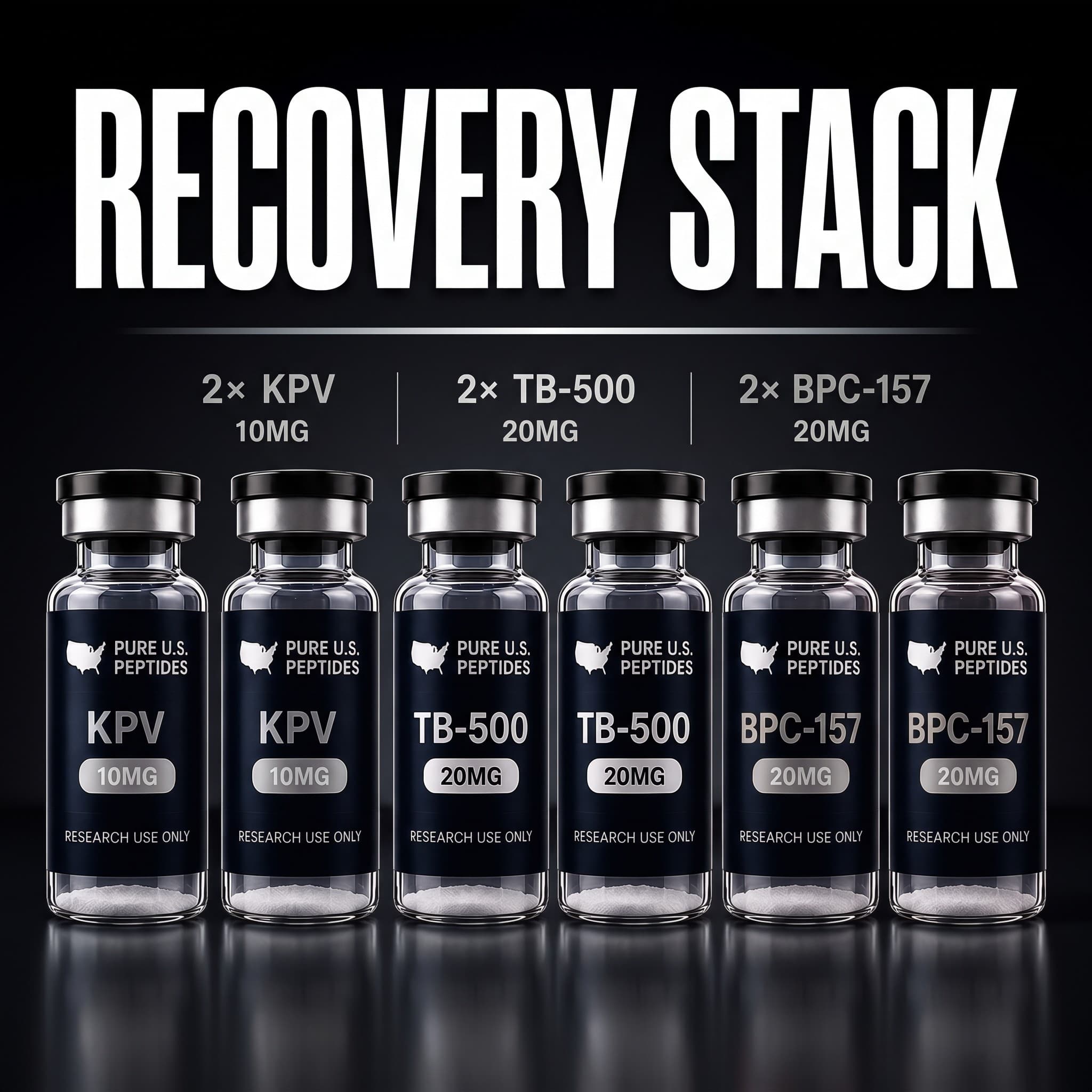
KPV + TB-500 + BPC-157 Research Kit
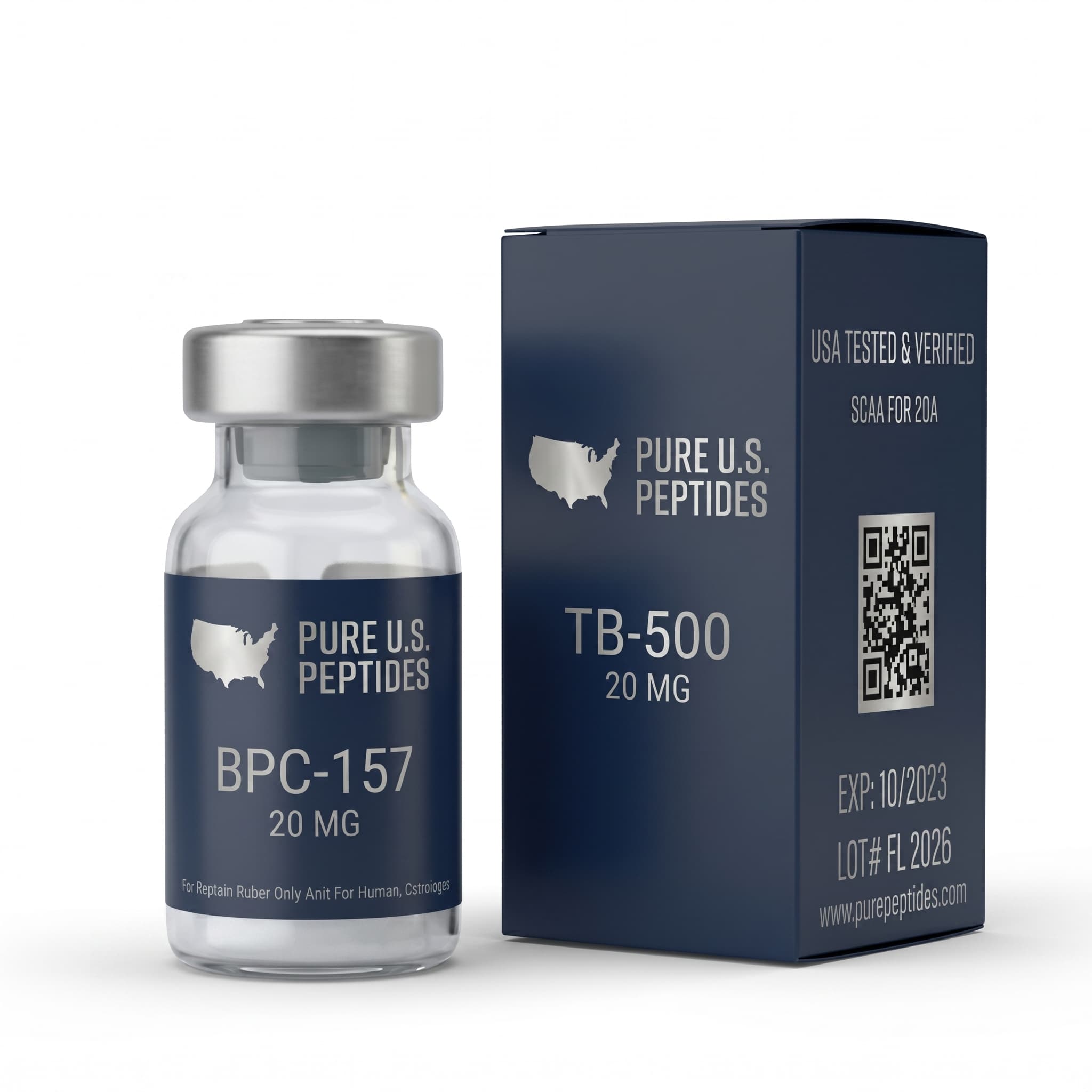
BPC-157 20mg + TB-500 20mg Bundle
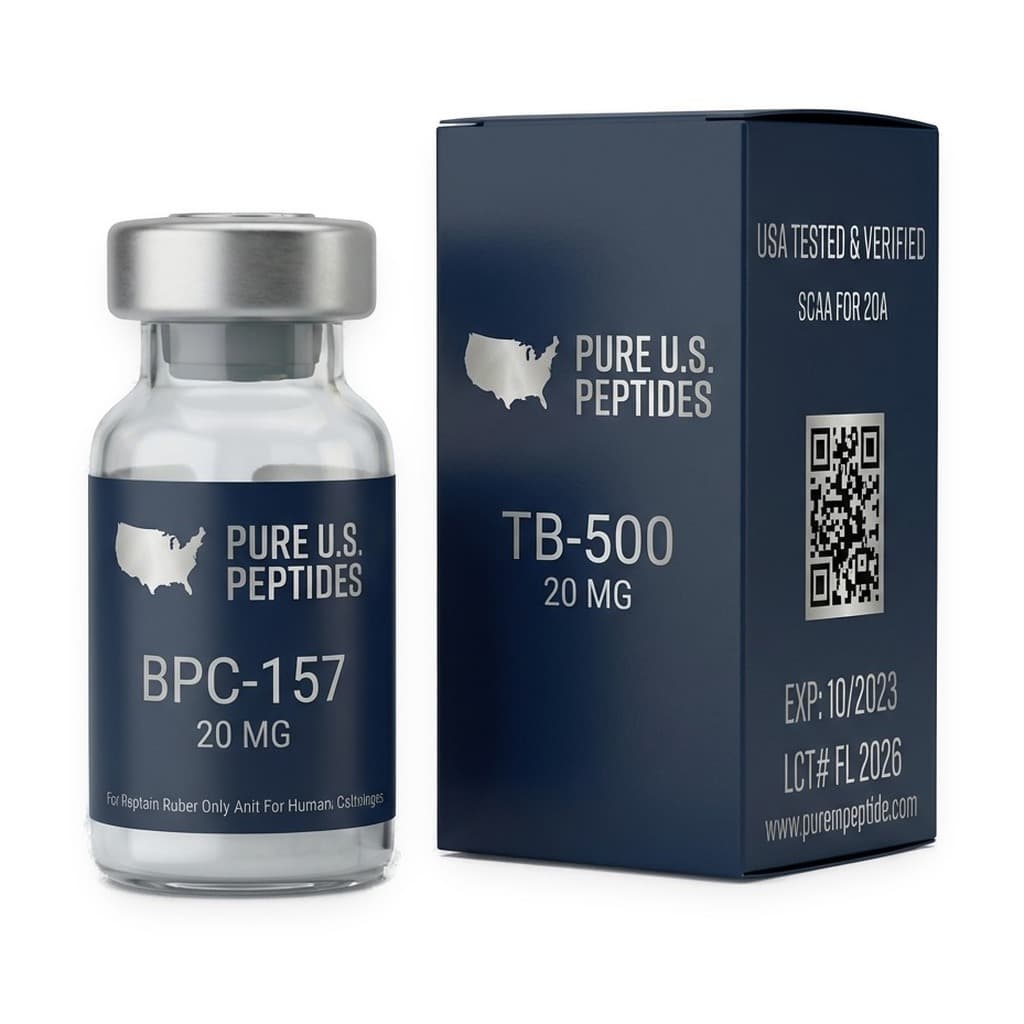
BPC-157 10mg + TB-500 10mg Bundle