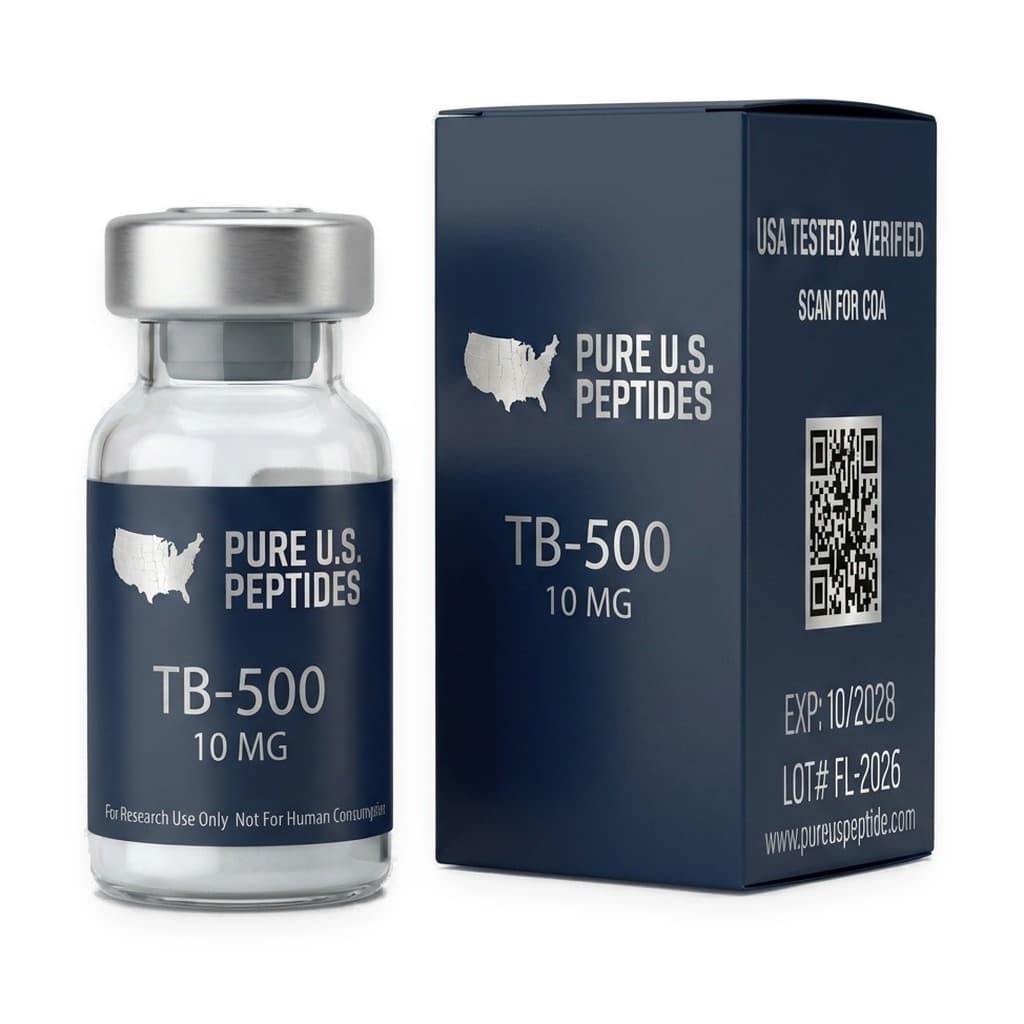
TB500 10mg
In Stock & Ready to Ship from USA
FREE shipping on every U.S. order
Secure checkout via encrypted payment processor


 +2.9k
+2.9kResearch Use Only
These products are for laboratory research only and not intended for medical use. They are not FDA-approved to diagnose, treat, cure, or prevent any disease. By purchasing, you certify they will be used solely for research and not for human or animal consumption.
Research Summary
29 PubMed CitationsOverview TB-500 (also known as Fequesetide) is a synthetic heptapeptide corresponding to the N-acetylated amino acid sequence 17–23 of the naturally occurring protein Thymosin Beta-4 (Tβ4). Its sequence is Ac-LKKTETQ.[1][2] The parent molecule, Thymosin Beta-4, is a ubiquitous 43-amino acid polypeptide originally isolated from the thymus gland. It is found in high concentrations in blood platelets, white blood cells, and wound fluid, and belongs to the β-thymosin family of actin-sequestering proteins.[3] TB-500 was developed based on the discovery that the specific seven-amino acid sequence (17–23) within Tβ4 is responsible for its actin-binding properties, which are critical for cell migration and tissue repair. The shorter fragment retains the essential angiogenic and wound-healing activities of the parent molecule while being more economical to synthesize.[6][8] The U.S. FDA has classified TB-500 as a Category 2 Bulk Drug Substance, citing insufficient safety-related information and immunogenicity risk. It is prohibited from being compounded by outsourcing...
TB500 — Research Data at a Glance
| Property | Value |
|---|---|
| PubMed Citations Referenced | 29 |
| Contributing Researchers | 3 |
| Storage Conditions | Store lyophilized powder at -20°C for long-term stability. |
| Purity Standard | Certificate pending |
| Research Use Only | Not for human consumption. RUO only. |
Compare TB500 with Other Peptides
Research guide
What is TB500? Read the full research guideOverview
Overview
TB-500 (also known as Fequesetide) is a synthetic heptapeptide corresponding to the N-acetylated amino acid sequence 17–23 of the naturally occurring protein Thymosin Beta-4 (Tβ4). Its sequence is Ac-LKKTETQ.[1][2]
The parent molecule, Thymosin Beta-4, is a ubiquitous 43-amino acid polypeptide originally isolated from the thymus gland. It is found in high concentrations in blood platelets, white blood cells, and wound fluid, and belongs to the β-thymosin family of actin-sequestering proteins.[3]
TB-500 was developed based on the discovery that the specific seven-amino acid sequence (17–23) within Tβ4 is responsible for its actin-binding properties, which are critical for cell migration and tissue repair. The shorter fragment retains the essential angiogenic and wound-healing activities of the parent molecule while being more economical to synthesize.[6][8]
The U.S. FDA has classified TB-500 as a Category 2 Bulk Drug Substance, citing insufficient safety-related information and immunogenicity risk. It is prohibited from being compounded by outsourcing facilities.[4] TB-500 and Tβ4 are also explicitly prohibited by WADA under Section S2.3 at all times.[5]
Discovery and design rationale
TB-500 emerged from a structural decomposition of full-length Tbeta4 aimed at isolating the minimum sequence required for actin sequestration. The 17–23 LKKTETQ window contains the actin-binding helix identified by NMR and X-ray crystallography of Tbeta4-actin complexes, while the N-terminal Ac-SDKP fragment (residues 1–4) carries the parent's distinct anti-fibrotic and hematopoietic-quiescence activity.[6][7] N-terminal acetylation in TB-500 was retained to mirror the natural Tbeta4 acetylation state and to confer modest exopeptidase resistance.[2]
Research framework
Within the actin-cytoskeleton-modulating peptide research domain, TB-500 is most often referenced alongside Thymosin alpha-1 for parallel thymic-peptide pharmacology, BPC-157 for shared cytoprotection and tissue-repair signaling, and GHK-Cu for matrix-remodeling crosstalk. The compound is supplied here strictly as a research reference standard for in vitro and animal-model investigation, and is not intended for human or veterinary use.
Mechanism of Action
Mechanism of Action
Primary Target: G-Actin Sequestration
The fundamental molecular target of TB-500 is monomeric globular actin (G-actin). The LKKTETQ motif binds G-actin in a 1:1 stoichiometric complex, sequestering monomeric actin and preventing its uncontrolled polymerization into filamentous actin (F-actin).[6] By regulating actin polymerization, TB-500 modulates cytoskeletal organization — the prerequisite for cell motility and migration essential for tissue repair.[9]
ATP Synthase Interaction
Tβ4 (and potentially its active fragments) interacts with F1-F0 ATP synthase on the surface of endothelial cells, binding the beta-subunit with a dissociation constant (KD) of approximately 12 nM. This interaction increases cell surface ATP levels, which is necessary for purinergic receptor signaling involved in cell migration.[10]
ILK-PINCH-Akt Pathway (Cell Survival)
TB-500 forms a functional complex with Integrin-Linked Kinase (ILK) and PINCH (Particularly Interesting New Cys-His protein). This complex leads to phosphorylation and activation of Akt (Protein Kinase B), specifically Akt2 in endothelial cells, promoting cell survival and cardiomyocyte protection following ischemic injury.[11][12]
NF-κB Pathway (Anti-Inflammatory)
TB-500 modulates inflammation by interrupting the NF-κB signal transduction pathway. It blocks phosphorylation and nuclear translocation of the RelA/p65 subunit, suppressing transcription of pro-inflammatory cytokines IL-8, IL-1β, and TNF-α.[13][16]
Matrix Metalloproteinase (MMP) Upregulation
The peptide increases production of Matrix Metalloproteinases (MMP-2 and MMP-9), enzymes necessary for degrading the basement membrane to facilitate cell migration during angiogenesis and wound repair.[15]
Antioxidant Enzyme Upregulation
TB-500 upregulates manganese superoxide dismutase (Mn-SOD), copper/zinc SOD, and catalase, providing cytoprotection against oxidative stress.[16]
TB-500 vs. Full-Length Thymosin Beta-4
A critical distinction: the anti-fibrotic properties of Tβ4 are largely attributed to the N-terminal tetrapeptide Ac-SDKP (amino acids 1–4), which is not present in TB-500. Ac-SDKP inhibits hematopoietic stem cell proliferation and reduces fibrosis by interfering with TGF-β signaling. Therefore, TB-500 retains the actin-binding and migratory properties but may lack the specific anti-fibrotic signaling of the full-length protein.[7]
Additionally, recent research (Rahaman et al., 2024) suggests that TB-500's metabolite Ac-LKKTE may be the primary wound-healing driver rather than the parent peptide itself.[17]
Research Applications
Research Applications
In laboratory research, TB-500 and its parent molecule Tβ4 are investigated in multiple experimental paradigms:
- Dermal Wound Healing — Accelerated repair of full-thickness dermal wounds in diabetic (db/db) and aged mouse models. Promoted keratinocyte migration, collagen deposition, and reduced scar tissue formation.[8][18]
- Corneal Repair Models — Studied in corneal epithelial-defect models (chemical burn, ethanol exposure); epithelial-migration and ocular-inflammation endpoints reported. Full-length Tβ4 has been studied in dry-eye and neurotrophic-keratopathy trials.[19][20]
- Cardiovascular Models — Studied in rodent myocardial-ischemia models (full-length Tβ4); infarct-size, cardiac-function, angiogenesis and epicardial-progenitor endpoints reported.[11][21]
- Musculoskeletal Models — Studied in muscle, tendon, and ligament injury models. Promoted myoblast migration and tenocyte proliferation in tendon transection models.[7]
- CNS Injury Models — Studied in rodent traumatic brain injury, stroke and demyelination models; histological, oligodendrocyte-differentiation and Toll-like-receptor signaling endpoints reported.[6]
- Liver and Kidney Fibrosis Models — Studied in ethanol/CCl₄ liver-injury models; fibrosis, oxidative-stress, NF-κB and hepatic-stellate-cell endpoints reported.[16][14]
- Metabolite-Driven Wound-Healing Profiling — Investigated for the activity of its enzymatic metabolites (Ac-LKKTE, Ac-LKK, Ac-LK), with 2024 work suggesting the metabolite series rather than the parent peptide may be the operative wound-healing driver in fibroblast assays.[17]
- Anti-inflammatory Cytokine Profiling — Examined for capacity to interrupt NF-kappaB-mediated transcription of IL-1beta, IL-8, and TNF-alpha in stress-loaded epithelial and immune cell lines, supporting research designs that bridge cytoskeletal and inflammatory signaling.[13][16]
Comparative Research Context
TB-500 is most directly compared in the cytoskeletal-peptide research literature with the full-length parent Thymosin beta-4 for the actin-binding versus anti-fibrotic activity split, with BPC-157 for parallel pleiotropic tissue-repair coverage, and with GHK-Cu for matrix-remodeling and angiogenic crosstalk. These cross-comparisons inform research designs investigating whether the LKKTETQ minimal motif suffices to recapitulate the parent's broader regenerative profile.[7]
Biochemical Characteristics
| Property | Value |
|---|---|
| Molecular Formula | C₃₈H₆₈N₁₀O₁₄ |
| Molecular Weight | 889.018 g/mol |
| CAS Number | 885340-08-9 |
| Sequence (3-Letter) | Ac-Leu-Lys-Lys-Thr-Glu-Thr-Gln |
| Sequence (1-Letter) | Ac-LKKTETQ |
| Amino Acids | 7 (N-acetylated heptapeptide) |
| Parent Molecule | Thymosin Beta-4 (fragment 17–23 of 43-aa protein) |
| Structural Type | Linear heptapeptide with N-terminal acetylation |
| Synonyms | Fequesetide, Thymosin β4 fragment (17-23), N-acetylated LKKTETQ |
| Plasma Half-Life | ~2.5–3 hours |
Identifiers
| PubChem CID | |
|---|---|
| InChI Key | |
| Isomeric SMILES | |
| IUPAC Name |
Preclinical Research Summary
Preclinical Research Summary
Animal Studies (TB-500 Fragment Specifically)
| Study | Model | Key Findings | Ref |
|---|---|---|---|
| Rahaman et al. (2024) | Rat / fibroblasts in vitro | Metabolite Ac-LKKTE showed wound-healing activity — parent TB-500 did not. Primary metabolite Ac-LK at 0-6h, Ac-LKK to 72h. No cytotoxicity. | [17] |
| Philp et al. (2003) | db/db diabetic mice, aged mice | LKKTETQ fragment promoted dermal repair comparable to full-length Tβ4. ↑ wound contracture and collagen deposition. | [8] |
| Sosne et al. (2010) | In vitro (LDH assay) | No significant difference between acetylated TB-500 and non-acetylated LKKTETQ on cell injury (LDH release). | [24] |
| Ho et al. / Kwok et al. (2012-2013) | Thoroughbred horses | Single administration; detected at 0.02 ng/mL in plasma, 0.01 ng/mL urine. Detection: 11.3h plasma, 9.7h urine. | [25][26] |
Studies Using Full-Length Thymosin Beta-4 (Parent Molecule)
Note: These studies used the 43-amino acid full-length Tβ4 protein, not the TB-500 fragment. Results may not be directly transferable to the 7-amino acid fragment.
| Study | Model | Key Findings | Ref |
|---|---|---|---|
| Bao et al. (2013) | Rat myocardial ischemia | 5.37 mg/kg, long-term exposure — 43% infarct volume reduction (p < 0.01) | [21] |
| Bock-Marquette et al. (2004) | Mouse cardiac cells | Tβ4 activates ILK → promotes cardiac cell migration, survival, and cardiac repair (published in Nature) | [11] |
| Smart et al. (2007) | Mouse epicardial progenitors | Tβ4 induces epicardial progenitor mobilization and neovascularization (published in Nature) | [27] |
| Malinda et al. (1999) | Rat dermal wound | Tβ4 increased re-epithelialization by 42% over saline at 4 days post-injury | [18] |
| Shah et al. (2018) | Mouse liver fibrosis | Tβ4 prevented oxidative stress, inflammation, and fibrosis in ethanol/LPS liver injury | [16] |
Clinical Studies / Human Data (Full-Length Tβ4 Only)
No registered human clinical data exists specifically for the TB-500 fragment. The following are clinical data for the full-length Thymosin Beta-4 protein.
| Study | Design | n= | Key Outcome | Ref |
|---|---|---|---|---|
| RGN-352 Phase I | Healthy volunteers | 40 | Well tolerated over 14 days; no dose-limiting toxicities | [28] |
| RGN-259 Phase II (Dry Eye) | Phase II trial | — | Dry-eye sign and symptom endpoints reported | [19][20] |
| RGN-137 Phase II (Pressure Ulcers) | Phase II trial | — | Dermal-healing endpoints reported | [29] |
Pharmacokinetic Parameters
| Parameter | Value | Ref |
|---|---|---|
| G-Actin Binding | 1:1 stoichiometric complex (LKKTETQ motif) | [6] |
| ATP Synthase KD | ~12 nM (endothelial cell surface) | [10] |
| In vitro migration activity | ~50 nM (identical to full-length Tβ4) | [24] |
| Plasma Half-life | ~2.5–3 hours | [25] |
| Equine Detection | Plasma 11.3h, urine 9.7h (single administration) | [26] |
| Primary Metabolite | Ac-LK (0-6h), Ac-LKK (up to 72h) | [17] |
| Acute Toxicity Threshold | No toxicity observed up to 20 mg/kg | [3] |
Comparison: TB-500 (Fragment) vs. Thymosin Beta-4 (Full Protein)
| Feature | TB-500 (Ac-LKKTETQ) | Thymosin Beta-4 (Full) |
|---|---|---|
| Length | 7 amino acids (fragment 17–23) | 43 amino acids |
| Actin Binding | ✅ Retains LKKTETQ motif | ✅ Full actin-binding domain |
| Anti-Fibrotic (Ac-SDKP) | ❌ Absent (aa 1–4 not included) | ✅ Present via N-terminal Ac-SDKP |
| Cell Migration | Comparable (~50 nM) | Comparable (~50 nM) |
| Wound Healing | Via metabolite Ac-LKKTE | Direct + via Ac-SDKP |
| Human Clinical Data | None | Phase I/II (RGN-352, 259, 137) |
| FDA Status | Category 2 (prohibited) | IND (clinical development) |
The products offered on this website are furnished for in-vitro studies only. In-vitro studies (Latin: in glass) are performed outside of the body. These products are not medicines or drugs and have not been approved by the FDA to prevent, treat or cure any medical condition, ailment or disease. Bodily introduction of any kind into humans or animals is strictly forbidden by law.
For Laboratory Research Only. Not for human use, medical use, diagnostic use, or veterinary use.
ALL ARTICLES AND PRODUCT INFORMATION PROVIDED ON THIS WEBSITE ARE FOR INFORMATIONAL AND EDUCATIONAL PURPOSES ONLY.
Authors & Attribution
✍️ Article Author
Dr. Allan L. Goldstein
Allan L. Goldstein, Ph.D., is Professor Emeritus at George Washington University, Department of Biochemistry and Molecular Medicine, and Chairman and Chief Scientific Advisor at RegeneRx Biopharmaceuticals, Inc. Dr. Goldstein is the co-discoverer of the thymosins. His research laboratory was instrumental in isolating Thymosin Beta-4 (Tβ4) and identifying its active sites, demonstrating that the specific 7-amino acid actin-binding domain (amino acids 17–23), which corresponds to TB-500, is sufficient to promote wound healing, angiogenesis, and tissue repair in animal models comparable to the full-length molecule. Allan L. Goldstein is being referenced as one of the leading scientists involved in the research and development of TB-500 and Thymosin Beta-4. In no way is this doctor/scientist endorsing or advocating the purchase, sale, or use of this product for any reason. There is no affiliation or relationship, implied or otherwise, between Pure US Peptide and this doctor.
View Full Researcher Profile →🎓 Scientific Journal Author
Dr. Hynda K. Kleinman
Hynda K. Kleinman, Ph.D., is affiliated with George Washington University (Department of Biochemistry and Molecular Biology) and formerly with the National Institutes of Health (NIDCR). Dr. Kleinman conducted foundational research isolating the biological activities of Tβ4 to specific peptide sequences. She co-authored key studies showing that the actin-binding motif LKKTETQ (the sequence of TB-500) is essential and sufficient for angiogenesis and endothelial cell migration, and confirmed this fragment's ability to accelerate dermal wound healing. Hynda K. Kleinman is being referenced as one of the leading scientists involved in the research and development of TB-500 and Thymosin Beta-4. In no way is this doctor/scientist endorsing or advocating the purchase, sale, or use of this product for any reason. There is no affiliation or relationship, implied or otherwise, between Pure US Peptide and this doctor.
View Full Researcher Profile →Dr. Hynda K. Kleinman is being referenced as one of the leading scientists involved in the research and development of TB500. In no way is this doctor/scientist endorsing or advocating the purchase, sale, or use of this product for any reason. There is no affiliation or relationship, implied or otherwise, between Pure US Peptide and this doctor. The purpose of citing the doctor is to acknowledge, recognize, and credit the exhaustive research and development efforts conducted by the scientists studying this peptide.
🔬 Contributing Researcher
Dr. Gabriel Sosne
Gabriel Sosne, M.D., is affiliated with Wayne State University (Kresge Eye Institute). Dr. Sosne has extensively studied the ophthalmic applications of Thymosin Beta-4 and its fragments. He co-authored research defining the biological activities of short peptide sequences — including the 17–23 fragment (TB-500) — involved in cell migration, wound healing, and anti-apoptosis. His work has been critical in translating these findings into clinical trials for corneal repair and dry eye (RGN-259). Gabriel Sosne is being referenced as one of the leading scientists involved in the research and development of TB-500 and Thymosin Beta-4. In no way is this doctor/scientist endorsing or advocating the purchase, sale, or use of this product for any reason. There is no affiliation or relationship, implied or otherwise, between Pure US Peptide and this doctor.
View Full Researcher Profile →Dr. Gabriel Sosne is being referenced as one of the leading scientists involved in the research and development of TB500. In no way is this doctor/scientist endorsing or advocating the purchase, sale, or use of this product for any reason. There is no affiliation or relationship, implied or otherwise, between Pure US Peptide and this doctor. The purpose of citing the doctor is to acknowledge, recognize, and credit the exhaustive research and development efforts conducted by the scientists studying this peptide.
Referenced Citations
Esposito S, Deventer K, Goeman J, Van der Eycken J, Van Eenoo P. Synthesis and characterization of the N-terminal acetylated 17-23 fragment of thymosin beta 4 identified in TB-500. Drug Testing and Analysis. 2012;4(9):733-738.
PubMedDelcourt V, Garcia P, Chabot B, Bailly-Chouriberry L. TB500/TB1000 and SGF1000: A scientific approach for a better understanding of misbranded and adulterated drugs. Drug Testing and Analysis. 2023;15(4):458-464.
PubMedGoldstein AL, Hannappel E, Sosne G, Kleinman HK. Thymosin β4: a multi-functional regenerative peptide. Expert Opinion on Biological Therapy. 2012;12(1):37-51.
PubMedU.S. Food and Drug Administration. Certain Bulk Drug Substances for Use in Compounding that May Present Significant Safety Risks. FDA.gov. Updated July 8, 2025.
FDA.govWorld Anti-Doping Agency. The 2025 Prohibited List. WADA. January 1, 2025.
WADAXing Y, Ye Y, Zuo H, Li Y. Progress on the Function and Application of Thymosin β4. Frontiers in Endocrinology. 2021;12:767785.
PubMedBock-Marquette I, Maar K, Maar S, et al. International Immunopharmacology. 2023;116:109741.
PubMedPhilp D, Badamchian M, Scheremeta B, Nguyen M, Goldstein AL, Kleinman HK. Thymosin β4 and a synthetic peptide containing its actin-binding domain promote dermal wound repair in db/db diabetic mice and in aged mice. Wound Repair and Regeneration. 2003;11(1):19-24.
PubMedBelsky JB, Rivers EP, Filbin MR, Lee PJ, Morris DC. Thymosin beta 4 regulation of actin in sepsis. Expert Opinion on Biological Therapy. 2018;18(sup1):193-197.
PubMedHinkel R, El-Aouni C, Olson T, et al. Thymosin beta4 is an essential paracrine factor of embryonic endothelial progenitor cell-mediated cardioprotection. Circulation. 2008;117(17):2232-2240.
PubMedBock-Marquette I, Saxena A, White MD, Dimaio JM, Srivastava D. Thymosin beta4 activates integrin-linked kinase and promotes cardiac cell migration, survival and cardiac repair. Nature. 2004;432(7016):466-472.
PubMedSmart N, Risebro CA, Melville AA, et al. Nature. 2007;445(7124):177-182.
PubMedSosne G, Kleinman HK. Investigative Ophthalmology & Visual Science. 2015;56(9):5110-5117.
PubMedReyes-Gordillo K, Shah R, Popratiloff A, et al. Thymosin-β4 (Tβ4) Blunts PDGF-Dependent Phosphorylation and Binding of AKT to Actin in Hepatic Stellate Cells. American Journal of Pathology. 2011;178(5):2100-2108.
PubMedMalinda KM, Sidhu GS, Mani H, et al. Thymosin beta 4 accelerates wound healing. Journal of Investigative Dermatology. 1999;113(3):364-368.
PubMedShah R, Reyes-Gordillo K, Cheng Y, et al. Oxidative Medicine and Cellular Longevity. 2018;2018:9630175.
PubMedRahaman KA, Muresan AR, Min H, et al. Simultaneous quantification of TB-500 and its metabolites by UHPLC-Q-Exactive orbitrap MS/MS and their screening by wound healing activities in-vitro. Journal of Chromatography B. 2024;1235:124033.
PubMedMalinda KM, Sidhu GS, Mani H, et al. Thymosin beta 4 accelerates wound healing. Journal of Investigative Dermatology. 1999;113(3):364-368.
PubMedSosne G, Ousler GW. Clinical Ophthalmology. 2015;9:877-884.
PubMedSosne G, Dunn SP, Kim C. Cornea. 2015;34(5):491-496.
PubMedBao W, Ballard VL, Needle S, et al. Frontiers in Pharmacology. 2013;4:149.
PubMedTreadwell T, Kleinman HK, Crockford D, et al. Annals of the New York Academy of Sciences. 2012;1270:37-44.
PubMedNguyen J, Verma S, Vuong VT, et al. Engineered Tandem Thymosin Peptide Promotes Corneal Wound Healing. Investigative Ophthalmology & Visual Science. 2025;66(14):31.
PubMedSosne G, Qiu P, Goldstein AL, Wheater M. Biological activities of thymosin beta 4 defined by active sites in short peptide sequences. The FASEB Journal. 2010;24(7):2144-2151.
PubMedHo EN, Kwok WH, Lau MY, et al. Doping control analysis of TB-500 in equine urine and plasma by liquid chromatography-mass spectrometry. Journal of Chromatography A. 2012;1265:57-69.
PubMedKwok WH, Ho ENM, Lau MY, Leung GNW, et al. Doping control analysis of seven bioactive peptides in horse plasma by liquid chromatography-mass spectrometry. Analytical and Bioanalytical Chemistry. 2013;405(8):2595-2606.
DOISmart N, Risebro CA, Melville AA, et al. Nature. 2007;445(7124):177-182.
PubMedRegeneRx Biopharmaceuticals. 2009.
SourceTreadwell T, Kleinman HK, Crockford D, et al. The regenerative peptide thymosin β4 accelerates dermal healing. Annals of the New York Academy of Sciences. 2012;1270:37-44.
PubMedRUO Disclaimer
For Research Use Only (RUO). Not intended for human consumption, clinical use, or as a drug, food, cosmetic, or medical device. This product has not been evaluated by the FDA and is supplied solely for in-vitro laboratory research by qualified professionals.
Certificate of Analysis
Published certificates come from third-party laboratories. If this listing's certificate is still pending, the card below says so.
Latest Lab Report
Storage & Handling
Summary
Store lyophilized powder at -20°C for long-term stability.
Recommended Laboratory Storage Conditions
Lyophilized Powder: Store at -20°C (-4°F) for long-term stability. Stable at room temperature for up to 90 days, but freezer storage is recommended for extended periods.
Handling: Protect from intense light and heat. Allow vial to reach room temperature before opening.
“Preclinical Research Summary Animal Studies (TB-500 Fragment Specifically) Study Model Key Findings Ref Rahaman et al.”
Frequently Asked Questions
Common research questions about TB500 — purity, handling, COA documentation, and published-research context.
Related Research Compounds
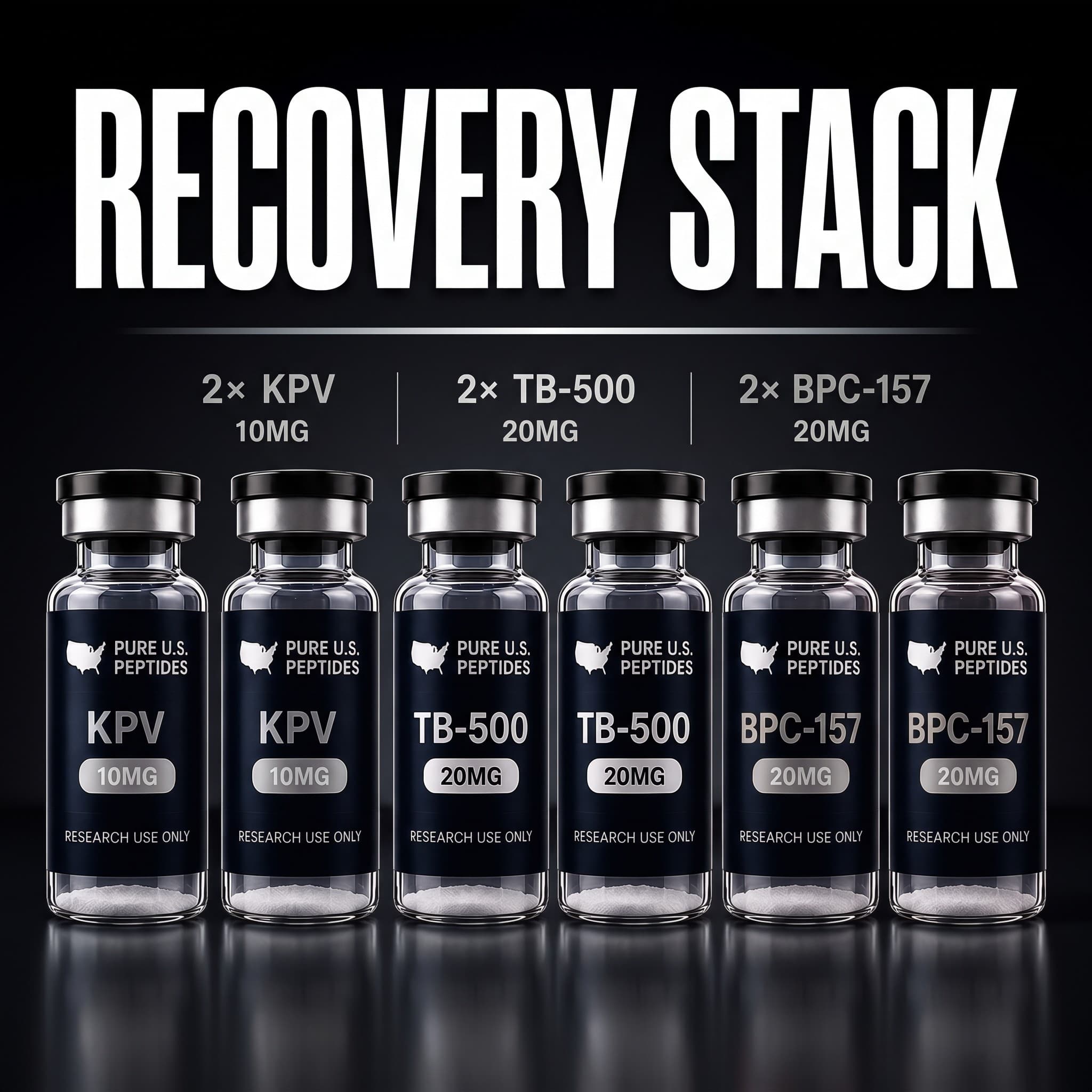
KPV + TB-500 + BPC-157 Research Kit
BPC-157 20mg + TB-500 20mg Bundle
BPC-157 10mg + TB-500 10mg Bundle