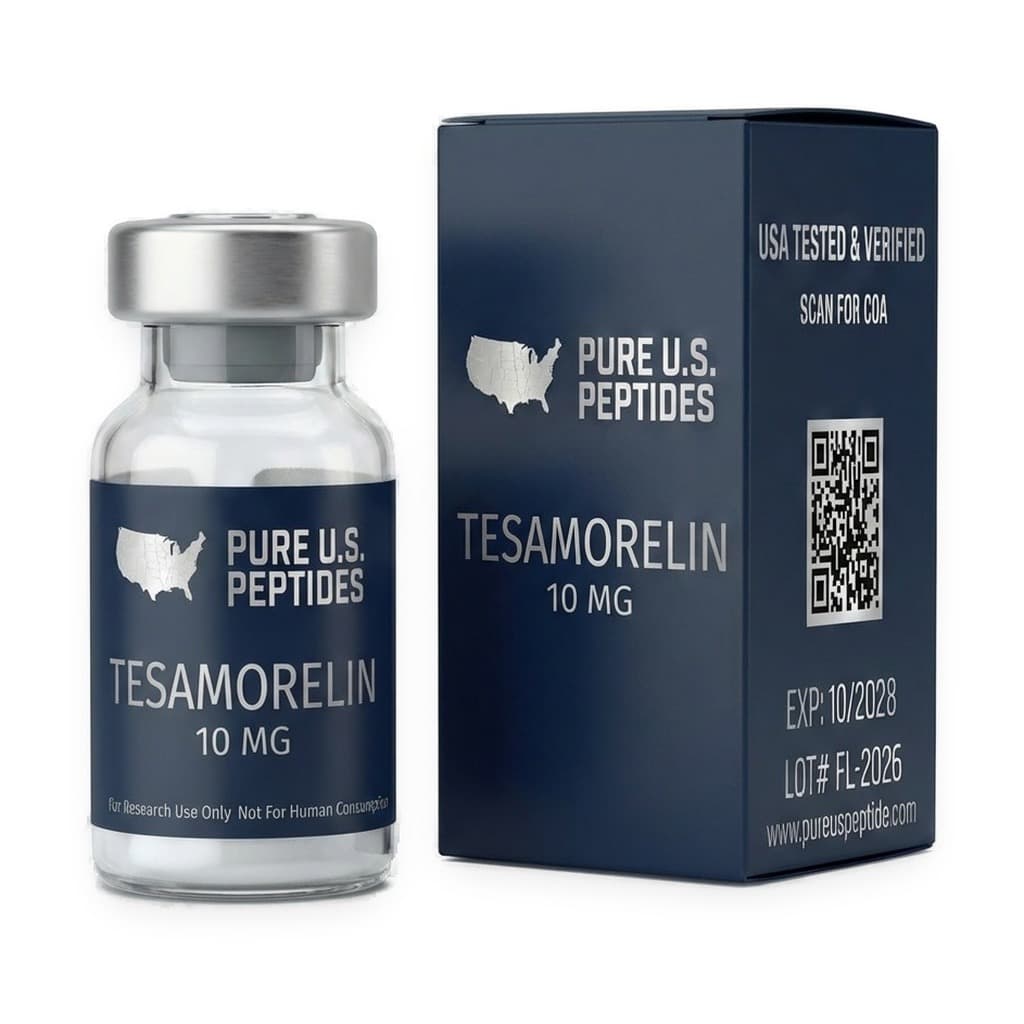
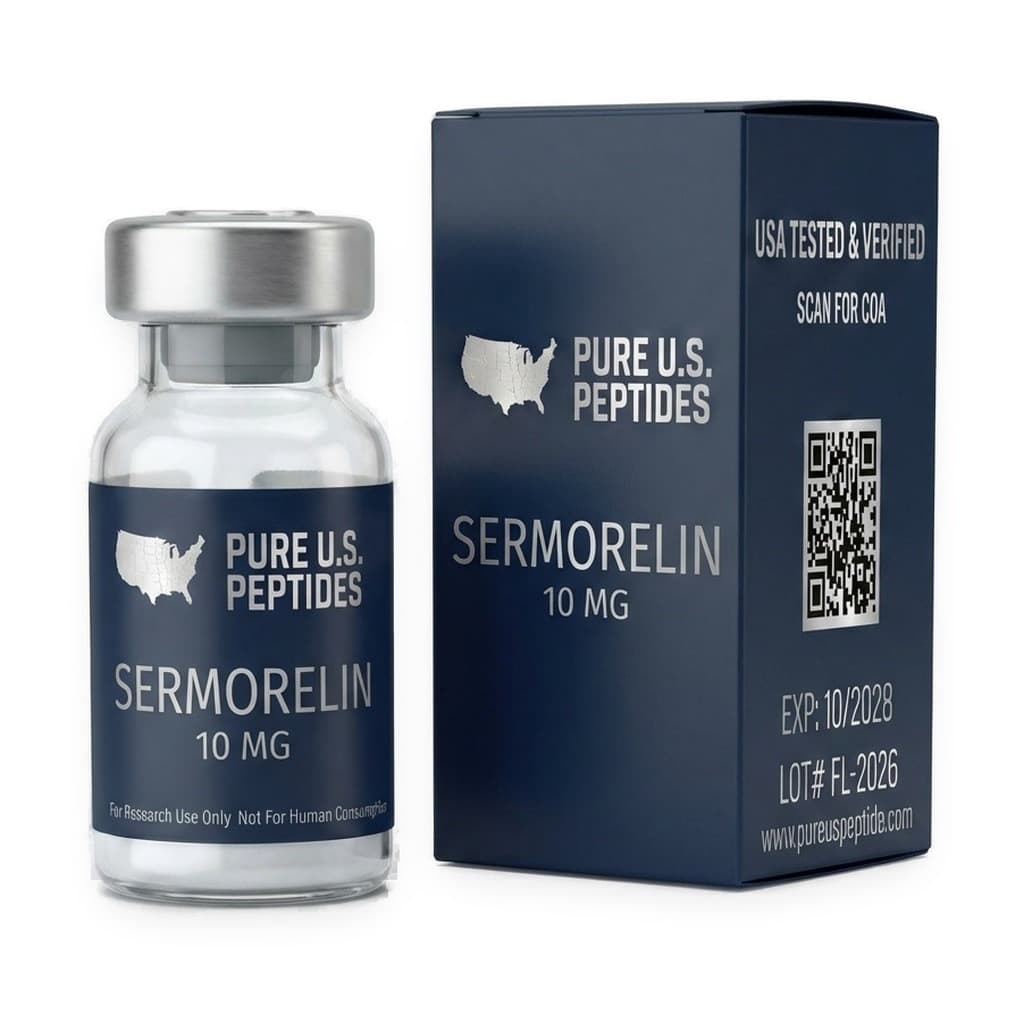
Sermorelin 10mg
Em Estoque e Pronto para Envio dos EUA
Frete GRÁTIS em todos os pedidos nos EUA
Checkout seguro via processador de pagamento criptografado


 +2.9k
+2.9kApenas para Uso em Pesquisa
Estes produtos sao destinados exclusivamente a pesquisa laboratorial e nao se destinam ao uso medico. Nao sao aprovados pela FDA para diagnosticar, tratar, curar ou prevenir qualquer doenca. Ao adquirir, voce certifica que os produtos serao utilizados exclusivamente para pesquisa e nao para consumo humano ou animal.
Resumo da Pesquisa
20 Citacoes PubMedSermorelin (GHRH 1-29) e um(a) sintetico(a) 29-aminoacido peptide with a peso molecular of 3,357.88 Da. It corresponds para o(a) N-terminal segment do(a) endogenous 44-aminoacido GHRH molecule e e considered the shortest fully functional fragment retaining full biological activity. [1] [2] Key Features: Binding Potency: Equipotent to full-length GHRH(1-40) in stimulating GH secretion Pulsatility: Stimulates natural pulsatile GH release (diferentemente de rhGH) Feedback: Regulated by somatostatin — overdose difficult Gene Transcription: Stimulates hGH mRNA transcricao, aumenta pituitary reserve [3] Regulatory Status: FDA: Approved 1990 (diagnostic) / 1997 (pediatric GHD) as Geref. Voluntarily discontinued 2008 — NOT for tolerability/efficacy reasons. Now available compounded. [4] WADA: Prohibited (S2 — Peptide Hormones). [5] Developer: EMD Serono, Inc. (formerly Serono Laboratories) Pharmacokinetic Highlights: Bioavailability: ~5.1% in rats Half-Life: ~11–12 min Tmax: 5–20 min Clearance: 2.4–2.8 L/min
Sermorelin — Dados de Pesquisa em Resumo
| Propriedade | Valor |
|---|---|
| Formula Molecular | C₁₄₉H₂₄₆N₄₄O₄₂S |
| Peso Molecular | 3,357.88 Da |
| Numero CAS | 86168-78-7 |
| Sequencia de Aminoacidos | YADAIFTNSYRKVLGQLSARKLLQDIMSR-NH₂ (29 aa) |
| Citacoes PubMed Referenciadas | 20 |
| Pesquisadores Colaboradores | 3 |
| Condicoes de Armazenamento | Liofilizado: 2–8°C refrigerado, proteja da luz. |
| Padrao de Pureza | 99.27% por HPLC (certificado publicado) |
| Apenas para Uso em Pesquisa | Nao destinado ao consumo humano. Apenas para uso em pesquisa. |
Compare Sermorelin com Outros Peptideos
Research guide
What is Sermorelin? Read the full research guideVisao Geral
Sermorelin (GHRH 1-29) e um(a) sintetico(a) 29-aminoacido peptide with a peso molecular of 3,357.88 Da. It corresponds para o(a) N-terminal segment do(a) endogenous 44-aminoacido GHRH molecule e e considered the shortest fully functional fragment retaining full biological activity. [1] [2]
Key Features:
- Binding Potency: Equipotent to full-length GHRH(1-40) in stimulating GH secretion
- Pulsatility: Stimulates natural pulsatile GH release (diferentemente de rhGH)
- Feedback: Regulated by somatostatin — overdose difficult
- Gene Transcription: Stimulates hGH mRNA transcricao, aumenta pituitary reserve [3]
Regulatory Status:
- FDA: Approved 1990 (diagnostic) / 1997 (pediatric GHD) as Geref. Voluntarily discontinued 2008 — NOT for tolerability/efficacy reasons. Now available compounded. [4]
- WADA: Prohibited (S2 — Peptide Hormones). [5]
Developer: EMD Serono, Inc. (formerly Serono Laboratories)
Pharmacokinetic Highlights:
- Bioavailability: ~5.1% in rats
- Half-Life: ~11–12 min
- Tmax: 5–20 min
- Clearance: 2.4–2.8 L/min
Mecanismo de Acao
1. Receptor Target — GHRH Receptor
Sermorelin binds specifically para o(a) GHRH receptor (GHRHR) on somatotroph cells no(a) anterior pituitary gland. Apesar de being a 29-aa fragment, it is equipotent to full-length GHRH(1-40) in stimulating GH secretion. [1] [6]
2. Sinalizacao a Jusante Cascades
Upon binding para o(a) GHRHR, Sermorelin ativa multiplos(as) intracellular pathways:
- Gₛ/Adenylyl Cyclase → cAMP Pathway: Primary mechanism — receptor ativacao desencadeia Gₛα, stimulating adenylyl cyclase to produce cAMP como um(a) second messenger [6]
- MAPK Pathway: GHRHR ativacao also estimula the mitogen-ativou protein kinase pathway [6]
- Ca²⁺ Signaling: Cascades raise intracellular calcium levels, facilitating vesicle fusion and exocytosis of hormonio do crescimento
🔑 Pulsatile GH Release: Diferentemente de exogenous rhGH, Sermorelin estimula the pituitary to release GH in natural bursts/pulses, mimicking neuroendocrine rhythms and avoiding tachyphylaxis. Its action is regulado(a) por somatostatin negativo(a) feedback, making overdose difficult. [3]
The product supplied here is for uso em pesquisa apenas independentemente de regulatory status of related formulations.
3. Dose-Response Characteristics
- Duration vs Peak: The duration of GH release is mais dose-dependente do que peak magnitude [6]
- Older-Adult Study: IGF-1 endpoints reported in older men [7]
- In Vitro Sensitivity: Minimal eficaz dose in rat pituitary cultures: 0.4 × 10⁻¹⁵ M [8]
4. Receptor Selectivity
In vitro: Does NOT stimulate LH, FSH, or Prolactin release (high somatotroph selectivity). [8]
In vivo (human): Minor agudo(a) rises in prolactin, FSH, and LH relatado(a) em children — effect not seen with GHRH(1-40) — suggesting slight differences between fragment and full-length. [9]
5. Cellular and Tissue-Level Effects
Anti-Tumor (Glioma):
- Blocks cell cycle progression in recurrent glioma cells
- Negatively regula immune checkpoints, downregula GHRHR/GGF
- Identified as a maioria eficaz candidate from 4,865 drugs (P<0.0001) [10]
Immune Activation:
- Increases B cell number (~30%) and responsiveness to mitogens (+50%)
- Increases linfocitos expressing IL-2 receptors (+70%)
- Enhances T cell responsiveness to phytohemagglutinin (+50%) [11]
6. Comparison to Related Compounds
| Compound | Structure | Key Difference |
|---|---|---|
| Sermorelin | 29 aa (native fragment) | Shortest functional GHRH; T½ ~11 min; equipotent to 1-40 |
| Tesamorelin | 44 aa + hexenoyl cap | DPP-4 resistant; T½ ~30 min; mais potent |
| D-Ala²-GHRH(1-29) | 29 aa + D-Ala² | Lower depuracao; longer T½ do que native fragment |
| CJC-1295 + DAC | GHRH analog + DAC | Days-long T½ via albumin binding; continuous GH |
| Somatropin (rhGH) | Exogenous GH | Bypasses pituitary; constant levels; higher risk |
7. Pharmacokinetics
| Parameter | Value |
|---|---|
| Bioavailability | ~5.1% in rats |
| Half-Life (T½) | ~11–12 min; ~6.2 min in rats |
| Tmax | 5–20 min |
| Clearance | 2.4–2.8 L/min (adults) |
| GH Pulsatility | Preserved (natural pulses, somatostatin feedback intact) |
| Metabolism | DPP-4 proteolise; no N-terminal modification |
Aplicacoes de Pesquisa
👶 Pediatric GHD (Formerly FDA-registered)
The Geref International Study Group multicenter trial (n=110) studied Sermorelin in pediatric GH deficiency, with growth-velocity, IGF-1 and glucose endpoints reported. [2]
🔬 Diagnostic Evaluation
A single IV dose (1 µg/kg) is used to assess pituitary GH reserve, distinguishing hypothalamic vs pituitary causes of GHD. Fewer false positives comparado(a) a outro(a) provocative tests. [2]
🧓 Age-Related GH Decline
A secreção de GH foi estudada em adultos mais velhos; alterações de IGF-1 foram relatadas em homens de 60–78 anos. [7] [12]
🧠 Cognitivo Function & Sleep
Sermorelin facilita slow-wave sleep, que is correlated with nocturnal GH secretion. Modulates age-related decline no(a) somatotropic axis. [13]
🛡️ Immunosenescencia
In aging adults, B-cell, T-cell-responsiveness, IL-2-receptor and immunoglobulin endpoints were reported. [11]
💪 Body Composition / Hypogonadal Men
A retrospective study (n=14) of hypogonadal men on testosterone + Sermorelin/GHRP-2/GHRP-6 reported IGF-1 endpoints at 90, 180, and 270 days; lean-body-mass and visceral-fat endpoints were also reported. [14]
🎯 Oncology — Glioma
Bioinformatics screening of 4,865 drugs identificado(a) Sermorelin como o(a) most eficaz candidate for recurrent glioma (P<0.0001). In vitro, it inibiu U87/LN229 cell growth dose-dependentely by blocking cell cycle and negatively regulating immune checkpoints. [10]
Caracteristicas Bioquimicas
| Propriedade | Valor |
|---|---|
| Formula | C₁₄₉H₂₄₆N₄₄O₄₂S |
| Molecular Weight | 3,357.88 Da |
| Synonyms | Sermorelin acetate, Geref, GRF 1-29 NH₂, GHRH(1-29), Growth Hormone-Releasing Factor (1-29) amide, Somatotropin-releasing-hormone(1-29)amide |
| Cas Number | 86168-78-7 |
| Sequence | YADAIFTNSYRKVLGQLSARKLLQDIMSR-NH₂ (29 aa) |
| Pubchem Cid | 16129620 / 16132413 |
| Monoisotopic Mass | 3,355.818 Da |
| Polar Area | N/A |
| Complexity | N/A |
| X Log P | N/A |
| Heavy Atom Count | N/A |
| H Bond Donor Count | N/A |
| H Bond Acceptor Count | N/A |
| Rotatable Bond Count | N/A |
Identificadores
| Pubchem Cid | |
|---|---|
| Inchi Key | |
| Inchi | |
| Smiles Isomeric | |
| Smiles Canonical | |
| Iupac Name |
Resumo da Pesquisa Pre-clinica
Clinical Studies
🏛️ Sermorelin e o(a) classic GHRH fragment — formerly FDA-registered, with a robust tolerability record spanning pediatric, geriatric, and diagnostic applications. Its pulsatile GH release and somatostatin regulacao provide um(a) unico(a) perfil de tolerabilidade.
| Study | Type | n= | Indication |
|---|---|---|---|
| Khorram 1997 (Metabolic) | RCT | 19 | Healthy Elderly |
| Khorram 1997 (Immune) | RCT | 19 | Healthy Elderly |
| Vittone 1997 | Prospective | 11 | Elderly Men |
| Corpas 1992 | Dose-ranging | 19 | Young vs Elderly |
| Sigalos 2017 | Retrospective | 14 | Hypogonadal Men |
| Thorner 1996 (Geref ISG) | Multicenter OL | 110 | Pediatric GHD |
| Diagnostic | Standard | — | Pituitary Function |
| Veldhuis 2008 | Physiology | 22 | GH Burst Waveform |
Reported Tolerability Profile
Sermorelin has a well-estabeleceu tolerability record from FDA-registered experimental investigation. [4]
- Key Regulatory Note: FDA confirmou Geref was NOT withdrawn for tolerability or efficacy reasons [4]
Handle with standard laboratory PPE. Consult the SDS.
TODOS OS ARTIGOS E INFORMAÇÕES SOBRE PRODUTOS FORNECIDOS NESTE SITE SÃO APENAS PARA FINS INFORMATIVOS E EDUCACIONAIS.
Autores e Atribuicao
✍️ Autor do Artigo
Dr. Michael O. Thorner
Michael O. Thorner, MB, BS, DSc, is Professor Emeritus no(a) University of Virginia. He led the Geref International Study Group multicenter trials que studied Sermorelin in pediatric GHD. A pioneer in GHRH discovery, his work spans do(a) original characterization of GHRH to modern hormonio do crescimento secretagogue research for aging. Michael O. Thorner é referenciado(a) como um(a) dos(as) principais cientistas envolvidos(as) na pesquisa e desenvolvimento de Sermorelin. De forma alguma este(a) médico(a)/cientista endossa ou defende a compra, venda ou uso deste produto por qualquer motivo. Não existe afiliação ou relação, implícita ou de outra forma, entre a Pure US Peptide e este(a) médico(a).
Ver Perfil Completo do Pesquisador →🎓 Autor de Revista Cientifica
Dr. Andrew V. Schally
Andrew V. Schally, PhD, is a Nobel Prize laureate (1977) and Distinguished Medical Research Scientist no(a) VA Medical Center Miami and University of Miami. He spent decades developing GHRH analogs incluindo agonists and antagonists, with principal contributions to understanding oncological applications of GHRH peptides in glioblastoma, lung, and prostate cancer via GHRH receptor downregulacao. Andrew V. Schally é referenciado(a) como um(a) dos(as) principais cientistas envolvidos(as) na pesquisa e desenvolvimento de Sermorelin. De forma alguma este(a) médico(a)/cientista endossa ou defende a compra, venda ou uso deste produto por qualquer motivo. Não existe afiliação ou relação, implícita ou de outra forma, entre a Pure US Peptide e este(a) médico(a).
Ver Perfil Completo do Pesquisador →Dr. Andrew V. Schally is being referenced as one of the leading scientists involved in the research and development of Sermorelin. In no way is this doctor/scientist endorsing or advocating the purchase, sale, or use of this product for any reason. There is no affiliation or relationship, implied or otherwise, between Pure US Peptide and this doctor. The purpose of citing the doctor is to acknowledge, recognize, and credit the exhaustive research and development efforts conducted by the scientists studying this peptide.
🔬 Pesquisador Colaborador
Dr. Richard F. Walker
Richard F. Walker, PhD, is affiliated com o(a) International Society for Applied Research in Aging (SARA) and serves as Editor-in-Chief of Clinical Interventions in Aging. He has been a significant proponent of Sermorelin for adult-onset GH insufficiency and anti-envelhecimento composto de pesquisa, publishing key editorials on its physiological advantages over rhGH incluindo preservou pulsatile GH release and neuroendocrine function. Richard F. Walker é referenciado(a) como um(a) dos(as) principais cientistas envolvidos(as) na pesquisa e desenvolvimento de Sermorelin. De forma alguma este(a) médico(a)/cientista endossa ou defende a compra, venda ou uso deste produto por qualquer motivo. Não existe afiliação ou relação, implícita ou de outra forma, entre a Pure US Peptide e este(a) médico(a).
Ver Perfil Completo do Pesquisador →Dr. Richard F. Walker is being referenced as one of the leading scientists involved in the research and development of Sermorelin. In no way is this doctor/scientist endorsing or advocating the purchase, sale, or use of this product for any reason. There is no affiliation or relationship, implied or otherwise, between Pure US Peptide and this doctor. The purpose of citing the doctor is to acknowledge, recognize, and credit the exhaustive research and development efforts conducted by the scientists studying this peptide.
Citacoes Referenciadas
Chang Y, Huang R, Zhai Y, et al. Ann Transl Med, 9(5), 406, 2021.
PubMedPrakash A, Goa KL. BioDrugs, 12(2), 139-157, 1999.
PubMedWalker RF. Clin Interv Aging, 1(4), 307-308, 2006.
PubMedFood and Drug Administration. Fed Register, 78(42), 14095-14096, 2013.
SourceSinha DK, Balasubramanian A, Tatem AJ, et al. Transl Androl Urol, 9(Suppl 2), S149-S159, 2020.
PubMedGrossman AB, Savage MO, Lytras N, Besser GM. Clin Endocrinol (Oxf), 21(3), 321-330, 1984.
PubMedCorpas E, Harman SM, Piñeyro MA, et al. J Clin Endocrinol Metab, 75(2), 530-535, 1992.
PubMedHeiman ML, Nekola MV, Murphy WA, Lance VA, Coy DH. An extremely sensitive in vitro model for elucidating structure-activity relationships of hormonio do crescimento-releasing factor analogs. Endocrinology, 116(1), 410-415, 1985.
PubMedGelander L, Lindstedt G, Selstam G, et al. Horm Res, 31(5-6), 213-220, 1989.
PubMedKhorram O, Laughlin GA, Yen SS. J Clin Endocrinol Metab, 82(5), 1472-1479, 1997.
PubMedKhorram O, Yeung M, Vu L, Yen SS. J Clin Endocrinol Metab, 82(11), 3590-3596, 1997.
PubMedVittone J, Blackman MR, Busby-Whitehead J, et al. Metabolism, 46(1), 89-96, 1997.
PubMedVitiello MV, Schwartz RS, Moe KE, Mazzoni G, Merriam GR. Dialogues Clin Neurosci, 3(3), 229-236, 2001.
PubMedSigalos JT, Pastuszak AW, Allison A, et al. Am J Mens Health, 11(6), 1752-1757, 2017.
PubMedSchally AV, Wang H, He J, et al. PNAS, 115(47), 12028-12033, 2018.
PubMedJaszberenyi M, Rick FG, Popovics P, et al. Potentiation of cytotoxic chemotherapy by hormonio do crescimento-releasing hormone agonists. PNAS, 111(2), 781-786, 2014.
PubMedSoule SG, King JA, Millar RP. J Clin Endocrinol Metab, 79(4), 1208-1211, 1994.
PubMedMerriam GR, Buchner DM, Prinz PN, Schwartz RS, Vitiello MV. Potential applications of GH secretagogs no(a) evaluation and investigation do(a) age-related decline in GH secretion. Endocrine, 7(1), 49-52, 1997.
PubMedWalker RF, Yang SW, Bercu BB. Robust Growth Hormone (GH) secretion in aged female rats co-administered GH-releasing hexapeptide (GHRP-6) and GH-releasing hormone (GHRH). Life Sci, 49(20), 1499-1504, 1991.
PubMedRafferty B, Coy DH, Poole S. Pharmacokinetic evaluation of superactive analogues of hormonio do crescimento-releasing factor (1-29)-amide. Peptides, 9(1), 207-209, 1988.
PubMedAviso de Uso em Pesquisa
Apenas para Uso em Pesquisa (RUO). Nao destinado ao consumo humano, uso clinico, ou como medicamento, alimento, cosmetico ou dispositivo medico. Este produto nao foi avaliado pelo FDA e e fornecido exclusivamente para pesquisa laboratorial in vitro por profissionais qualificados.
Certificado de Analise
Published certificates come from third-party laboratories. If this listing's certificate is still pending, the card below says so.
Ultimo Relatorio de Laboratorio
Armazenamento e Manuseio
Resumo
Liofilizado: 2–8°C refrigerado, proteja da luz.
❄️ Liofilizado Powder Storage
Store unreconstituted vials refrigerated at 2°C to 8°C (36–46°F). Proteja da luz. O peptideo is supplied como um(a) liofilizado powder with mannitol como um(a) stabilizing agent.
🔬 Documentacao de qualidade
Os certificados publicados informam a pureza por HPLC e as endotoxinas quando testadas. This product is apenas para uso em pesquisa (RUO).
“Clinical Studies 🏛️ Sermorelin e o(a) classic GHRH fragment — formerly FDA-registered, with a robust tolerability record spanning pediatric, geriatric, and diagnostic applications.”
Compostos de Pesquisa Relacionados
Tesamorelin/Ipamorelin Blend 11mg/6mg
Tesamorelin 10mg + Ipamorelin 10mg Bundle
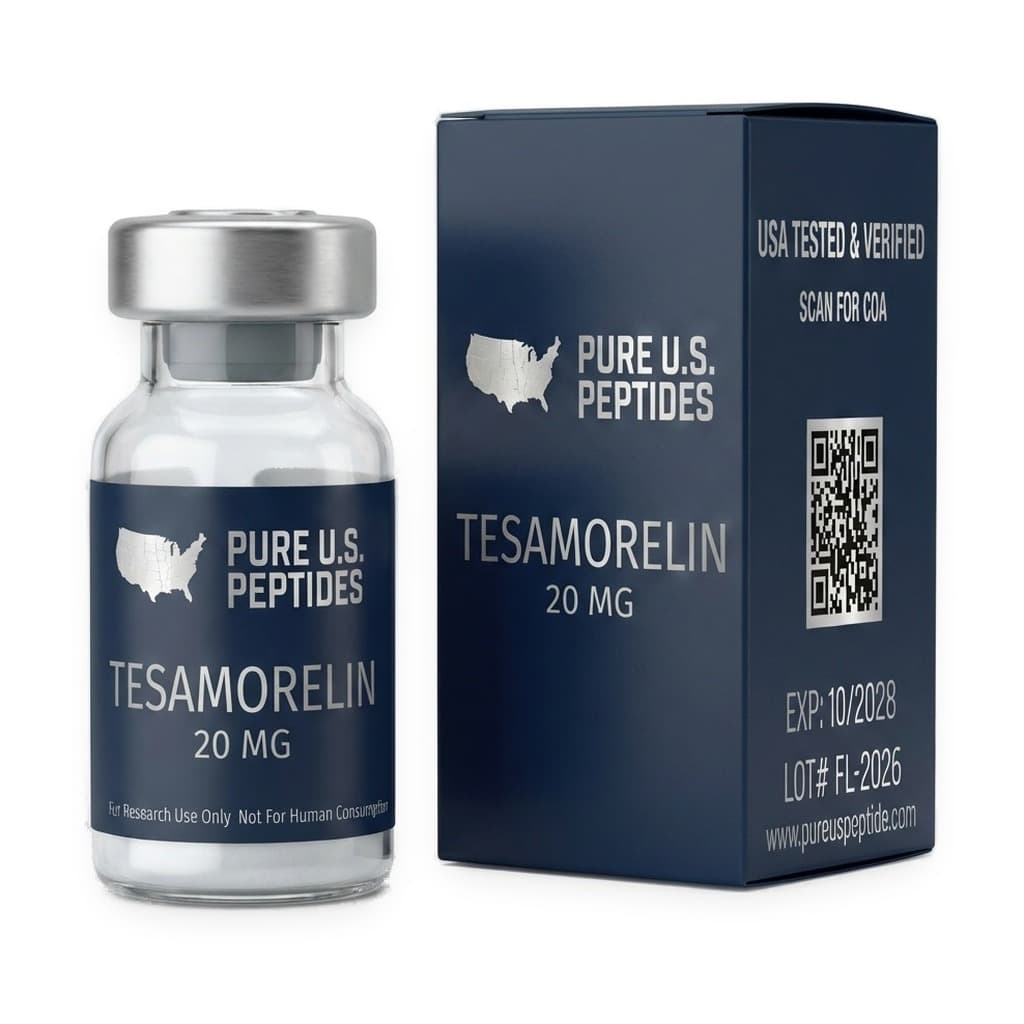
Tesamorelin
20mg