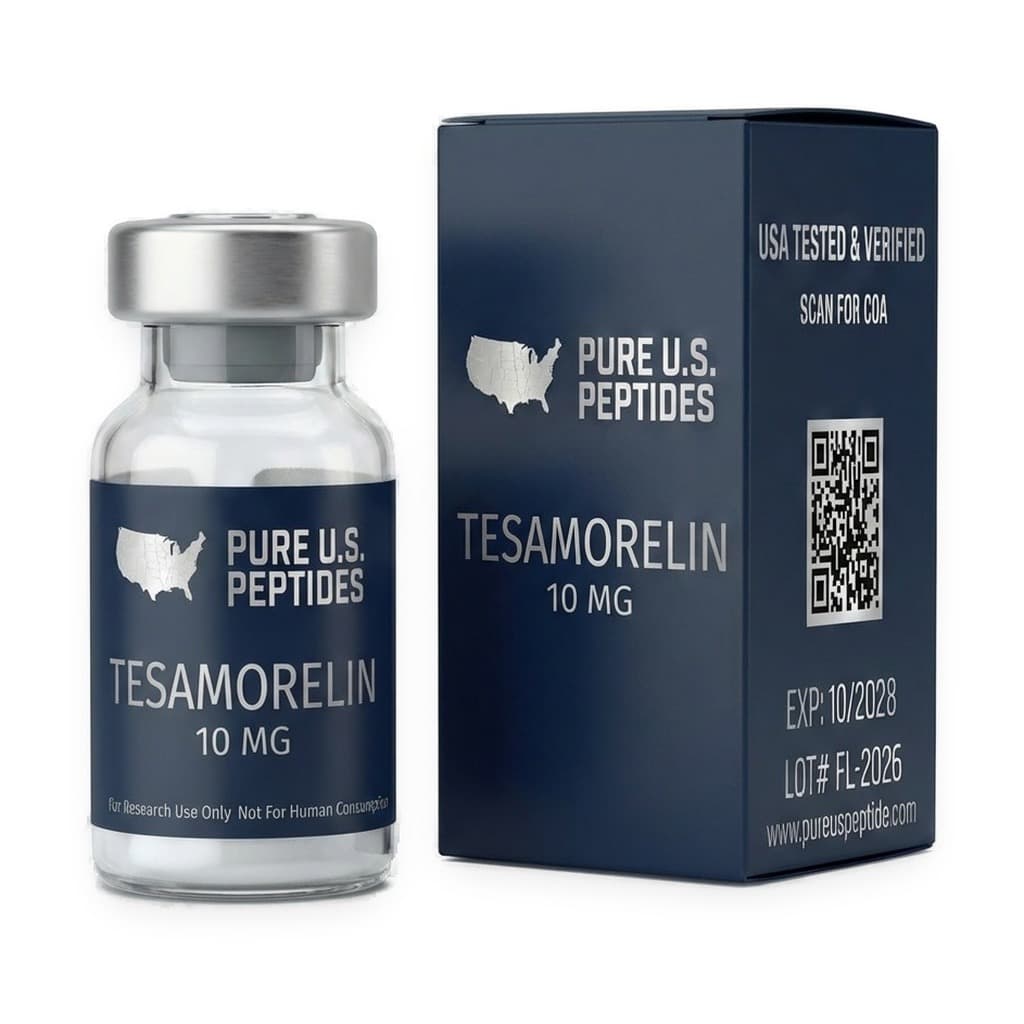
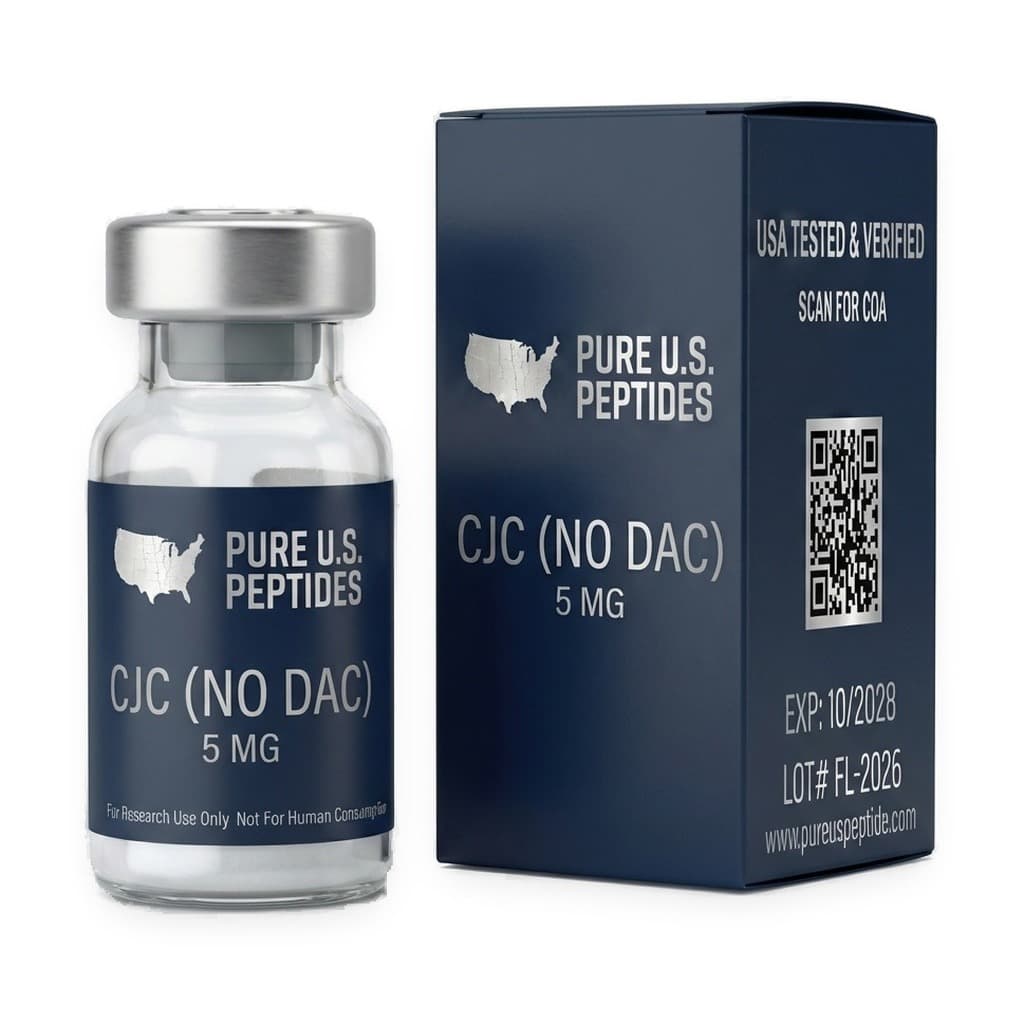
CJC (no DAC) 5mg
In Stock & Ready to Ship from USA
FREE shipping on every U.S. order
Secure checkout via encrypted payment processor


 +2.9k
+2.9kResearch Use Only
These products are for laboratory research only and not intended for medical use. They are not FDA-approved to diagnose, treat, cure, or prevent any disease. By purchasing, you certify they will be used solely for research and not for human or animal consumption.
Research Summary
16 PubMed CitationsResearch Overview CJC-1295 (no DAC), frequently referred to in the scientific literature as Modified GRF (1-29) or Mod GRF 1-29, is a synthetic peptide analog of endogenous growth hormone-releasing hormone (GHRH). It is derived from the first 29 amino acids of the native 44-amino acid GHRH molecule produced in the hypothalamus, representing the biologically active fragment responsible for stimulating growth hormone (GH) release from the anterior pituitary gland.[1][2] The peptide was originally developed by ConjuChem Biotechnologies Inc. (Montreal, Canada) as part of the CJC-1295 drug development program, where the tetrasubstituted core peptide served as the precursor to the long-acting DAC-conjugated variant.[4] The term "tetrasubstituted" refers to four strategic amino acid substitutions in the native GHRH(1-29) sequence: D-Alanine at position 2, Glutamine at position 8, Alanine at position 15, and Leucine at position 27.[2][3] Each substitution serves a specific purpose: position 2 (D-Ala) prevents DPP-4 enzymatic cleavage, position 8 (Gln) reduces...
CJC (no DAC) — Research Data at a Glance
| Property | Value |
|---|---|
| PubMed Citations Referenced | 16 |
| Contributing Researchers | 3 |
| Storage Conditions | Store lyophilized at -20 °C (long-term) or 2–8 °C (short-term), sealed, away from light. |
| Purity Standard | Certificate pending |
| Research Use Only | Not for human consumption. RUO only. |
Compare CJC (no DAC) with Other Peptides
Research guide
What is CJC (no DAC)? Read the full research guideOverview
Research Overview
CJC-1295 (no DAC), frequently referred to in the scientific literature as Modified GRF (1-29) or Mod GRF 1-29, is a synthetic peptide analog of endogenous growth hormone-releasing hormone (GHRH). It is derived from the first 29 amino acids of the native 44-amino acid GHRH molecule produced in the hypothalamus, representing the biologically active fragment responsible for stimulating growth hormone (GH) release from the anterior pituitary gland.[1][2] The peptide was originally developed by ConjuChem Biotechnologies Inc. (Montreal, Canada) as part of the CJC-1295 drug development program, where the tetrasubstituted core peptide served as the precursor to the long-acting DAC-conjugated variant.[4]
The term "tetrasubstituted" refers to four strategic amino acid substitutions in the native GHRH(1-29) sequence: D-Alanine at position 2, Glutamine at position 8, Alanine at position 15, and Leucine at position 27.[2][3] Each substitution serves a specific purpose: position 2 (D-Ala) prevents DPP-4 enzymatic cleavage, position 8 (Gln) reduces asparagine rearrangement or amide hydrolysis to aspartic acid, position 15 (Ala) enhances bioactivity, and position 27 (Leu) prevents methionine oxidation. These modifications collectively extend the half-life from the mere minutes characteristic of native GHRH to approximately 30 minutes for CJC-1295 (no DAC), dramatically improving bioavailability while preserving receptor binding characteristics.[1][5]
The "no DAC" designation is critically important for researchers to understand. CJC-1295 with DAC (Drug Affinity Complex) contains an N-epsilon-3-maleimidopropionyl-lysine linker that covalently binds to serum albumin, extending the half-life to 6–8 days and creating continuous, non-physiological GH stimulation.[4][8] In contrast, CJC-1295 (no DAC) lacks this conjugation entirely, producing pulsatile GH release that mimics the body's natural circadian rhythm. Pulsatile clearance is the variable studied in relation to GHRH-receptor desensitization (downregulation).[5][15] The FDA, in its December 2024 Pharmacy Compounding Advisory Committee briefing, explicitly noted that many studies cited under the name "CJC-1295" actually utilized the DAC variant, and that no published human clinical trials or preclinical efficacy studies exist specifically for CJC-1295 without DAC.[9]
Forensic and analytical chemistry studies by Henninge et al. (2010) and Hartvig et al. (2014) have confirmed that products marketed as "CJC-1295" on the grey market frequently contain the no-DAC variant (Modified GRF 1-29) rather than the genuine CJC-1295 with DAC, underscoring the importance of precise nomenclature and rigorous analytical verification using RP-HPLC and LC-MS/MS.[1][3][13]
Mechanism of Action
Mechanism of Action
CJC-1295 (no DAC) functions as a selective GHRH receptor agonist that binds to growth hormone-releasing hormone receptors (GHRHr) on somatotroph cells in the anterior pituitary gland, initiating a cAMP-dependent signaling cascade that stimulates growth hormone (GH) gene transcription, synthesis, and pulsatile secretion.[7][8]
Primary Receptor Target & Binding Characteristics
| Property | Detail | Evidence |
|---|---|---|
| Primary Target | Growth Hormone-Releasing Hormone Receptor (GHRHr) on anterior pituitary somatotrophs | Teichman et al. (2006); Alba et al. (2006)[8] |
| Receptor Class | Class B1 (secretin family) G protein-coupled receptor (GPCR) | Established GHRH receptor pharmacology[7] |
| Binding Affinity | High affinity; mimics native GHRH structure with enhanced stability from tetrasubstitution | Jetté et al. (2005)[4] |
| Binding Reversibility | Reversible binding; crucial for maintaining physiological balance and preventing GH axis overstimulation | Pharmacokinetic profile[5] |
| Half-Life | ~30 minutes (vs. minutes for native GHRH; vs. 6–8 days for CJC-1295 with DAC) | Soule et al. (1994); Henninge et al. (2010)[2][1] |
| Selectivity | Highly selective for GHRHr on pituitary somatotrophs; possible low-level cross-reactivity within the secretin receptor family | 86% homology with endogenous GHRH[7] |
| DPP-4 Resistance | D-Alanine at position 2 prevents dipeptidyl peptidase-4 cleavage that rapidly degrades native GHRH | Jetté et al. (2005); Soule et al. (1994)[4][2] |
Downstream Signaling Cascade
| Step | Event | Molecular Detail |
|---|---|---|
| 1. Receptor Binding | CJC-1295 (no DAC) binds GHRHr on somatotroph cell surface | High-affinity, reversible "lock-and-key" interaction mimicking native GHRH[7] |
| 2. G-Protein Activation | Ligand-receptor interaction activates stimulatory G-proteins (Gs) | Gsα subunit dissociates and activates downstream effectors[7] |
| 3. cAMP Production | Gs activates adenylyl cyclase; ATP is converted to cyclic AMP (cAMP) | Intracellular cAMP levels increase significantly (dose-dependent)[7][14] |
| 4. PKA Activation | Elevated cAMP activates Protein Kinase A (PKA) phosphorylation cascades | PKA phosphorylates transcription factors including CREB[7] |
| 5. GH Gene Transcription | PKA cascade stimulates GH gene transcription and protein synthesis in somatotrophs | Increased GH mRNA and total pituitary RNA[7][8] |
| 6. Pulsatile GH Secretion | GH is released in a physiological pulse from anterior pituitary | ~30 min half-life produces pulsatile (not continuous) GH release[5][15] |
| 7. IGF-1 Stimulation | Released GH stimulates the liver to produce Insulin-like Growth Factor-1 (IGF-1) | GH/IGF-1 axis activation drives downstream anabolic effects[8] |
Alternative Signaling Pathways
While the Gs/cAMP/PKA cascade is the primary signaling pathway, CJC-1295 (no DAC) may also engage the MAPK (mitogen-activated protein kinase) and PI3K/Akt pathways, which contribute to anabolic effects (protein synthesis via mTOR), anti-apoptotic signaling, and cellular proliferation.[7]
Cellular and Tissue-Level Effects
| Effect | Detail | Evidence |
|---|---|---|
| Somatotroph Proliferation | Stimulates proliferation of pituitary somatotroph cells; increases total pituitary RNA and GH mRNA | Alba et al. (2006) (DAC variant)[8] |
| GH/IGF-1 Axis | Stimulates pulsatile GH release; liver produces IGF-1; dose-dependent GH and IGF-1 elevation | Teichman et al. (2006) (DAC variant)[8] |
| DNA Damage (Pituitary) | Intense cAMP stimulation by CJC-1295 in mouse pituitary cells induced DNA damage (H2AX phosphorylation and comet assays) | Ben-Shlomo et al. (2020) (likely DAC variant)[14] |
Comparison: CJC-1295 No DAC vs. Related Compounds
| Parameter | CJC-1295 No DAC (Mod GRF 1-29) | CJC-1295 With DAC | Native GHRH(1-29) / Sermorelin |
|---|---|---|---|
| Half-Life | ~30 minutes | 6–8 days | Minutes |
| GH Release Pattern | Pulsatile (physiological) | Continuous (non-physiological) | Pulsatile (very brief) |
| DPP-4 Resistance | Yes (D-Ala² substitution) | Yes (D-Ala² substitution) | No (rapidly cleaved) |
| Albumin Binding | None | Covalent (via MPA-Lys linker) | None |
| Receptor Desensitization Risk | Low (pulsatile clearance) | Higher (chronic stimulation) | Low (too brief to cause) |
| Clinical Trials | None identified for this specific compound | Phase I/II completed (Teichman 2006; Ionescu 2006) | FDA-approved (as Sermorelin, discontinued) |
Research Applications
Research Applications
CJC-1295 (no DAC) / Modified GRF(1-29) is a tetrasubstituted GHRH(1-29) analog. FDA's December 2024 PCAC briefing identified no published clinical or preclinical efficacy studies for this specific substance; published work is analytical/forensic (Henninge 2010; Hartvig 2014).[9][1][3]
Analytical & Forensic Applications
CJC-1295 (no DAC) has been a subject of forensic and anti-doping research. Henninge et al. (2010) and Hartvig et al. (2014) developed LC-MS/MS methods to identify Modified GRF 1-29 in seized pharmaceutical preparations, confirming its widespread distribution in the grey market. These analytical methods also serve as the basis for WADA anti-doping testing protocols.[1][3][13]
Biochemical Characteristics
| Property | Value |
|---|---|
| Molecular Formula | C₁₅₂H₂₅₂N₄₄O₄₂ |
| Molecular Weight | 3367.95 g/mol |
| CAS Number | 863288-34-0 |
| PubChem CID | 56841945 |
| Sequence (1-Letter) | Y-a-D-A-I-F-T-Q-S-Y-R-K-V-L-A-Q-L-S-A-R-K-L-L-Q-D-I-L-S-R-NH₂ (a = D-Alanine) |
| Sequence (3-Letter) | Tyr-D-Ala-Asp-Ala-Ile-Phe-Thr-Gln-Ser-Tyr-Arg-Lys-Val-Leu-Ala-Gln-Leu-Ser-Ala-Arg-Lys-Leu-Leu-Gln-Asp-Ile-Leu-Ser-Arg-NH₂ |
| Structure | 29-amino acid linear peptide; tetrasubstituted analog of GHRH(1-29) with D-Ala², Gln⁸, Ala¹⁵, Leu²⁷ substitutions; C-terminal amide; lacks DAC (Drug Affinity Complex) moiety |
| Origin | Synthetic analog of human Growth Hormone-Releasing Hormone (GHRH) fragment 1-29, also known as Sermorelin. Developed by ConjuChem Biotechnologies Inc. (Montreal, Canada) |
| Classification | GHRH Analog / Growth Hormone Secretagogue / Research Peptide |
| Half-Life | Approximately 30 minutes (vs. 6–8 days for CJC-1295 with DAC; vs. minutes for native GHRH) |
| Bioavailability | DPP-4 resistant (D-Ala²); rapidly cleared from bloodstream |
Identifiers
| Synonyms | |
|---|---|
| Alternate CAS | |
| Monoisotopic Mass | |
| IUPAC Name |
Preclinical Research Summary
Research Summary
Clinical & Preclinical Data Status
According to a comprehensive FDA evaluation prepared for the Pharmacy Compounding Advisory Committee (December 2024), there are no published human clinical trials and no preclinical efficacy or toxicity studies specifically for CJC-1295 without DAC (Modified GRF 1-29). All prominent clinical trials associated with the name "CJC-1295" in medical literature were conducted using the DAC variant, which is pharmacokinetically distinct due to its albumin-binding Drug Affinity Complex.[9][10]
Key Studies on CJC-1295 (DAC Variant) — Often Misattributed to No-DAC
| Study | Model | Key Findings | Ref |
|---|---|---|---|
| Teichman et al. (2006) J Clin Endocrinol Metab | Healthy human adults; CJC-1295 with DAC | GH and IGF-1 endpoints and half-life reported. Note: DAC variant, not applicable to no-DAC. | [8] |
| Ionescu & Frohman (2006) J Clin Endocrinol Metab | Healthy human adults; CJC-1295 with DAC | Confirmed that pulsatile GH secretion persists during continuous stimulation by CJC-1295 (DAC). Note: DAC variant. | [15] |
| Jetté et al. (2005) Endocrinology | Sprague-Dawley rats; 1 µmol/kg | Described synthesis of tetrasubstituted GHRH core and DAC conjugation. Demonstrated GH elevation with half-life >72 hours. Note: DAC variant. | [4] |
| Alba et al. (2006) Am J Physiol | GHRH knockout mice; repeat-exposure design | Normalized growth; increased body length and lean mass; increased pituitary GH mRNA and somatotroph proliferation. Note: DAC variant. | [8] |
| Ben-Shlomo et al. (2020) J Clin Invest | C57BL/6 mice and primary pituitary cultures; 10–50 ng/mL in vitro | Intense cAMP stimulation induced DNA damage in somatotrophs (H2AX phosphorylation, comet assays). Increased GH levels and pituitary weight in vivo. Note: Likely DAC variant per FDA assessment. | [14] |
Studies Specific to CJC-1295 No DAC (Analytical/Forensic Only)
| Study | Context | Key Findings | Ref |
|---|---|---|---|
| Henninge et al. (2010) Drug Test Anal | Norwegian Doping Control Laboratory; seized pharmaceutical preparations | Identified Modified GRF 1-29 (CJC-1295 without DAC) in seized products using mass spectrometry. Confirmed widespread distribution of no-DAC variant mislabeled as CJC-1295. | [1] |
| Hartvig et al. (2014) Scand J Forensic Sci | Danish authorities; doping compounds confiscated 2007–2013 | Identified CJC-1295 (no DAC) among confiscated peptide preparations. No therapeutic efficacy or safety data generated. | [3] |
| Fabresse et al. (2017) Toxicol Anal Clin | LC-HRMS/MS identification of CJC-1295 analogs | Developed high-resolution mass spectrometric methods for identifying CJC-1295 peptide analogs in analytical chemistry settings. | [13] |
FDA Assessment Summary (December 2024)
| Category | FDA Finding for CJC-1295 No DAC |
|---|---|
| Clinical Trials | None identified. No Phase I, II, or III trials for CJC-1295 (free base) or CJC-1295 acetate.[9] |
| Preclinical Pharmacology | None identified. No nonclinical pharmacological studies for this specific substance.[9] |
| Preclinical Toxicity | None identified. No acute toxicity, repeat-dose toxicity, genotoxicity, developmental/reproductive toxicity, or carcinogenicity studies.[9] |
| Safety Profile | Unknown in humans. Potential risks include immunogenicity and local reactions based on peptide characteristics.[9] |
| Regulatory Classification | Category 2. Significant safety risks or insufficient evidence; restricted from pharmacy compounding.[9][10] |
Safety Considerations
| Parameter | Finding |
|---|---|
| Clinical Safety Data | No submitted or identified clinical safety studies for CJC-1295 (free base) or acetate[9] |
| Preclinical Toxicity Data | No nonclinical toxicity studies (acute, repeat-dose, genotoxicity) identified[9] |
| Immunogenicity | Theoretical risk of antibody formation; 86% homology with endogenous GHRH[9] |
| DAC Variant Safety Note | CJC-1295 with DAC was discontinued during Phase 2 trials after a subject death (attributed to underlying coronary artery disease, not the drug); no such event linked to the no-DAC variant[7] |
Important Disclaimer
This product is sold strictly for in-vitro research and laboratory use only. The products offered on this website are furnished for in-vitro studies only. In-vitro studies (Latin: in glass) are performed outside of the body. These products are not medicines or drugs and have not been approved by the FDA to prevent, treat or cure any medical condition, ailment or disease. Bodily introduction of any kind into humans or animals is strictly forbidden by law. For Laboratory Research Only. Not for human use, medical use, diagnostic use, or veterinary use.
About This Research Profile
This research profile was compiled from peer-reviewed sources, regulatory documents (FDA briefing materials), forensic analytical chemistry publications, and established GHRH pharmacology literature. All citations have been verified against PubMed, DOI, and official regulatory repositories. It is important to note that the FDA has identified no clinical trials or preclinical efficacy/toxicity studies specific to CJC-1295 without DAC; the research context presented here is drawn from the broader GHRH analog literature and the pharmacology of the GH/IGF-1 axis. ALL ARTICLES AND PRODUCT INFORMATION PROVIDED ON THIS WEBSITE ARE FOR INFORMATIONAL AND EDUCATIONAL PURPOSES ONLY.
Authors & Attribution
✍️ Article Author
Lucie Jetté, PhD
Lucie Jetté, PhD, was a lead researcher at ConjuChem Biotechnologies Inc. (Montreal, Canada), the company that developed the CJC-1295 peptide class. She and her team synthesized the tetrasubstituted growth hormone-releasing hormone (GHRH) analog known as Modified GRF (1-29), which serves as the core peptide for both CJC-1295 (no DAC) and CJC-1295 (with DAC). Her foundational 2005 paper in Endocrinology described the structural modifications (tetrasubstitution at positions 2, 8, 15, and 27) that grant the peptide resistance to DPP-4 enzymatic degradation, and characterized the Drug Affinity Complex (DAC) albumin-binding mechanism designed to extend the peptide's half-life. This work established the pharmacological foundation for all subsequent CJC-1295 research, including the clinical trials conducted by Teichman et al. (2006). Her key publication is "Human Growth Hormone-Releasing Factor (hGRF)1-29-Albumin Bioconjugates Activate the GRF Receptor on the Anterior Pituitary in Rats: Identification of CJC-1295 as a Long-Lasting GRF Analog" (2005, Endocrinology). Lucie Jetté is being referenced as one of the leading scientists involved in CJC-1295 (no DAC) research. In no way is this doctor/scientist endorsing or advocating the purchase, sale, or use of this product for any reason. There is no affiliation or relationship, implied or otherwise, between Pure US Peptide and this doctor.
View Full Researcher Profile →🎓 Scientific Journal Author
Lawrence A. Frohman, MD
Lawrence A. Frohman, MD (1935–2018), was a distinguished neuro-endocrinologist and one of the foremost authorities on growth hormone-releasing hormone (GHRH) physiology and pharmacology. He served as the Edmund F. Foley Professor and Chairman of the Department of Medicine at the University of Illinois College of Medicine in Chicago (1992–2001), and previously directed the Division of Endocrinology and Metabolism at the University of Cincinnati (1981–1992). His extensive career spanned foundational research on GHRH discovery, regulation, and clinical applications. As a senior investigator on the landmark Teichman et al. (2006) and Ionescu & Frohman (2006) clinical trials, he established the dose-dependent pharmacokinetic and pharmacodynamic profile of CJC-1295, demonstrating sustained GH and IGF-1 elevation in healthy adults. His key publications include "Prolonged stimulation of growth hormone (GH) and insulin-like growth factor I secretion by CJC-1295" (2006, J Clin Endocrinol Metab) and "Pulsatile secretion of growth hormone persists during continuous stimulation by CJC-1295" (2006, J Clin Endocrinol Metab). Lawrence A. Frohman is being referenced as one of the leading scientists involved in CJC-1295 (no DAC) research. In no way is this doctor/scientist endorsing or advocating the purchase, sale, or use of this product for any reason. There is no affiliation or relationship, implied or otherwise, between Pure US Peptide and this doctor.
View Full Researcher Profile →Lawrence A. Frohman, MD is being referenced as one of the leading scientists involved in the research and development of CJC (no DAC). In no way is this doctor/scientist endorsing or advocating the purchase, sale, or use of this product for any reason. There is no affiliation or relationship, implied or otherwise, between Pure US Peptide and this doctor. The purpose of citing the doctor is to acknowledge, recognize, and credit the exhaustive research and development efforts conducted by the scientists studying this peptide.
🔬 Contributing Researcher
Anat Ben-Shlomo, MD
Anat Ben-Shlomo, MD, is an endocrinologist and researcher at Cedars-Sinai Medical Center (Los Angeles, California) and a member of the Melmed Research Lab, one of the world's preeminent pituitary research groups. She earned her medical degree from Tel Aviv University and specializes in the study of genomic changes underlying the development and progression of pituitary tumors, particularly growth hormone-secreting somatotroph adenomas that lead to acromegaly. Her landmark 2020 study in The Journal of Clinical Investigation demonstrated that intense cAMP stimulation by CJC-1295 in mouse pituitary cells induced DNA damage, as measured by H2AX phosphorylation and comet assays. This work revealed a critical link between GHRH receptor-mediated secretory activity and cellular stress in somatotrophs, showing that somatic copy number alterations (SCNAs) rather than genetic mutations are hallmarks of these tumors. Her key publication is "DNA damage and growth hormone hypersecretion in pituitary somatotroph adenomas" (2020, The Journal of Clinical Investigation). Anat Ben-Shlomo is being referenced as one of the leading scientists involved in CJC-1295 (no DAC) research. In no way is this doctor/scientist endorsing or advocating the purchase, sale, or use of this product for any reason. There is no affiliation or relationship, implied or otherwise, between Pure US Peptide and this doctor.
View Full Researcher Profile →Anat Ben-Shlomo, MD is being referenced as one of the leading scientists involved in the research and development of CJC (no DAC). In no way is this doctor/scientist endorsing or advocating the purchase, sale, or use of this product for any reason. There is no affiliation or relationship, implied or otherwise, between Pure US Peptide and this doctor. The purpose of citing the doctor is to acknowledge, recognize, and credit the exhaustive research and development efforts conducted by the scientists studying this peptide.
Referenced Citations
Henninge J, Pepaj M, Hullstein I, Hemmersbach P. Identification of CJC-1295, a growth-hormone-releasing peptide, in an unknown pharmaceutical preparation. Drug Testing and Analysis, 2(11-12), 647-650, 2010.
DOISoule S, King JA, Millar RP. The Journal of Clinical Endocrinology and Metabolism, 79(4), 1208-1211, 1994.
DOIHartvig RA, Holm NB, Dalsgaard PW, Reitzel LA, Müller IB, Linnet K. Identification of peptide and protein doping related drug compounds confiscated in Denmark between 2007-2013. Scandinavian Journal of Forensic Science, 20(2), 42-49, 2014.
DOIJetté L, et al. Endocrinology, 146(7), 3052-3058, 2005.
DOILance VA, Murphy WA, Sueiras-Diaz J, Coy DH. Super-active analogs of growth hormone-releasing factor (1-29)-amide. Biochemical and Biophysical Research Communications, 119(1), 265-272, 1984.
DOIVan Hout MC, Hearne E. Netnography of Female Use of the Synthetic Growth Hormone CJC-1295: Pulses and Potions. Substance Use & Misuse, 51(1), 73-84, 2016.
PubMedSigalos JT, Pastuszak AW. Sexual Medicine Reviews, 6(1), 45-53, 2018.
PubMedTeichman SL, Neale A, Lawrence B, Gagnon C, Castaigne JP, Frohman LA. The Journal of Clinical Endocrinology & Metabolism, 91(3), 799-805, 2006.
DOIFood and Drug Administration. FDA Evaluation of CJC-1295 Related Bulk Drug Substances. FDA Briefing Document: Pharmacy Compounding Advisory Committee (PCAC) Meeting, December 4, 2024.
FDA.govFood and Drug Administration. Final Summary Minutes of the Pharmacy Compounding Advisory Committee Meeting. Center for Drug Evaluation and Research, December 4, 2024.
FDA.govWorld Anti-Doping Agency. The 2024 Prohibited List: International Standard. World Anti-Doping Code, 2024.
WADASinha DK, Balasubramanian A, Tatem AJ, Kovac JR, Pastuszak AW, Lipshultz LI. Translational Andrology and Urology, 9(Suppl 2), S149-S159, 2020.
PubMedFabresse N, Grassin-Delyle S, Etting I, Alvarez JC. Identification of a GHRH peptide analogue, the CJC-1295, using LC-HRMS/MS. Toxicologie Analytique et Clinique, 29(2), 205-211, 2017.
DOIBen-Shlomo A, et al. DNA damage and growth hormone hypersecretion in pituitary somatotroph adenomas. The Journal of Clinical Investigation, 130(11), 5738-5755, 2020.
SourceIonescu M, Frohman LA. Pulsatile secretion of growth hormone (GH) persists during continuous stimulation by CJC-1295, a long-acting GH-releasing hormone analog. The Journal of Clinical Endocrinology & Metabolism, 91(12), 4792-4797, 2006.
DOIMemdouh S, Gavrilović I, Ng K, Cowan D, Abbate V. Advances in the detection of growth hormone releasing hormone synthetic analogs. Drug Testing and Analysis, 13(11-12), 1871-1887, 2021.
DOIRUO Disclaimer
For Research Use Only (RUO). Not intended for human consumption, clinical use, or as a drug, food, cosmetic, or medical device. This product has not been evaluated by the FDA and is supplied solely for in-vitro laboratory research by qualified professionals.
Certificate of Analysis
Published certificates come from third-party laboratories. If this listing's certificate is still pending, the card below says so.
Latest Lab Report
Storage & Handling
Summary
Store lyophilized at -20 °C (long-term) or 2–8 °C (short-term), sealed, away from light.
Lyophilized Powder
Store at -20°C for long-term stability. The lyophilized form is stable at refrigerated temperatures (2–8°C) or even room temperature for shorter periods but should be kept sealed, away from moisture and direct light for optimal preservation.
Handling
White to off-white lyophilized powder. Published certificates report HPLC purity and endotoxin where tested. The tetrasubstitution modifications provide resistance to DPP-4 enzymatic degradation, extending functional half-life to approximately 30 minutes from the mere minutes characteristic of native GHRH.
“All prominent clinical trials associated with the name "CJC-1295" in medical literature were conducted using the DAC variant , which is pharmacokinetically distinct due to its albumin-binding Drug Affinity Complex.”
Related Research Compounds
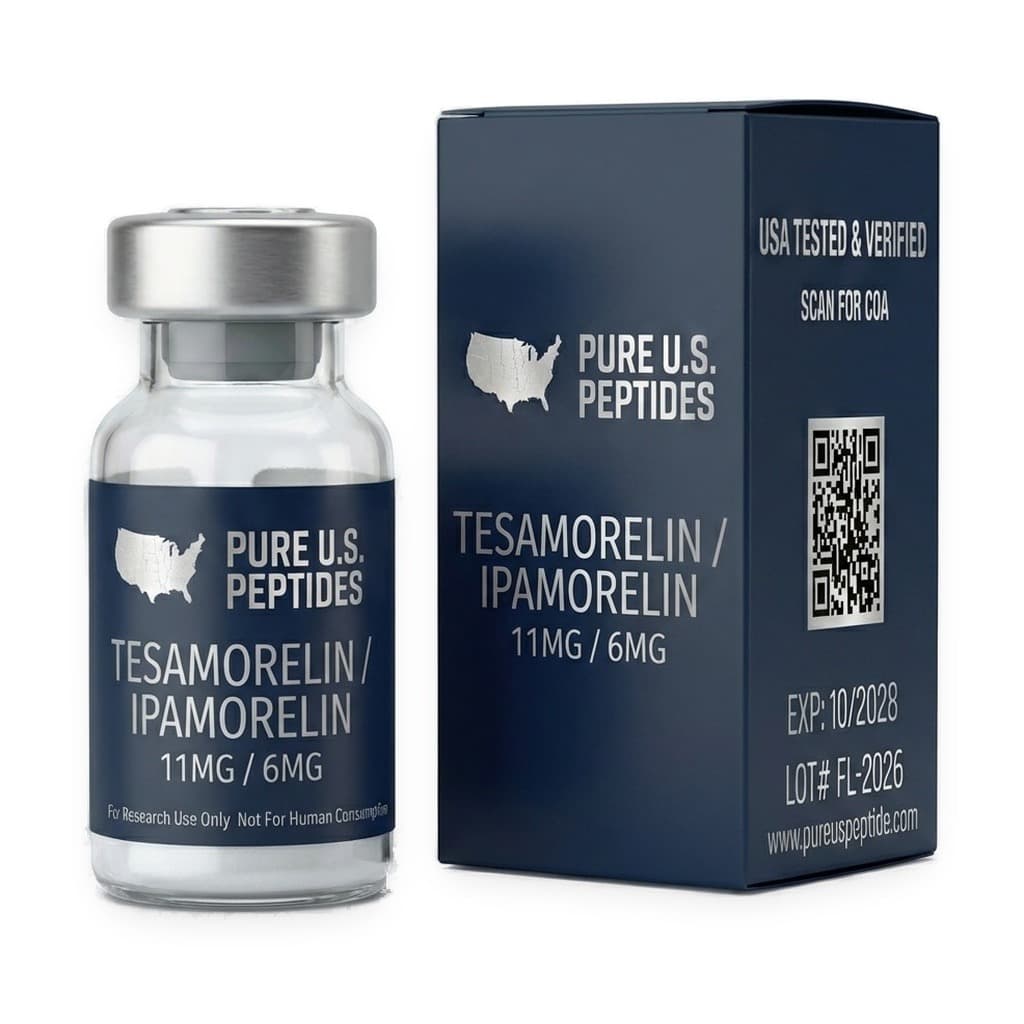
Tesamorelin/Ipamorelin Blend 11mg/6mg
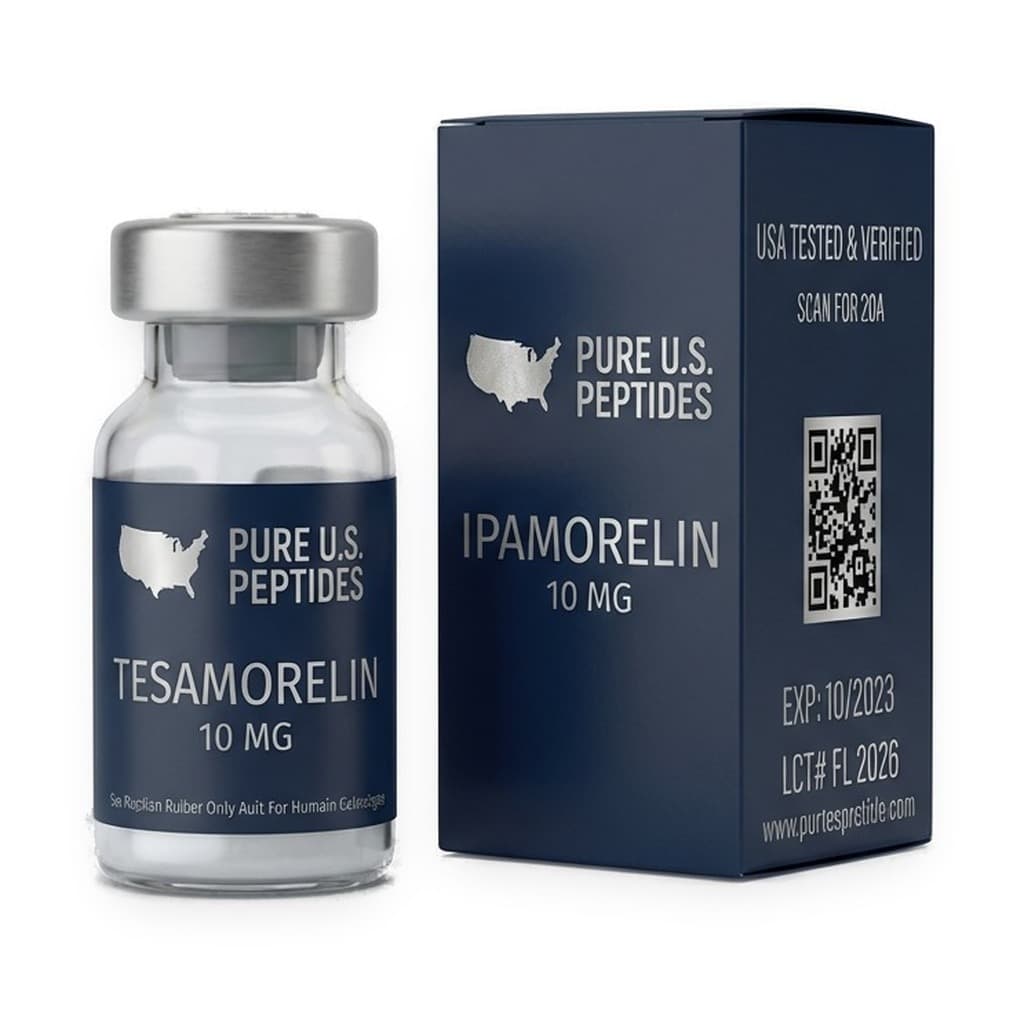
Tesamorelin 10mg + Ipamorelin 10mg Bundle
Tesamorelin
20mg