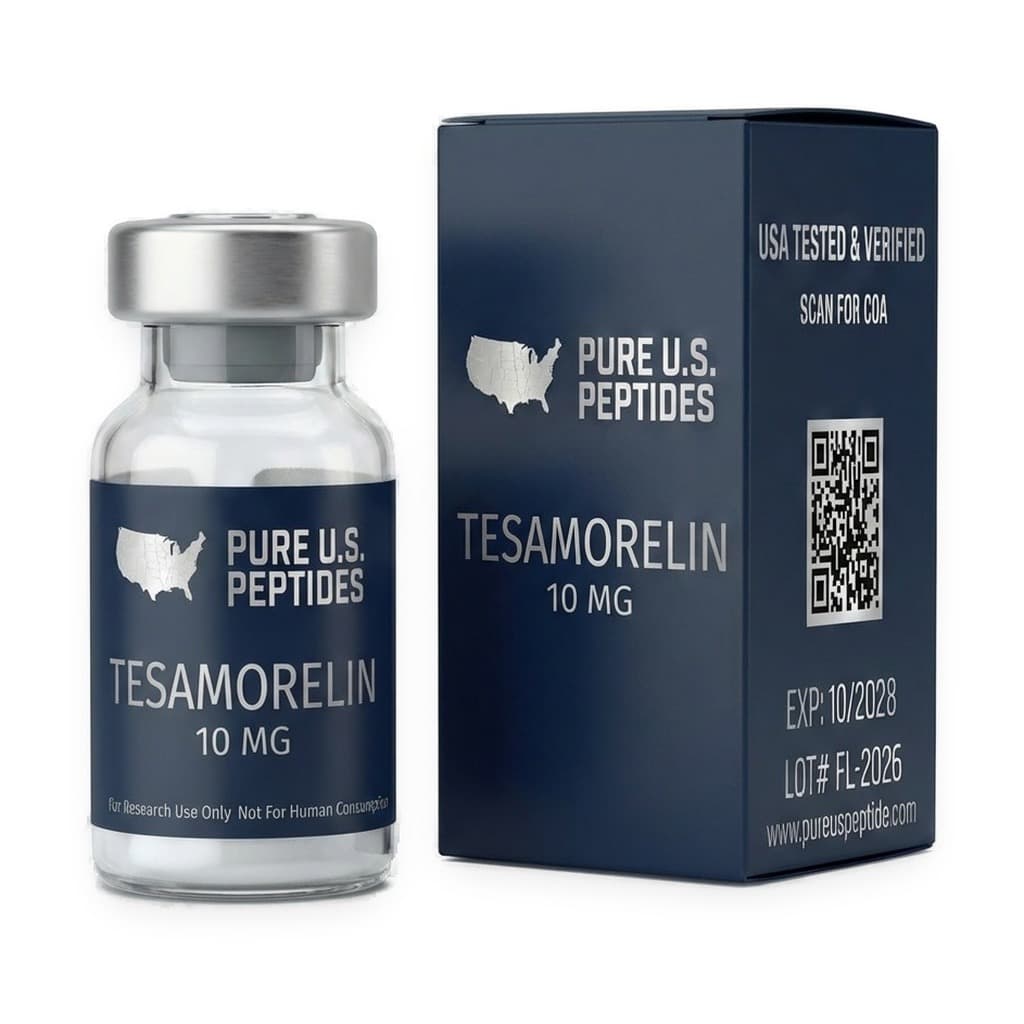
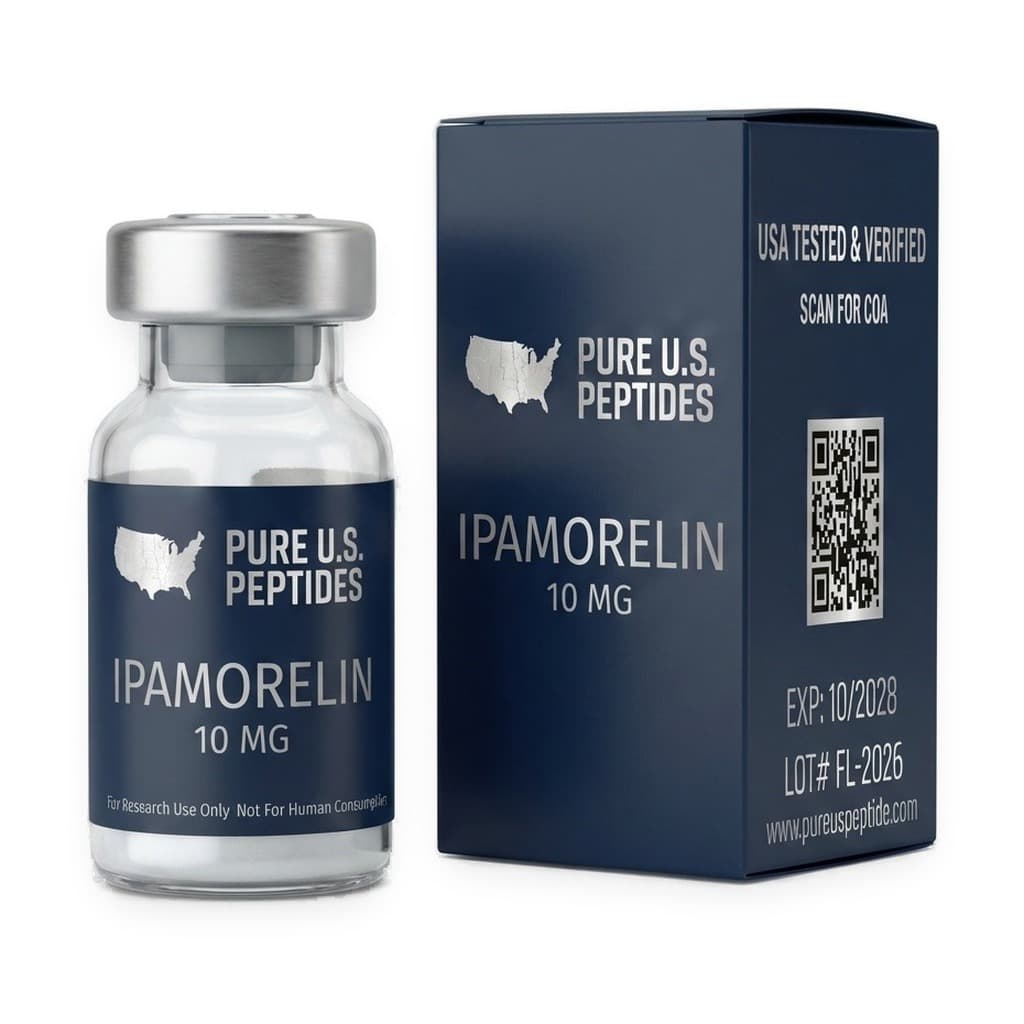
Ipamorelin 10mg
In Stock & Ready to Ship from USA
FREE shipping on every U.S. order
Secure checkout via encrypted payment processor


 +2.9k
+2.9kResearch Use Only
These products are for laboratory research only and not intended for medical use. They are not FDA-approved to diagnose, treat, cure, or prevent any disease. By purchasing, you certify they will be used solely for research and not for human or animal consumption.
Research Summary
21 PubMed CitationsResearch Overview Ipamorelin (NNC 26-0161) is a synthetic pentapeptide growth hormone secretagogue with the sequence Aib-His-D-2-Nal-D-Phe-Lys-NH₂, developed by Novo Nordisk in the mid-1990s by systematic modification of GHRP-1. It acts as a highly selective agonist of the GHS-R1a receptor (ghrelin receptor), stimulating potent, pulsatile growth hormone release without affecting ACTH, cortisol, FSH, LH, TSH, or prolactin — even at high multiples of active concentrations.[1][2] Ipamorelin research spans 8+ indication categories including selective GH secretion, postoperative ileus, bone growth, body composition, insulin secretion, pain modulation, and cancer cachexia. A Phase II clinical trial for POI (n=114, NCT00672074) failed to reach statistical significance, and clinical development was discontinued.[6][4] Key distinguishing features include: (1) first selective GHS with GHRH-like specificity, (2) no somatotroph desensitization in chronic rodent studies, (3) linear pharmacokinetics in humans (T½ ~2h), and (4) GH-independent adipogenic effects.[1][9] Structurally, ipamorelin is a non-natural pentapeptide built around the Aib-His-D-2-Nal-D-Phe-Lys-NH₂ scaffold, in which...
Ipamorelin — Research Data at a Glance
| Property | Value |
|---|---|
| PubMed Citations Referenced | 21 |
| Contributing Researchers | 3 |
| Storage Conditions | Lyophilized: -18°C to -20°C (stable several years); protect from light. |
| Purity Standard | 98.58% HPLC (published certificate) |
| Research Use Only | Not for human consumption. RUO only. |
Compare Ipamorelin with Other Peptides
Research guide
What is Ipamorelin? Read the full research guideOverview
Research Overview
Ipamorelin (NNC 26-0161) is a synthetic pentapeptide growth hormone secretagogue with the sequence Aib-His-D-2-Nal-D-Phe-Lys-NH₂, developed by Novo Nordisk in the mid-1990s by systematic modification of GHRP-1. It acts as a highly selective agonist of the GHS-R1a receptor (ghrelin receptor), stimulating potent, pulsatile growth hormone release without affecting ACTH, cortisol, FSH, LH, TSH, or prolactin — even at high multiples of active concentrations.[1][2]
Ipamorelin research spans 8+ indication categories including selective GH secretion, postoperative ileus, bone growth, body composition, insulin secretion, pain modulation, and cancer cachexia. A Phase II clinical trial for POI (n=114, NCT00672074) failed to reach statistical significance, and clinical development was discontinued.[6][4]
Key distinguishing features include: (1) first selective GHS with GHRH-like specificity, (2) no somatotroph desensitization in chronic rodent studies, (3) linear pharmacokinetics in humans (T½ ~2h), and (4) GH-independent adipogenic effects.[1][9]
Structurally, ipamorelin is a non-natural pentapeptide built around the Aib-His-D-2-Nal-D-Phe-Lys-NH₂ scaffold, in which two D-amino acids and one α-aminoisobutyric acid residue confer resistance to enzymatic degradation. Raun and colleagues (1998) reported the original pharmacological characterization, demonstrating in vitro EC₅₀ values of 1.3 ± 0.4 nmol/L for GH release in primary rat pituitary cell cultures and in vivo ED₅₀ values of approximately 80 nmol/kg in rats and 2.3 nmol/kg in swine.[1] The compound was originally developed as a candidate for postoperative ileus and as a tool molecule for studying the ghrelin/GHS-R1a axis.[4]
Ipamorelin sits within a broader family of growth hormone secretagogues that includes CJC-1295 (GHRH analog), sermorelin (GHRH 1–29), and tesamorelin (stabilized GHRH analog). Among these, ipamorelin is unique in acting on the GHS-R1a (ghrelin) receptor rather than the GHRH receptor, a complementary receptor pathway; co-stimulation of GHS-R1a and GHRH-R has been studied in pituitary-cell and rodent models.[1][15] Phase I human pharmacokinetic data (Gobburu et al., 1999) established linear PK with a terminal half-life of ~2 hours and SC₅₀ of 214 nmol/L.[2]
Mechanism of Action
Mechanism of Action
Ipamorelin activates the GHS-R1a (ghrelin receptor) on pituitary somatotroph cells with an in vitro EC₅₀ of 1.3 ± 0.4 nmol/L and in vivo ED₅₀ of 2.3 nmol/kg (swine). Binding triggers phospholipase C (PLC) activation via Gα₁₁/q → IP3 → intracellular Ca²⁺ release → GH vesicle exocytosis — a pathway distinct from GHRH's cAMP signaling.[1][2]
Receptor & Signaling Profile
| Target | Action | Downstream Effect |
|---|---|---|
| GHS-R1a (Ghrelin Receptor) | Selective agonist | PLC → IP3 → Ca²⁺ → GH vesicle exocytosis |
| cAMP (Synergistic) | Enhances pre-stimulated adenylyl cyclase | Co-stimulation with GHRH studied in pituitary-cell models |
| Enteric Cholinergic Neurons | Activates excitatory neurons (atropine/TTX-sensitive) | Accelerates gastric motility and emptying |
Ipamorelin's selectivity is exceptional: it does NOT stimulate ACTH, cortisol, FSH, LH, prolactin, or TSH — even at 200× the ED₅₀. In chronic rodent studies somatotroph desensitization was not observed, unlike GHRH which induces homologous down-regulation.[1][7]
Published human PK: linear pharmacokinetics, half-life ~2 h, SC₅₀ 214 nmol/L.[2]
At the cellular level, the PLC/Ca²⁺ cascade engaged by ipamorelin diverges from the cAMP/PKA cascade activated by GHRH. Co-stimulation of GHS-R1a and GHRH-R has been studied in pituitary-cell and rodent models, where convergent activation of multiple second-messenger systems on the same secretory cell is examined.[1][2] The PLC pathway also engages diacylglycerol/PKC signaling that contributes to GH gene transcription via CREB phosphorylation.[7]
Outside the pituitary, ipamorelin engages GHS-R1a expressed on enteric cholinergic neurons, where it activates atropine- and tetrodotoxin-sensitive excitatory pathways that accelerate gastric and colonic transit — the mechanistic basis for its evaluation in postoperative ileus models.[4][5] The compound also binds peripheral ghrelin receptors on enteric afferent neurons, attenuating visceromotor responses to noxious distension in rat models — an effect blocked by selective ghrelin receptor antagonists, confirming receptor specificity.[17]
vs. Related Compounds
| Feature | Ipamorelin | GHRP-6 / GHRP-2 | GHRH |
|---|---|---|---|
| Selectivity | HIGH — GH only | LOW — GH + ACTH + cortisol + prolactin | Selective for GH |
| Desensitization | NO | Partial | YES (homologous) |
| Primary Signaling | PLC / Ca²⁺ | PLC / Ca²⁺ | cAMP |
| Half-Life (Human) | ~2 hours | Shorter (5× faster clearance) | Minutes |
Research Applications
Research Applications
Ipamorelin research spans 8+ indication categories across GH physiology, GI motility, musculoskeletal biology, and pain. The compound is widely deployed in preclinical pharmacology as a selective GHS-R1a probe, and historical clinical evaluation has published human pharmacokinetic and safety data.[1][2]
- Selective GH Secretion — Pulsatile GH release without ACTH/cortisol effects; potency comparable to GHRP-6 but with GHRH-like selectivity. Used as the prototypical selective GHS in receptor pharmacology research.[1]
- Postoperative Ileus (POI) — Accelerates gastric emptying via GHS-R1a on cholinergic neurons; reduces stomach retention to <25% (vs 78% vehicle) in rodent models. Phase II clinical trial in bowel-resection subjects failed to reach significance (median meal tolerance 25.3h vs 32.6h placebo, p=0.15).[4][6]
- Bone Growth & Metabolism — Dose-dependent longitudinal bone growth in adult female rats (42→52 µm/day, p<0.0001) over 15 days; increased tibial and vertebral bone mineral content in long-term studies.[3][8]
- Glucocorticoid-Induced Catabolism — In rats receiving methylprednisolone, ipamorelin (100 µg/kg, 3 months) increased periosteal bone formation rate 4-fold and increased maximum tetanic muscle tension, suggesting an osteo-anabolic and myogenic role in steroid-myopathy research models.[12]
- Body Composition & Adiposity — In GH-deficient (lit/lit) mice, 250 µg/kg for 2–9 weeks increased body weight by 15–17% and increased adiposity even in the absence of GH signaling, demonstrating GH-independent adipogenic effects mediated by central ghrelin pathways.[9]
- Insulin Secretion — In normal and diabetic rat pancreatic tissue (10⁻¹² to 10⁻⁶ M in vitro), ipamorelin produced significant insulin release (p<0.04) via calcium channel activation and adrenergic receptor pathways, supporting use as a tool molecule in pancreatic islet research.[10]
- Pain Modulation / Nociception — In rat visceral hypersensitivity models, 0.01–1.0 mg/kg produced dose-dependent reductions in visceromotor response that were blocked by selective ghrelin receptor antagonists, confirming peripheral GHS-R1a involvement in nociceptive signaling.[17]
- Cancer Cachexia / Emesis — In ferrets receiving cisplatin chemotherapy, a cisplatin-induced body-weight endpoint was reported, confirming activity in a non-rodent wasting model and establishing a research basis for ghrelin-mimetic interventions in chemotherapy-induced cachexia paradigms.[14]
Comparative research with structurally related compounds — including sermorelin, CJC-1295, and tesamorelin — has examined whether GHS-R1a vs GHRH-receptor stimulation produce different downstream metabolic, bone, and body-composition signatures. Co-stimulation of GHS-R1a and GHRH-R has been studied in pituitary-cell and rodent models, reflecting convergent activation of PLC/Ca²⁺ and cAMP/PKA cascades on shared somatotroph pools.[1][15]
Biochemical Characteristics
| Property | Value |
|---|---|
| Molecular Formula | C₃₈H₄₉N₉O₅ |
| Molecular Weight | 711.85 Da |
| CAS Number | 170851-70-4 |
| PubChem CID | 9831659 |
| Sequence (1-Letter) | XHXFK (X = non-proteinogenic amino acids) |
| Sequence (3-Letter) | Aib-His-D-2-Nal-D-Phe-Lys-NH₂ |
| Structure | Linear pentapeptide; contains Aib (α-methylalanine) and D-2-naphthylalanine; C-terminal amide |
| InChI Key | NEHWBYHLYZGBNO-BVEPWEIPSA-N |
| Origin | Synthetic — derived from GHRP-1 (Novo Nordisk) |
| Classification | Growth Hormone Secretagogue / Ghrelin Mimetic / Research Peptide |
| Plasma Half-Life | ~2 hours (human); ~30–60 min (rat) |
Identifiers
| IUPAC Name | |
|---|---|
| SMILES | |
| UNII Code | |
| Monoisotopic Mass | |
| Solubility |
Preclinical Research Summary
Preclinical Research Summary
Key Preclinical Studies
| Study | Model | Key Findings | Ref |
|---|---|---|---|
| Raun et al. (1998) | Rats/Swine | ED₅₀ = 80 nmol/kg (rats), 2.3 nmol/kg (swine); NO ACTH/cortisol even at >200× ED₅₀; first selective GHS | [1] |
| Johansen et al. (1999) | Adult female rats — 15-day design | Longitudinal bone growth 42→52 µm/day (p<0.0001); dose-dependent | [3] |
| Andersen et al. (2001) | Rats — GC-induced catabolism — 100 µg/kg × 3mo | Periosteal bone formation rate increased 4-fold; increased maximum tetanic muscle tension | [12] |
| Venkova et al. (2009) | Rats with POI — 0.014–1.0 mg/kg | Gastric retention reduced to <25% (vs 78% vehicle, p<0.05); accelerated colonic transit | [4] |
| Svensson et al. (2000) | Female rats — 0.5 mg/kg/day × 12 wk | Increased tibial and vertebral BMC; bone dimensions increased (not density) | [8] |
| Jiménez-Reina et al. (2002) | Female Wistar rats — 100 µg/kg × 21d | 67% increase in basal GH release; NO somatotroph desensitization; significant weight gain | [7] |
| Lall et al. (2001) | GH-deficient (lit/lit) mice — 250 µg/kg × 2–9 wk | Body weight +15–17%; increased adiposity via GH-independent mechanism | [9] |
| Adeghate & Ponery (2004) | Normal/diabetic rat tissue — 10⁻¹² to 10⁻⁶ M in vitro | Significant insulin release (p<0.04); via calcium channels and adrenergic pathways | [10] |
| Mohammadi et al. (2020) | Rat visceral hypersensitivity — 0.01–1.0 mg/kg | Dose-dependent reduction in visceromotor response; blocked by ghrelin receptor antagonist | [17] |
| Lu et al. (2024) | Ferrets — cisplatin-induced wasting | Body-weight endpoint reported; non-rodent cachexia model | [14] |
Clinical Trials
| Trial | Population | Intervention | Key Results | Ref |
|---|---|---|---|---|
| Phase I PK/PD | n=48 healthy males | 5 dose levels (published PK design) | Linear kinetics; T½ ~2h; SC₅₀ = 214 nmol/L | [2] |
| Phase II POI (NCT00672074) | n=114 bowel resection subjects | Randomized, placebo-controlled | Meal-tolerance endpoint; primary endpoint not met | [6] |
Safety Summary
| Parameter | Finding |
|---|---|
| Selectivity | No ACTH, cortisol, FSH, LH, PRL, or TSH stimulation — even at 200× ED₅₀ |
| Handling | Handle with standard laboratory PPE. Consult the SDS. |
| Receptor Pharmacology | Reverses morphine-induced GI slowing in rodent models; blocked by GHS receptor antagonists; not affected by GHRH antagonists |
| Pharmacokinetics | Renally excreted (60–80% unchanged in urine; rat/human PK literature) |
The products offered on this website are furnished for in-vitro studies only. In-vitro studies (Latin: in glass) are performed outside of the body. These products are not medicines or drugs and have not been approved by the FDA to prevent, treat or cure any medical condition, ailment or disease. Bodily introduction of any kind into humans or animals is strictly forbidden by law.
For Laboratory Research Only. Not for human use, medical use, diagnostic use, or veterinary use.
ALL ARTICLES AND PRODUCT INFORMATION PROVIDED ON THIS WEBSITE ARE FOR INFORMATIONAL AND EDUCATIONAL PURPOSES ONLY.
Authors & Attribution
✍️ Article Author
Kirsten Raun
Kirsten Raun is a researcher at Novo Nordisk (Health Care Discovery, Department of GH Biology). Raun was the lead researcher in the original characterization of Ipamorelin, identifying it as the first growth hormone secretagogue with high selectivity for GH release without significantly stimulating ACTH or cortisol — distinguishing it from all earlier GHS compounds including GHRP-6 and GHRP-2. Her foundational 1998 paper 'Ipamorelin, the first selective growth hormone secretagogue' in the European Journal of Endocrinology established the compound's pharmacological uniqueness. She also co-authored 'Highly Potent Growth Hormone Secretagogues: Hybrids of NN703 and Ipamorelin' (2001). Kirsten Raun is referenced as a leading scientist in Ipamorelin research. In no way is this scientist endorsing or advocating the purchase, sale, or use of this product for any reason. There is no affiliation or relationship, implied or otherwise, between Pure US Peptide and this scientist.
View Full Researcher Profile →🎓 Scientific Journal Author
Dr. Beverley Greenwood-Van Meerveld, Ph.D.
Dr. Beverley Greenwood-Van Meerveld is a Professor at the University of Oklahoma Health Sciences Center (Oklahoma Center for Neuroscience; Department of Physiology) and VA Medical Center. She conducted extensive research on the gastrointestinal applications of Ipamorelin, studying ipamorelin as a ghrelin-receptor agonist in rodent models of postoperative ileus (POI). Her work demonstrated that Ipamorelin accelerates gastric emptying via a mechanism involving cholinergic excitatory neurons (atropine- and TTX-sensitive). Key publications include 'Efficacy of ipamorelin, a novel ghrelin mimetic, in a rodent model of postoperative ileus' (JPET, 2009) and 'Efficacy of ipamorelin on gastric dysmotility in a rodent model of postoperative ileus' (J Exp Pharmacol, 2012). Beverley Greenwood-Van Meerveld is referenced as a leading scientist in Ipamorelin research. In no way is this doctor/scientist endorsing or advocating the purchase, sale, or use of this product for any reason. There is no affiliation or relationship, implied or otherwise, between Pure US Peptide and this doctor.
View Full Researcher Profile →Dr. Beverley Greenwood-Van Meerveld, Ph.D. is being referenced as one of the leading scientists involved in the research and development of Ipamorelin. In no way is this doctor/scientist endorsing or advocating the purchase, sale, or use of this product for any reason. There is no affiliation or relationship, implied or otherwise, between Pure US Peptide and this doctor. The purpose of citing the doctor is to acknowledge, recognize, and credit the exhaustive research and development efforts conducted by the scientists studying this peptide.
🔬 Contributing Researcher
Peter B. Johansen
Peter B. Johansen is a researcher at Novo Nordisk (Department of Pharmacological Research). Johansen's research focused on the pharmacokinetics of Ipamorelin, including absorption and bioavailability studies. He demonstrated that Ipamorelin induces dose-dependent longitudinal bone growth in adult rats (42→52 µm/day, p<0.0001 over 15 days of treatment). Key publications include 'Pharmacokinetic evaluation of ipamorelin and other peptidyl growth hormone secretagogues with emphasis on nasal absorption' (Xenobiotica, 1998) and 'Ipamorelin, a new growth-hormone-releasing peptide, induces longitudinal bone growth in rats' (Growth Hormone & IGF Research, 1999). Peter B. Johansen is referenced as a leading scientist in Ipamorelin research. In no way is this scientist endorsing or advocating the purchase, sale, or use of this product for any reason. There is no affiliation or relationship, implied or otherwise, between Pure US Peptide and this scientist.
View Full Researcher Profile →Peter B. Johansen is being referenced as one of the leading scientists involved in the research and development of Ipamorelin. In no way is this doctor/scientist endorsing or advocating the purchase, sale, or use of this product for any reason. There is no affiliation or relationship, implied or otherwise, between Pure US Peptide and this doctor. The purpose of citing the doctor is to acknowledge, recognize, and credit the exhaustive research and development efforts conducted by the scientists studying this peptide.
Referenced Citations
Raun K, Hansen BS, Johansen NL, et al. Ipamorelin, the first selective growth hormone secretagogue. European Journal of Endocrinology. 1998;139(5):552-561.
DOIGobburu JVS, Agersø H, Jusko WJ, Ynddal L. Pharmaceutical Research. 1999;16(9):1412-1416.
PubMedJohansen PB, Nowak J, Skjaerbaek C, et al. Ipamorelin, a new growth-hormone-releasing peptide, induces longitudinal bone growth in rats. Growth Hormone & IGF Research. 1999;9(2):106-113.
DOIVenkova K, Mann W, Nelson R, Greenwood-Van Meerveld B. JPET. 2009;329(3):1110-1116.
DOIGreenwood-Van Meerveld B, Tyler K, Mohammadi E, Pietra C. Journal of Experimental Pharmacology. 2012;4:149-155.
DOIBeck DE, Sweeney WB, McCarter MD. Int J Colorectal Dis. 2014;29(12):1527-1534.
DOIJiménez-Reina L, Cañete R, de la Torre MJ, Bernal G. European Journal of Anatomy. 2002;6(1):37-45.
PubMedSvensson J, Lall S, Dickson SL, Jansson JO. Journal of Endocrinology. 2000;165:569-577.
PubMedLall S, Tung LY, Ohlsson C, Jansson JO, Dickson SL. Growth hormone (GH)-independent stimulation of adiposity by GH secretagogues. BBRC. 2001;280(1):132-138.
DOIAdeghate E, Ponery AS. Mechanism of ipamorelin-evoked insulin release from the pancreas of normal and diabetic rats. Neuro Endocrinology Letters. 2004;25(6):403-406.
PubMedJohansen PB, Hansen KT, Andersen JV, Johansen NL. Xenobiotica. 1998;28(11):1083-1092.
DOIAndersen NB, Malmlöf K, Johansen PB, Oxlund H. Growth Hormone & IGF Research. 2001;11(5):266-272.
PubMedHansen TK, Ankersen M, Raun K, Hansen BS. Highly Potent Growth Hormone Secretagogues: Hybrids of NN703 and Ipamorelin. Bioorganic & Medicinal Chemistry Letters. 2001;11(14):1915-1918.
PubMedLu Z, Ngan MP, Liu JYH, et al. Physiology & Behavior. 2024;284:114644.
PubMedSinha DK, Balasubramanian A, Tatem AJ, et al. Translational Andrology and Urology. 2020;9(Suppl 2):S149-S159.
DOIAnkersen M, Johansen NL, Madsen K, et al. A new series of highly potent growth hormone-releasing peptides derived from ipamorelin. Journal of Medicinal Chemistry. 1998;41(19):3699-3704.
PubMedMohammadi EN, Louwies T, Pietra C, Northrup SR, Greenwood-Van Meerveld B. Attenuation of Visceral and Somatic Nociception by Ghrelin Mimetics. J Exp Pharmacol. 2020;12:267-274.
PubMedU.S. Food & Drug Administration. FDA Evaluation of Ipamorelin-Related Bulk Drug Substances. FDA Pharmacy Compounding Advisory Committee. 2024.
FDA.govWorld Anti-Doping Agency. WADA Prohibited List — S2: Peptide Hormones, Growth Factors, Related Substances, and Mimetics. 2024.
WADAPolvino WJ. US Patent 8,039,456 B2.
SourceThøger Nielsen K, et al. Validated screening method for GH-releasing peptides using UHPLC-HRMS on dried blood spots. Drug Testing and Analysis. 2021.
PubMedRUO Disclaimer
For Research Use Only (RUO). Not intended for human consumption, clinical use, or as a drug, food, cosmetic, or medical device. This product has not been evaluated by the FDA and is supplied solely for in-vitro laboratory research by qualified professionals.
Certificate of Analysis
Published certificates come from third-party laboratories. If this listing's certificate is still pending, the card below says so.
Latest Lab Report
Storage & Handling
Summary
Lyophilized: -18°C to -20°C (stable several years); protect from light.
Lyophilized Powder
Store desiccated at -18°C to -20°C, stable for several years. Stable at room temperature for up to 3 weeks. Protect from light and moisture.
Solubility
Free base: 0.0032 mg/mL (water) — use acetate salt for aqueous preparations (5 mg/mL water).
“Preclinical Research Summary Key Preclinical Studies Study Model Key Findings Ref Raun et al.”
Related Research Compounds
Tesamorelin/Ipamorelin Blend 11mg/6mg
Tesamorelin 10mg + Ipamorelin 10mg Bundle
Tesamorelin
20mg