
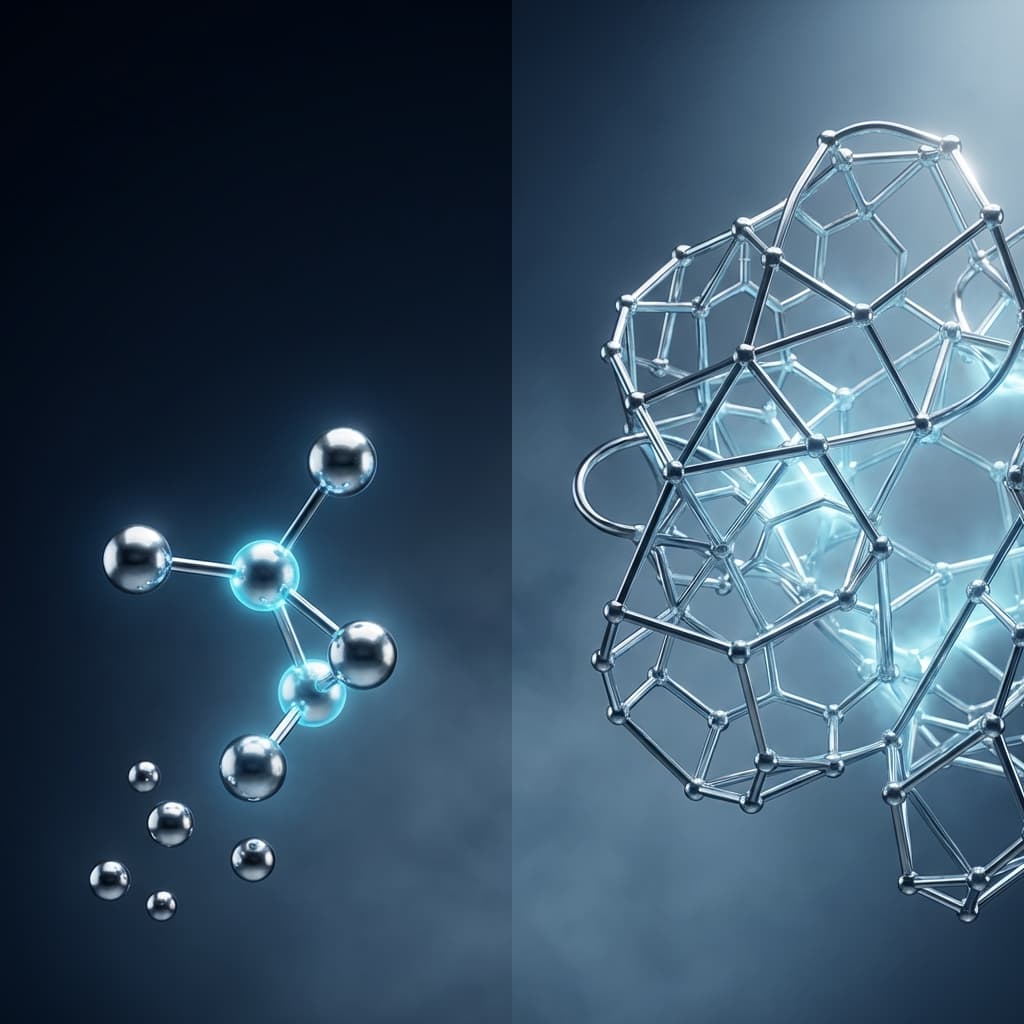
Péptidos vs Proteínas
Aviso
TODOS LOS ARTÍCULOS E INFORMACIÓN SOBRE PRODUCTOS PROPORCIONADOS EN ESTE SITIO WEB SON SÓLO CON FINES INFORMATIVOS Y EDUCATIVOS. Los productos ofrecidos en este sitio web se proporcionan únicamente para estudios in vitro. Los estudios in vitro (del latín: en vidrio) se realizan fuera del cuerpo. Estos productos no son medicamentos ni fármacos y no han sido aprobados por la FDA para prevenir, tratar o curar ninguna condición médica, dolencia o enfermedad. La introducción corporal de cualquier tipo en humanos o animales está estrictamente prohibida por ley.
Cuáles son las Diferencias?
Los péptidos y las proteínas, aunque similares en muchos aspectos, tienen varias diferencias clave que es importante comprender. A menudo los términos "péptido" y "proteína" se usan como sinónimos, pero las características y actividades biológicas diferentes entre los dos compuestos impiden que los términos sean totalmente intercambiables. Para apreciar plenamente las diferencias entre proteínas y péptidos, es importante comprender los aminoácidos, los bloques de construcción de ambos, y cómo los tres (aminoácidos, péptidos y proteínas) se relacionan entre sí.
Péptidos
Cadenas cortas de aminoácidos unidas por enlaces peptídicos. Generalmente se refiere a un compuesto formado por dos o más aminoácidos (por ejemplo, Dipéptido, Tripéptido). Se clasifican además como Oligopéptidos (pocos, típicamente <10) y Polipéptidos (>10).
Proteínas
Históricamente definidas como polipéptidos compuestos por más de 50 aminoácidos. De manera crucial, las proteínas se pliegan en estructuras tridimensionales estables y fijas requeridas para funciones biológicas específicas (por ejemplo, hemoglobina).
Aminoácidos: Los Bloques de Construcción
Los aminoácidos son compuestos pequeños pero biológicamente vitales que contienen un grupo amino (NH2) y un grupo ácido carboxílico (COOH), así como una estructura de cadena lateral que varía entre los diferentes aminoácidos. Aunque se conocen cientos de aminoácidos, sólo veinte se combinan genéticamente en péptidos (como la arginina, la lisina y la glutamina), mientras que otros pueden combinarse sintéticamente.
Es importante destacar que los aminoácidos constituyen los bloques de construcción de los péptidos. Cuando los grupos funcionales amina y ácido carboxílico de los aminoácidos se unen para formar enlaces amida, se forma un péptido.
Distinciones Clave: Tamaño y Estructura
Los científicos comúnmente diferencian entre proteínas y polipéptidos basándose en dos factores principales:
- Tamaño: Un polipéptido compuesto por más de 50 aminoácidos generalmente se clasifica como proteína, aunque el umbral puede variar de 40 a 100 aminoácidos.
- Estructura: Típicamente, los polipéptidos de menos de aproximadamente 40-50 aminoácidos de longitud no se pliegan en una estructura fija. Las proteínas, sin embargo, forman estructuras 3D estables.
Qué Término Usar?
Es importante destacar que todas las proteínas son técnicamente polipéptidos. Sin embargo, como investigador, a veces puede ser útil diferenciar entre los dos y reservar el término "proteínas" para referirse a cadenas de aminoácidos relativamente largas y estructuralmente fijas. En consecuencia, los péptidos generalmente se referirán a cadenas de aminoácidos más cortas (menos de 50).