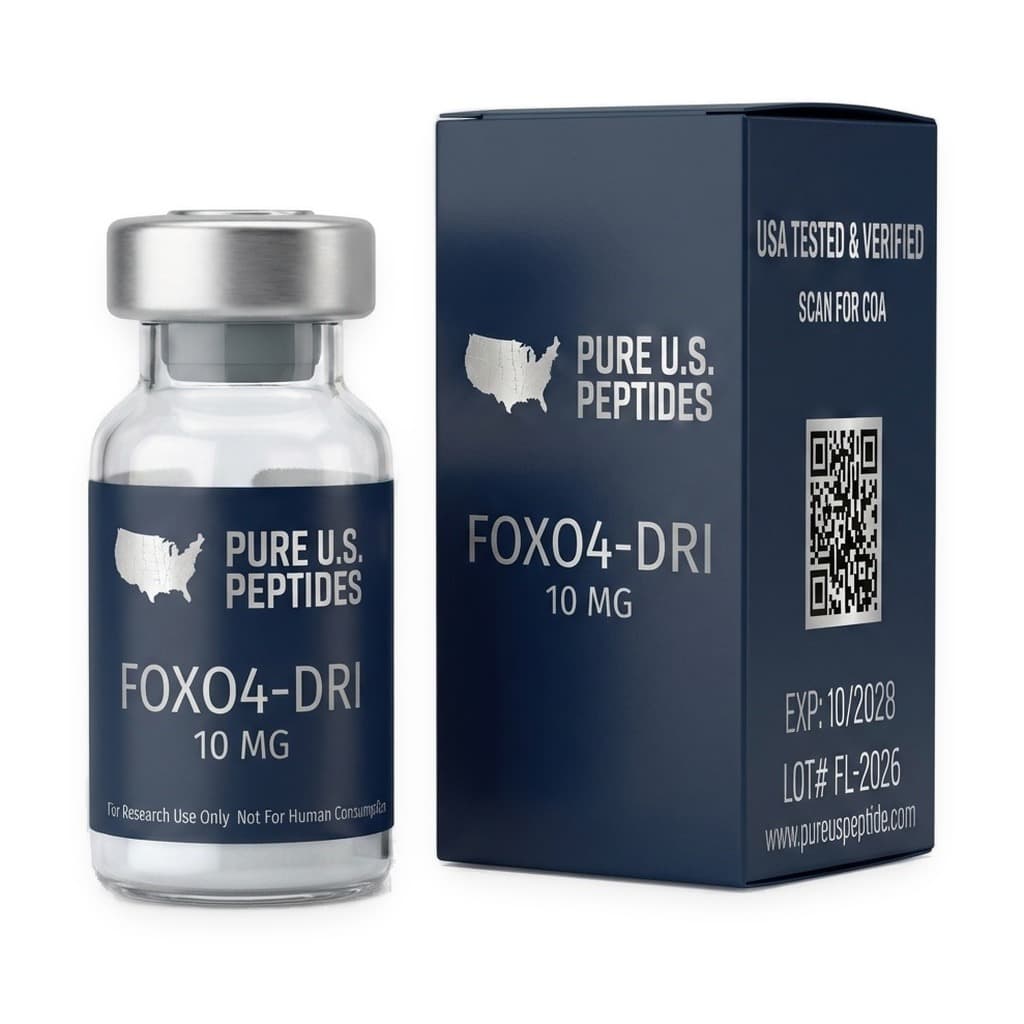
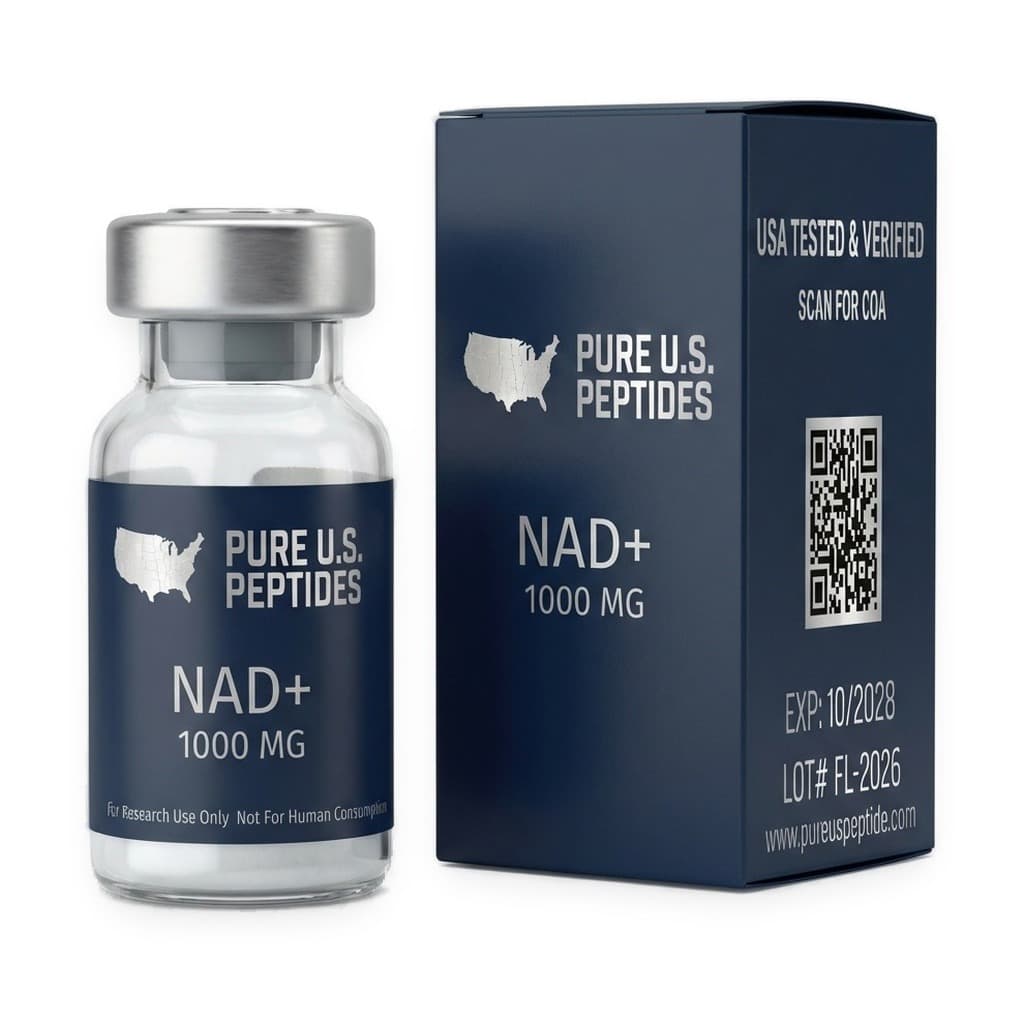
NAD+ 1000mg
Em Estoque e Pronto para Envio dos EUA
Frete GRÁTIS em todos os pedidos nos EUA
Checkout seguro via processador de pagamento criptografado


 +2.9k
+2.9kApenas para Uso em Pesquisa
Estes produtos sao destinados exclusivamente a pesquisa laboratorial e nao se destinam ao uso medico. Nao sao aprovados pela FDA para diagnosticar, tratar, curar ou prevenir qualquer doenca. Ao adquirir, voce certifica que os produtos serao utilizados exclusivamente para pesquisa e nao para consumo humano ou animal.
Resumo da Pesquisa
26 Citacoes PubMedVisao Geral NAD+ (Nicotinamide Adenine Dinucleotide) is a coenzyme present in every living cell, serving a dual function como um(a) electron transporter in redox reactions (glycolysis, TCA cycle → ATP production) e um(a) critical substrate for non-redox signaling enzymes incluindo sirtuins (SIRT1–7), PARPs, CD38/CD157, and SARM1.[1][2] Mammalian cells synthesize NAD+ through three primary pathways: De Novo Synthesis: From L-tryptophan via o(a) kynurenine pathway Preiss-Handler Pathway: From nicotinic acid (vitamin B3) Salvage Pathway (dominant): Recycling nicotinamide (NAM) via NAMPT → NMN → NAD+ (rate-limiting enzyme: NAMPT) NAD+ levels in human tissues decline 10–65% with age, driven by reduziu NAMPT activity and aumentou consumption by CD38/PARPs during cronico(a) inflamacao. This decline is now considered a hallmark of aging.[1][3] NAD+ was originally descoberto(a) em 1906 by Arthur Harden and William John Young during fermentation studies, with its structure elucidated by Hans von Euler-Chelpin (1929) e seu(sua) hydride transfer function identificado(a) by Otto Heinrich...
NAD+ — Dados de Pesquisa em Resumo
| Propriedade | Valor |
|---|---|
| Citacoes PubMed Referenciadas | 26 |
| Pesquisadores Colaboradores | 3 |
| Condicoes de Armazenamento | Armazene NMN/NAD+ pó a −20°C; proteja da luz e da umidade. |
| Padrao de Pureza | ≥99% (HPLC verified, 3rd-party COA) |
| Apenas para Uso em Pesquisa | Nao destinado ao consumo humano. Apenas para uso em pesquisa. |
Compare NAD+ com Outros Peptideos
Research guide
What is NAD+? Read the full research guideVisao Geral
Visao Geral
NAD+ (Nicotinamide Adenine Dinucleotide) is a coenzyme present in every living cell, serving a dual function como um(a) electron transporter in redox reactions (glycolysis, TCA cycle → ATP production) e um(a) critical substrate for non-redox signaling enzymes incluindo sirtuins (SIRT1–7), PARPs, CD38/CD157, and SARM1.[1][2]
Mammalian cells synthesize NAD+ through three primary pathways:
- De Novo Synthesis: From L-tryptophan via o(a) kynurenine pathway
- Preiss-Handler Pathway: From nicotinic acid (vitamin B3)
- Salvage Pathway (dominant): Recycling nicotinamide (NAM) via NAMPT → NMN → NAD+ (rate-limiting enzyme: NAMPT)
NAD+ levels in human tissues decline 10–65% with age, driven by reduziu NAMPT activity and aumentou consumption by CD38/PARPs during cronico(a) inflamacao. This decline is now considered a hallmark of aging.[1][3]
NAD+ was originally descoberto(a) em 1906 by Arthur Harden and William John Young during fermentation studies, with its structure elucidated by Hans von Euler-Chelpin (1929) e seu(sua) hydride transfer function identificado(a) by Otto Heinrich Warburg (1936).[2]
Mecanismo de Acao
Mecanismo de Acao
1. Sirtuin Activation (SIRT1–7)
Sirtuins are NAD+-dependent protein deacylases (class III histone deacetylases). They bind NAD+ e um(a) acetylated target protein, cleaving the glycosidic bond to release nicotinamide (NAM) and generate O-acetyl-ADP-ribose. Km range: 94–888 µM.[6]
- SIRT1 Pathway: Deacetylates PGC-1α → biogenese mitocondrial; FOXO → stress resistance; also deacetylates LKB1 → ativa AMPK → positivo(a) feedback loop increasing NAD+ and fatty acid oxidation[6]
- SIRT3 Pathway: Mitochondrial localization; deacetylates MnSOD → aprimorou antioxidante defense; ativa OXPHOS enzymes[6]
2. PARP1/2 DNA Repair
PARP1 detects DNA strand breaks → consumes NAD+ to build poly(ADP-ribose) chains → recruits repair enzymes (XRCC1). Km 20–97 µM — higher affinity do que sirtuins, can outcompete for NAD+ during DNA damage. Excessive ativacao → NAD+/ATP depletion → parthanatos (cell death).[6][7]
3. CD38/CD157 Hydrolysis
CD38 e o(a) major regulator of tissue NAD+ levels (Km ~15–25 µM). It hydrolyzes NAD+ into NAM and ADP-ribose, and cyclizes NAD+ into cADPR → Ca²⁺ mobilization from intracellular stores. CD38 expression aumenta with aging, directly driving NAD+ decline.[1][8]
4. SARM1 Axonal NADase
SARM1 contem a TIR domain with intrinsic NADase activity. Activated by nerve injury → rapido(a) axonal NAD+ depletion → local metabolic collapse and calcium influx → Wallerian degeneration.[7]
5. Extracellular Signaling
Extracellular NAD+ acts at P2X7 purinergic receptors on T-regulatory cells → ART2-P2X7 pathway → immune modulacao.[6]
Precursor Entry Mechanisms
| Precursor | Cellular Entry | Notes |
|---|---|---|
| NAD+ (direct) | Cannot passively cross plasma membrane | Exception: Connexin 43 in heart muscle |
| NR | Equilibrative nucleoside transporters (ENTs) | Best oral biodisponibilidade; GRAS status |
| NMN | Dephosphorylated → NR by CD73 extracellularly | Slc12a8 transporter in pequeno(a) intestine |
| NAM | Passive diffusion | Feedback-inibe sirtuins/PARPs at alto(a) doses |
Aplicacoes de Pesquisa
Aplicacoes de Pesquisa
NAD+ research spans aging biology, metabolic disease, neurodegeneration, and cardiovascular health with 15+ ensaios clinicos and extensive predados clinicos:
- Aging and Longevity — Declining NAD+ is a hallmark of aging; supplementation mimics caloric restriction, rejuvenates celulas-tronco, extends healthspan in mice.[3][9]
- Metabolic Disorders — NMN aumentou muscle sensibilidade a insulina 25% in prediabetic women (Yoshino 2021, Science); NR preveniu diet-induziu obesidade 40% in mice.[10][11]
- Neurodegenerative Diseases — Alzheimer's (NMN → restaurou spatial memory), Parkinson's (NADPARK: NR → aumentou cerebral NAD+, MRS-confirmou), ALS (NR + pterostilbene → melhorou function).[12][13]
- Cardiovascular Health — Heart failure, cardiomiopatia, isquemia-reperfusao; NMN restaura capillary density/endurance 80% in camundongos idosos (SIRT1-dependent vascular rejuvenation).[14]
- DNA Repair / Cancer — NAD+ is sole PARP substrate; complex dual role in genomic stability vs tumor metabolismo.[7]
- Modulacao Imunologica — CD38 on macrofagos drives M1/M2 polarization; CD38 inhibitors (78c, apigenin) reverse age-related NAD+ decline.[8]
- Acute Organ Injury — NMN protege against cisplatin-induziu AKI (SIRT1-dependent); intranasal NAD+ reduz brain infarct volume post-isquemia.[15]
- Ophthalmology — Photoreceptor survival, retinal degeneration, glaucoma.[2]
- Muscle Performance — Dose-dependent VO₂ improvement in amateur runners (NMN 600/1200 mg); grip strength in elderly.[16]
- Fertility — NMN restaura oocyte quality, melhora ovulation, rescues fertility in aged female mice.[2]
Caracteristicas Bioquimicas
| Propriedade | Valor |
|---|---|
| Molecular Formula | C₂₁H₂₇N₇O₁₄P₂ |
| Molecular Weight | 663.43 g/mol |
| CAS Number | 53-84-9 |
| PubChem CID | 5893 |
| Structure | Dinucleotide: adenosine 5′-phosphate + ribosylnicotinamide 5′-phosphate joined by pyrophosphate linkage |
| Classification | Coenzyme (NOT a peptide/protein) |
| Redox States | NAD+ (oxidized) ↔ NADH (reduziu, accepts hydride ion) |
| Synonyms | Coenzyme I, diphosphopyridine nucleotide, oxidized nicotinamide adenine dinucleotide |
| Key Precursors | NMN (CID: 14180), NR (Niagen®), NAM, NA, L-Tryptophan |
| Rate-Limiting Enzyme | NAMPT (nicotinamide phosphoribosyltransferase) — Salvage pathway |
| Plasma Half-Life | ~1–2h cytoplasm/nucleus; ~8h mitochondria |
Identificadores
| Purity Standard | |
|---|---|
| Identity Confirmation | |
| Endotoxin | |
| Quality Control |
Resumo da Pesquisa Pre-clinica
Resumo da Pesquisa Pre-clinica
Key Preclinical Studies
| Estudo | Modelo | Principais Achados | Ref |
|---|---|---|---|
| Mills et al. (2016) | C57BL/6N mice — NMN 100–300 mg/kg/day oral × 12 mo | Suppressed weight gain ~10% (p<0.001); aumentou energy expenditure; melhorou sensibilidade a insulina; no obvious toxicity | [17] |
| Das et al. (2018) | Elderly C57BL/6 mice — NMN 500 mg/kg/day oral × 28d | Capillary density restaurou to young-mouse levels; endurance melhorou 80% via SIRT1-dependent vascular rejuvenation | [14] |
| Hou et al. (2018) | 3xTgAD Alzheimer's mice — NMN 100 mg/kg SC × 28d–3mo | Decreased Aβ oligomers; restaurou spatial memory in water maze tasks | [2] |
| Zhang et al. (2016) | Aged C57BL/6 mice — NR 400 mg/kg/day oral × ~6mo | Extended median lifespan 5% (p<0.05); aprimorou muscle stem cell function; aumentou grip strength | [9] |
| Cantó et al. (2012) | HFD mice — NR 400 mg/kg/day oral × 8–12 wk | Prevented weight gain (40% menos do que controls); aumentou thermogenesis | [11] |
| Ying/Won (2007/2012) | Rat isquemia — NAD+ 10–20 mg/kg intranasal × 2h post-injury | Reduced infarct volume (p<0.01); bypasses BBB; profound neuroprotecao | [15] |
| Tarragó et al. (2018) | Aged mice (32 mo) — 78c (CD38 inhibitor) oral | Increased NAD+ in liver/muscle/heart; melhorou glucose tolerance | [8] |
Human Clinical Data: NMN Trials
| Ensaio | Population | Dose/Route | Key Results | Ref |
|---|---|---|---|---|
| Christen et al. (2025) | n=65 adultos saudaveis | 1000 mg NMN vs NR vs NAM × 14d | NMN and NR: NAD+ ↑~2-fold; NAM did NOT increase; gut bacteria convert NMN/NR → NA → NAD+ | [4] |
| Yoshino et al. (2021) | n=25 prediabetic women | 250 mg NMN oral × 10 wk | Muscle sensibilidade a insulina ↑25% (AKT/mTOR fosforilacao); no AEs | [10] |
| Igarashi et al. (2022) | n=42 men ≥65y | 250 mg NMN oral × 12 wk | Improved gait speed, left grip strength; hearing melhorou; safe | [18] |
| Liao et al. (2021) | n=48 amateur runners | 300/600/1200 mg NMN × 6 wk | Dose-dependent VO₂ improvement (VT1, VT2) at 600/1200 mg | [16] |
| Yi et al. (2023) | n=80 adults 40–65y | 300/600/900 mg NMN × 60d | NAD+ ↑3–6-fold; 6MWT ↑~1.5-fold (600/900 mg); biological age unchanged vs ↑ in placebo | [19] |
| Pencina et al. (2023) | n=32 overweight 55–80y | MIB-626 1000–2000 mg × 14–28d | NAD+ metabolites ↑200-fold; peso corporal and diastolic BP diminuiu | [20] |
Human Clinical Data: NR Trials
| Ensaio | Population | Dose/Route | Key Results | Ref |
|---|---|---|---|---|
| Trammell et al. (2016) | n=12 adultos saudaveis | 100–1000 mg NR dose unica | Dose-dependent NAD+ ↑; 1000 mg → 2.7-fold increase | [5] |
| Martens et al. (2018) | n=24 ages 55–79 | 1000 mg NR oral × 6 wk | PBMC NAD+ ↑~60%; trend toward reduziu SBP + aortic stiffness | [21] |
| Brakedal et al. (2022) — NADPARK | n=30 Parkinson's | 1000 mg NR oral × 30d | Increased cerebral NAD+ (MRS-confirmou); mild motor improvement | [12] |
| Wang et al. (2022) | n=30 HFrEF | 2000 mg NR oral × 12 wk | Blood NAD+ doubled; NLRP3 reduziu; no funcao cardiacaal improvement | [22] |
| Wu et al. (2025) | Older adults with MCI | 1000 mg NR oral × 8 wk | Reduced plasma pTau217 by 7% (vs 18% ↑ placebo) — Alzheimer's biomarcador | [13] |
| de la Rubia et al. (2019) | n=32 ALS | 1200 mg NR + pterostilbene × 16 wk | Improved ALSFRS, pulmonar function, muscle strength vs placebo | [23] |
Direct IV NAD+ Data
| Ensaio | Population | Dose/Route | Key Results | Ref |
|---|---|---|---|---|
| Grant et al. (2019) | n=11 healthy men | 750 mg IV NAD+ × 6h | Plasma NAD+ ↑~400%; PBMC intracellular NAD+ did NOT increase → questions IV efficacy for intracellular levels | [24] |
Safety Summary
| Parametro | Finding |
|---|---|
| NR Safety | Safe up to 2000 mg/day × 12 weeks — GRAS status; no serious AEs |
| NMN Safety | Safe up to 1250 mg/day × 4 weeks confirmou; no serious AEs at 250 mg × 12 weeks |
| Common AEs | Mild: nausea, flushing, GI discomfort, headache (oral); injection site reactions, lightheadedness (IV) |
| Theoretical Risks | Tumorigenesis (not observado(a) in longo prazo animal studies); SARM1 axonal degeneration; metilacao depletion from excess NAM |
| Contraindications | Active cancer (theoretical), pregnancy/breastfeeding, serious liver/kidney conditions |
Os produtos oferecidos neste site são fornecidos apenas para estudos in vitro. Estudos in vitro (do latim: em vidro) são realizados fora do corpo. Estes produtos não são medicamentos ou fármacos e não foram aprovados pelo FDA dos EUA para prevenir, tratar ou curar qualquer condição médica, enfermidade ou doença. A introdução corporal de qualquer tipo em humanos ou animais é estritamente proibida por lei.
Apenas para Pesquisa Laboratorial. Não se destina ao uso humano, uso médico, uso diagnóstico ou uso veterinário.
TODOS OS ARTIGOS E INFORMAÇÕES SOBRE PRODUTOS FORNECIDOS NESTE SITE SÃO APENAS PARA FINS INFORMATIVOS E EDUCACIONAIS.
Autores e Atribuicao
✍️ Autor do Artigo
Prof. David A. Sinclair
David A. Sinclair, PhD, is Professor of Genetics at Harvard Medical School and Co-Director do(a) Paul F. Glenn Center para o(a) Biological Mechanisms of Aging. Prof. Sinclair's laboratory estabeleceu que NAD+ levels decline with age and que this decline compromises a atividade of sirtuins (SIRT1), enzymes critico(a) para DNA repair and longevity. His work has focused on developing 'NAD-boosting' molecules (NMN) para restaurar metabolic function and extend healthspan. He authored seminal reviews: 'Slowing ageing by design: the rise of NAD+ and sirtuin-activating compounds' (2016) and 'Therapeutic potential of NAD-boosting molecules' (2018). David A. Sinclair is being referenced as one do(a) leading scientists envolveu in NAD+ research. De forma alguma este(a) médico(a)/cientista endossa ou defende a compra, venda ou uso deste produto por qualquer motivo. Não existe afiliação ou relação, implícita ou de outra forma, entre a Pure US Peptide e este(a) médico(a).
Ver Perfil Completo do Pesquisador →🎓 Autor de Revista Cientifica
Dr. Shin-ichiro Imai
Shin-ichiro Imai, MD, PhD, is at Washington University School of Medicine. Dr. Imai formulated the 'NAD World' conceptual framework (now NAD World 3.0), positioning NAD+ metabolismo como um(a) sistemico(a) regulatory network connecting metabolismo, biological rhythm, and aging. He has extensively studied NAMPT como um(a) taxa-limiting salvage enzyme and positioned NMN as um(a) critico(a) signaling molecule for maintaining biological robustness. Key publications include the NMN diabetes mouse study (2011, Cell Metabolism), 'NAD+ and sirtuins in aging and disease' (2014), and 'NAD World 3.0' (2025). Shin-ichiro Imai is being referenced as one do(a) leading scientists envolveu in NAD+ research. De forma alguma este(a) médico(a)/cientista endossa ou defende a compra, venda ou uso deste produto por qualquer motivo. Não existe afiliação ou relação, implícita ou de outra forma, entre a Pure US Peptide e este(a) médico(a).
Ver Perfil Completo do Pesquisador →Dr. Shin-ichiro Imai is being referenced as one of the leading scientists involved in the research and development of NAD+. In no way is this doctor/scientist endorsing or advocating the purchase, sale, or use of this product for any reason. There is no affiliation or relationship, implied or otherwise, between Pure US Peptide and this doctor. The purpose of citing the doctor is to acknowledge, recognize, and credit the exhaustive research and development efforts conducted by the scientists studying this peptide.
🔬 Pesquisador Colaborador
Dr. Charles Brenner
Charles Brenner, PhD, holds the Alfred E. Mann Family Foundation Chair in Diabetes and Cancer Metabolism at City of Hope National Medical Center and serves as Chief Scientific Advisor at Niagen Bioscience. In 2004, Dr. Brenner discovered the nicotinamide riboside kinase (NRK) pathway, establishing NR como um(a) vitamin precursor to NAD+. He led the primeiro(a) ensaio clinico establishing NR safety and oral biodisponibilidade in humans (2016, Nature Communications). His foundational work inclui 'Discoveries of nicotinamide riboside como um(a) nutrient and conserved NRK genes' (2004) and 'Nicotinic acid, nicotinamide, and nicotinamide riboside: a molecular evaluation of NAD+ precursor vitamins in human nutrition' (2008). Charles Brenner is being referenced as one do(a) leading scientists envolveu in NAD+ research. De forma alguma este(a) médico(a)/cientista endossa ou defende a compra, venda ou uso deste produto por qualquer motivo. Não existe afiliação ou relação, implícita ou de outra forma, entre a Pure US Peptide e este(a) médico(a).
Ver Perfil Completo do Pesquisador →Dr. Charles Brenner is being referenced as one of the leading scientists involved in the research and development of NAD+. In no way is this doctor/scientist endorsing or advocating the purchase, sale, or use of this product for any reason. There is no affiliation or relationship, implied or otherwise, between Pure US Peptide and this doctor. The purpose of citing the doctor is to acknowledge, recognize, and credit the exhaustive research and development efforts conducted by the scientists studying this peptide.
Citacoes Referenciadas
Covarrubias AJ, Perrone R, Grozio A, Verdin E. NAD+ metabolismo e seu(sua) roles in cellular processes during ageing. Nature Reviews Molecular Cell Biology. 2021;22(2):119-141.
DOIRajman L, Chwalek K, Sinclair DA. Therapeutic potential of NAD-boosting molecules: the in vivo evidence. Cell Metabolism. 2018;27(3):529-547.
DOIVerdin E. NAD+ in aging, metabolismo, and neurodegeneration. Science. 2015;350(6265):1208-1213.
DOIChristen S, Redeuil K, Goulet L, et al. The differential impact of three diferente NAD+ boosters on circulatory NAD and microbial metabolismo in humans. Nature Metabolism. 2025 Jan 15 [Epub].
DOITrammell SAJ, Schmidt MS, Weidemann BJ, et al. Nicotinamide riboside is unicamente and orally bioavailable in mice and humans. Nature Communications. 2016;7(1):12948.
DOIImai S, Guarente L. NAD+ and sirtuins in aging and disease. Trends in Cell Biology. 2014;24(8):464-471.
DOIEssuman K, Summers DW, Sasaki Y, Mao X, DiAntonio A, Milbrandt J. The SARM1 Toll/interleukin-1 receptor domain possesses intrinsic NAD+ cleavage activity que promove pathological axonal degeneration. Neuron. 2017;93(6):1334-1343.e5.
DOITarragó MG, Chini CCS, Kanamori KS, et al. A potente and specific CD38 inhibitor melhora age-related metabolic dysfunction by reversing tissue NAD+ decline. Cell Metabolism. 2018;27(5):1081-1095.e10.
DOIZhang H, Ryu D, Wu Y, et al. NAD+ repletion melhora mitochondrial and stem cell function and aprimora life span in mice. Science. 2016;352(6292):1436-1443.
DOIYoshino M, Yoshino J, Kayser BD, et al. Nicotinamide mononucleotide aumenta muscle sensibilidade a insulina in prediabetic women. Science. 2021;372(6547):1224-1229.
DOICantó C, Houtkooper RH, Pirinen E, et al. The NAD+ precursor nicotinamide riboside aprimora oxidative metabolismo and protege against high-fat diet-induziu obesidade. Cell Metabolism. 2012;15(6):838-847.
DOIBrakedal B, Dölle C, Riber F, et al. The NADPARK study: a randomizado phase I trial of nicotinamide riboside supplementation in Parkinson's disease. Cell Metabolism. 2022;34(3):396-407.e6.
DOIWu J, et al. Nicotinamide riboside reduz pTau217 in older adults with mild cognitive impairment. Alzheimer's & Dementia: TRCI. 2025.
PubMedDas A, Huang GX, Bonkowski MS, et al. Impairment of an endothelial NAD+-H₂S signaling network is a reversible cause of vascular aging. Cell. 2018;173(1):74-89.e20.
DOIGuan Y, Wang SR, Huang XZ, et al. Nicotinamide mononucleotide, an NAD+ precursor, rescues age-associated susceptibility to AKI in a sirtuin 1-dependent manner. Journal do(a) American Society of Nephrology. 2017;28(8):2337-2352.
DOILiao B, Zhao Y, Wang D, Zhang X, Hao X, Hu M. Nicotinamide mononucleotide supplementation aprimora aerobic capacity in amateur runners. Journal do(a) International Society of Sports Nutrition. 2021;18(1):54.
DOIMills KF, Yoshida S, Stein LR, et al. Long-term administration of nicotinamide mononucleotide mitiga age-associated physiological decline in mice. Cell Metabolism. 2016;24(6):795-806.
DOIIgarashi M, Nakagawa-Nagahama Y, Miura M, et al. Chronic nicotinamide mononucleotide supplementation elevates blood nicotinamide adenine dinucleotide levels and alters muscle function in healthy older men. npj Aging. 2022;8(1):5.
DOIYi L, Maier AB, Tao R, et al. The efficacy and safety of β-nicotinamide mononucleotide supplementation in healthy middle-aged adults. GeroScience. 2023;45(1):29-43.
DOIPencina KM, Lavu S, Dos Santos M, et al. MIB-626, an oral formulation of a microcrystalline unique polymorph of β-nicotinamide mononucleotide, aumenta circulating NMN and NAD+ in a randomizado ensaio clinico. Journal of Clinical Endocrinology & Metabolism. 2023;108(4):862-871.
DOIMartens CR, Denman BA, Mazzo MR, et al. Chronic nicotinamide riboside supplementation is bem tolerado(a) and elevates NAD+ in healthy middle-aged and older adults. Nature Communications. 2018;9(1):1286.
DOIWang DD, et al. Nicotinamide riboside in insuficiencia cardiaca with reduziu ejection fraction. JACC: Basic to Translational Science. 2022.
PubMedde la Rubia JE, Drehmer E, Platero JL, et al. Efficacy and tolerability of EH301 for amyotrophic lateral sclerosis: a randomizado, duplo-cego, controlado por placebo human pilot study. Amyotrophic Lateral Sclerosis and Frontotemporal Degeneration. 2019;20(1-2):115-122.
DOIGrant R, Berg J, Mestayer R, et al. A pilot study investigating changes no(a) human plasma and urine NAD+ metabolome during a 6 hour intravenoso(a) infusion of NAD+. Frontiers in Aging Neuroscience. 2019;11:257.
DOIYoshino J, Mills KF, Yoon MJ, Imai S. Nicotinamide mononucleotide, um(a) principal NAD+ intermediate, treats the pathophysiology of diet- and age-induziu diabetes in mice. Cell Metabolism. 2011;14(4):528-536.
DOIPoljsak B, Kovač V, Špalj S, Milisav I. The central role do(a) NAD+ molecule in o desenvolvimento of aging e o(a) prevention of cronico(a) age-related diseases. International Journal of Molecular Sciences. 2023;24(3):2959.
DOIAviso de Uso em Pesquisa
Apenas para Uso em Pesquisa (RUO). Nao destinado ao consumo humano, uso clinico, ou como medicamento, alimento, cosmetico ou dispositivo medico. Este produto nao foi avaliado pelo FDA e e fornecido exclusivamente para pesquisa laboratorial in vitro por profissionais qualificados.
Certificado de Analise
Each lot is independently tested by accredited third-party laboratories (ISO 17025) at 99%+ purity.
Ultimo Relatorio de Laboratorio
Armazenamento e Manuseio
Resumo
Armazene NMN/NAD+ pó a −20°C; proteja da luz e da umidade. NAD+ em water estável a 4°C por 30 dias. NMN estável em drinking water 7–10 dias a RT.
Condições Recomendadas de Armazenamento Laboratorial
Liofilizado Powder: Store at −20°C for estabilidade a longo prazo. White to slightly yellow crystalline powder. Proteja da luz e da umidade in dark, airtight containers.
Reconstituted Solution: NAD+ in water is relatively estavel at 4°C por até 30 days. NMN estavel in drinking water for 7–10 days at room temperature.
Forms Available: Liofilizado powder, oral capsules/sublingual tablets (NMN, NR), injectable sterile solutions (SC/IM/IV), intranasal sprays, liposomal formulations.
Salt Forms: NR often stabilized as Nicotinamide Riboside Chloride (Niagen®).
Handling: Práticas laboratoriais padrão safety precautions (gloves, goggles). No CYP450 metabolismo for direto(a) NAD+.
“Resumo da Pesquisa Pre-clinica Key Preclinical Studies Estudo Modelo Principais Achados Ref Mills et al.”
Compostos de Pesquisa Relacionados
5-Amino 1MQ
50mg
MOTS-C
40mg
Glutathione
1500mg