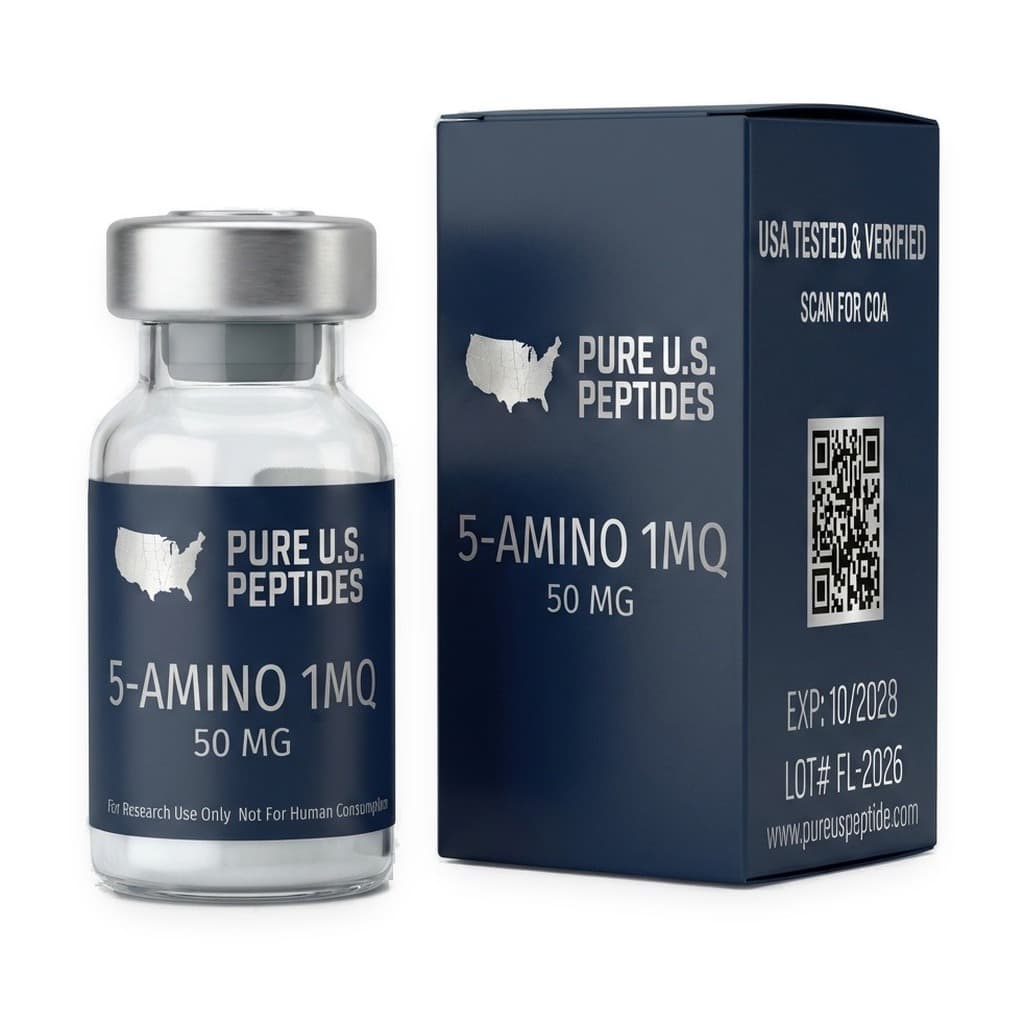
5-Amino 1MQ 50mg
Em Estoque e Pronto para Envio dos EUA
Frete GRÁTIS em todos os pedidos nos EUA
Checkout seguro via processador de pagamento criptografado


 +2.9k
+2.9kApenas para Uso em Pesquisa
Estes produtos sao destinados exclusivamente a pesquisa laboratorial e nao se destinam ao uso medico. Nao sao aprovados pela FDA para diagnosticar, tratar, curar ou prevenir qualquer doenca. Ao adquirir, voce certifica que os produtos serao utilizados exclusivamente para pesquisa e nao para consumo humano ou animal.
Resumo da Pesquisa
18 Citacoes PubMed⚠️ Important: 5-Amino 1MQ is a small molecule (methylquinolinium derivative), not a peptide chain. It e um(a) experimental research chemical — not FDA-registered, not GRAS, and banned by WADA (S0 category). 5-Amino 1MQ (5-amino-1-methylquinolinium, CAS 42464-96-0) e um(a) sintetico(a) pequeno(a) molecule classificado(a) como a methylquinolinium derivative. [1] It foi desenvolvido(a) por Dr. Stanley J. Watowich’s grupo de pesquisa no(a) University of Texas Medical Branch (UTMB) at Galveston como um(a) selective inhibitor do(a) metabolic enzyme nicotinamide N-methyltransferase (NNMT). [2] 5-Amino 1MQ e um(a) analogue do(a) parent molecule 1-methylquinolinium (1-MQ), modified with a primary amine substitution no(a) 5-position do(a) quinoline ring. This structural modification was rationally projetado(a) para optimize afinidade de ligacao to NNMT enquanto dramatically improving membrane permeability — um(a) critico(a) limitation do(a) parent 1-MQ molecule. [3] In conditions como obesidade, diabetes tipo 2, and aging, NNMT is overexpresso(a) em tecido adiposo and musculo esqueletico, onde it depletes cellular pools of...
5-Amino 1MQ 50mg at a glance
| Specification | Detail |
|---|---|
| Identity | 5-amino-1-methylquinolinium; NNMT research inhibitor |
| Classification | Small molecule, not a peptide |
| Listed amount | 50mg |
| Powder storage | -20 degrees C long term; 4 degrees C short term; protect from light and moisture. Research Use Only. |
| Lot certificate | Not listed in the published certificate index; confirm availability with support |
| Price | $47.25 |
| Price per mg | $0.94 per mg |
| Dispatch | Same business day for orders before 2:00 PM EST Monday through Friday |
| U.S. shipping | Free on every order |
| Included with every order | Free BAC water vial; Research Use Only |
| Product status | This listing is not an FDA-approved drug. Strictly for laboratory Research Use Only. |
Current price and availability are shown in the purchase panel at the top of this page.
5-Amino 1MQ — Dados de Pesquisa em Resumo
| Propriedade | Valor |
|---|---|
| Formula Molecular | C₁₀H₁₁IN₂ (iodide salt) |
| Peso Molecular | 286.11 g/mol |
| Numero CAS | 42464-96-0 |
| Sequencia de Aminoacidos | N/A — Small molecule (not a peptide) |
| Citacoes PubMed Referenciadas | 18 |
| Pesquisadores Colaboradores | 2 |
| Condicoes de Armazenamento | Liofilizado: -20°C (estável ≤3 anos) ou 4°C, protegido de light/moisture. |
| Padrao de Pureza | Certificado pendente |
| Apenas para Uso em Pesquisa | Nao destinado ao consumo humano. Apenas para uso em pesquisa. |
Research guide
What is 5-Amino 1MQ? Read the full research guideVisao Geral
⚠️ Important: 5-Amino 1MQ is a small molecule (methylquinolinium derivative), not a peptide chain. It e um(a) experimental research chemical — not FDA-registered, not GRAS, and banned by WADA (S0 category).
5-Amino 1MQ (5-amino-1-methylquinolinium, CAS 42464-96-0) e um(a) sintetico(a) pequeno(a) molecule classificado(a) como a methylquinolinium derivative. [1] It foi desenvolvido(a) por Dr. Stanley J. Watowich’s grupo de pesquisa no(a) University of Texas Medical Branch (UTMB) at Galveston como um(a) selective inhibitor do(a) metabolic enzyme nicotinamide N-methyltransferase (NNMT). [2]
5-Amino 1MQ e um(a) analogue do(a) parent molecule 1-methylquinolinium (1-MQ), modified with a primary amine substitution no(a) 5-position do(a) quinoline ring. This structural modification was rationally projetado(a) para optimize afinidade de ligacao to NNMT enquanto dramatically improving membrane permeability — um(a) critico(a) limitation do(a) parent 1-MQ molecule. [3]
In conditions como obesidade, diabetes tipo 2, and aging, NNMT is overexpresso(a) em tecido adiposo and musculo esqueletico, onde it depletes cellular pools of NAD+ and SAM. By blocking NNMT, 5-Amino 1MQ preserva these critico(a) metabolic cofactors, shifting cellular metabolismo from fat storage to fat oxidation and energy expenditure. [4]
Regulatory Status:
- FDA: NOT registered for human use — experimental research chemical. [5]
- WADA: Banned under S0 category (Non-Approved Substances) — prohibited at all times.
- GRAS: Not classificado(a) como Generally Recognized as Well-tolerated for dietary supplementation.
Developer: Ridgeline Therapeutics (Houston, TX), founded by Dr. Watowich, is advancing a lead NNMT inhibitor candidate (RT-002) toward Phase 1 first-in-human ensaios clinicos, with IND-enabling GLP toxicology studies in minipigs atualmente underway. [6]
Pharmacokinetic Highlights:
- Oral Bioavailability: 38.4% (rats) [7]
- Half-Life: ~3.8–6.9 hours in rats
- Cmax: 2,252 ng/mL (oral, rats)
- Membrane Permeability: High (passive and ativo(a) transport)
Mecanismo de Acao
1. Primary Target — NNMT Enzyme
The molecular target of 5-Amino 1MQ e o(a) cytosolic enzyme nicotinamide N-methyltransferase (NNMT), a metabolic regulator highly expresso(a) em tecido adiposo, liver, and musculo esqueletico — particularmente in obesidade and diabetes tipo 2. [2]
Binding Mechanism: 5-Amino 1MQ is a substrate-competitive inhibitor. It competes with nicotinamide (NAM) para o(a) ativo(a) binding site of NNMT, preventing a enzima from catalyzing the transfer of a methyl group from SAM to NAM. This blockade previne formation of 1-methylnicotinamide (1-MNA) and S-adenosyl-L-homocysteine (SAH). [3]
Potency:
- IC₅₀: ~1.0–1.2 µM for NNMT inibicao [1]
- EC₅₀: 2.3 ± 1.1 µM (reduction of intracellular 1-MNA levels) [1]
- Lipogenesis Inhibition: 30 µM reduziu lipogenesis by 50%; 60 µM by 70%
2. Downstream Cascade A — NAD+ Salvage and SIRT1 Activation
NNMT normally acts como um(a) “sink” for nicotinamide, permanently removing it do(a) NAD+ salvage pathway by methylating it into 1-MNA (which is then excreted). By inhibiting NNMT, 5-Amino 1MQ preserva the intracellular NAM pool, shunting it back no(a) NAD+ salvage pathway and significantly increasing intracellular NAD+ levels. [4]
Elevated NAD+ acts como um(a) co-substrate for sirtuins, specifically activating SIRT1 — often called the “longevity gene.” SIRT1 ativacao drives aumentou biogenese mitocondrial and metabolic rate. [8]
3. Downstream Cascade B — Methionine-SAM Cycle and Epigenetic Regulation
NNMT consumes SAM (the universal methyl donor) during NAM metilacao. 5-Amino 1MQ previne this consumption, increasing intracellular SAM levels and reducing SAH (a metilacao inhibitor). This alters the cell’s epigenetic metilacao potential, influencing histone and DNA metilacao states que regulate expressao genica for adipogenesis and metabolismo. [4] [9]
4. Downstream Cascade C — Exercise Mimicry (Muscle-Specific)
In musculo esqueletico, 5-Amino 1MQ desencadeia unique signaling: [10]
- Ribosomal Biogenesis: Upregula proteins envolveu in ribosomal RNA biogenesis and aminoacyl-tRNA ligase activity, mimicking a proteina traducao signaling normally induzido(a) por exercise.
- Transsulfuration Pathway: Unicamente upregula the transsulfuration pathway (via cystathionine β-synthase), enhancing protection against reactive oxygen species (ROS) via glutathione synthesis.
- AMPK Activation: Shifts the metabolome of sedentary muscle toward an exercised state via aumentou AMP, driving AMPK ativacao — um(a) critico(a) energy sensor linked to protein-synthesis signalling.
5. Receptor Selectivity
5-Amino 1MQ demonstra high selectivity for NNMT, avoiding off-target effects: [3]
- Does NOT inhibit structurally related SAM-dependent methyltransferases: DNMT1, PRMT3, COMT
- Does NOT inhibit NAD+ pathway enzymes: NAMPT, SIRT1
This confirma que NAD+ and SAM aumenta result solely from preventing their degradacao by NNMT, not from interfering with their synthesis or utilization enzymes.
6. Cellular and Tissue-Level Effects
Adipose Tissue (White Fat):
- Suppresses lipogenesis (fat creation) in adipocitos [1]
- Reduces white adipocito size by >30% and WAT mass by ~35% [2]
- Produces um(a) unico(a) metabolomic signature (aumentou ketogenic aminoacidos)
- No alteration in food intake [2]
Skeletal Muscle:
- Activates senescent muscle celulas-tronco (MuSCs), promoting proliferacao and myofiber repair [11]
- Nearly 2-fold increase in myofiber cross-sectional area; ~70% increase in peak torque
- Sustained running capacity sem fatigue taper [10]
Liver:
- Reverses hepatico(a) steatosis (fatty liver) and normalizes ALT/AST [12]
- Reduces total plasma cholesterol by ~30% [2]
7. Pharmacokinetics
| Parameter | Rat |
|---|---|
| Oral Bioavailability | 38.4% |
| Half-Life (T½) | 3.8–6.9 h |
| Cmax | 2,252 ng/mL |
| Membrane Permeability | High (passive + ativo(a) transport) |
| Tissue Distribution | Adipose, muscle, liver; no 24h accumulation in heart/kidney/brain |
Source: Awosemo/Neelakantan et al., J. Pharm. Biomed. Anal., 2021 [7]
Aplicacoes de Pesquisa
🏋️ Diet-Induced-Obesity Models
In diet-induziu obese (DIO) mice, 5-Amino 1MQ (20 mg/kg, 11 days) reduziu peso corporal by 5.1%, diminuiu epididymal white tecido adiposo (WAT) mass by ~35% (P<0.001), and reduziu adipocito size by >30%, all sem altering food intake. Plasma total cholesterol diminuiu ~30% (P<0.05). [2] In a longer study (32 mg/kg daily, 7 weeks), massa gorda diminuiu by 29.3%, normalizing composicao corporal to levels indistinguishable from age-matched lean controls. [9]
Veja tambem: AOD-9604 para pesquisas relacionadas sobre fat metabolismo research.
💊 Type 2 Diabetes & Metabolic Syndrome
5-Amino 1MQ melhorou oral glucose tolerance and suprimiu hyperinsulinemia in obese modelo de camundongos. It addresses the underlying metabolic dysfunction in white tecido adiposo que drives resistencia a insulina. [12]
Veja tambem: Tirzepatide para pesquisas relacionadas sobre metabolic research.
💪 Muscle Regeneration & Sarcopenia
In aged (22-month) mice, 5-Amino 1MQ (10 mg/kg daily, 8 weeks) mimicked exercise effects: sedentary treated mice showed ~40% greater grip strength do que untreated controls (P<0.001). Combined with exercise, grip strength aumentou by ~60%. Treated mice manteve a 1.8 km/day running increase na semana 8, enquanto untreated mice tapered off (P=0.0039). Intramyocellular lipid content diminuiu >30%. [10]
In aged (24-month) mice with agudo(a) muscle injury, treated animals showed nearly 2× greater myofiber cross-sectional area and ~70% aumentou peak torque (P<0.05), with aprimorou muscle stem cell (MuSC) proliferacao and fusion. [11]
🫁 Doenca Hepatica (NAFLD/NASH)
Combined diet switch + 5-Amino 1MQ aplicacao em pesquisa (28 days) normalized ALT and AST liver enzyme levels, reduziu liver weight/size and triglyceride content, atenuou hepatico(a) steatosis and macrofago infiltration. [12]
🧬 Duchenne Muscular Dystrophy (DMD)
Estudos pre-clinicos indicate que NNMT inibicao can improve muscle regeneration and function in DMD models by enhancing mitochondrial bioenergetics and reactivating dysfunctional muscle celulas-tronco. [11]
🪸 Chronic Kidney Disease (CKD)
Research targeting NNMT inibicao shows potential in reducing renal fibrose and tubular senescencia, with melhorou kidney function and slowed progressao da doenca in CKD models. [13]
🎯 Cancer (NNMT Overexpression)
NNMT is overexpresso(a) em aggressive cancers incluindo glioblastoma, ovarian cancer, and gastric cancer, driving metabolic and epigenetic remodeling que apoia tumor growth. 5-Amino 1MQ is being investigated for its potential para suprimir tumorigenesis, metastasis, and chemoresistance. [14]
⏳ Aging Biology
By elevating intracellular NAD+ levels and activating SIRT1, 5-Amino 1MQ is studied in cellular aging and mitochondrial-function models. [8]
Caracteristicas Bioquimicas
| Propriedade | Valor |
|---|---|
| Formula | C₁₀H₁₁IN₂ (iodide salt) |
| Molecular Weight | 286.11 g/mol |
| Synonyms | 5-Amino 1MQ, 5-AMQ, 5A-1MQ, NNMTi, 5-amino-1-methylquinolinium |
| Cas Number | 42464-96-0 |
| Sequence | N/A — Small molecule (not a peptide) |
| Pubchem Cid | 160243 |
| Monoisotopic Mass | N/A |
| Polar Area | N/A |
| Complexity | N/A |
| X Log P | N/A |
| Heavy Atom Count | N/A |
| H Bond Donor Count | N/A |
| H Bond Acceptor Count | N/A |
| Rotatable Bond Count | N/A |
Identificadores
| Pubchem Cid | |
|---|---|
| Inchi Key | |
| Inchi | |
| Smiles Isomeric | |
| Smiles Canonical | |
| Iupac Name |
Resumo da Pesquisa Pre-clinica
Preclinical Animal Studies
⚠️ Important: There are no completed or published human ensaios clinicos for 5-Amino 1MQ. All efficacy data below is from preclinical (cell culture and animal) studies only.
- Obesity — DIO Mice (Neelakantan 2018): 20 mg/kg, 11 days. -5.1% peso corporal (P<0.0001 at day 10), -35% WAT mass (P<0.001), >30% diminuiu adipocito size and >40% diminuiu volume (P<0.05), ~30% lower plasma cholesterol (P<0.05). No change in food intake; no adverse toxicity. [2]
- Obesity + Diet (Sampson 2021): 32 mg/kg daily, ~7 weeks (DIO mice switched to lean diet). -29.3% massa gorda em relacao ao basal vs. -2.9% for diet alone. Body composition normalized to lean controls. Metabolomic analysis predicted lipid synthesis inibicao (z-score = -2.566, P=0.045). [9]
- Microbiome (Dimet-Wiley 2022): 32 mg/kg daily, ~7 weeks. Treated mice showed distinct microbiome cluster with aumentou Lactobacillus and Parasutterella; diminuiu Erysipelatoclostridium. [15]
- Metabolic/Liver (Babula 2024): 28 days (DIO mice). Normalized ALT/AST, melhorou oral glucose tolerance, suprimiu hyperinsulinemia, reduziu liver weight and triglycerides, atenuou steatosis and macrofago infiltration. [12]
- Aged-Mouse Muscle Model (Dimet-Wiley 2024): 10 mg/kg daily, 8 weeks (aged 22-month mice). Sedentary treated: +40% grip strength (P<0.001). Exercise + treated: +60% grip strength, manteve 1.8 km/day running increase na semana 8 (P=0.0039). >30% reduction in intramyocellular lipid. [10]
- Muscle Regeneration (Neelakantan 2019): 5–10 mg/kg, 1–3 weeks (aged 24-month mice with agudo(a) injury). ~2× myofiber CSA, +70% peak torque (P<0.05), aumentou MuSC proliferacao and fusion. [11]
- Peripheral Artery Disease (Dong 2025): Daily administration (BALB/cJ mice with hindlimb isquemia). Significantly melhorou muscle strength (P<0.0001), power (P=0.031), total work (P=0.037). Independent of perfusao or capillary changes. [16]
Pharmacokinetic Profile (Rats)
Awosemo/Neelakantan et al. (2021): Oral biodisponibilidade 38.4%; T½ 3.8–6.9h; Cmax 2,252 ng/mL. High membrane permeability. No 24-hour accumulation in heart, liver, kidney, or brain (recirculation observado(a) at ~12h). Cross-species liver metabolic stability confirmou. [7]
relatado(a) perfil de tolerabilidade (Preclinical)
Acute Toxicity: In mice, animals survived doses from 50 mg/kg to 2,000–5,000 mg/kg with no observable toxicity during 48-hour monitoring. [2]
Subacute Toxicity (14 days): Liver (AST, GGT), heart (troponin I), and inflammatory (CRP) markers were unaffected except for significant CRP rise at highest IV dose (200 mg/kg) at 6 hours post-dose. [2]
Cell Viability: No impact up to 100 µM; modest cytotoxicity at 100–300 µM; ~40% cytotoxicity at 600 µM in 3T3-L1 adipocitos. [1]
Clinical Development Status
Ridgeline Therapeutics (founded by Dr. Watowich) is developing a lead NNMT inhibitor candidate (RT-002), conducting IND-enabling GLP toxicology studies in minipigs com o(a) goal of submitting an IND briefing package para o(a) FDA for Phase 1 first-in-human ensaios clinicos. [6]
TODOS OS ARTIGOS E INFORMAÇÕES SOBRE PRODUTOS FORNECIDOS NESTE SITE SÃO APENAS PARA FINS INFORMATIVOS E EDUCACIONAIS.
Autores e Atribuicao
✍️ Autor do Artigo
Dr. Stanley J. Watowich
Stanley J. Watowich, PhD, is Associate Professor no(a) Department of Biochemistry & Molecular Biology no(a) University of Texas Medical Branch (UTMB) at Galveston. He led the research team que identificado(a) 5-Amino 1MQ como um(a) selective NNMT inhibitor, conducted the proof-of-concept obesidade reversal studies in diet-induziu camundongos obesos, and founded Ridgeline Therapeutics to advance o composto toward aprovacao da FDA. He is o(a) principal inventor on multiplos(as) U.S. patents for quinoline-derived NNMT inhibitors (US 11,401,243; US 12,071,409). Stanley J. Watowich é referenciado(a) como um(a) dos(as) principais cientistas envolvidos(as) na pesquisa e desenvolvimento de 5-Amino-1MQ. De forma alguma este(a) médico(a)/cientista endossa ou defende a compra, venda ou uso deste produto por qualquer motivo. Não existe afiliação ou relação, implícita ou de outra forma, entre a Pure US Peptide e este(a) médico(a).
Ver Perfil Completo do Pesquisador →🎓 Autor de Revista Cientifica
Dr. Harshini Neelakantan
Harshini Neelakantan, PhD, served as lead scientist at UTMB e e now Executive Director of R&D at Ridgeline Therapeutics. She is co-inventor of 5-Amino 1MQ and led the seminal in vitro e em vivo experiments incluindo a estrutura-activity relationship study (J. Med. Chem. 2017), the landmark obesidade reversal paper (Biochem. Pharmacol. 2018), the muscle stem cell ativacao study (2019), e o(a) pharmacokinetic characterization (J. Pharm. Biomed. Anal. 2021). Harshini Neelakantan é referenciado(a) como um(a) dos(as) principais cientistas envolvidos(as) na pesquisa e desenvolvimento de 5-Amino-1MQ. De forma alguma este(a) médico(a)/cientista endossa ou defende a compra, venda ou uso deste produto por qualquer motivo. Não existe afiliação ou relação, implícita ou de outra forma, entre a Pure US Peptide e este(a) médico(a).
Ver Perfil Completo do Pesquisador →Dr. Harshini Neelakantan is being referenced as one of the leading scientists involved in the research and development of 5-Amino 1MQ. In no way is this doctor/scientist endorsing or advocating the purchase, sale, or use of this product for any reason. There is no affiliation or relationship, implied or otherwise, between Pure US Peptide and this doctor. The purpose of citing the doctor is to acknowledge, recognize, and credit the exhaustive research and development efforts conducted by the scientists studying this peptide.
Citacoes Referenciadas
Neelakantan H, Wang HY, Vance V, et al. Structure-Activity Relationship for Small Molecule Inhibitors of Nicotinamide N-Methyltransferase. J Med Chem, 60(12), 5015–5028, 2017.
PubMedNeelakantan H, Brightwell CR, Graber TG, et al. Biochem Pharmacol, 147, 141–152, 2018.
PubMedNeelakantan H, Vance V, Wetzel MD, et al. Structure-Activity Relationship for Small Molecule Inhibitors of Nicotinamide N-Methyltransferase. J Med Chem, 60(12), 5015-5028, 2017.
DOISun WD, Zhu GY, Li J, et al. Nicotinamide N-methyltransferase (NNMT): um(a) novo(a) experimental target for metabolic syndrome. Front Pharmacol, 15, 1410479, 2024.
PubMedWorld Anti-Doping Agency (WADA). The World Anti-Doping Code International Standard: Lista de Substancias Proibidas 2025. S0: Non-Approved Substances.
WADAWatowich SJ. SBIR Award: NNMT Inhibitor Development. National Institute on Aging (NIA), 2021.
SourceAwosemo O, Neelakantan H, Watowich SJ, et al. Development & Validation of LC–MS/MS Assay for 5-Amino-1-Methyl Quinolinium in Rat Plasma. J Pharm Biomed Anal, 204, 114255, 2021.
PubMedLiu JR, Deng ZH, Zhu XJ, et al. BioMed Res Int, 2021, 9924314, 2021.
PubMedSampson CM, Dimet AL, Neelakantan H, et al. Sci Rep, 11(1), 5637, 2021.
PubMedDimet-Wiley AL, Latham CM, Brightwell CR, et al. Nicotinamide N-methyltransferase inibicao mimics and boosts exercise-mediated improvements in muscle function in camundongos idosos. Sci Rep, 14(1), 15554, 2024.
PubMedNeelakantan H, Vance V, Wang HYL, et al. Small molecule nicotinamide N-methyltransferase inhibitor ativa senescent muscle celulas-tronco and melhora regenerative capacity of aged musculo esqueletico. Biochem Pharmacol, 163, 481–492, 2019.
PubMedBabula J, Dimet-Wiley AL, Seyoum B, et al. Diabetes Obes Metab, 26(11), 5272–5282, 2024.
PubMedLi XY, Pi YN, Chen Y, et al. Front Oncol, 12, 894744, 2022.
PubMedMoody TW, Nuche-Berenguer B, Jensen RT. Cancer and NNMT overexpression in aggressive tumors. Curr Opin Endocrinol Diabetes Obes, 2022.
PubMedDimet-Wiley A, Sampson CM, Neelakantan H, et al. Reduced calorie diet combined with NNMT inibicao estabelece a distinct microbiome in DIO mice. Sci Rep, 12(1), 484, 2022.
PubMedDong G, Latham CM, Brightwell CR, et al. Nicotinamide N-methyltransferase inibicao melhora limb function in experimental periferico(a) artery disease. Acta Physiol, 2025.
PubMedWatowich S, Neelakantan H, McHardy SF. Quinoline derived pequeno(a) molecule inhibitors of nicotinamide N-methyltransferase (NNMT) and uses thereof. U.S. Patent No. 12,071,409, August 27, 2024.
SourceWatowich S, Neelakantan H, McHardy SF. Quinoline derived pequeno(a) molecule inhibitors of nicotinamide N-methyltransferase (NNMT) and uses thereof. U.S. Patent No. 11,401,243, August 2, 2022.
SourceAviso de Uso em Pesquisa
Apenas para Uso em Pesquisa (RUO). Nao destinado ao consumo humano, uso clinico, ou como medicamento, alimento, cosmetico ou dispositivo medico. Este produto nao foi avaliado pelo FDA e e fornecido exclusivamente para pesquisa laboratorial in vitro por profissionais qualificados.
Certificado de Analise
Published certificates come from third-party laboratories. If this listing's certificate is still pending, the card below says so.
Ultimo Relatorio de Laboratorio
Armazenamento e Manuseio
Resumo
Liofilizado: -20°C (estável ≤3 anos) ou 4°C, protegido de light/moisture. Solutions: -80°C (estável ≤1 ano). Molécula pequena (não é um peptídeo).
⚠️ Note: 5-Amino 1MQ is a small molecule (methylquinolinium derivative), not a peptide. Storage characteristics differ from typical liofilizado peptides.
❄️ Powder Storage
Store the liofilizado powder or crystalline solid at -20°C (-4°F) for estabilidade a longo prazo (até 3 years). Short-term storage at 4°C is acceptable. Proteja da luz e da umidade at all times.
💧 Solubility
Soluble in DMSO or saline. Solubility is aproximadamente 33 mg/mL in DMSO/water mixtures. Sonication pode ser necessario(a) para complete dissolution. Store solutions at -80°C por até 1 year. Prepare fresh solutions quando possible for optimal activity.
📊 Documentacao de qualidade
O certificado de lote deste produto está pendente. This product is apenas para uso em pesquisa (RUO).
“Preclinical Animal Studies ⚠️ Important: There are no completed or published human ensaios clinicos for 5-Amino 1MQ.”
Frequently Asked Questions
Common research questions about 5-Amino 1MQ — purity, handling, COA documentation, and published-research context.
Compostos de Pesquisa Relacionados
NAD+
1000mg
MOTS-C
40mg
Glutathione
1500mg