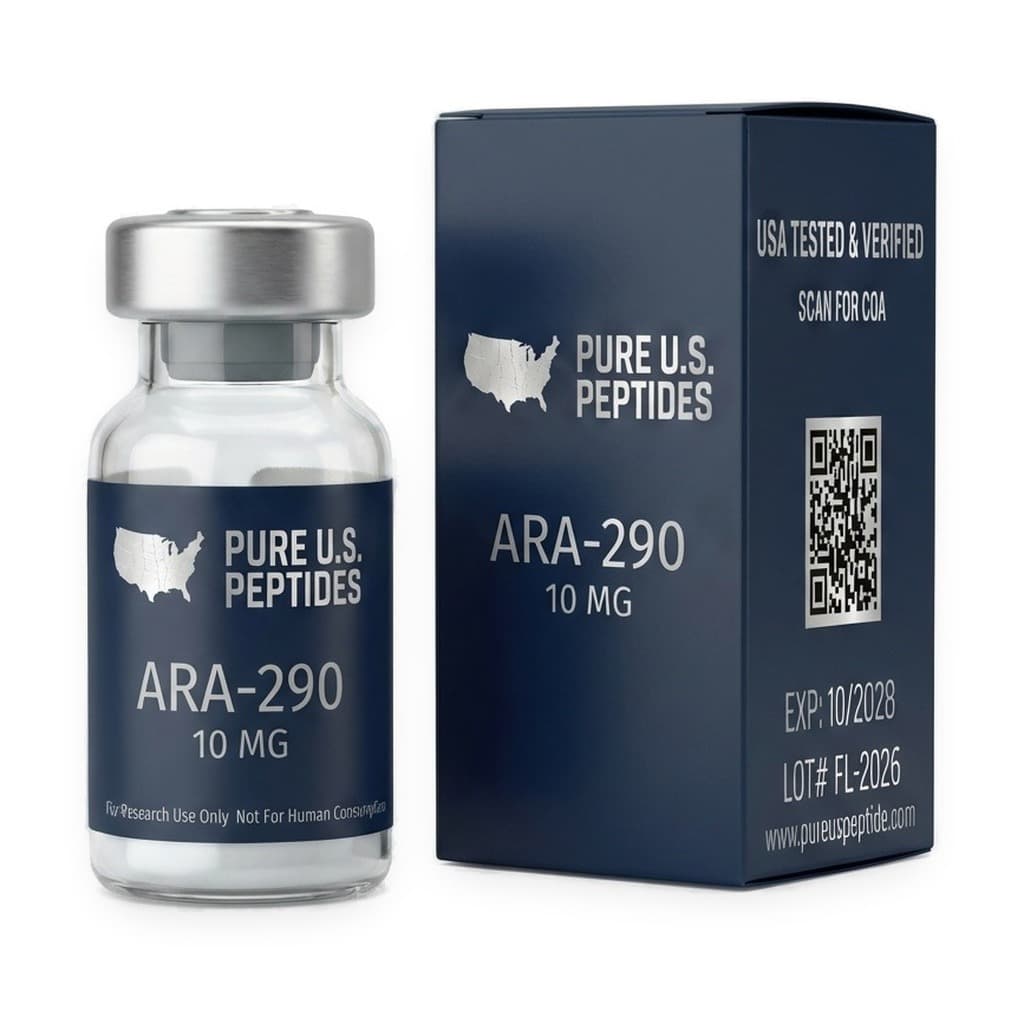
ARA-290 10mg
En Stock y Listo para Envío desde EE.UU.
Envío GRATIS en todos los pedidos de EE.UU.
Pago seguro mediante procesador de pagos encriptado


 +2.9k
+2.9kSolo para Uso en Investigación
Estos productos son exclusivamente para investigación de laboratorio y no están destinados para uso médico. No están aprobados por la FDA para diagnosticar, tratar, curar o prevenir ninguna enfermedad. Al realizar su compra, usted certifica que serán utilizados exclusivamente para investigación y no para consumo humano o animal.
Resumen de Investigación
21 Citas PubMedARA-290 (también conocido como cibinetide) es un péptido sintético de 11 aminoácidos derivado de la estructura tridimensional de la eritropoyetina (EPO), específicamente modelado a partir del dominio de superficie de la hélice-B de la molécula de EPO. [2] A diferencia de la EPO de longitud completa, ARA-290 es no hematopoyético — no estimula la producción de glóbulos rojos (eritropoyesis), evitando así los riesgos cardiovasculares y trombóticos asociados con el protocolo experimental de EPO, como hipertensión y eventos tromboembólicos. [3] ARA-290 fue desarrollado por Araim Pharmaceuticals (Tarrytown, NY), cofundada por Dr. Michael Brines y Dr. Anthony Cerami, para aprovechar las potentes propiedades protectoras de tejidos y antiinflamatorias de la EPO sin desencadenar sus observaciones hematológicas reportadas en poblaciones de estudio. [18] El péptido activa selectivamente el Receptor de Reparación Innata (IRR), un heterocomplejo del receptor de EPO (EPOR) y del receptor beta-común CD131 (βcR). El IRR típicamente no se expresa en...
ARA-290 — Datos de Investigación de un Vistazo
| Propiedad | Valor |
|---|---|
| Fórmula Molecular | C51H84N16O21 |
| Peso Molecular | 1257.3 g/mol |
| Número CAS | 1208244-03-8 |
| Secuencia de Aminoácidos | Pyr-Glu-Gln-Leu-Glu-Arg-Ala-Leu-Asn-Ser-Ser-OH |
| Citas PubMed Referenciadas | 21 |
| Investigadores Colaboradores | 2 |
| Condiciones de Almacenamiento | Almacenar liofilizado a −20°C (hasta 3 años) o 2–8°C (hasta 2 años). |
| Estándar de Pureza | Certificado pendiente |
| Solo para Uso en Investigación | No destinado al consumo humano. Solo para uso en investigación. |
Research guide
What is ARA-290? Read the full research guideDescripción General
ARA-290 (también conocido como cibinetide) es un péptido sintético de 11 aminoácidos derivado de la estructura tridimensional de la eritropoyetina (EPO), específicamente modelado a partir del dominio de superficie de la hélice-B de la molécula de EPO. [2] A diferencia de la EPO de longitud completa, ARA-290 es no hematopoyético — no estimula la producción de glóbulos rojos (eritropoyesis), evitando así los riesgos cardiovasculares y trombóticos asociados con el protocolo experimental de EPO, como hipertensión y eventos tromboembólicos. [3]
ARA-290 fue desarrollado por Araim Pharmaceuticals (Tarrytown, NY), cofundada por Dr. Michael Brines y Dr. Anthony Cerami, para aprovechar las potentes propiedades protectoras de tejidos y antiinflamatorias de la EPO sin desencadenar sus observaciones hematológicas reportadas en poblaciones de estudio. [18] El péptido activa selectivamente el Receptor de Reparación Innata (IRR), un heterocomplejo del receptor de EPO (EPOR) y del receptor beta-común CD131 (βcR). El IRR típicamente no se expresa en tejidos sanos, pero se sobrerregula rápidamente en respuesta al estrés celular, hipoxia o inflamación. [4]
ARA-290 ha recibido la Designación de Compuesto Huérfano de la FDA y estatus de Vía Rápida (Fast Track) para la investigación de neuropatía asociada a sarcoidosis, y también posee la Designación de Compuesto Huérfano de la EMA para sarcoidosis. [9] Actualmente es un compuesto en investigación no registrado para uso experimental. ARA-290 no está incluido en la Lista de Sustancias Prohibidas de la WADA, aunque su origen relacionado con la EPO podría estar sujeto a revisión futura. [6]
Mecanismo de Acción
1. Objetivo Receptor Primario — El Receptor de Reparación Innata (IRR)
ARA-290 se une selectivamente al Receptor de Reparación Innata (IRR), un complejo heteromérico compuesto por el receptor de eritropoyetina (EPOR) y el receptor beta-común CD131 (βcR). [3] El IRR normalmente no se expresa en tejidos sanos, pero se sobrerregula rápidamente de forma local en respuesta a lesión tisular, hipoxia o estrés metabólico. [4] De manera crítica, ARA-290 no se une al homodímero EPOR responsable de la eritropoyesis, confirmando su selectividad no hematopoyética. [2]
Swartjes et al. (2011) confirmaron esta selectividad demostrando que ARA-290 no tuvo efecto analgésico en ratones knockout del receptor beta-común (βcR−/−), demostrando la dependencia absoluta de la subunidad CD131. [3]
2. Señalización Descendente — JAK2 / STAT / PI3K / MAPK
La unión al IRR inicia la fosforilación de la Janus quinasa 2 (JAK2), que propaga la transducción de señales a través de tres vías principales: [18]
- Vía STAT: Activa factores de transcripción STAT para promover la expresión de genes antiapoptóticos.
- Vía PI3K/Akt: Modula la supervivencia celular, la migración de células madre y el flujo sanguíneo regional para la reparación tisular.
- Vía MAPK: Reduce la inflamación, el edema y media la antiapoptosis.
ARA-290 también inhibe significativamente la translocación nuclear de NF-κB, reduciendo la producción de citoquinas proinflamatorias (TNF-α, IL-6, IL-1β) y aumentando la IL-10 antiinflamatoria. [1]
3. Efectos Antiinflamatorios y Neuroprotectores
En tejido de médula espinal tras lesión nerviosa, ARA-290 suprime la activación de la microglía (inmunorreactividad Iba-1 reducida) y la reactividad astrocítica (expresión de GFAP reducida), cambiando los macrófagos activados de vuelta a un fenotipo en reposo. [7] También regula a la baja las subunidades del receptor NMDA (NR1, NR2A, NR2B) e inhibe la actividad del canal TRPV1, ambos moduladores clave del dolor neuropático. [7]
4. Citoprotección y Salud Mitocondrial
ARA-290 desensibiliza el poro de transición de permeabilidad mitocondrial (mPTP) al estrés oxidante, elevando significativamente el umbral para la apertura del mPTP inducida por ROS en cardiomiocitos. [1] La aplicación crónica en investigación mejora el flujo de autofagia y reduce la acumulación de lipofuscina, marcadores clave del envejecimiento celular. [1]
5. "Interruptor Molecular" — Vida Media Corta, Efectos Sostenidos
A pesar de una vida media plasmática muy corta (~2–20 minutos), ARA-290 activa un "interruptor molecular" tras la activación del IRR. [4] Los efectos biológicos — incluyendo señalización antiapoptótica, supresión de citoquinas y regeneración nerviosa — persisten mucho después de que el péptido se ha eliminado de la circulación. La activación requiere concentraciones que excedan aproximadamente 1 nmol/L (~1.3 ng/mL). [5]
Aplicaciones de Investigación
🧠 Dolor Neuropático y Neuropatía de Fibras Pequeñas (NFP)
ARA-290 ha sido ampliamente estudiado por su capacidad para aliviar el dolor neuropático y reparar fibras nerviosas pequeñas. En un modelo de lesión nerviosa preservada, Swartjes et al. demostraron un alivio dependiente de la dosis y a largo plazo tanto de la alodinia mecánica como la alodinia al frío, que duró hasta 20 semanas (30–60 µg/kg, p < 0.001 vs vehículo) junto con la supresión de la activación de la microglía espinal. [7]
En el ensayo NERVARA (n=38, 28 días) se reportaron criterios de valoración de área de fibras nerviosas corneales, puntuación de síntomas SFNSL y prueba de caminata de 6 minutos. [4]
🩺 Diabetes Tipo 2 y Control Metabólico
En un estudio de Fase 2 (28 días) en sujetos de estudio con diabetes tipo 2 y neuropatía se reportaron criterios de valoración de HbA1c, perfil lipídico y PainDetect. [5]
En modelos preclínicos, ARA-290 (30 µg/kg) mejoró la resistencia a la insulina inducida por dieta en ratones, reduciendo la deposición lipídica hepática, normalizando la glucosa sérica y mejorando la biogénesis mitocondrial en músculo esquelético. [12]
❤️ Protección Cardiovascular y Envejecimiento
La aplicación crónica de ARA-290 en investigación (100 µg/kg, tres veces por semana durante 15 meses) en ratas envejecidas mitigó el aumento asociado a la edad en el volumen telesistólico del ventrículo izquierdo en ~75% (p < 0.05), atenuó la disminución de la fracción de eyección casi a la mitad (p < 0.0001) y redujo significativamente la elevación de la presión arterial (p < 0.008). [1] Las ratas tratadas mostraron significativamente menor inflamación cardíaca (leucocitos CD45 p < 0.001, monocitos CD68 p < 0.001), actividad reducida de NF-κB y puntuaciones más bajas del índice de fragilidad a los 33 meses de edad (p < 0.001). [1]
Ver también: BPC-157 y TB-500 para investigación relacionada con reparación tisular.
Características Bioquímicas
| Propiedad | Valor |
|---|---|
| Formula | C51H84N16O21 |
| Molecular Weight | 1257.3 g/mol |
| Synonyms | Cibinetide, ARA290, pHBSP (Pyroglutamate Helix B Surface Peptide) |
| Cas Number | 1208244-03-8 |
| Sequence | Pyr-Glu-Gln-Leu-Glu-Arg-Ala-Leu-Asn-Ser-Ser-OH |
| Pubchem Cid | 91810664 |
| Monoisotopic Mass | 1256.6 Da |
| Polar Area | N/A |
| Complexity | N/A |
| X Log P | N/A |
| Heavy Atom Count | 88 |
| H Bond Donor Count | 21 |
| H Bond Acceptor Count | 27 |
| Rotatable Bond Count | 44 |
Identificadores
| Pubchem Cid | |
|---|---|
| Inchi | |
| Inchi Key | |
| Smiles Isomeric | |
| Smiles Canonical | |
| Iupac Name |
Resumen de Investigación Preclínica
Estudios en Animales
- Dolor Neuropático (Ratas): 30–60 µg/kg produjo alivio dependiente de la dosis y a largo plazo (20 semanas) de la alodinia mecánica y al frío con supresión de la activación de la microglía espinal. [7]
- Envejecimiento Cardiovascular (Ratas): 100 µg/kg tres veces por semana durante 15 meses preservó la función cardíaca (fracción de eyección, volumen del VI), redujo la inflamación cardíaca (NF-κB, CD45, CD68), mejoró el índice de fragilidad, incrementó el flujo de autofagia. Sin extensión significativa de la esperanza de vida (p = 0.182). [1]
- Resistencia a la Insulina (Ratones): 30 µg/kg mejoró la disfunción metabólica inducida por dieta, normalizó los perfiles de glucosa/lípidos, incrementó la biogénesis mitocondrial. [12]
- Trasplante de Islotes (Ratas): 120 µg/kg/día protegió los islotes de la apoptosis inducida por citoquinas in vitro (75.2% vs. 54.6% viabilidad, p < 0.05). [14]
- Depresión (Ratones): ARA-290 diario mejoró el comportamiento similar a la depresión inducida por estrés crónico, comparable a la fluoxetina, revirtiendo la activación de la microglía. [7]
- Cicatrización de Heridas (Ratas): La aplicación tópica en ratas diabéticas aceleró el cierre de heridas, redujo el período de reepitelización y aumentó el contenido de colágeno. [17]
Ensayos Clínicos en Humanos
- Piloto de NFP por Sarcoidosis (n=22): diseño de 4 semanas; se reportaron criterios de valoración SFNSL. [6]
- Ensayo NERVARA (n=38): diseño de 28 días; se reportaron criterios de valoración de área de fibras nerviosas corneales, SFNSL y 6MWT. [4]
- Neuropatía por DT2 (n=48): diseño de 28 días; se reportaron criterios de valoración de HbA1c, PainDetect y densidad de fibras nerviosas corneales. [5]
- Edema Macular Diabético (Fase 2): diseño de 12 semanas; se reportaron criterios de valoración de grosor retiniano, producción lagrimal y control metabólico. [10]
Estatus Regulatorio
FDA: Compuesto en investigación. Designación de Compuesto Huérfano + Vía Rápida para neuropatía asociada a sarcoidosis. [9]
EMA: Designación de Compuesto Huérfano para sarcoidosis.
WADA: Actualmente no está en la Lista de Sustancias Prohibidas, pero el origen relacionado con EPO podría estar sujeto a revisión futura.
Perfil de tolerabilidad reportado: No se detectaron anticuerpos anti-ARA-290 después de 28 días de exposición. Sin aumento en hematocrito, hemoglobina o recuento de plaquetas. La toxicología preclínica no mostró hallazgos adversos incluso a múltiplos altos de las concentraciones activas. [5]
TODOS LOS ARTÍCULOS E INFORMACIÓN DE PRODUCTOS PROPORCIONADOS EN ESTE SITIO WEB SON SOLO PARA FINES INFORMATIVOS Y EDUCATIVOS.
Autores y Atribución
✍️ Autor del Artículo
Dr. Michael Brines
Michael Brines, MD, PhD, es endocrinólogo y cofundador de Araim Pharmaceuticals, Inc. (Tarrytown, NY). Graduado de la Universidad Rockefeller, el Dr. Brines identificó que las propiedades protectoras de tejidos de la eritropoyetina (EPO) eran mediadas por un receptor específico (el Receptor de Reparación Innata) distinto del receptor eritropoyético. Desempeñó un papel principal en la ingeniería de ARA-290 basada en la estructura tridimensional de la hélice B de la EPO para activar selectivamente el IRR sin estimular la producción de glóbulos rojos. También sirvió en The Feinstein Institutes for Medical Research (Manhasset, NY) y ha publicado más de 40 artículos sobre protección tisular derivada de EPO. Michael Brines es referenciado como uno de los principales científicos involucrados en la investigación y desarrollo de ARA-290. De ninguna manera este doctor/científico respalda o promueve la compra, venta o uso de este producto por ninguna razón. No existe afiliación ni relación, implícita o de otro tipo, entre Pure US Peptide y este doctor.
Ver Perfil Completo del Investigador →🎓 Autor de Revista Científica
Dr. Albert Dahan
Albert Dahan, MD, PhD, es Profesor de Anestesiología en el Centro Médico de la Universidad de Leiden (LUMC), Países Bajos. El Dr. Dahan es un investigador clínico clave que identificó la necesidad médica no satisfecha de neuropatía dolorosa en sujetos de estudio con sarcoidosis e inició los ensayos clínicos pivotales que evaluaron ARA-290 para esta condición, incluyendo el Ensayo NERVARA (NCT02039687). Sus ensayos reportaron criterios de valoración de síntomas de neuropatía de fibras pequeñas, densidad de fibras nerviosas corneales y calidad de vida en sujetos de estudio con sarcoidosis y diabetes tipo 2. Es el autor principal de varias publicaciones clínicas fundamentales sobre ARA-290 en Molecular research compound. Albert Dahan es referenciado como uno de los principales científicos involucrados en la investigación y desarrollo de ARA-290. De ninguna manera este doctor/científico respalda o promueve la compra, venta o uso de este producto por ninguna razón. No existe afiliación ni relación, implícita o de otro tipo, entre Pure US Peptide y este doctor.
Ver Perfil Completo del Investigador →Dr. Albert Dahan is being referenced as one of the leading scientists involved in the research and development of ARA-290. In no way is this doctor/scientist endorsing or advocating the purchase, sale, or use of this product for any reason. There is no affiliation or relationship, implied or otherwise, between Pure US Peptide and this doctor. The purpose of citing the doctor is to acknowledge, recognize, and credit the exhaustive research and development efforts conducted by the scientists studying this peptide.
Citas Referenciadas
Winicki NM, Nanavati AP, Morrell CH, et al. A small erythropoietin derived non-hematopoietic peptide reduces cardiac inflammation, attenuates age associated declines in heart function and prolongs healthspan. Front Cardiovasc Med, 9, 1096887, 2023.
DOIBrines M, Patel NS, Villa P, et al. Nonerythropoietic, tissue-protective peptides derived from the tertiary structure of erythropoietin. PNAS USA, 105(31), 10925–10930, 2008.
PubMedSwartjes M, Morariu A, Niesters M, et al. Anesthesiology, 115(5), 1084–1092, 2011.
PubMedDahan A, Dunne A, Swartjes M, et al. Mol Med, 19(1), 334–345, 2013.
PubMedBrines M, Dunne AN, van Velzen M, et al. Mol Med, 20(1), 658–666, 2015.
PubMedHeij L, Niesters M, Swartjes M, et al. Mol Med, 18(1), 1430–1436, 2012.
PubMedSwartjes M, van Velzen M, Niesters M, et al. Mol Pain, 10, 13, 2014.
PubMedMcVicar CM, Hamilton R, Colhoun LM, et al. Intervention with an erythropoietin-derived peptide protects against neuroglial and vascular degeneration during diabetic retinopathy. Diabetes, 60(11), 2995–3005, 2011.
PubMedCulver DA, Dahan A, Bajorunas D, et al. Invest Ophthalmol Vis Sci, 58(6), BIO52–BIO60, 2017.
PubMedLois N, Gardner E, McFarland M, et al. J Clin Med, 9(7), 2225, 2020.
PubMedNairz M, Haschka D, Dichtl S, et al. Cibinetide dampens innate immune cell functions thus ameliorating the course of experimental colitis. Sci Rep, 7(1), 13012, 2017.
PubMedCollino M, Benetti E, Rogazzo M, et al. A non-erythropoietic peptide derivative of erythropoietin decreases susceptibility to diet-induced insulin resistance in mice. Br J Pharmacol, 171(24), 5802–5815, 2014.
PubMedTokodai K, Brines M, Ericzon BG, et al. Improvement of Islet Allograft Function Using Cibinetide, an Innate Repair Receptor Ligand. Transplantation, 104(10), 2020.
PubMedKumagai-Braesch M, Cerami A, Ericzon BG, et al. Cell Transplantation, 30, 2021.
PubMedSchmidt RE, Feng D, Wang Q, et al. Effect of insulin and an erythropoietin-derived peptide (ARA290) on established neuritic dystrophy in Akita diabetic mouse sympathetic ganglia. Exp Neurol, 232(2), 126–135, 2011.
PubMedNiesters M, Swartjes M, Heij L, et al. Expert Opin Orphan Drugs, 1, 77–87, 2013.
DOIPulman KG, Smith M, Mengozzi M, et al. The erythropoietin-derived peptide ARA290 reverses mechanical allodynia in the neuritis model. Neuroscience, 233, 174–183, 2013.
PubMedBrines M. Discovery of a Master Regulator of Injury and Healing: Tipping the Outcome from Damage toward Repair. Mol Med, 20(Suppl 1), S10–S16, 2014.
PubMedAhmet I, Tae H, Brines M, et al. J Pharmacol Exp Ther, 345(3), 446–456, 2013.
PubMedColdewey SM, Khan AI, Kapoor A, et al. Kidney Int, 84(3), 482–490, 2013.
PubMedMuller C, Yassin K, Li LS, et al. ARA290 Improves Insulin Release and Glucose Tolerance in Type 2 Diabetic Goto-Kakizaki Rats. Mol Med, 21(1), 969–978, 2016.
PubMedAviso de Uso en Investigación
Solo para Uso en Investigación (RUO). No destinado al consumo humano, uso clínico, ni como medicamento, alimento, cosmético o dispositivo médico. Este producto no ha sido evaluado por la FDA y se suministra exclusivamente para investigación de laboratorio in vitro por profesionales calificados.
Certificado de Análisis
Published certificates come from third-party laboratories. If this listing's certificate is still pending, the card below says so.
Último Informe de Laboratorio
Almacenamiento y Manejo
Resumen
Almacenar liofilizado a −20°C (hasta 3 años) o 2–8°C (hasta 2 años). Proteger de la luz.
❄️ Almacenamiento de Polvo Liofilizado
El ARA-290 liofilizado es estable a temperatura ambiente durante el envío, pero debe almacenarse a largo plazo a −20°C (−4°F) o menos, donde permanece estable hasta 3 años, o a 2–8°C (36–46°F) hasta 2 años. Proteger de la luz en todo momento.
🧴 Precauciones de Manejo
Se aplican las prácticas estándar de seguridad de laboratorio. ARA-290 es solo para uso en investigación (RUO). El certificado de lote de este producto está pendiente.
“Estudios en Animales Dolor Neuropático (Ratas): 30–60 µg/kg produjo alivio dependiente de la dosis y a largo plazo (20 semanas) de la alodinia mecánica y al frío con supresión de la activación de la microglía espinal.”
Compuestos de Investigación Relacionados
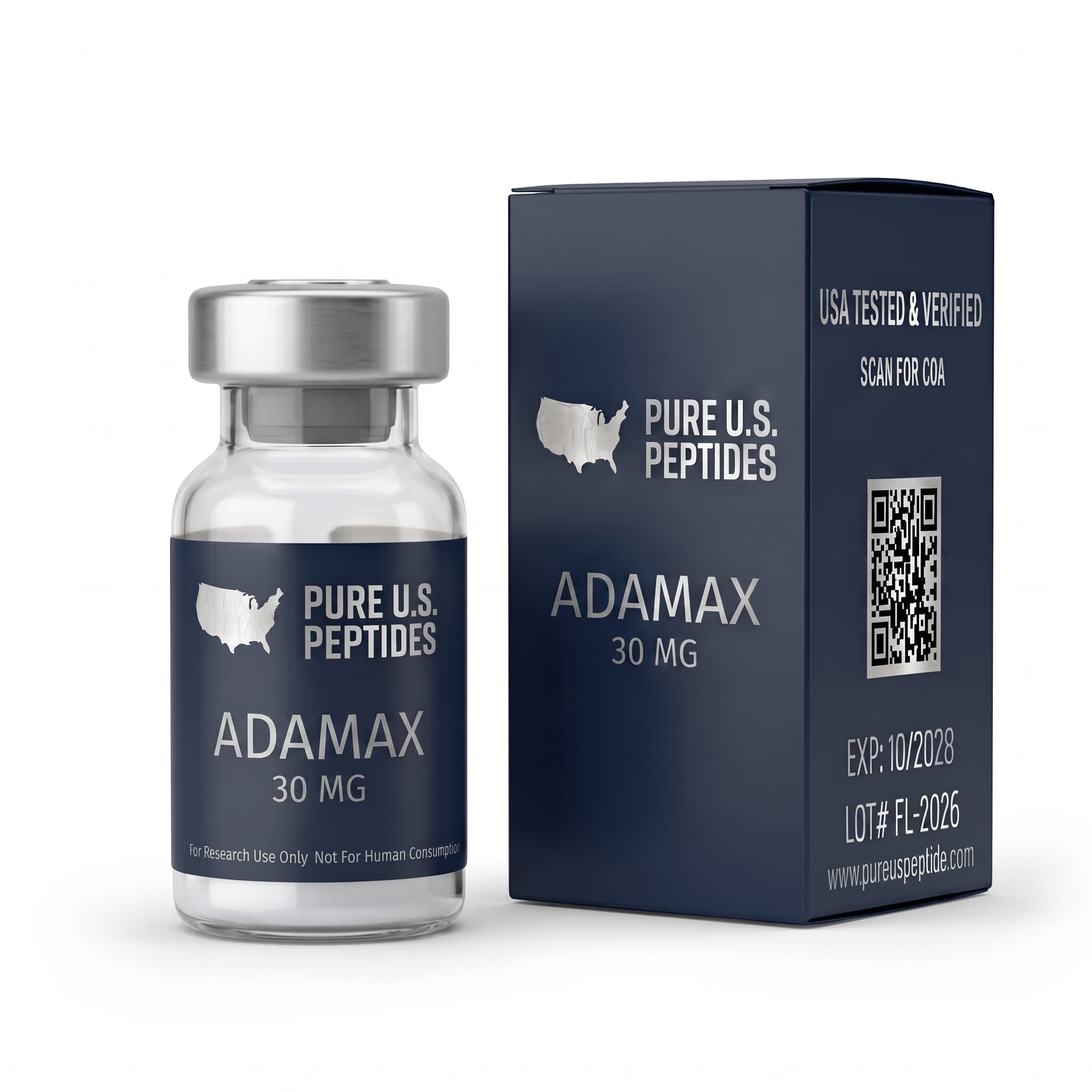
Adamax
30mg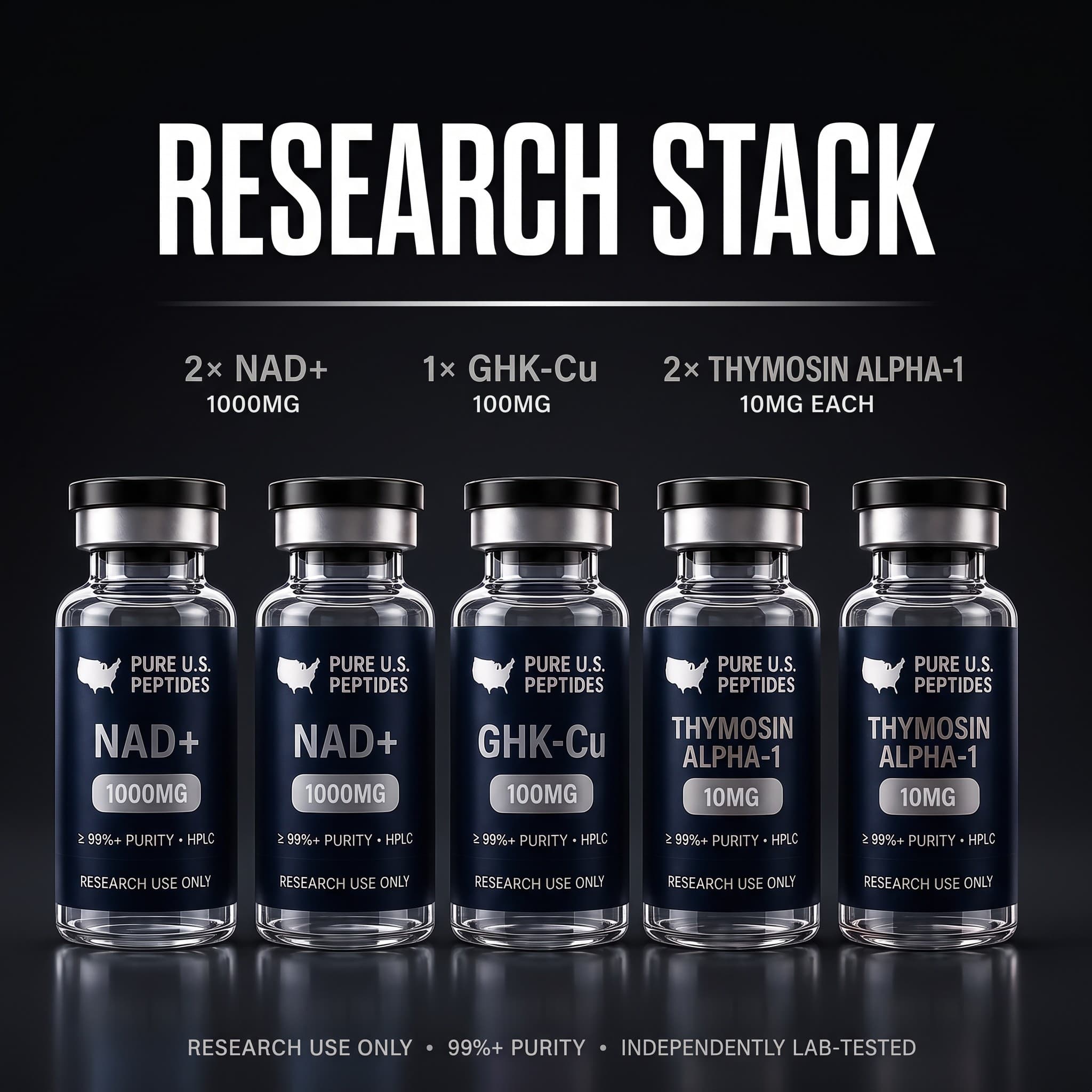
Long Shot Research Kit
Grand Slam Research Kit