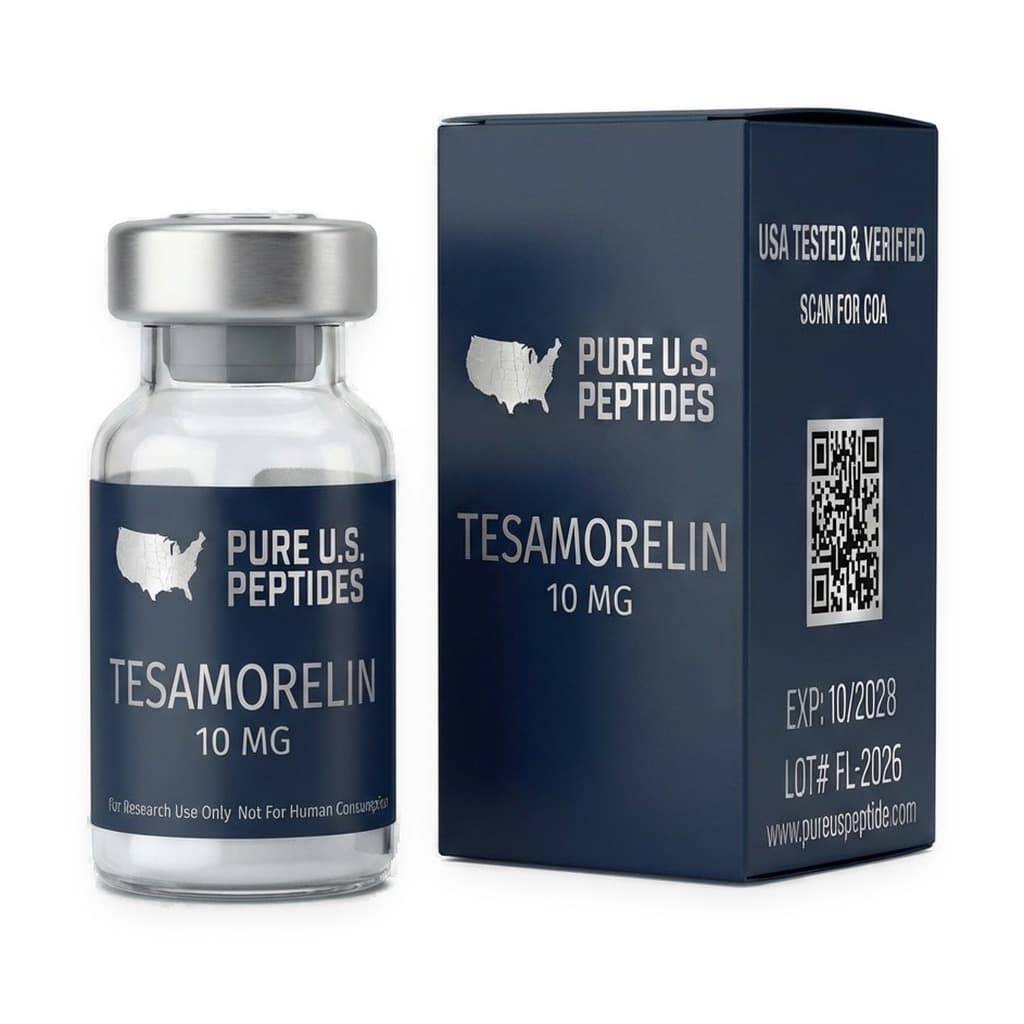
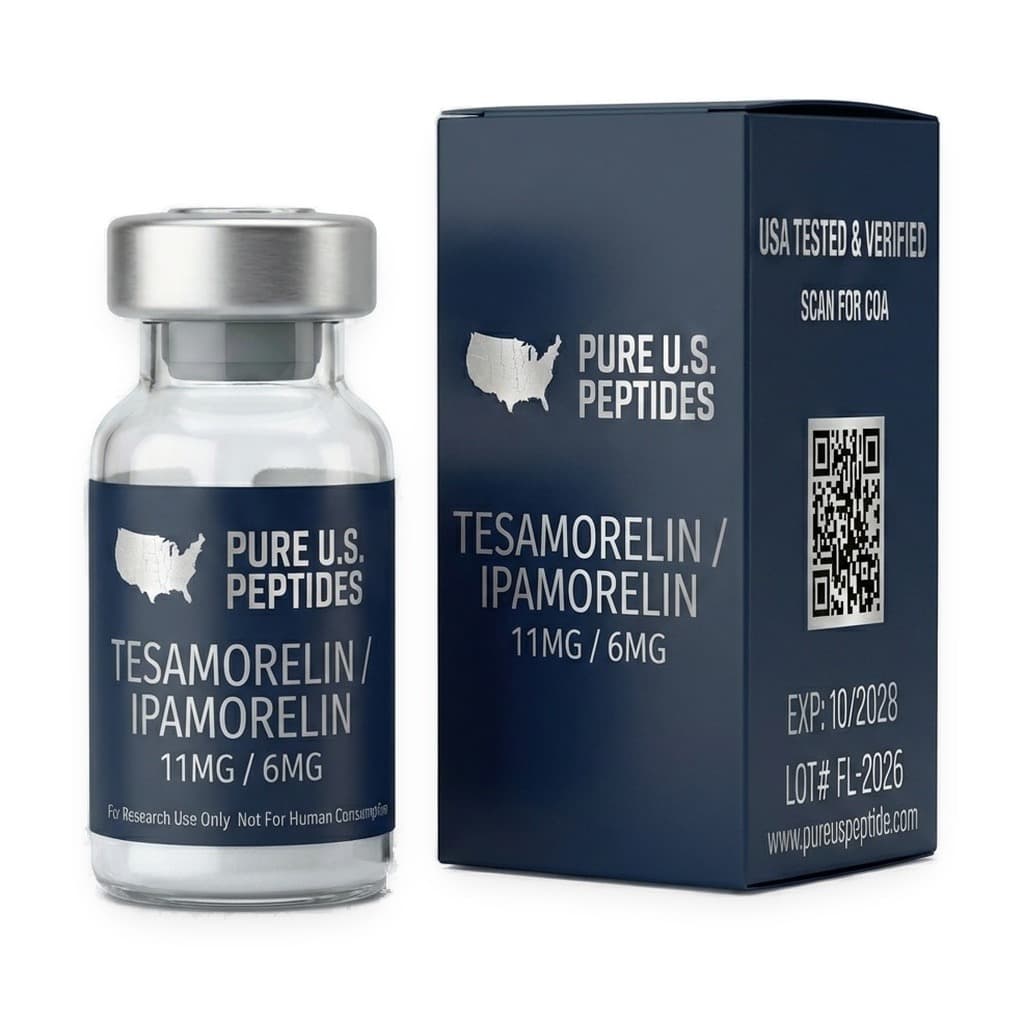
Tesamorelin/Ipamorelin Blnd 11mg/6mg
In Stock & Ready to Ship from USA
FREE shipping on orders over $200
Secure checkout via encrypted payment processor


 +2.9k
+2.9kResearch Use Only
These products are for laboratory research only and not intended for medical use. They are not FDA-approved to diagnose, treat, cure, or prevent any disease. By purchasing, you certify they will be used solely for research and not for human or animal consumption.
Bundle / Blend Research
This product contains Tesamorelin + Ipamorelin. Select a tab below to view the full Gold Standard research profile for each component.
Overview
Tesamorelin (TH9507) is a synthetic 44-amino acid analog of endogenous GHRH with a molecular weight of 5135.9 Da. It was developed by Theratechnologies Inc. to overcome the inherent instability of native GHRH, which has a half-life of only 3–8 minutes due to rapid cleavage by DPP-4. [1] [2]
Key Structural Feature: A trans-3-hexenoic acid group is anchored to the N-terminal tyrosine (Tyr1), rendering the peptide resistant to DPP-4 degradation and extending the half-life to approximately 26–38 minutes. C-terminal is amidated (-NH₂). [3]
Regulatory Status:
- FDA: Approved as Egrifta SV / Egrifta WR for HIV-associated lipodystrophy (excess abdominal fat reduction). NOT indicated for weight loss. [4]
- EMA: Application withdrawn; not marketed in the EU. [6]
- WADA: Prohibited (S2 — Peptide Hormones, Growth Factors). [5]
Developer: Theratechnologies Inc. (Montreal, Canada) — originally designated TH9507.
Pharmacokinetic Highlights:
- Bioavailability: <4% (subcutaneous)
- Half-Life: ~26–38 min (SC); ~11 min (1.28 mg WR formulation)
- Route: Subcutaneous injection (abdomen)
- Standard Dose: 2 mg SC daily (Egrifta SV); 1.28 mg SC daily (Egrifta WR, bioequivalent)
- Pulsatility: Preserves natural pulsatile GH secretion (unlike rhGH)
Discovery and design rationale
Theratechnologies developed tesamorelin in the late 1990s by introducing a single trans-3-hexenoyl modification at the N-terminal tyrosine of the native 44-residue GHRH(1-44) sequence. The strategy was deliberately conservative: keep the full-length GHRH backbone so the molecule retains GHRH-receptor selectivity and binding affinity, but block the dipeptidyl-peptidase-4 cleavage site responsible for the <5-minute half-life of native GHRH. The modification yielded a research compound with the same downstream signaling profile as native GHRH but with a circulating duration suitable for daily subcutaneous research administration in animal and clinical investigation models. [1]
Research framework
Within the GHRH-axis and metabolic peptide research family, tesamorelin is most directly compared with sermorelin (truncated GHRH(1-29) analog) and CJC-1295 (long-acting GHRH analog with DAC variant). For visceral-adipose endpoints it is also paired with the lipolytic hGH-fragment analog AOD-9604. These cross-comparisons inform research designs that aim to dissect GHRH-receptor-mediated effects from direct hGH-receptor or beta-3-adrenergic-driven adipocyte responses. [2]
Mechanism of Action
1. Receptor Target — GHRH Receptor
Tesamorelin acts as a specific agonist for the GHRH receptor (GHRHr), a seven-transmembrane G protein-coupled receptor (GPCR) located on somatotroph cells in the anterior pituitary gland. Binding potency is comparable to endogenous GHRH. [7]
2. DPP-4 Resistance
The trans-3-hexenoic acid modification at the N-terminal Tyr1 acts as a chemical shield against DPP-4 cleavage. Native GHRH is rapidly degraded (T½ ~5 min); Tesamorelin's modification extends stability to ~26–38 min. [3]
3. Downstream Signaling Cascade
Gₛ → Adenylyl Cyclase → cAMP → PKA → Ca²⁺ Influx → GH Exocytosis:
- Receptor activation triggers the Gₛα subunit
- Gₛα stimulates adenylyl cyclase, converting ATP to cAMP
- Elevated cAMP activates Protein Kinase A (PKA)
- PKA opens voltage-gated Ca²⁺ channels → calcium influx
- Ca²⁺ triggers exocytosis of pre-stored GH vesicles
- Simultaneously, cAMP promotes GH gene transcription (new GH synthesis) [7]
🔑 Pulsatility Preserved: Unlike exogenous rhGH (which creates constant supraphysiological levels), Tesamorelin stimulates natural pulsatile GH release. The IGF-1 negative feedback loop remains intact, preventing runaway GH production. [8]
The product supplied here is for research use only regardless of regulatory status of related formulations.
4. Selectivity
Tesamorelin is highly selective for the GHRH receptor. It does not significantly alter TSH, LH, ACTH, or Prolactin levels. Unlike GHRPs (e.g., Ipamorelin), it does not bind the ghrelin receptor. [9]
5. Cellular and Tissue-Level Effects
Adipose Tissue:
- Selectively reduces visceral adipose tissue (VAT) by ~15–18%, minimal effect on subcutaneous fat [10]
- Activates hormone-sensitive lipase (HSL), inhibits lipoprotein lipase (LPL)
- Visceral fat cells have higher GH receptor density, explaining selectivity
Hepatic (Liver):
- Reduces hepatic fat (~37% relative reduction) [11]
- Reduces de novo lipogenesis, enhances fatty acid oxidation
- Prevents progression of liver fibrosis (10.5% vs 37.5% progression, P=0.04) [11]
Musculoskeletal:
- Promotes protein synthesis, increases trunk lean mass and muscle area [12]
- Improves muscle density (myosteatosis reduction)
Nervous System:
- Improves executive function and verbal memory in MCI/aging [13]
- Increases GABA levels, modulates amyloid-beta pathways
6. Comparison with Related Molecules
| Compound | Structure | Key Difference |
|---|---|---|
| Endogenous GHRH | Native 44 aa | Rapidly degraded by DPP-4 (T½ ~5 min) |
| Tesamorelin | 44 aa + hexenoyl cap | DPP-4 resistant (T½ ~30 min); pulsatile GH |
| Sermorelin | 29 aa fragment | Shorter T½ (~5–10 min); less potent |
| CJC-1295 + DAC | GHRH analog + DAC | Days-long T½; continuous “GH bleed” (not pulsatile) |
| Somatropin (rhGH) | Exogenous GH | Bypasses pituitary; suppresses natural production |
7. Pharmacokinetics
| Parameter | Value |
|---|---|
| Route | Subcutaneous (abdomen) |
| Bioavailability | <4% (SC) |
| Half-Life (T½) | ~26–38 min (SC, 2 mg); ~11 min (1.28 mg WR) |
| Standard Dose | 2 mg SC daily (SV); 1.28 mg SC daily (WR) |
| GH Pulsatility | Preserved (natural pulses, IGF-1 feedback intact) |
| Metabolism | Proteolytic cleavage; no formal human metabolism studies |
| Animal T½ | 21–45 min (dogs) |
Research Applications
💊 HIV-Associated Lipodystrophy (FDA-registered)
The primary clinical application. Two pivotal Phase 3 trials (n=816) demonstrated 14–18% VAT reduction with 2 mg SC daily, with improvements in triglycerides (-12.3%), body image, and waist circumference. Reductions were maintained over 52 weeks but reversed upon discontinuation. [4] [10]
🫁 NAFLD / NASH
A 12-month RCT (n=61) in HIV-infected study subjects showed 37% hepatic fat reduction, with 35% achieving normal hepatic fat fraction (<5%). Critically, Tesamorelin prevented progression of liver fibrosis (10.5% vs 37.5% in placebo, P=0.04). [11]
🧠 Cognitive Function / MCI
In a blinded RCT (n=152) of healthy older adults and MCI study subjects, 1 mg daily for 20 weeks improved executive function (P=0.005) and global cognition (P=0.03), with IGF-1 increasing +117%. Mechanisms involve increased GABA and amyloid-beta modulation. [13]
🦴 Peripheral Nerve Regeneration
Preclinical GH models showed enhanced median nerve regeneration (axon density P<0.005, myelin thickness P<0.0001) and improved muscle re-innervation (38% vs 27.9%, P<0.02). Tesamorelin is identified as the optimal agent for human translation. [14]
❤️ Cardiovascular Risk Reduction
Reduces triglycerides and improves carotid intima-media thickness (cIMT). VAT reduction is theorized to lower atherosclerotic cardiovascular disease risk. Long-term cardiovascular outcomes remain under study. [15]
💪 Sarcopenia / Muscle Quality
Increases skeletal muscle density and area (particularly trunk region), independent of changes in muscle mass quantity. Replaces hypertrophic lipid-engorged fat cells with healthy tissue. [12]
🍬 Metabolic Syndrome / Type 2 Diabetes
A tolerability study in T2D study subjects (n=53) demonstrated neutral glucose effects — no significant changes in fasting glucose, HbA1c, or insulin response vs placebo. However, Phase 3 HIV data showed increased HbA1c risk (HR 3.3 vs placebo), warranting monitoring. [16]
GHRH-Receptor Pulsatility Profiling
Tesamorelin is used as a research tool to investigate whether stimulating endogenous, pulsatile GH secretion through the GHRH-receptor produces a different downstream IGF-1 and metabolic-substrate signature compared with continuous exogenous recombinant human GH. Pharmacokinetic-pharmacodynamic studies in healthy volunteer cohorts have catalogued amplitude, frequency, and trough patterns that inform research models of natural-pulsatility versus tonic-elevation GH biology. [7]
Comparative Research Context
Within the GHRH-axis research family, tesamorelin is most directly compared with sermorelin (truncated GHRH(1-29)), CJC-1295 (long-acting GHRH analog), and the lipolytic hGH-fragment AOD-9604. These cross-comparisons help research teams dissect GHRH-receptor-mediated visceral-adiposity effects from direct hGH-receptor or beta-3-adrenergic-driven adipocyte responses.
Biochemical Characteristics
| Property | Value |
|---|---|
| Formula | C₂₂₁H₃₆₆N₇₂O₆₇S |
| Molecular Weight | 5135.9 Da |
| Synonyms | TH9507, Egrifta, Egrifta SV, Egrifta WR, Tesamorelin acetate, [hexenoyl-trans-3-Tyr1]hGRF(1-44)NH₂, Hex-hGRF |
| Cas Number | 218949-48-5 (free base); 901758-09-6 (acetate) |
| Sequence | hexenoyl-YADAIFTNSYRKVLGQLSARKLLQDIMSRQQGESNQERGARARL-NH₂ (44 aa) |
| Pubchem Cid | 16137828 |
| Monoisotopic Mass | N/A |
| Polar Area | N/A |
| Complexity | N/A |
| X Log P | N/A |
| Heavy Atom Count | N/A |
| H Bond Donor Count | N/A |
| H Bond Acceptor Count | N/A |
| Rotatable Bond Count | N/A |
Identifiers
| Pubchem Cid | |
|---|---|
| Inchi Key | |
| Inchi | |
| Smiles Isomeric | |
| Smiles Canonical | |
| Iupac Name |
Preclinical Research Summary
Clinical Trials
✅ Tesamorelin is one of very few GHRH analogs with formal FDA approval. The pivotal program included 816 study subjects in Phase 3 trials, with expanding research into NAFLD, cognitive function, and nerve regeneration.
| Trial | Phase | n= | Indication | Key Result | Outcome |
|---|---|---|---|---|---|
| Pivotal (Study 1+2) | Phase 3 | 816 | HIV Lipodystrophy | -18%/-14% VAT (P<0.001) | ✅ FDA-registered |
| Dose-Ranging | Phase 2 | 61 | HIV Lipodystrophy | -15.7% VAT (2mg group) | ✅ Positive |
| NAFLD | RCT | 61 | HIV + NAFLD | -37% hepatic fat; fibrosis prevented | ✅ Positive |
| MCI/Aging | RCT | 152 | Cognitive Function | Exec function P=0.005; IGF-1 +117% | ✅ Positive |
| HIV Neuro | Phase 2 | 73 | HIV Neurocognitive | Trend only (P=0.060) | ❌ Negative |
| Obesity/GH-Low | RCT | 60 | Obesity | -18% VAT (P<0.001) | ✅ Positive |
| T2D Tolerability Assessment | RCT | 53 | Type 2 Diabetes | Neutral glucose — tolerability demonstrated | ✅ Well-tolerated |
| Healthy Men | PK | 13 | Physiology | +GH pulsatility, no insulin change | ✅ Positive |
Reported Tolerability Profile
Established through 800+ study subjects in Phase 3 trials. [4]
- Common (>5%): Arthralgia, injection site erythema/pruritus, pain in extremity, peripheral edema, myalgia
- Hypersensitivity: 3.6–4% (pruritus, erythema, flushing, urticaria)
- Glucose: Increased risk of HbA1c ≥6.5% (HR 3.3 vs placebo); monitor glucose
- Reproductive: Pregnancy Category X — hydrocephaly in rat offspring at 2–4x human dose; delayed skull ossification at lower doses
- Contraindications: Active malignancy, hypophysectomy/pituitary tumor, pregnancy, hypersensitivity
ALL ARTICLES AND PRODUCT INFORMATION PROVIDED ON THIS WEBSITE ARE FOR INFORMATIONAL AND EDUCATIONAL PURPOSES ONLY.
Authors & Attribution
✍️ Article Author
Dr. Steven K. Grinspoon
Steven K. Grinspoon, MD, is Professor of research compound at Harvard Medical School and leads the Program in Nutritional Metabolism at Massachusetts General Hospital. He served as the lead US investigator for the Egrifta clinical trials and his research spans visceral adipose tissue, cardiovascular risk, and NAFLD in HIV-infected study subjects. He is a named inventor on the NAFLD/NASH patent for Tesamorelin. Steven K. Grinspoon is being referenced as one of the leading scientists involved in the research and development of Tesamorelin. In no way is this doctor/scientist endorsing or advocating the purchase, sale, or use of this product for any reason. There is no affiliation or relationship, implied or otherwise, between Pure US Peptide and this doctor.
🎓 Scientific Journal Author
Dr. Julian Falutz
Julian Falutz, MD, is affiliated with the Montreal General Hospital and McGill University Health Centre. He serves as lead author on the pivotal multicenter Phase 3 clinical trials and pooled tolerability analyses that established Tesamorelin's efficacy in reducing visceral adipose tissue in HIV-infected study subjects. His work was central to the FDA approval of Egrifta. Julian Falutz is being referenced as one of the leading scientists involved in the research and development of Tesamorelin. In no way is this doctor/scientist endorsing or advocating the purchase, sale, or use of this product for any reason. There is no affiliation or relationship, implied or otherwise, between Pure US Peptide and this doctor.
🔬 Contributing Researcher
Dr. Takara L. Stanley
Takara L. Stanley, MD, is at Massachusetts General Hospital and Harvard Medical School. She has conducted extensive research into the metabolic profile of Tesamorelin study subjects, including liver enzymes, inflammatory markers, and GH pulsatility. Her landmark Lancet HIV trial (2019) demonstrated Tesamorelin prevents hepatic fibrosis progression in NAFLD. Takara L. Stanley is being referenced as one of the leading scientists involved in the research and development of Tesamorelin. In no way is this doctor/scientist endorsing or advocating the purchase, sale, or use of this product for any reason. There is no affiliation or relationship, implied or otherwise, between Pure US Peptide and this doctor.
Referenced Citations
Falutz J, Allas S, Kotler D, et al. A placebo-controlled, dose-ranging study of a growth hormone releasing factor in HIV-infected patients with abdominal fat accumulation. AIDS, 19(12), 1279-87, 2005.
PubMedFerdinandi ES, Brazeau P, High K, et al. Non-clinical pharmacology and safety evaluation of TH9507, a human growth hormone-releasing factor analogue. Basic Clin Pharmacol Toxicol, 100(1), 49-58, 2007.
PubMedFalutz J, Allas S, Blot K, et al. Metabolic effects of a growth hormone-releasing factor in patients with HIV. N Engl J Med, 357(23), 2359-70, 2007.
PubMedFalutz J, Mamputu JC, Potvin D, et al. Effects of tesamorelin (TH9507), a growth hormone-releasing factor analog, in human immunodeficiency virus-infected patients with excess abdominal fat: a pooled analysis of two multicenter, double-blind placebo-controlled phase 3 trials with safety extension data. J Clin Endocrinol Metab, 95(9), 4291-304, 2010.
PubMedWang Y, Tomlinson B. Tesamorelin, a human growth hormone releasing factor analogue. Expert Opin Investig Drugs, 18(3), 303-10, 2009.
PubMedGrunfeld C, Dritselis A, Kirkpatrick P. Tesamorelin. Nat Rev Drug Discov, 10(2), 95-6, 2011.
PubMedStanley TL, Chen CY, Branch KL, Makimura H, Grinspoon SK. Effects of a growth hormone-releasing hormone analog on endogenous GH pulsatility and insulin sensitivity in healthy men. J Clin Endocrinol Metab, 96(1), 150-8, 2011.
PubMedDhillon S. Tesamorelin: a review of its use in the management of HIV-associated lipodystrophy. Drugs, 71(8), 1071-91, 2011.
PubMedSpooner LM, Olin JL. Tesamorelin: a growth hormone-releasing factor analogue for HIV-associated lipodystrophy. Ann Pharmacother, 46(2), 240-7, 2012.
PubMedStanley TL, Falutz J, Marsolais C, et al. Reduction in visceral adiposity is associated with an improved metabolic profile in HIV-infected patients receiving tesamorelin. Clin Infect Dis, 54(11), 1642-51, 2012.
PubMedStanley TL, Fourman LT, Feldpausch MN, et al. Effects of tesamorelin on non-alcoholic fatty liver disease in HIV: a randomised, double-blind, multicentre trial. Lancet HIV, 6(12), e821-e830, 2019.
PubMedAdrian S, Scherzinger A, Sanyal A, et al. The Growth Hormone Releasing Hormone Analogue, Tesamorelin, Decreases Muscle Fat and Increases Muscle Area in Adults with HIV. J Frailty Aging, 8(3), 154-159, 2019.
PubMedBaker LD, Barsness SM, Borson S, et al. Effects of Growth Hormone-Releasing Hormone on Cognitive Function in Adults With Mild Cognitive Impairment and Healthy Older Adults. Arch Neurol, 69(11), 1420-9, 2012.
PubMedLopez J, Quan A, Budihardjo J, et al. Growth Hormone Improves Nerve Regeneration, Muscle Re-innervation, and Functional Outcomes After Chronic Denervation Injury. Sci Rep, 9(1), 3117, 2019.
PubMedGrinspoon SK, Fourman L, Stanley T, et al. P-433. Impact of Tesamorelin on Cardiovascular Disease Risk Prediction Scores in Phase 3 Studies Treatment Arms. Open Forum Infect Dis, 12(Suppl 1), 2025. [conference abstract]
DOIClemmons DR, Miller S, Mamputu JC. Safety and metabolic effects of tesamorelin, a growth hormone-releasing factor analogue, in patients with type 2 diabetes: A randomized, placebo-controlled trial. PLoS One, 12(6), e0179538, 2017.
PubMedMakimura H, Feldpausch MN, Rope AM, et al. Metabolic effects of a growth hormone-releasing factor in obese subjects with reduced growth hormone secretion. J Clin Endocrinol Metab, 97(12), 4769-79, 2012.
PubMedFourman LT, Czerwonka N, Feldpausch MN, et al. Visceral fat reduction with tesamorelin is associated with improved liver enzymes in HIV. AIDS, 31(16), 2253-9, 2017.
PubMedMangili A, Falutz J, Mamputu JC, et al. Predictors of Treatment Response to Tesamorelin, a Growth Hormone-Releasing Factor Analog, in HIV-Infected Patients with Excess Abdominal Fat. PLoS One, 10(10), e0140358, 2015.
PubMedLake JE, La K, Erlandson KM, et al. Tesamorelin Improves Fat Quality Independent of Changes in Fat Quantity. AIDS, 35(9), 1395-1402, 2021.
PubMedMakimura H, Murphy CA, Feldpausch MN, Grinspoon SK. The Effects of Tesamorelin on Phosphocreatine Recovery in Obese Subjects With Reduced GH. J Clin Endocrinol Metab, 99(1), 338-343, 2014.
PubMedStanley TL, Feldpausch MN, Oh J, et al. Effect of tesamorelin on visceral fat and liver fat in HIV-infected patients with abdominal fat accumulation: a randomized clinical trial. JAMA, 312(4), 380-9, 2014.
PubMedEllis RJ, Vaida F, Hu K, et al. Effects of Tesamorelin on Neurocognitive Impairment in Persons With HIV and Abdominal Obesity. J Infect Dis, 231(5), 1230-1238, 2025.
PubMedFalutz J, Potvin D, Mamputu JC, et al. Effects of tesamorelin, a growth hormone-releasing factor, in HIV-infected patients with abdominal fat accumulation: a randomized placebo-controlled trial with a safety extension. J Acquir Immune Defic Syndr, 53(3), 311-22, 2010.
PubMedStorage & Handling
Summary
Lyophilized: 2–8°C refrigerated, protect from light. Egrifta SV: 2 mg/vial; Egrifta WR: 11.6 mg/vial. Reconstituted WR: stable 7 days at RT (20–25°C).
❄️ Lyophilized Powder Storage
Store vials refrigerated at 2°C to 8°C (36–46°F). Protect from light. May be kept at room temperature (up to 25°C/77°F) for short durations immediately prior to use. Do not freeze.
💧 Reconstitution
Reconstitute with Bacteriostatic Water for Injection (containing benzyl alcohol) or Sterile Water for Injection. Swirl gently — do not shake. Solution should be clear and colorless; discard if cloudy or containing particles.
⚠️ Formulations
- Egrifta SV: 2 mg/vial — use immediately after reconstitution
- Egrifta WR: 11.6 mg/vial — reconstituted solution stable 7 days at RT (20–25°C)
- Research: Supplied as acetate salt lyophilized powder
📊 Quality Verification
Purity verified via RP-HPLC (>98.5% pharmaceutical grade). Key degradation products monitored: deamidated forms (β-Asp8-Tesamorelin) and oxidized forms (Met27-oxidized). Identity confirmed by mass spectrometry (5135.9 Da) and amino acid analysis. This product is for research use only (RUO).
RUO Disclaimer
For Research Use Only (RUO). This product is intended solely for in-vitro research and laboratory experimentation. It is not a drug, food, cosmetic, or medical device and has not been approved by the FDA for any human or veterinary use. It must not be used for therapeutic, diagnostic, or any other non-research purpose. Pure US Peptide does not condone or encourage the use of this product for anything other than strictly defined research applications. Users assume full responsibility for compliance with all applicable regulations and guidelines.
Certificate of Analysis
Each lot is independently tested by accredited third-party laboratories (ISO 17025) at 99%+ purity.
Latest Lab Report
Related Research Compounds
Tesamorelin/Ipamorelin Blend 11mg/6mg
Tesamorelin 10mg + Ipamorelin 10mg Bundle
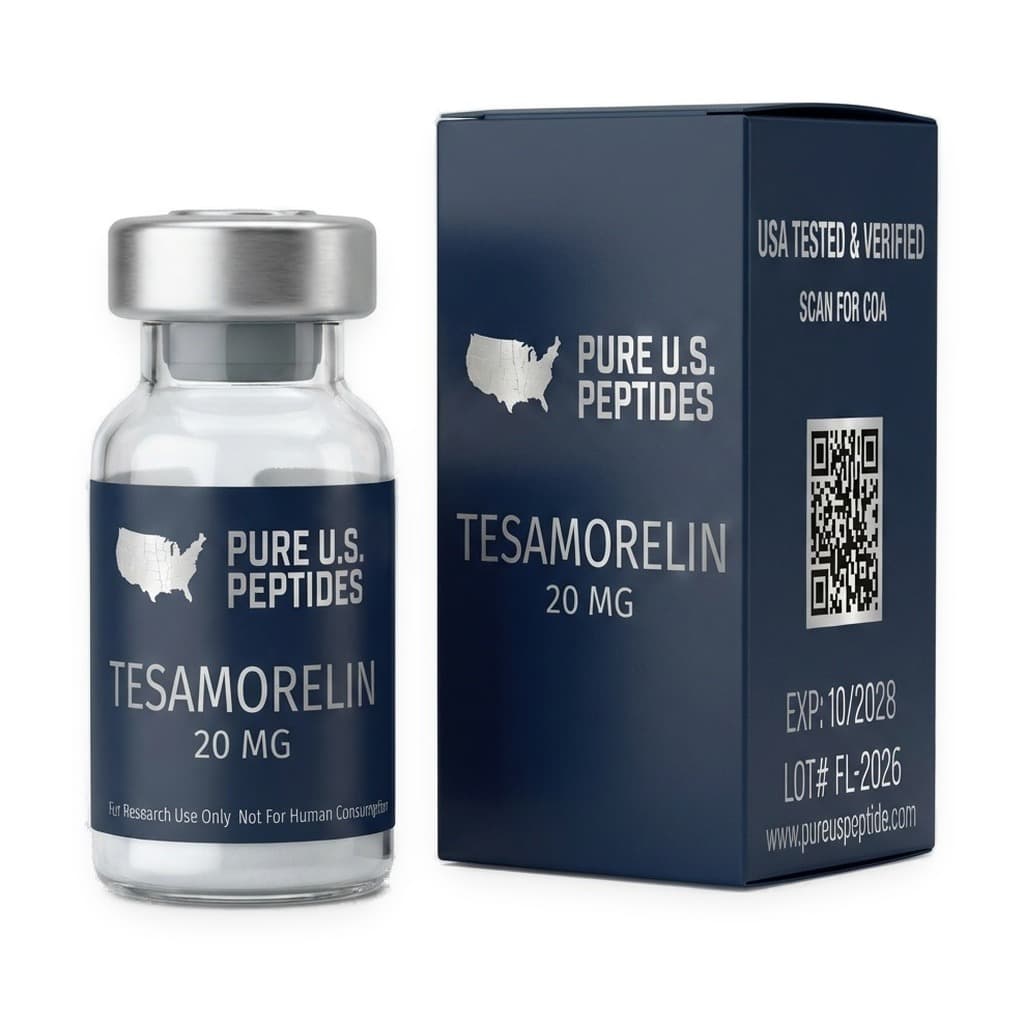
Tesamorelin
20mg