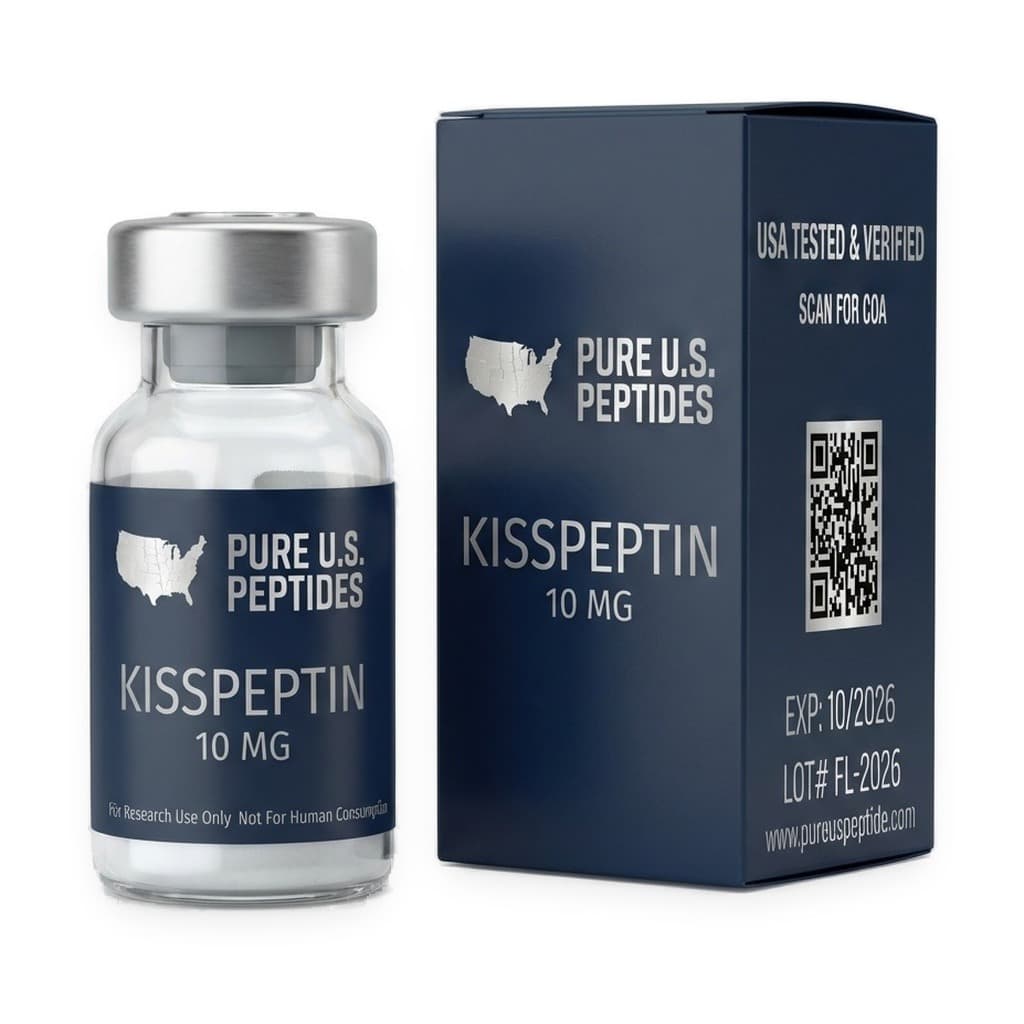
Kisspeptin 10mg
In Stock & Ready to Ship from USA
FREE shipping on every U.S. order
Secure checkout via encrypted payment processor


 +2.9k
+2.9kResearch Use Only
These products are for laboratory research only and not intended for medical use. They are not FDA-approved to diagnose, treat, cure, or prevent any disease. By purchasing, you certify they will be used solely for research and not for human or animal consumption.
Research Summary
30 PubMed CitationsOverview Kisspeptin refers to a family of neuropeptides derived from the KISS1 gene, originally discovered in 1996 by Danny R. Welch and J.H. Lee in Hershey, Pennsylvania, as a melanoma metastasis suppressor. The gene was named "KiSS-1" to honor the discovery location near the Hershey's Kisses chocolate factory, with "SS" denoting "suppressor sequence."[1] The KISS1 gene encodes a 145-amino acid prepro-kisspeptin precursor that undergoes proteolytic cleavage to produce four biologically active isoforms: Kisspeptin-54 (Kp-54), Kp-14, Kp-13, and Kp-10. All isoforms share a conserved C-terminal decapeptide containing an RF-amide motif (Arg-Phe-NH₂) essential for binding and activating the KISS1R (GPR54) receptor.[2][3] Kp-54 is the major circulating form with a half-life of ~27.6 minutes; the shorter Kp-10 (~4 min half-life) exhibits full intrinsic bioactivity and is highly conserved across species.[5] In 2003, Stephanie Seminara and colleagues made the landmark discovery that loss-of-function mutations in KISS1R (GPR54) cause idiopathic hypogonadotropic hypogonadism and pubertal failure...
Kisspeptin 10mg at a glance
| Specification | Detail |
|---|---|
| Identity | Kisspeptin-10 research peptide |
| Listed amount | 10mg |
| Storage | Store lyophilized kisspeptin at -20 degrees C. Avoid repeated freeze-thaw cycles. Confirm solution-specific conditions against the lot documentation; the specification separately discusses a different kisspeptin form. |
| Lot certificate | Published for Kisspeptin 10mg; confirm the supplied lot matches |
| Price | $34.65 |
| Price per mg | $3.46 per mg |
| Dispatch | Same business day for orders before 2:00 PM EST Monday through Friday |
| U.S. shipping | Free on every order |
| Included with every order | Free BAC water vial |
| Product status | This listing is not an FDA-approved drug. Strictly for laboratory Research Use Only. |
Current price and availability are shown in the purchase panel at the top of this page.
Kisspeptin — Research Data at a Glance
| Property | Value |
|---|---|
| PubMed Citations Referenced | 30 |
| Contributing Researchers | 3 |
| Storage Conditions | Store lyophilized kisspeptin at −20°C, protected from light and moisture. |
| Purity Standard | 99.70% HPLC (published certificate) |
| Research Use Only | Not for human consumption. RUO only. |
Compare Kisspeptin with Other Peptides
Research guide
What is Kisspeptin? Read the full research guideOverview
Overview
Kisspeptin refers to a family of neuropeptides derived from the KISS1 gene, originally discovered in 1996 by Danny R. Welch and J.H. Lee in Hershey, Pennsylvania, as a melanoma metastasis suppressor. The gene was named "KiSS-1" to honor the discovery location near the Hershey's Kisses chocolate factory, with "SS" denoting "suppressor sequence."[1]
The KISS1 gene encodes a 145-amino acid prepro-kisspeptin precursor that undergoes proteolytic cleavage to produce four biologically active isoforms: Kisspeptin-54 (Kp-54), Kp-14, Kp-13, and Kp-10. All isoforms share a conserved C-terminal decapeptide containing an RF-amide motif (Arg-Phe-NH₂) essential for binding and activating the KISS1R (GPR54) receptor.[2][3]
Kp-54 is the major circulating form with a half-life of ~27.6 minutes; the shorter Kp-10 (~4 min half-life) exhibits full intrinsic bioactivity and is highly conserved across species.[5]
In 2003, Stephanie Seminara and colleagues made the landmark discovery that loss-of-function mutations in KISS1R (GPR54) cause idiopathic hypogonadotropic hypogonadism and pubertal failure — establishing kisspeptin as the gatekeeper of sexual maturation.[4]
Kisspeptin is currently investigational — not approved by the FDA or EMA for general clinical use. It is prohibited by WADA under S2 (Peptide Hormones, Growth Factors) as it stimulates LH/FSH/testosterone production.[7]
Discovery and design rationale
Kisspeptin was originally identified as a metastasis-suppressor gene product before its role as a master HPG-axis regulator was uncovered. Subsequent investigations dissected the precursor into Kp-54, Kp-14, Kp-13, and Kp-10 isoforms and established that the C-terminal RF-amide decapeptide retained full intrinsic bioactivity. Synthetic analogs MVT-602 and TAK-448 were engineered with metalloprotease-resistant backbones to extend the in-vivo signature beyond the brief plasma half-life of native Kp-10, producing research tools suitable for pulse, continuous-infusion, and once-weekly experimental paradigms. [9]
Research framework
Within the reproductive and neuroendocrine peptide research family, kisspeptin is most directly compared with oxytocin (nonapeptide investigated for parallel social/limbic-bonding endpoints), the GnRH-axis tool family represented by sermorelin and tesamorelin (GHRH analogs that interrogate adjacent hypothalamic releasing-hormone systems), and Melanotan-II (melanocortin-receptor agonist used in limbic-processing research). These cross-comparisons inform research interrogating how a single hypothalamic gatekeeper interacts with neighbouring HPG, HPA, and melanocortin networks. [3]
Mechanism of Action
Mechanism of Action
KISS1R (GPR54) Receptor Binding
Kisspeptin acts by binding KISS1R (GPR54/AXOR12), a rhodopsin-like Class A GPCR sharing ~45% identity with galanin receptors (but does not bind galanin). The essential pharmacophore is the C-terminal RF-amide motif; key residues Phe-6 and Arg-9 (Kp-10 numbering) are critical for binding. Cryo-EM studies reveal an orthosteric pocket spanning TM2–7 plus ECL1–3.[2][3]
Primary Gαq/11–PLC–Ca²⁺ Pathway
KISS1R couples primarily to Gαq/11, activating phospholipase C beta (PLCβ), which hydrolyzes PIP₂ into IP₃ and DAG. IP₃ triggers biphasic intracellular Ca²⁺ release from the endoplasmic reticulum; DAG + Ca²⁺ activates PKC.[3]
MAPK and Additional Cascades
Downstream signaling involves robust, sustained ERK1/2 phosphorylation (via PKC-dependent and β-arrestin pathways), p38 MAPK activation, arachidonic acid release, and PI3K/Akt signaling.[3]
GnRH Neuronal Excitation
In GnRH neurons, kisspeptin activates TRPC channels (cation influx) and simultaneously closes Kir channels (preventing K⁺ efflux), causing sustained depolarization and increased action potential firing → pulsatile GnRH secretion → LH/FSH release.[8]
Desensitization (β-Arrestin–Mediated)
Continuous kisspeptin exposure recruits β-arrestin 1/2, causing receptor internalization via clathrin-coated pits → paradoxical HPG axis suppression. In TAK-448 studies, continuous exposure suppressed testosterone to castrate levels (prostate cancer research).[9][14]
Isoform Pharmacokinetic Comparison
| Isoform | Half-Life | Notes |
|---|---|---|
| Kp-54 | ~27.6 min | Major circulating form |
| Kp-10 | ~4 min | Full intrinsic bioactivity; highly conserved |
| MVT-602 (TAK-448) | Peak at ~21h | MMP-resistant; >4x AUC vs Kp-54 |
KNDy Neuron Network and Pulse Generation
Kisspeptin-expressing neurons in the arcuate nucleus co-express neurokinin B and dynorphin (the so-called KNDy neurons), forming an interconnected pulse-generating network. Research investigations use kisspeptin agonists and KISS1R-specific antagonists in animal models to dissect how this KNDy network sets GnRH pulse frequency, with downstream readouts including LH-pulse amplitude, follicular dynamics, and steady-state gonadal steroid output. This makes kisspeptin a foundational research tool for mapping the central architecture of mammalian reproductive cycles.[8]
Limbic-Cortical Connectivity Investigation
Functional MRI research in human volunteer cohorts has documented that systemic kisspeptin administration enhances activation of amygdala, hippocampus, anterior cingulate, and orbitofrontal cortices in response to sexual and bonding stimuli. This makes kisspeptin a research tool for investigating extra-hypothalamic actions of an HPG-axis peptide and its potential role in limbic-cortical processing of social and reward information.[16]
Research Applications
Research Applications
Kisspeptin is one of the most extensively studied reproductive neuropeptides, with >1,000 human subjects across Phase 1/2 clinical trials:
- IVF Oocyte Maturation — Kp-54 has been studied as an oocyte-maturation trigger in IVF trials; oocyte-maturation, live-birth and OHSS endpoints are reported in the cited references.[10][11]
- Hypothalamic Amenorrhea — LH-pulsatility endpoints; in an 8-week study LH was sustained at ~9 IU/L without complete desensitization.[12][13]
- PCOS — LH and estradiol endpoints were reported with KP-10 in women with polycystic ovary syndrome.[15]
- Psychosexual Research (HSDD) — Neuroimaging studies report limbic (amygdala, hippocampus) processing endpoints for sexual/bonding stimuli, with sexual-desire-region endpoints reported in women.[16][17]
- Metabolic / Fatty Liver Disease — TAK-448 reduces hepatic triglycerides, serum FFA, and ALT in MASLD models via AMPK→SREBP-1c→CIDEA downregulation.[18]
- Cancer Metastasis Suppression — Originally identified as melanoma/breast cancer metastasis suppressor ("metastin"); inhibits MMP-9 via NF-κB pathway suppression.[1]
- Prostate Cancer (Androgen Deprivation) — Continuous TAK-448/MVT-602 exposure → receptor desensitization → testosterone suppression to castrate levels (Phase 1 data).[14]
- Pregnancy Biomarker — Kisspeptin rises 7,000-fold during healthy pregnancy; low levels predict miscarriage/preeclampsia by assessing trophoblast invasion.[20]
- Bone Biology — Promotes osteoblast differentiation and inhibits osteoclast activity in research models; osteocalcin endpoints have been reported in men.[21]
- Puberty Disorders — Activating/inactivating KISS1/KISS1R mutations linked to precocious/delayed puberty; kisspeptin challenge tests used diagnostically.[4]
- Metabolic Insulin Signaling — glucose-stimulated insulin-secretion endpoints have been reported in healthy men.[22]
Biochemical Characteristics
| Property | Value |
|---|---|
| Gene | KISS1 (chromosome 1q32, human) |
| Precursor Size | 145 amino acids (prepro-kisspeptin) |
| Molecular Weight (Kp-54) | ~5.9 kDa |
| Molecular Weight (Kp-10) | ~1.3 kDa |
| Sequence (Kp-10, Human) | YNWNSFGLRF-NH₂ (Tyr-Asn-Trp-Asn-Ser-Phe-Gly-Leu-Arg-Phe-NH₂) |
| Sequence (Kp-10, Rodent) | YNWNSFGLRY-NH₂ |
| C-Terminal Motif | RF-amide (Arg-Phe-NH₂) — critical for KISS1R binding |
| Receptor | KISS1R (GPR54/AXOR12) — Class A rhodopsin-like GPCR |
| Isoforms | Kp-54, Kp-14, Kp-13, Kp-10 (all share C-terminal decapeptide) |
| Synonyms | Metastin, KiSS-1-derived peptide, Kp-54, Kp-14, Kp-13, Kp-10 |
| Analogs | MVT-602 (TAK-448), TAK-683 |
| Plasma Half-Life | Kp-10 ~4 min; Kp-54 ~27.6 min; MVT-602 peaks at 21h |
Identifiers
| Identity Confirmation | |
|---|---|
| Endotoxin | |
| Sterility |
Preclinical Research Summary
Preclinical Research Summary
Key Preclinical Studies
| Study | Model | Key Findings | Ref |
|---|---|---|---|
| Mills et al. (2025) | C57BL/6J mice — Kp-54 | 12.8–50 nM: dose-dependent LH to 3.6 ng/mL at 25 min (p < 0.001); GnRH neurons activated in olfactory bulb → novel extra-hypothalamic pathway | [19] |
| Izarraras et al. (2025) | DIAMOND mice — TAK-448 MASLD | 6-week design: reduced liver triglycerides, serum FFA, ALT (p < 0.05); downregulated CIDEA via AMPK-SREBP-1c | [18] |
| Seminara/Ramaswamy (2006/07) | Juvenile rhesus monkeys — continuous KP-10 | 98-hour design: maximal LH at 3h, desensitization by 12h; GnRH bolus still effective but KP-10 bolus was not | [23] |
| Terse et al. (2021) | Dogs — KP-10 1000 µg/kg × 14d | NOAEL at 1000 µg/kg; peak LH at 5 min post-dose; no toxicity signs | [24] |
| Thompson et al. (2006) | Adult male rats — chronic KP-54 | Chronic exposure → testicular degeneration; HPG axis suppression via receptor desensitization | [25] |
| Dinh et al. (2023) | Wistar rats — KP-13 CKD model | 10-day design: increased BP, exacerbated CKD markers and uremic cardiomyopathy | [26] |
Human Clinical Data (>1,000 Participants)
| Trial | Population | Key Results | Ref |
|---|---|---|---|
| Dhillo et al. (2005) | n=6 healthy men | LH endpoints; first-in-human | [5] |
| Dhillo et al. (2007) | n=8 healthy women | LH endpoints across cycle phases | [6] |
| Abbara et al. (2015) | n=60 IVF, high OHSS risk | Oocyte-maturation, pregnancy, live-birth and OHSS endpoints | [10] |
| Abbara et al. (2017) | n=62 IVF RCT | Live-birth and OHSS endpoints | [11] |
| Jayasena et al. (2009) | n=10 women with HA | Acute and repeated-exposure LH endpoints | [12] |
| Jayasena et al. (2010) | n=20 women with HA | LH endpoints over 8 weeks | [13] |
| Mills et al. (2023) | n=32 men with HSDD | Sexual brain-processing endpoints | [17] |
| Abbara et al. (2020) | n=21 (HV, HA, PCOS) | MVT-602 vs Kp-54 LH-profile endpoints | [9] |
| Mills et al. (2025) | n=34 (men, women, HA) | LH endpoints | [19] |
| Izzi-Engbeaya et al. (2018) | n=15 healthy men | Glucose-stimulated insulin-secretion endpoint | [22] |
| Comninos et al. (2022) | n=26 healthy men | Osteocalcin endpoint | [21] |
Safety Summary (Published Trials and Nonclinical Data)
| Parameter | Finding |
|---|---|
| Cardiotoxicity | None — no changes in HR, BP, or ECG |
| Tachyphylaxis | Continuous high-dose → β-arrestin recruitment → receptor internalization → HPG suppression (physiological, not toxic) |
| Dog NOAEL | 1000 µg/kg × 14 days — no toxicity |
| Metabolism | Cleaved by MMP-2, MMP-9, furin; C-terminal cleavage inactivates |
The products offered on this website are furnished for in-vitro studies only. In-vitro studies (Latin: in glass) are performed outside of the body. These products are not medicines or drugs and have not been approved by the FDA to prevent, treat or cure any medical condition, ailment or disease. Bodily introduction of any kind into humans or animals is strictly forbidden by law.
For Laboratory Research Only. Not for human use, medical use, diagnostic use, or veterinary use.
ALL ARTICLES AND PRODUCT INFORMATION PROVIDED ON THIS WEBSITE ARE FOR INFORMATIONAL AND EDUCATIONAL PURPOSES ONLY.
Authors & Attribution
✍️ Article Author
Prof. Waljit S. Dhillo
Waljit S. Dhillo, BSc MBBS PhD, is Professor of Endocrinology and Metabolism at Imperial College London, Department of Investigative Medicine. Prof. Dhillo conducted the first-in-human kisspeptin administration studies in men (2005) and women (2007), establishing kisspeptin as a potent stimulator of the HPG axis. His research program has studied kisspeptin in IVF (Phase 2 oocyte-maturation trials), hypothalamic amenorrhea, psychosexual disorders, and neuroimaging studies of sexual and emotional brain processing. Waljit S. Dhillo is being referenced as one of the leading scientists involved in the research and development of Kisspeptin. In no way is this doctor/scientist endorsing or advocating the purchase, sale, or use of this product for any reason. There is no affiliation or relationship, implied or otherwise, between Pure US Peptide and this doctor.
View Full Researcher Profile →🎓 Scientific Journal Author
Dr. Stephanie B. Seminara
Stephanie B. Seminara, MD, is affiliated with the Reproductive Endocrine Unit, Department of Medicine, Massachusetts General Hospital and Harvard Medical School. Dr. Seminara led one of the independent groups that discovered loss-of-function mutations in KISS1R (GPR54) cause idiopathic hypogonadotropic hypogonadism and pubertal failure (NEJM, 2003), establishing kisspeptin as the gatekeeper of sexual maturation. Her subsequent work characterized kisspeptin-induced desensitization of GPR54 in primate models, demonstrating the mechanism underlying tachyphylaxis with continuous exposure. Stephanie B. Seminara is being referenced as one of the leading scientists involved in the research and development of Kisspeptin. In no way is this doctor/scientist endorsing or advocating the purchase, sale, or use of this product for any reason. There is no affiliation or relationship, implied or otherwise, between Pure US Peptide and this doctor.
View Full Researcher Profile →Dr. Stephanie B. Seminara is being referenced as one of the leading scientists involved in the research and development of Kisspeptin. In no way is this doctor/scientist endorsing or advocating the purchase, sale, or use of this product for any reason. There is no affiliation or relationship, implied or otherwise, between Pure US Peptide and this doctor. The purpose of citing the doctor is to acknowledge, recognize, and credit the exhaustive research and development efforts conducted by the scientists studying this peptide.
🔬 Contributing Researcher
Dr. Danny R. Welch
Danny R. Welch, PhD, is affiliated with the University of Kansas Comprehensive Cancer Center (previously University of Alabama at Birmingham). Dr. Welch led the research team that originally discovered the KiSS-1 gene in 1996, identifying it as a metastasis suppressor in human malignant melanoma cells. He named the gene 'KiSS-1' in homage to the discovery location near the Hershey's Kisses chocolate factory, with 'SS' denoting 'suppressor sequence.' His foundational work established the entire kisspeptin field, which has since expanded from cancer biology into reproductive endocrinology, metabolic science, and neuroscience. Danny R. Welch is being referenced as one of the leading scientists involved in the research and development of Kisspeptin. In no way is this doctor/scientist endorsing or advocating the purchase, sale, or use of this product for any reason. There is no affiliation or relationship, implied or otherwise, between Pure US Peptide and this doctor.
View Full Researcher Profile →Dr. Danny R. Welch is being referenced as one of the leading scientists involved in the research and development of Kisspeptin. In no way is this doctor/scientist endorsing or advocating the purchase, sale, or use of this product for any reason. There is no affiliation or relationship, implied or otherwise, between Pure US Peptide and this doctor. The purpose of citing the doctor is to acknowledge, recognize, and credit the exhaustive research and development efforts conducted by the scientists studying this peptide.
Referenced Citations
Lee JH, Miele ME, Hicks DJ, Phillips KK, Trent JM, Weissman BE, Welch DR. Journal of the National Cancer Institute. 1996;88(23):1731-1737.
DOIOhtaki T, Shintani Y, Honda S, et al. Metastasis suppressor gene KiSS-1 encodes peptide ligand of a G-protein-coupled receptor. Nature. 2001;411(6837):613-617.
DOIKotani M, Detheux M, Vandenbogaerde A, et al. The metastasis suppressor gene KiSS-1 encodes kisspeptins, the natural ligands of the orphan G protein-coupled receptor GPR54. Journal of Biological Chemistry. 2001;276(37):34631-34636.
DOISeminara SB, Messager S, Chatzidaki EE, et al. The GPR54 gene as a regulator of puberty. New England Journal of Medicine. 2003;349(17):1614-1627.
DOIDhillo WS, Chaudhri OB, Patterson M, et al. Journal of Clinical Endocrinology & Metabolism. 2005;90(12):6609-6615.
DOIDhillo WS, Chaudhri OB, Thompson EL, et al. Journal of Clinical Endocrinology & Metabolism. 2007;92(10):3958-3966.
DOIWorld Anti-Doping Agency. The Prohibited List. S2 Peptide Hormones, Growth Factors, Related Substances, and Mimetics. WADA. Updated 2025.
WADAde Roux N, Genin E, Carel JC, Matsuda F, Chaussain JL, Milgrom E. Proceedings of the National Academy of Sciences. 2003;100(19):10972-10976.
DOIAbbara A, Eng PC, Phylactou M, et al. Journal of Clinical Investigation. 2020;130(12):6739-6753.
DOIAbbara A, Jayasena CN, Christopoulos G, et al. Journal of Clinical Endocrinology & Metabolism. 2015;100(9):3322-3331.
DOIAbbara A, Clarke S, Islam R, et al. Human Reproduction. 2017;32(9):1915-1924.
DOIJayasena CN, Nijher GM, Chaudhri OB, et al. Journal of Clinical Endocrinology & Metabolism. 2009;94(11):4315-4323.
DOIJayasena CN, Nijher GM, Abbara A, et al. Clinical Pharmacology & Therapeutics. 2010;88(6):840-847.
DOIMacLean DB, Matsui H, Suri A, Neuwirth R, Colombel M. Journal of Clinical Endocrinology & Metabolism. 2014;99(8):E1445-E1453.
DOISkorupskaite K, George JT, Veldhuis JD, Millar RP, Anderson RA. Human Reproduction. 2020;35(6):1421-1431.
DOIComninos AN, Wall MB, Demetriou L, et al. Journal of Clinical Investigation. 2017;127(2):709-719.
DOIMills EG, et al. JAMA Network Open. 2023.
PubMedIzarraras K, Shah A, Prasad K, et al. Cells. 2025;14(16).
PubMedMills EG, et al. eBioMedicine. 2025.
PubMedJayasena CN, Abbara A, et al. Journal of Clinical Investigation. 2014;124(8):3667-3677.
DOIComninos AN, et al. Journal of Clinical Endocrinology & Metabolism. 2022.
PubMedIzzi-Engbeaya C, Comninos AN, Clarke SA, et al. Diabetes, Obesity and Metabolism. 2018;20(12):2800-2810.
PubMedSeminara SB, Dipietro MJ, Ramaswamy S, et al. Endocrinology. 2006;147(5):2122-2126.
PubMedTerse PS, Peggins J, Seminara SB. International Journal of Toxicology. 2021;40(4):337-343.
PubMedThompson EL, et al. 2006.
PubMedDinh TO, et al. Kisspeptin-13 exacerbates chronic kidney disease and uremic cardiomyopathy in rats. 2023.
PubMedGeorge JT, Veldhuis JD, Roseweir AK, et al. Journal of Clinical Endocrinology & Metabolism. 2011;96(8):E1228-E1236.
DOIThurston L, et al. JAMA Network Open. 2022.
PubMedNishizawa N, Takatsu Y, et al. Design and synthesis of TAK-448, an investigational nonapeptide KISS1R agonist. Journal of Medicinal Chemistry. 2016;59(19):8804-8811.
DOIChan YM, Butler JP, Pinnell NE, et al. Journal of Clinical Endocrinology & Metabolism. 2011;96(6):E908-E915.
DOIRUO Disclaimer
For Research Use Only (RUO). Not intended for human consumption, clinical use, or as a drug, food, cosmetic, or medical device. This product has not been evaluated by the FDA and is supplied solely for in-vitro laboratory research by qualified professionals.
Certificate of Analysis
Published certificates come from third-party laboratories. If this listing's certificate is still pending, the card below says so.
Latest Lab Report
Storage & Handling
Summary
Store lyophilized kisspeptin at −20°C, protected from light and moisture. Avoid repeated freeze-thaw.
Recommended Laboratory Storage Conditions
Lyophilized Powder: Store at −20°C for long-term stability. Protect from light and moisture.
Handling: Handle with standard laboratory PPE. Consult the SDS.
“Preclinical Research Summary Key Preclinical Studies Study Model Key Findings Ref Mills et al.”
Frequently Asked Questions
Common research questions about Kisspeptin — purity, handling, COA documentation, and published-research context.
Related Research Compounds
PT-141
10mg
Oxytocin
10mg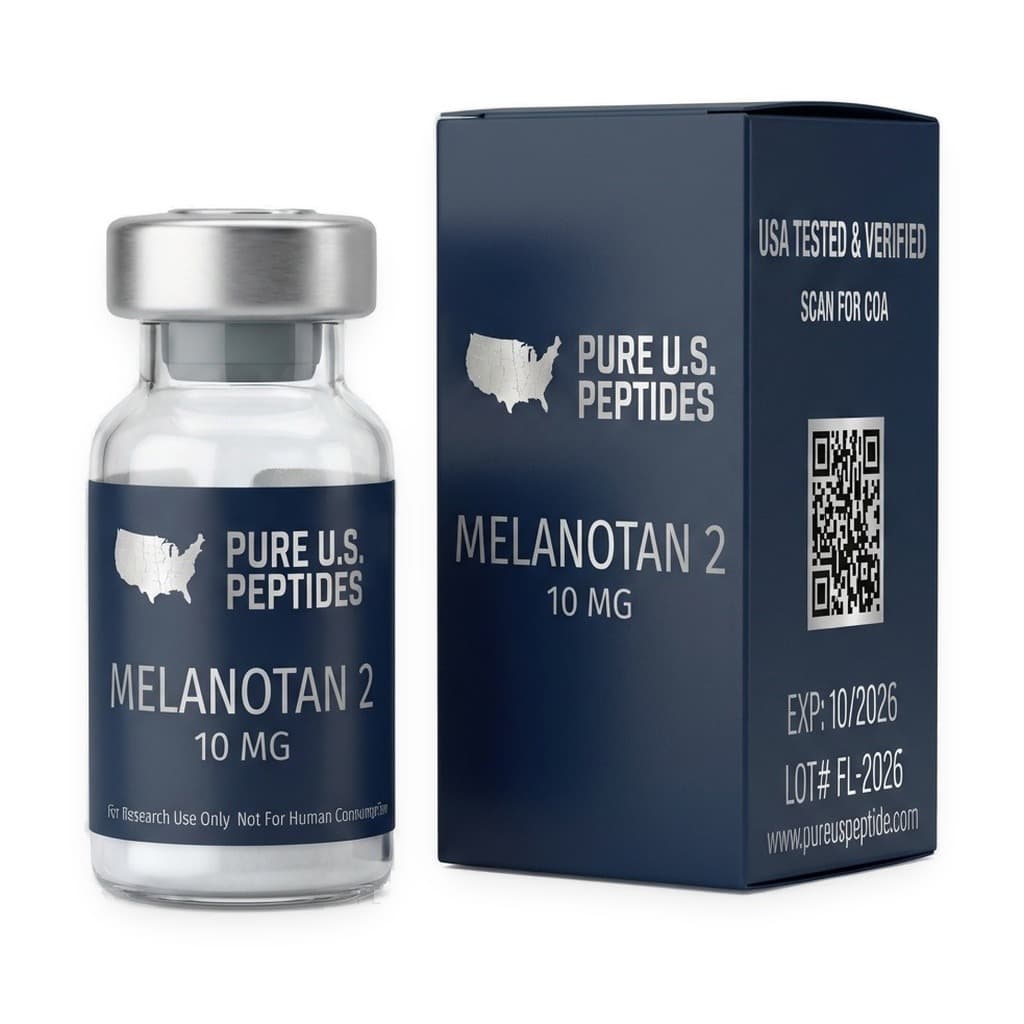
Melanotan 2
10mg