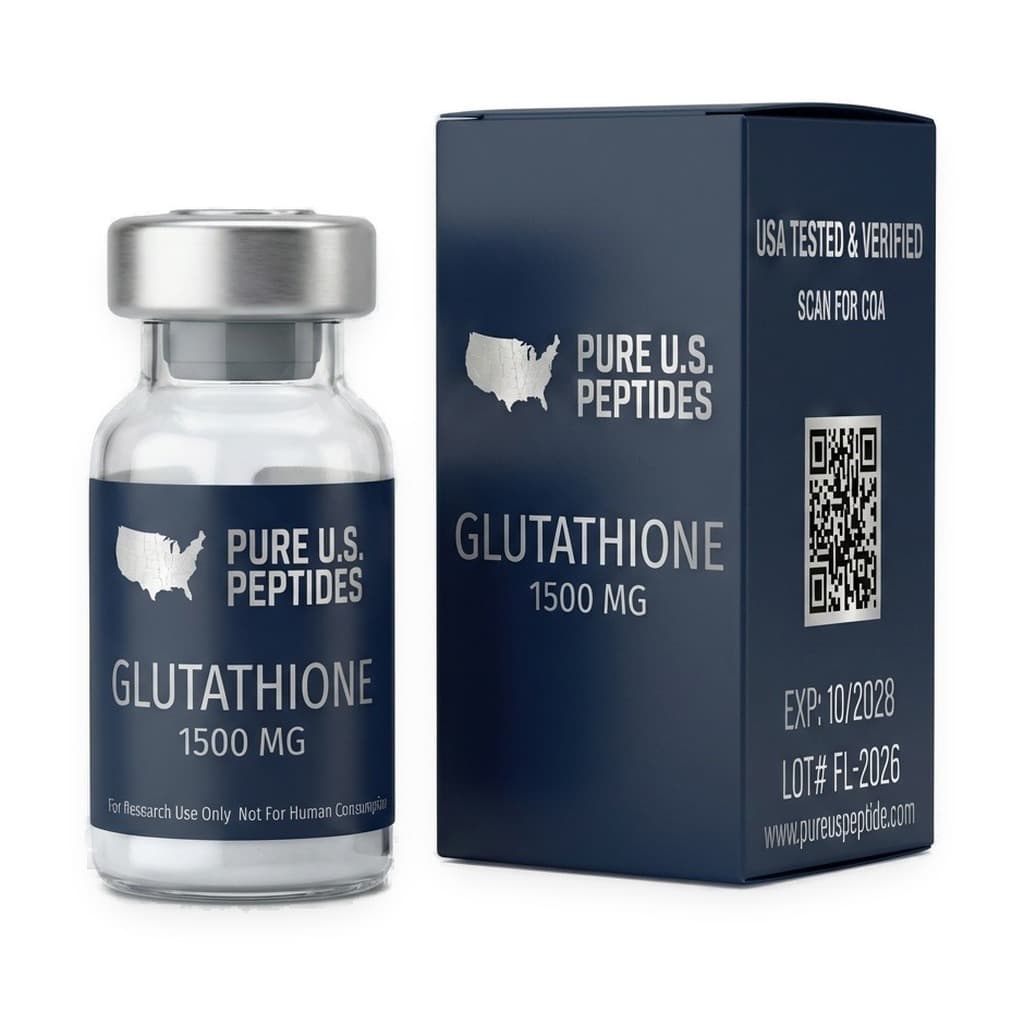
Glutathione 1500mg
In Stock & Ready to Ship from USA
FREE shipping on every U.S. order
Secure checkout via encrypted payment processor


 +2.9k
+2.9kResearch Use Only
These products are for laboratory research only and not intended for medical use. They are not FDA-approved to diagnose, treat, cure, or prevent any disease. By purchasing, you certify they will be used solely for research and not for human or animal consumption.
Research Summary
20 PubMed CitationsResearch Overview Glutathione (GSH) is a ubiquitous endogenous tripeptide that serves as the principal intracellular antioxidant and redox buffer in mammalian biology. Composed of L-glutamate, L-cysteine, and glycine, it was first isolated and named by Frederick Gowland Hopkins in 1921, though its correct tripeptide structure was not established until 1935 by Harington and Mead. Present at millimolar concentrations (0.5–10 mM) in virtually every cell, GSH participates in a vast network of antioxidant defense, detoxification, signal transduction, and immune modulation processes that are essential for cellular survival.[3][12] GSH is biosynthesized in the cytosol via a tightly regulated, two-step ATP-dependent enzymatic process. First, glutamate-cysteine ligase (GCL) catalyzes the formation of γ-glutamylcysteine from glutamate and cysteine (the rate-limiting step); then glutathione synthetase (GS) adds glycine to the C-terminal to yield the final molecule. The availability of cysteine is the primary rate-limiting factor in this synthesis. The liver serves as the principal production organ...
Glutathione — Research Data at a Glance
| Property | Value |
|---|---|
| PubMed Citations Referenced | 20 |
| Contributing Researchers | 3 |
| Storage Conditions | Store lyophilized at -20°C or 2–8°C (stable long-term as dry powder); protect from light, air, and moisture. |
| Purity Standard | Certificate pending |
| Research Use Only | Not for human consumption. RUO only. |
Research guide
What is Glutathione? Read the full research guideOverview
Research Overview
Glutathione (GSH) is a ubiquitous endogenous tripeptide that serves as the principal intracellular antioxidant and redox buffer in mammalian biology. Composed of L-glutamate, L-cysteine, and glycine, it was first isolated and named by Frederick Gowland Hopkins in 1921, though its correct tripeptide structure was not established until 1935 by Harington and Mead. Present at millimolar concentrations (0.5–10 mM) in virtually every cell, GSH participates in a vast network of antioxidant defense, detoxification, signal transduction, and immune modulation processes that are essential for cellular survival.[3][12]
GSH is biosynthesized in the cytosol via a tightly regulated, two-step ATP-dependent enzymatic process. First, glutamate-cysteine ligase (GCL) catalyzes the formation of γ-glutamylcysteine from glutamate and cysteine (the rate-limiting step); then glutathione synthetase (GS) adds glycine to the C-terminal to yield the final molecule. The availability of cysteine is the primary rate-limiting factor in this synthesis. The liver serves as the principal production organ and the main source of plasma GSH for interorgan distribution.[12][20]
The therapeutic rationale for GSH research is grounded in its role as the body's "master antioxidant." GSH directly neutralizes reactive oxygen species (ROS) and reactive nitrogen species (RNS), serves as the essential cofactor for glutathione peroxidases (GPx), and conjugates with electrophilic toxins and heavy metals via glutathione S-transferases (GSTs) for excretion (Phase II detoxification). The ratio of reduced GSH to oxidized GSSG serves as a fundamental index of cellular oxidative status; a decline in this ratio is a hallmark of oxidative stress, cellular dysfunction, and aging.[3][12]
Clinical research has established that GSH depletion is implicated in the pathology of numerous conditions. In Parkinson's disease, GSH depletion in the substantia nigra precedes neurodegeneration, and UPDRS endpoints were assessed in a Phase IIb trial.[11][5] In liver disease, alanine transaminase (ALT) endpoints were assessed in NAFLD subjects.[8] In dermatology, randomized controlled trials of GSH and GSSG formulations reported melanin-index, wrinkle and skin-elasticity endpoints.[19][18][2] In type 2 diabetes research, whole-body insulin-sensitivity endpoints were reported in obese males.[16] As a chemotherapy adjunct, neurotoxicity and antineoplastic-efficacy endpoints were reported in gastric and ovarian cancer subjects receiving cisplatin.[4][15]
A key challenge in GSH research is bioavailability. Standard oral GSH has limited systemic availability due to degradation by intestinal γ-glutamyl transpeptidase (GGT), and its plasma half-life is less than 3 minutes. Strategies studied include liposomal encapsulation and the use of GSH precursors such as N-acetylcysteine (NAC).[14][20][9]
Mechanism of Action
Mechanism of Action
Glutathione (GSH) does not function through a single classical receptor-ligand interaction. Instead, it acts as a pervasive biochemical modulator of cellular redox state, enzymatic cofactor, and signaling regulator via post-translational protein modification.[3]
Primary Biochemical Targets & Binding Characteristics
| Target / Mechanism | Detail | Evidence |
|---|---|---|
| S-Glutathionylation | Reversible post-translational modification; GSH forms mixed disulfide bonds with reactive cysteine residues on target proteins (protein-SSG), acting as a redox "on/off" switch for regulatory, structural, and metabolic proteins | Ballatori et al. (2009)[3] |
| Glutathione Peroxidases (GPx) | GSH serves as the essential electron donor for GPx-catalyzed reduction of H2O2 and lipid hydroperoxides to water/alcohols, oxidizing GSH to GSSG | Ballatori et al. (2009)[3] |
| Glutathione S-Transferases (GSTs) | GSH conjugates with electrophilic xenobiotics, heavy metals (Hg, Pb), and endogenous toxins (Phase II detoxification), rendering them water-soluble for excretion | Ballatori et al. (2009)[3] |
| Metal Chelation | Six coordination sites for metal ions; thiol group has high affinity for Cu, Zn, Hg, and Pb, forming stable mercaptide complexes for mobilization and transport | Ballatori et al. (2009)[3] |
| NMDA Receptor Modulation | GSH modulates the N-methyl-D-aspartate (NMDA) receptor, regulating calcium influx in cerebellar granule cells | Ballatori et al. (2009)[3] |
| Bcl-2 Binding | GSH binds the Bcl-2 BH3-domain groove at the mitochondria, contributing to anti-apoptotic antioxidant function | Ballatori et al. (2009)[3] |
| γ-Peptide Bond Stability | Unusual γ-carboxyl linkage between glutamate and cysteine protects from intracellular peptidase hydrolysis; only cleaved by ectoenzyme γ-glutamyl transpeptidase (GGT) on external cell surfaces | Ballatori et al. (2009)[3] |
Downstream Signaling Cascades
| Pathway | Mechanism | Outcome |
|---|---|---|
| Keap1-Nrf2-ARE | Oxidative stress or electrophiles modify Keap1 cysteines, preventing Nrf2 degradation; stabilized Nrf2 translocates to nucleus and binds Antioxidant Response Element (ARE); modulated by ERK and p38 MAPK kinases | Transcription of GSH synthesis genes (GCLC, GCLM) and detoxification enzymes (GSTs)[3] |
| NF-κB Signaling | S-glutathionylation of the p50 subunit of NF-κB inhibits its DNA binding; GSH depletion activates NF-κB via ROS-mediated IκB degradation | GSH suppresses pro-inflammatory gene transcription (TNF-α, IL-1β, IL-6); depletion drives inflammation[3] |
| MAPK Pathway | Severe GSH depletion oxidizes MAPK phosphatases (MKPs), causing sustained JNK and p38 MAPK activation; GST-pi monomers bind JNK (inhibition), but dimerize under oxidative stress to release JNK | Cytochrome c release and caspase activation leading to apoptosis[3] |
| Nitric Oxide (NO) Signaling | GSH buffers NO; depletion increases free NO causing protein nitration and DNA damage; activates p53, which induces PGC-1α for antioxidant response | Modulation of NO-mediated signaling and protection against nitrosative stress[3] |
Cellular & Tissue-Level Effects
| System | Effect | Detail |
|---|---|---|
| Mitochondria | Critical for neutralizing H2O2 from electron transport chain | Transported via dicarboxylate and 2-oxoglutarate carriers; prevents mPTP opening[3] |
| Skin (Antimelanogenic) | Inhibits tyrosinase by chelating copper at active site | Shifts melanogenesis from eumelanin (dark) to pheomelanin (light); reduces melanin index, wrinkles, increases elasticity[19] |
| Nervous System | Astrocytes synthesize and release GSH for neuronal uptake | Protects dopaminergic neurons from oxidative damage; preserves mitochondrial Complex I activity[5] |
| Immune System | Essential for T-cell metabolic reprogramming and clonal expansion | GSH:GSSG ratio modulates Th1/Th2 balance; depletion favors Th2 (chronic inflammation)[14] |
| Cardiovascular | Restores endothelium-dependent vasorelaxation in aging | Increases H2S levels and mtNOS activity; inhibits mPTP opening in aged heart tissue[3] |
| Hepatoprotective | Reduces ALT and oxidative damage markers in liver tissue | Significant benefit in NAFLD and NASH models[8] |
Comparison with Related Compounds
| Compound | Relationship to GSH | Key Difference |
|---|---|---|
| L-Cysteine | Rate-limiting precursor substrate for GSH synthesis | Neurotoxic at high extracellular concentrations; GSH is the non-toxic storage form[3] |
| N-Acetylcysteine (NAC) | Deacetylated precursor used to replenish intracellular GSH | Better oral bioavailability than GSH; widely used clinically as GSH booster[7] |
| GSSG (Oxidized Glutathione) | Disulfide dimer formed when GSH is oxidized | Accumulation is toxic; cells maintain GSH:GSSG ratio >100:1 via Glutathione Reductase + NADPH[3] |
| Liposomal Glutathione | GSH encapsulated in phospholipid vesicles | Enhanced oral absorption bypassing GGT degradation; elevates body stores and immune markers[14] |
| Glutathione Monoethyl Ester (GEE) | Synthetic analog designed for enhanced cell penetration | Bypasses transport limitations; crosses blood-brain barrier more effectively than native GSH[3] |
Research Applications
Research Applications
Glutathione is investigated across a broad spectrum of research domains, with evidence spanning preclinical animal models to randomized controlled clinical trials:
1. Neurodegenerative Diseases (Parkinson's, Alzheimer's)
GSH depletion in the substantia nigra is one of the earliest biochemical changes in Parkinson's disease, preceding mitochondrial Complex I dysfunction and dopaminergic neuron loss. UPDRS endpoints were assessed in a Phase IIb RCT, and a CNS-uptake study reported brain GSH endpoints as measured by magnetic resonance spectroscopy.[11][5][13]
2. Hepatoprotection (NAFLD, NASH, Cirrhosis)
GSH is extensively studied for its hepatoprotective effects. A 4-month study in NAFLD subjects and a 3-month study in NASH subjects reported ALT and 8-OHdG (DNA oxidative damage marker) endpoints; a 12-week study examined liver cirrhosis.[8]
3. Dermatology & Skin Research
| Study | Intervention | Key Result | Ref |
|---|---|---|---|
| Weschawalit et al. (2017) | GSH or GSSG, 12 weeks | Wrinkle, elasticity and melanin endpoints | [19] |
| Arjinpathana et al. (2012) | GSH, 4 weeks | Melanin-index endpoints (sun-exposed areas) vs placebo | [2] |
| Watanabe et al. (2014) | 2% GSSG lotion, 10 weeks | Melanin-index, TEWL and wrinkle endpoints | [18] |
4. Diabetes & Metabolic Syndrome
Research highlights a correlation between GSH insufficiency and T2DM complications. A 3-week study (NCT02948673) in obese males with and without T2DM reported whole-body insulin-sensitivity endpoints. A larger trial (n=360, 6 months) in subjects >55 years reported oxidative-damage-marker and HbA1c endpoints.[16]
5. Oncology & Chemotherapy Support
Glutathione was studied alongside cisplatin chemotherapy in randomized trials in advanced gastric and ovarian cancer, with neurotoxicity, nephrotoxicity and antineoplastic-efficacy endpoints.[4][15]
6. Respiratory Conditions (Cystic Fibrosis, IPF)
Glutathione is investigated for replenishing GSH in the epithelial lining fluid of the lungs. Growth and FEV1 endpoints have been reported in pediatric cystic fibrosis subjects.[17]
7. Viral Infections & Immune Function
GSH depletion is linked to impaired host immune responses and severe outcomes in HIV and COVID-19. Body GSH-store and immune-function endpoints (including natural killer cell activity) were reported in healthy adults.[14]
8. Male Infertility
GSH was studied in a placebo-controlled, double-blind crossover trial for male infertility, targeting oxidative stress in seminal plasma that damages sperm DNA and motility.[10]
9. Cardiovascular Aging
In aged Wistar rats, GSH (52 mg/kg) increased total heart glutathione by 40% (p = 0.0027), reduced superoxide generation 2.5-fold, and restored endothelium-dependent vasorelaxation in this cardiovascular-aging model.[3]
Biochemical Characteristics
| Property | Value |
|---|---|
| Molecular Formula | C₁₀H₁₇N₃O₆S |
| Molecular Weight | 307.32 g/mol |
| CAS Number | 70-18-8 |
| PubChem CID | 124886 |
| Sequence (3-Letter) | γ-Glu-Cys-Gly |
| Sequence (1-Letter) | γ-E-C-G |
| IUPAC Name | (2S)-2-Amino-5-({(2R)-1-[(carboxymethyl)amino]-1-oxo-3-sulfanylpropan-2-yl}amino)-5-oxopentanoic acid |
| Structure | Tripeptide with gamma-peptide linkage between γ-carboxyl of glutamate and α-amino of cysteine; contains free thiol (sulfhydryl) group; forms intermolecular disulfide bond (GSSG) upon oxidation |
| Origin | Endogenous tripeptide synthesized in virtually all mammalian cells from L-glutamate, L-cysteine, and glycine via a two-step ATP-dependent enzymatic process (GCL and GS) |
| Classification | Endogenous Tripeptide Antioxidant / Redox Modulator / Research Compound |
| Half-Life | Plasma half-life < 3 minutes (IV administration); intracellular turnover regulated by γ-glutamyl cycle |
| Bioavailability | Low oral bioavailability due to intestinal hydrolysis by γ-glutamyl transpeptidase (GGT); enhanced by liposomal formulation |
Identifiers
| Synonyms | |
|---|---|
| InChI Key | |
| SMILES | |
| InChI |
Preclinical Research Summary
Research Summary
Key Clinical Studies
| Study | Design / Population | Key Findings | Ref |
|---|---|---|---|
| Richie et al. (2015) Eur J Nutr | RCT, n=54 healthy adults; two GSH arms, 6 months | GSH endpoints in erythrocytes, plasma, lymphocytes and buccal cells | [12] |
| Mischley et al. (2017) J Parkinson's Dis | Phase IIb RCT, n=45 PD subjects; two GSH arms, 12 weeks | UPDRS Total and motor sub-score endpoints | [11] |
| Honda et al. (2017) BMC Gastroenterol | Open-label pilot, n=34 NAFLD subjects; GSH, 4 months | ALT and liver-stiffness endpoints | [8] |
| Søndergård et al. (2021) Appl Physiol Nutr Metab | RCT, n=20 obese males ± T2DM; GSH, 3 weeks | Whole-body insulin-sensitivity and muscle GSH endpoints | [16] |
| Weschawalit et al. (2017) Clin Cosm Invest Derm | RCT, n=57 healthy females; GSH or GSSG, 12 weeks | Wrinkle, elasticity and melanin endpoints | [19] |
| Cascinu et al. (1995) J Clin Oncol | RCT, advanced gastric cancer; GSH with cisplatin | Neurotoxicity and chemotherapy-efficacy endpoints | [4] |
| Smyth et al. (1997) Ann Oncol | RCT, ovarian cancer; GSH with cisplatin | Toxicity, quality-of-life and antineoplastic-efficacy endpoints | [15] |
| Sinha et al. (2018) Eur J Clin Nutr | RCT; liposomal GSH supplementation | Body GSH stores and immune-function endpoints | [14] |
Key Preclinical Studies
| Study | Model | Key Findings | Ref |
|---|---|---|---|
| Strutynska et al. (2023) | Aged male Wistar rats; 52 mg/kg, acute | Heart GSH +40% (p=0.0027); superoxide reduced 2.5x; H2O2 reduced 2.3x; restored vasorelaxation; inhibited mPTP opening | [3] |
| Cai et al. (2003) | BALB/c mice; oral GSH; influenza A/X-31 | Decreased viral titers in both lung and trachea homogenates | [3] |
| Chinta et al. (2007) | In vivo GSH depletion in dopaminergic midbrain neurons | Inducible GSH alterations result in nigrostriatal degeneration, confirming causative role of GSH loss in PD pathology | [5] |
Published Concentration Ranges
| Setting | Concentration | Design | Notes |
|---|---|---|---|
| In Vitro | 0.5–10 mM | Cell culture | Physiological intracellular concentration range |
| Animal (Rat) | 52 mg/kg | Acute | LD50 > 5 g/kg (mice) |
Safety Profile
| Parameter | Finding |
|---|---|
| Nonclinical toxicity | LD50 > 5 g/kg (mice) |
| Handling | Handle with standard laboratory PPE. Consult the SDS. |
&x26A0;&xFE0F; Important Disclaimer
This product is sold strictly for in-vitro research and laboratory use only. The products offered on this website are furnished for in-vitro studies only. In-vitro studies (Latin: in glass) are performed outside of the body. These products are not medicines or drugs and have not been approved by the FDA to prevent, treat or cure any medical condition, ailment or disease. Bodily introduction of any kind into humans or animals is strictly forbidden by law. For Laboratory Research Only. Not for human use, medical use, diagnostic use, or veterinary use.
About This Research Profile
This research profile was compiled from peer-reviewed sources and publicly available scientific literature. All articles and product information provided on this website are for informational and educational purposes only. The information presented here does not constitute medical advice and should not be relied upon as a substitute for consultation with a qualified healthcare professional.
Authors & Attribution
✍️ Article Author
Helmut Sies, MD
Helmut Sies, MD, is a pioneering biochemist who formulated the concept of "oxidative stress" and is recognized as a "Redox Pioneer" by the journal Free Radical Biology and Medicine. He received his MD from the University of Munich (1967) and his Habilitation in Physiological Chemistry and Physical Biochemistry (1972), with training at the University of Tübingen and the University of Munich. He is affiliated with Heinrich Heine University of Düsseldorf. Dr. Sies elucidated the role of glutathione as an antioxidant and its physiology, quantified central redox systems including antioxidant GSH in subcellular compartments, and discovered that ebselen is a glutathione peroxidase mimic. His foundational work spans over four decades and has shaped the entire field of redox biology and antioxidant research. Key publications include "Hydroperoxide metabolism in mammalian organs" (1979), "Glutathione and its role in cellular functions" (1999, Free Radical Biology and Medicine), and "Oxidative stress: introductory remarks" (1985). Helmut Sies is being referenced as one of the leading scientists involved in Glutathione research. In no way is this doctor/scientist endorsing or advocating the purchase, sale, or use of this product for any reason. There is no affiliation or relationship, implied or otherwise, between Pure US Peptide and this doctor.
View Full Researcher Profile →🎓 Scientific Journal Author
Alton Meister, PhD
Alton Meister, PhD, was a distinguished biochemist and professor who was instrumental in the surge of glutathione research during the 1980s. He is credited with elucidating the γ-glutamyl cycle, the central metabolic pathway governing glutathione synthesis, transport, and degradation. Meister also developed the use of buthionine sulfoximine (BSO) as a potent and specific inhibitor of glutathione synthesis, a method that became a widely adopted tool for studying GSH deficiency in experimental systems. His work established the mechanistic foundation for understanding how cells synthesize, utilize, and recycle this critical antioxidant. His landmark publications include "Glutathione" (1983, Annual Review of Biochemistry), "On the discovery of glutathione" (1988), and "Glutathione metabolism and its selective modification" (1988, Journal of Biological Chemistry). Alton Meister is being referenced as one of the leading scientists involved in Glutathione research. In no way is this doctor/scientist endorsing or advocating the purchase, sale, or use of this product for any reason. There is no affiliation or relationship, implied or otherwise, between Pure US Peptide and this doctor.
View Full Researcher Profile →Alton Meister, PhD is being referenced as one of the leading scientists involved in the research and development of Glutathione. In no way is this doctor/scientist endorsing or advocating the purchase, sale, or use of this product for any reason. There is no affiliation or relationship, implied or otherwise, between Pure US Peptide and this doctor. The purpose of citing the doctor is to acknowledge, recognize, and credit the exhaustive research and development efforts conducted by the scientists studying this peptide.
🔬 Contributing Researcher
Laurie K. Mischley, ND, PhD
Laurie K. Mischley, ND, PhD, is a neuroscience researcher and clinician-scientist who has led clinical research on glutathione in Parkinson's disease, including a Phase I/IIa safety and tolerability trial (2015, Movement Disorders), a Phase IIb randomized, double-blind, placebo-controlled trial with UPDRS endpoints (2017, Journal of Parkinson's Disease; NCT02424708), and a CNS-uptake study using magnetic resonance spectroscopy (2016, npj Parkinson's Disease). Laurie K. Mischley is being referenced as one of the leading scientists involved in Glutathione research. In no way is this doctor/scientist endorsing or advocating the purchase, sale, or use of this product for any reason. There is no affiliation or relationship, implied or otherwise, between Pure US Peptide and this doctor.
View Full Researcher Profile →Laurie K. Mischley, ND, PhD is being referenced as one of the leading scientists involved in the research and development of Glutathione. In no way is this doctor/scientist endorsing or advocating the purchase, sale, or use of this product for any reason. There is no affiliation or relationship, implied or otherwise, between Pure US Peptide and this doctor. The purpose of citing the doctor is to acknowledge, recognize, and credit the exhaustive research and development efforts conducted by the scientists studying this peptide.
Referenced Citations
Allen J, Bradley RD. Journal of Alternative and Complementary Medicine, 17(9), 827-833, 2011.
PubMedArjinpathana N, Asawanonda P. Journal of Dermatological Treatment, 23(2), 97-102, 2012.
PubMedBallatori N, Krance SM, Notenboom S, Shi S, Tieu K, Hammond CL. Biological Chemistry, 390(3), 191-214, 2009.
PubMedCascinu S, Cordella L, Del Ferro E, et al. Journal of Clinical Oncology, 13(1), 26-32, 1995.
PubMedChinta SJ, Kumar MJ, Hsu M, et al. Journal of Neuroscience, 27(51), 13997-14006, 2007.
PubMedHandog EB, Datuin MS, Singzon IA. International Journal of Dermatology, 55(2), 153-157, 2016.
PubMedHolmay MJ, Terpstra M, Coles LD, et al. Clinical Neuropharmacology, 36(4), 103-106, 2013.
PubMedHonda Y, Kessoku T, Sumida Y, et al. BMC Gastroenterology, 17(1), 96, 2017.
PubMedKovacs-Nolan J, Rupa P, Matsui T, et al. Journal of Agricultural and Food Chemistry, 62(39), 9499-9506, 2014.
PubMedLenzi A, Culasso F, Gandini L, Lombardo F, Dondero F. Human Reproduction, 8(10), 1657-62, 1993.
PubMedMischley LK, Leverenz JB, Lau RC, et al. Movement Disorders, 30(12), 1696-1701, 2015.
PubMedRichie JP, Nichenametla S, Neidig W, et al. European Journal of Nutrition, 54(2), 251-263, 2015.
PubMedSechi G, Deledda MG, Bua G, et al. Progress in Neuro-Psychopharmacology and Biological Psychiatry, 20(7), 1159-1170, 1996.
PubMedSinha R, Sinha I, Calcagnotto A, et al. European Journal of Clinical Nutrition, 72(1), 105-111, 2018.
PubMedSmyth JF, Bowman A, Perren T, et al. Annals of Oncology, 8(6), 569-73, 1997.
PubMedSøndergård SD, Cintin I, Kuhlman AB, et al. Applied Physiology, Nutrition, and Metabolism, 46(9), 1133-1142, 2021.
PubMedVisca A, Bishop CT, Hilton S, Hudson VM. Journal of Pediatric Gastroenterology and Nutrition, 60(6), 802-810, 2015.
PubMedWatanabe F, Hashizume E, Chan GP, Kamimura A. Clinical, Cosmetic and Investigational Dermatology, 7, 267-274, 2014.
PubMedWeschawalit S, Thongthip S, Phutrakool P, Asawanonda P. Clinical, Cosmetic and Investigational Dermatology, 10, 147-153, 2017.
PubMedWitschi A, Reddy S, Stofer B, Lauterburg BH. European Journal of Clinical Pharmacology, 43(6), 667-669, 1992.
PubMedRUO Disclaimer
For Research Use Only (RUO). Not intended for human consumption, clinical use, or as a drug, food, cosmetic, or medical device. This product has not been evaluated by the FDA and is supplied solely for in-vitro laboratory research by qualified professionals.
Certificate of Analysis
Published certificates come from third-party laboratories. If this listing's certificate is still pending, the card below says so.
Latest Lab Report
Storage & Handling
Summary
Store lyophilized at -20°C or 2–8°C (stable long-term as dry powder); protect from light, air, and moisture.
Lyophilized Powder
Store at -20°C for optimal long-term stability, or at 2–8°C for routine storage. The dry powder form is relatively stable but must be kept in tightly sealed, opaque containers to protect from light and moisture. Glutathione is highly susceptible to oxidation in the presence of air and elevated humidity (water activity >0.3).
Solubility
Solubility: water-soluble. Aqueous GSH oxidizes rapidly to GSSG when exposed to air.
Quality & Handling
Supplied as a white crystalline powder. Published certificates report HPLC purity and endotoxin where tested. Incompatible with strong oxidizing agents. CAS: 70-18-8, PubChem CID: 124886.
“Research Summary Key Clinical Studies Study Design / Population Key Findings Ref Richie et al.”
Related Research Compounds
5-Amino 1MQ
50mg
NAD+
1000mg
MOTS-C
40mg