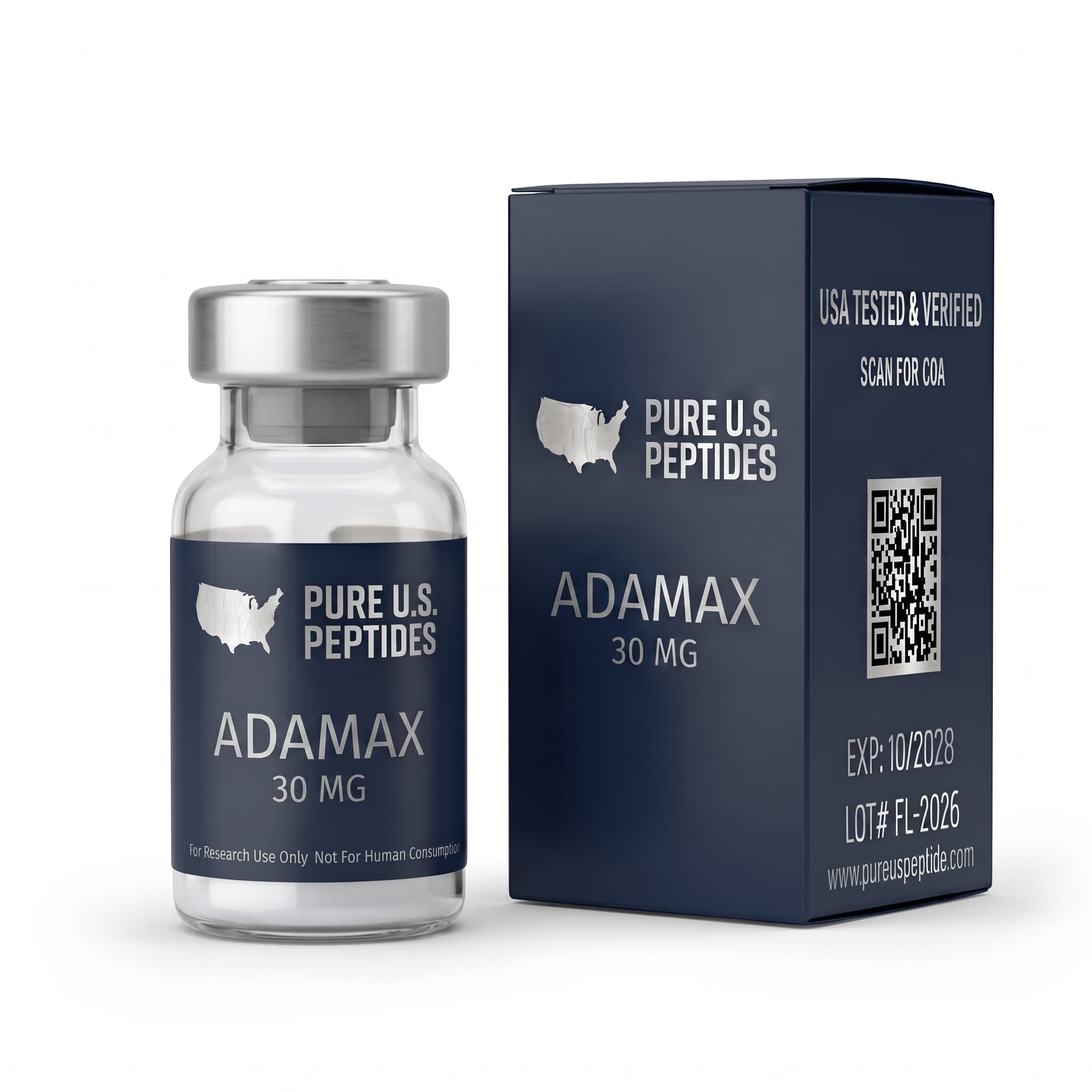
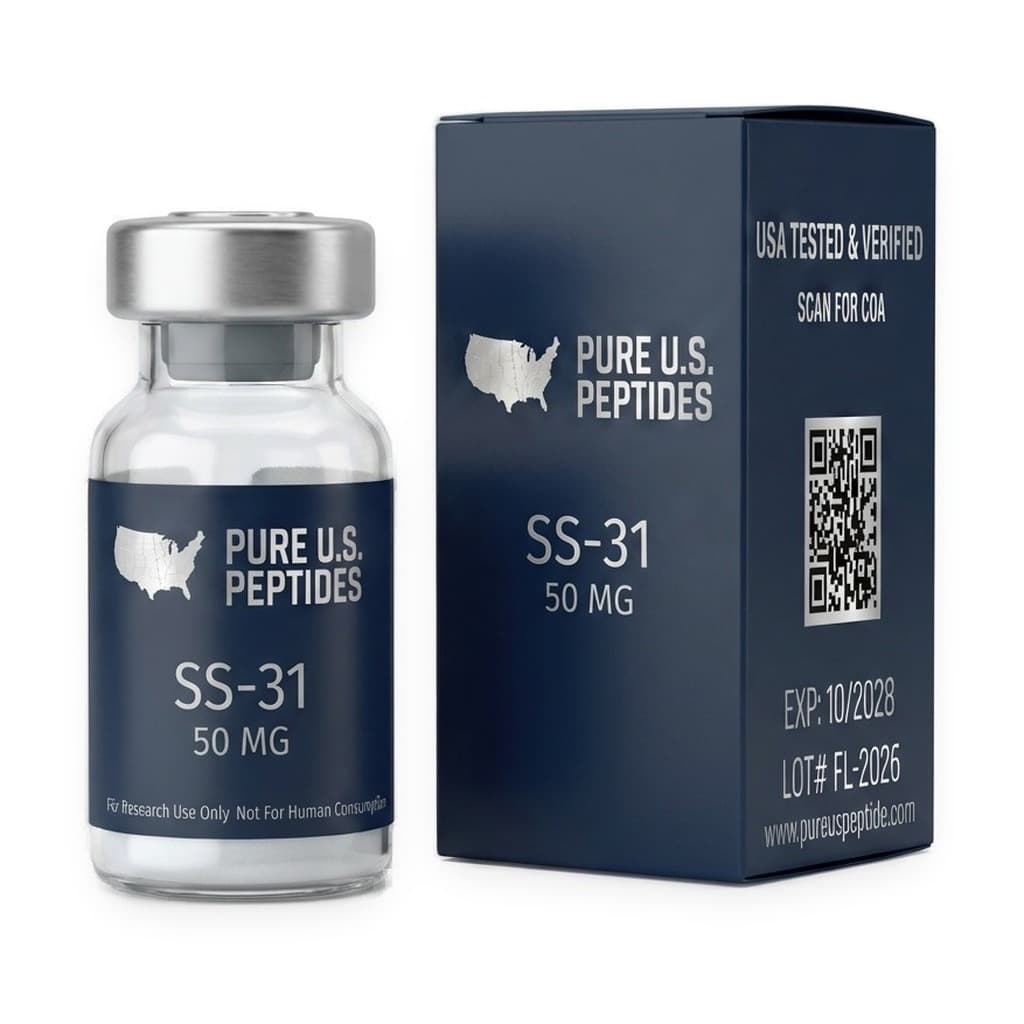
SS-31 50mg
Em Estoque e Pronto para Envio dos EUA
Frete GRÁTIS em todos os pedidos nos EUA
Checkout seguro via processador de pagamento criptografado


 +2.9k
+2.9kApenas para Uso em Pesquisa
Estes produtos sao destinados exclusivamente a pesquisa laboratorial e nao se destinam ao uso medico. Nao sao aprovados pela FDA para diagnosticar, tratar, curar ou prevenir qualquer doenca. Ao adquirir, voce certifica que os produtos serao utilizados exclusivamente para pesquisa e nao para consumo humano ou animal.
Resumo da Pesquisa
17 Citacoes PubMedVisao Geral SS-31 (elamipretide) e um(a) sintetico(a), aromatic-cationic tetrapeptide pertencente a the Szeto-Schiller (SS) family of mitochondria-targeted peptides. Its sequence — D-Arg-Dmt-Lys-Phe-NH₂ — alternates cationic residues (D-Arg, Lys) with aromatic residues (Dmt, Phe), an architectural pattern que confere selective, high-affinity binding to cardiolipin (CL) no(a) inner membrana mitocondrial (IMM).[1][2] Discovery: SS-31 was identificado(a) serendipitously by Dr. Hazel Szeto (Weill Cornell Medical College) and Dr. Peter Schiller (Montreal IRCM) during research into opioid agonista do receptors. It was derivado(a) de SS-02 ([Dmt¹]DALDA), a synthetic opioid peptide analog, but projetado(a) para completely eliminate opioid receptor activity enquanto retaining the aromatic-cationic motif necessario(a) para mitochondrial targeting.[1] Key distinguishing features: (1) Concentrates 5,000-fold no(a) IMM via cardiolipin binding; (2) Uptake is membrane-potential-independent (diferentemente de MitoQ, que requer intact electrochemical gradient); (3) Has no effect on healthy mitochondria; (4) Small, water-soluble, crosses the blood-brain barrier.[2][4] Regulatory milestone: On September 19, 2025, the FDA granted Accelerated...
SS-31 50mg at a glance
| Specification | Detail |
|---|---|
| Identity | SS-31 (elamipretide), synthetic tetrapeptide |
| Sequence | D-Arg-Dmt-Lys-Phe-NH2 |
| Listed amount | 50mg |
| Lab certificate | Published: Kovera Labs report KVR-2026-814088 (no batch number recorded by the lab) |
| Price | $103.95 |
| Price per mg | $2.08 per mg |
| Dispatch | Same business day for orders before 2:00 PM EST Monday through Friday |
| U.S. shipping | Free on every order |
| Included with every order | Free BAC water vial; Research Use Only |
| Product status | This listing is not an FDA-approved drug. Strictly for laboratory Research Use Only. |
Current price and availability are shown in the purchase panel at the top of this page.
SS-31 — Dados de Pesquisa em Resumo
| Propriedade | Valor |
|---|---|
| Citacoes PubMed Referenciadas | 17 |
| Pesquisadores Colaboradores | 3 |
| Condicoes de Armazenamento | Pó liofilizado de grau de pesquisa. |
| Padrao de Pureza | 99.536% por HPLC (certificado publicado) |
| Apenas para Uso em Pesquisa | Nao destinado ao consumo humano. Apenas para uso em pesquisa. |
Research guide
What is SS-31? Read the full research guideVisao Geral
Visao Geral
SS-31 (elamipretide) e um(a) sintetico(a), aromatic-cationic tetrapeptide pertencente a the Szeto-Schiller (SS) family of mitochondria-targeted peptides. Its sequence — D-Arg-Dmt-Lys-Phe-NH₂ — alternates cationic residues (D-Arg, Lys) with aromatic residues (Dmt, Phe), an architectural pattern que confere selective, high-affinity binding to cardiolipin (CL) no(a) inner membrana mitocondrial (IMM).[1][2]
Discovery: SS-31 was identificado(a) serendipitously by Dr. Hazel Szeto (Weill Cornell Medical College) and Dr. Peter Schiller (Montreal IRCM) during research into opioid agonista do receptors. It was derivado(a) de SS-02 ([Dmt¹]DALDA), a synthetic opioid peptide analog, but projetado(a) para completely eliminate opioid receptor activity enquanto retaining the aromatic-cationic motif necessario(a) para mitochondrial targeting.[1]
Key distinguishing features: (1) Concentrates 5,000-fold no(a) IMM via cardiolipin binding; (2) Uptake is membrane-potential-independent (diferentemente de MitoQ, que requer intact electrochemical gradient); (3) Has no effect on healthy mitochondria; (4) Small, water-soluble, crosses the blood-brain barrier.[2][4]
Regulatory milestone: On September 19, 2025, the FDA granted Accelerated Approval to Forzinity™ (elamipretide) for Barth syndrome — a rare genetic disorder caused by TAFAZZIN gene mutations levando a cardiolipin deficiency. This made SS-31 the first drug ever authorized pelo(a) FDA specifically for Barth syndrome, and one do(a) primeiro(a) mitochondrially-targeted drugs to receive aprovacao da FDA for qualquer indication.[3]
Comparado(a) a MOTS-c — another mitochondria-targeted composto de pesquisa — SS-31 acts upstream at o nivel of cardiolipin e o(a) electron transport chain itself, rather do que via nuclear gene regulacao.[1]
Mecanismo de Acao
Mecanismo de Acao
Primary Target: Cardiolipin (CL) no(a) Inner Mitochondrial Membrane
SS-31 does NOT bind to a protein receptor. Instead, it binds directly to cardiolipin (CL) — an anionic phospholipid unique para o(a) IMM que is critico(a) para organizing the electron transport chain (ETC) into functional supercomplexes (respirasomes). The binding is driven by two forces:[1][2]
- Electrostatic: D-Arg and Lys (cationic residues) bind the anionic phosphate head groups of CL
- Hydrophobic: Dmt and Phe (aromatic residues) intercalate no(a) hydrophobic acyl chain region of CL
- Selectivity: SS-31 does NOT bind zwitterionic phospholipids (e.g., phosphatidylcholine, phosphatidylethanolamine) — purely selective for anionic CL
Downstream Cascade
| Step | Mecanismo | Functional Outcome |
|---|---|---|
| 1. CL binding | High-affinity IMM localization (5,000×) | Prevents pathological CL/cytochrome c peroxidase activity[2] |
| 2. Cyt c preservation | Stabilizes CL → preserva cyt c electron carrier function | Facilitates Complex III→IV electron transfer → ↑ATP synthesis[1] |
| 3. Supercomplex assembly | Stabilizes ETC respirasomes | Optimizes oxidative fosforilacao coupling efficiency[5] |
| 4. Cristae preservation | Optimizes IMM curvature | Prevents mitochondrial swelling and fragmentation[4] |
| 5. mPTP inibicao | Prevents mitochondrial permeability transition pore opening | mPTP opening inhibited in isolated-mitochondria assays[6] |
| 6. NF-κB inibicao | Prevents p65 nuclear translocation | Reduced pro-inflamatorio(a) cytokine production[7] |
| 7. NLRP3 inibicao | Reduces inflammasome ativacao | ↓ IL-1β, IL-18 production[7] |
| 8. Nrf2/SIRT1/PGC-1α | HO-1 upregulacao; biogenese mitocondrial | Antioxidant expressao genica; restaurou mitochondrial mass[5] |
| 9. BDNF signaling | Enhances synapsin-1, PSD-95, p-CREB | BDNF/synapsin-1 expression changes in rodent hippocampus[8] |
vs. Related Mitochondrial Compounds
| Compound | Primary Target | Membrane Potential Dep. | Key Difference |
|---|---|---|---|
| SS-31 (elamipretide) | Cardiolipin (IMM) | No | Reaches severely dysfunctional mitochondria; no depolarization at alto(a) concentrations |
| MitoQ | Mitochondrial matrix | Yes (requer ΔΨm) | Depolarizes at alto(a) doses; cannot reach severely damaged mito |
| NAC (N-acetylcysteine) | Cytosolic GSH replenishment | No | Stoichiometric scavenging; not concentrated at ROS source |
| MOTS-c | Folate cycle / Nuclear ARE | No | Mitokine; direciona nuclear gene regulacao via AMPK/Nrf2 rather do que direto(a) ETC |
Aplicacoes de Pesquisa
Aplicacoes de Pesquisa
Elamipretide has been studied in cardiolipin and mitochondrial-membrane research; the published literature is listed under References.
- Aged-mouse model: exercise-tolerance endpoint reported (Campbell 2019).[4]
Caracteristicas Bioquimicas
| Propriedade | Valor |
|---|---|
| Molecular Formula | C₃₂H₄₉N₉O₅ (free base) |
| Molecular Weight | 639.8 g/mol (free base); 749.2 g/mol (HCl salt) |
| CAS Number | 736992-21-5 (free base); 72244098-12-0 (HCl salt) |
| PubChem CID | 11764719 |
| Sequence (3-Letter) | D-Arg-Dmt-Lys-Phe-NH₂ (Dmt = 2',6'-dimethyltyrosine) |
| InChI Key | SFVLTCAESLKEHH-WKAQUBQDSA-N |
| Structure | Linear tetrapeptide; D-aminoacido (D-Arg), non-natural aminoacido (Dmt), C-terminal amide |
| Net Charge | 3+ at physiological pH |
| Alternating Motif | Aromatic-cationic (Dmt/Phe = aromatic; D-Arg/Lys = cationic) |
| Synonyms | Elamipretide, Forzinity™, MTP-131, Bendavia, RX-31 |
Identificadores
| Identity Confirmation | |
|---|---|
| Counter-Ion | |
| Detection Methods | |
| Metabolism | |
| Excretion |
Resumo da Pesquisa Pre-clinica
Preclinical & Clinical Research Summary
Key Preclinical Studies
| Estudo | Modelo | Principais Achados | Ref |
|---|---|---|---|
| Sabbah et al. (2016) | Dogs, microembolization HF — 0.5 mg/kg × 3 mo | LVEF 30%→36% (p<0.05); NT-proBNP ↓774 pg/mL (p<0.001); ATP/ADP 1.16 vs 0.38 control | [6] |
| Dai et al. (2013) | C57BL/6 mice TAC — osmotic minipump × 4 wk | Fibrosis reduziu ~5% vs ~15% control (p=0.005); protegeu 84% of mitochondrial proteins | [14] |
| Campbell et al. (2019) | Aged-mouse model (26-mo female C57BL/6) | Exercise-tolerance endpoint reported | [4] |
| Chiao et al. (2020) | Aged C57BL/6 mice — cardiac dysfunction model | Late-life SS-31 administration reversed age-related cardiac dysfunction; restaurou diastolic function | [15] |
| Zhao et al. (2019) | LPS cognitive impairment mice — 5 mg/kg | Escape latency ↓ (p<0.01); hipocampal TNF-α/IL-6 ↓ (p<0.05); BDNF signaling aprimorou | [8] |
| Birk et al. (2013) | Ischemic renal tubules — 1 nM–1 µM in vitro; rodent ARAS model | Re-energized ischemic mitochondria; restaurou tubular ATP; protegeu brush border membranes | [11] |
| 26-wk Rat Tox (FDA NDA) | Sprague Dawley rats — 5–15 mg/kg/day × 26 wk | Systemic NOAEL 40/15 mg/kg/day (~6.2-fold human AUC); no sistemico(a) toxicity | [3] |
| 39-wk Dog Tox (FDA NDA) | Beagles — 2.5–20 mg/kg/day × 39 wk | Systemic NOAEL 20/10 mg/kg/day (~5.7-fold human AUC); no ECG/BP/HR effects up to 100 mg/kg | [3] |
Safety Summary
| Parametro | Finding |
|---|---|
| Genotoxicity | Negative in Ames, chromosomal aberration, e em vivo micronucleus assays |
| Reproductive toxicity | No teratogenicity in rats or rabbits at clinically relevant exposures |
| Concentrations used | In vitro: 1 nM–1 µM (published range) |
Handle with standard laboratory PPE. Consult the SDS.
Os produtos oferecidos neste site são fornecidos apenas para estudos in vitro. Estudos in vitro (do latim: em vidro) são realizados fora do corpo. Estes produtos não são medicamentos ou fármacos e não foram aprovados pelo FDA dos EUA para prevenir, tratar ou curar qualquer condição médica, enfermidade ou doença. A introdução corporal de qualquer tipo em humanos ou animais é estritamente proibida por lei.
Apenas para Pesquisa Laboratorial. Não se destina ao uso humano, uso médico, uso diagnóstico ou uso veterinário.
TODOS OS ARTIGOS E INFORMAÇÕES SOBRE PRODUTOS FORNECIDOS NESTE SITE SÃO APENAS PARA FINS INFORMATIVOS E EDUCACIONAIS.
Autores e Atribuicao
✍️ Autor do Artigo
Dr. Hazel H. Szeto, MD, PhD
Hazel H. Szeto, MD, PhD, is a Professor no(a) Department of Pharmacology at Weill Cornell Medical College and co-discoverer do(a) Szeto-Schiller (SS) class of mitochondria-targeted peptides, incluindo SS-31 (elamipretide). Her laboratory identificado(a) que SS-31 liga-se seletivamente cardiolipin no(a) inner membrana mitocondrial, assim optimizing electron transport and restoring cellular bioenergetics in disease states. She co-founded Stealth Peptides (now Stealth BioTherapeutics) to advance elamipretide into desenvolvimento clinico. Key publications: 'First-in-class cardiolipin-protective compound como um(a) therapeutic agent para restaurar mitochondrial bioenergetics' (British Journal of Pharmacology, 2014) and extensive preclinical characterization of SS peptide pharmacology. Dr. Szeto's work provided the scientific foundation para o(a) FDA's 2025 Accelerated Approval of Forzinity™ for Barth syndrome. De forma alguma este(a) médico(a)/cientista endossa ou defende a compra, venda ou uso deste produto por qualquer motivo. Não existe afiliação ou relação, implícita ou de outra forma, entre a Pure US Peptide e este(a) médico(a).
Ver Perfil Completo do Pesquisador →🎓 Autor de Revista Cientifica
Dr. Hani N. Sabbah, PhD
Hani N. Sabbah, PhD, is a Professor no(a) Department of Medicine, Division of Cardiovascular Medicine, at Henry Ford Hospital (Henry Ford Health) in Detroit, Michigan. He has conducted extensive traducaoal research on elamipretide (SS-31) in insuficiencia cardiaca models, demonstrating que cronico(a) administration melhora left ventricular function, reduz NT-proBNP, and restaura mitochondrial respiration in a validated canine model of advanced insuficiencia cardiaca. His work tambem tem elucidated the anti-inflamatorio(a) mechanisms of SS-31 incluindo NF-κB and NLRP3 inflammasome inibicao. Key publications: 'Chronic therapy with elamipretide melhora left ventricular and funcao mitocondrial in dogs with advanced insuficiencia cardiaca' (Circulation: Heart Failure, 2016) and 'Contemporary insights into elamipretide mechanism' (Biomedicine & Pharmacotherapy, 2025). De forma alguma este(a) médico(a)/cientista endossa ou defende a compra, venda ou uso deste produto por qualquer motivo. Não existe afiliação ou relação, implícita ou de outra forma, entre a Pure US Peptide e este(a) médico(a).
Ver Perfil Completo do Pesquisador →Dr. Hani N. Sabbah, PhD is being referenced as one of the leading scientists involved in the research and development of SS-31. In no way is this doctor/scientist endorsing or advocating the purchase, sale, or use of this product for any reason. There is no affiliation or relationship, implied or otherwise, between Pure US Peptide and this doctor. The purpose of citing the doctor is to acknowledge, recognize, and credit the exhaustive research and development efforts conducted by the scientists studying this peptide.
🔬 Pesquisador Colaborador
Dr. Peter W. Schiller, PhD
Peter W. Schiller, PhD, is a researcher no(a) Montreal Clinical Research Institute (IRCM) and co-discoverer of elamipretide. He designed and chemically synthesized the SS peptide analogs in collaboration with Dr. Szeto, and developed the fluorescent peptide derivatives que enabled visualization of mitochondrial localization — um(a) principal methodological breakthrough que confirmou the SS-31 mecanismo de acao. His expertise in peptide chemistry and structure-activity relationships was foundational to o desenvolvimento do(a) aromatic-cationic structural motif que gives SS-31 its selective mitochondrial targeting properties. Key publications include the original SS peptide characterization studies. De forma alguma este(a) médico(a)/cientista endossa ou defende a compra, venda ou uso deste produto por qualquer motivo. Não existe afiliação ou relação, implícita ou de outra forma, entre a Pure US Peptide e este(a) médico(a).
Ver Perfil Completo do Pesquisador →Dr. Peter W. Schiller, PhD is being referenced as one of the leading scientists involved in the research and development of SS-31. In no way is this doctor/scientist endorsing or advocating the purchase, sale, or use of this product for any reason. There is no affiliation or relationship, implied or otherwise, between Pure US Peptide and this doctor. The purpose of citing the doctor is to acknowledge, recognize, and credit the exhaustive research and development efforts conducted by the scientists studying this peptide.
Citacoes Referenciadas
Szeto HH. British Journal of Pharmacology. 2014;171(8):2029-2050.
SourceBirk AV, Liu S, Soong Y, et al. The Mitochondrial-Targeted Compound SS-31 Re-Energizes Ischemic Mitochondria by Interacting with Cardiolipin. Journal do(a) American Society of Nephrology. 2013;24(8):1250-1261.
DOIFDA Press Announcement. September 19, 2025.
FDA.govCampbell MD, Duan J, Bhatt SK, et al. Free Radical Biology and Medicine. 2019;134:268-281.
DOISabbah HN. Elamipretide (SS-31) melhora funcao mitocondrial and previne cellular apoptose in insuficiencia cardiaca e seu(sua) comorbidities. Expert Opinion on Investigational Drugs. 2021;30(12):1227-1244.
DOISabbah HN, Gupta RC, Kohli S, et al. Circulation: Heart Failure. 2016;9(2):e002206.
DOISabbah HN, Klewer SE, O'Brien T, et al. Elamipretide and NF-κB/NLRP3 inflammasome inibicao. Biomedicine & Pharmacotherapy. 2025;183:118056.
DOIZhao W, Xu Z, Cao J, et al. Scientific Reports. 2019;9(1):13137.
DOIThompson WR, Hornby B, Manuel R, et al. Genetics in Medicine. 2024;101138.
DOIKaraa A, Haas R, Goldstein A, et al. Neurology. 2018;90(14):e1212-e1221.
DOIBirk AV, Chao WM, Bracken C, et al. Targeting mitochondrial cardiolipin e o(a) cytochrome c/cardiolipin complex para promover electron transport and optimize mitochondrial ATP synthesis. British Journal of Pharmacology. 2014;171(8):2017-2028.
DOICousins D, Brar P, McFarlane T, et al. Ophthalmology Retina. 2023.
PubMedSaad A, Herrmann SMS, Eirin A, et al. Circulation: Cardiovascular Interventions. 2017;10(9):e005130.
DOIDai DF, Hsieh EJ, Chen T, et al. Global proteomics and pathway analysis of pressure-overload-induziu insuficiencia cardiaca e seu(sua) attenuation by mitochondrial-targeted peptides. Circulation: Heart Failure. 2013;6(5):1067-1076.
PubMedChiao YA, Rabinovitch PS, Bhatt SK, et al. eLife. 2020;9:e55513.
DOILincoff AM, Bhatt DL, Fischell T, et al. Elamipretide and post–cardiac arrest outcomes (EMBRACE STEMI). American Heart Journal. 2014;168(2):222-228.
PubMedCited source. 2025.
FDA.govAviso de Uso em Pesquisa
Apenas para Uso em Pesquisa (RUO). Nao destinado ao consumo humano, uso clinico, ou como medicamento, alimento, cosmetico ou dispositivo medico. Este produto nao foi avaliado pelo FDA e e fornecido exclusivamente para pesquisa laboratorial in vitro por profissionais qualificados.
Certificado de Analise
Published certificates come from third-party laboratories. If this listing's certificate is still pending, the card below says so.
Ultimo Relatorio de Laboratorio
Armazenamento e Manuseio
Resumo
Pó liofilizado de grau de pesquisa. Armazene a -20 °C ou menos, dessecado, protegido da luz.
Condições Recomendadas de Armazenamento Laboratorial
Research-Grade (Liofilizado Powder): Store at -20°C to -80°C in desiccated, airtight container. Estável à temperatura ambiente for limited time during shipping.
Solubilidade: solúvel em água. Dados de estabilidade em solução: consulte a literatura citada.
Formas de sal: acetato ou HCl.
“Preclinical & Clinical Research Summary Key Preclinical Studies Estudo Modelo Principais Achados Ref Sabbah et al.”
Frequently Asked Questions
Common research questions about SS-31 — purity, handling, COA documentation, and published-research context.
Compostos de Pesquisa Relacionados
MOTS-C 40mg + SS-31 50mg Bundle
Semax
10mg
Selank
10mg