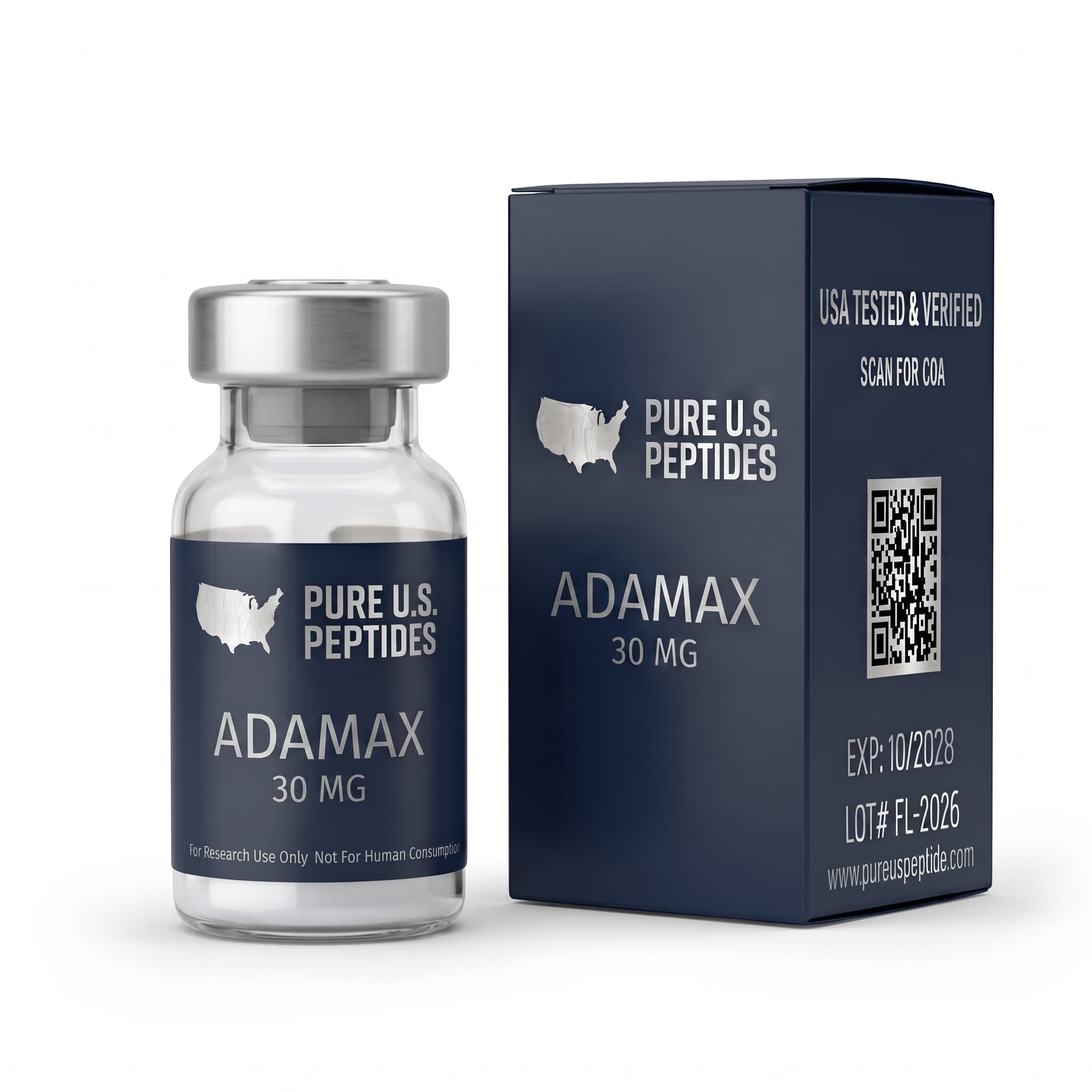
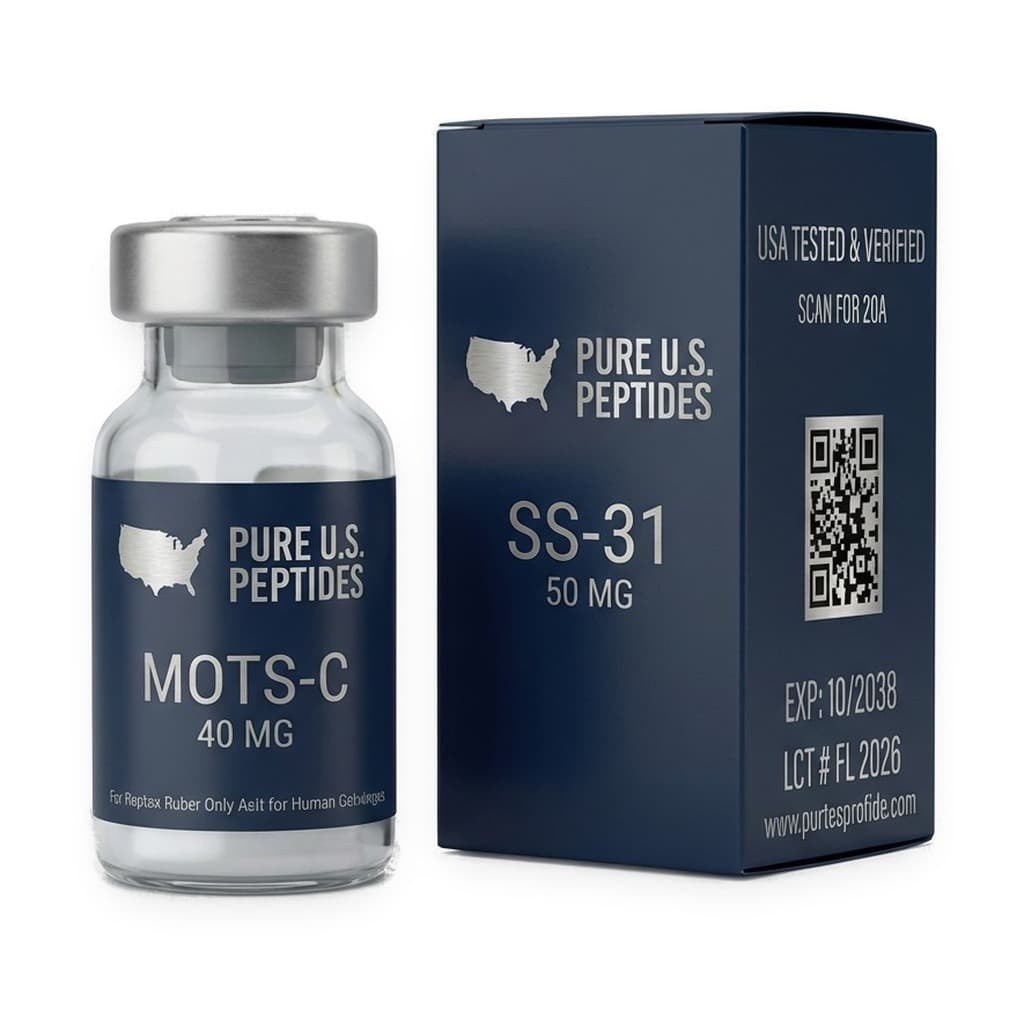
MOTS-C 40mg + SS-31 50mg Bundle
Em Estoque e Pronto para Envio dos EUA
Frete GRÁTIS em todos os pedidos nos EUA
Checkout seguro via processador de pagamento criptografado


 +2.9k
+2.9kApenas para Uso em Pesquisa
Estes produtos sao destinados exclusivamente a pesquisa laboratorial e nao se destinam ao uso medico. Nao sao aprovados pela FDA para diagnosticar, tratar, curar ou prevenir qualquer doenca. Ao adquirir, voce certifica que os produtos serao utilizados exclusivamente para pesquisa e nao para consumo humano ou animal.
Bundle / Blend Research
This product contains MOTS-c + SS-31. Select a tab below to view the full Gold Standard research profile for each component.
Visao Geral
Visao Geral
MOTS-c (Mitochondrial Open Reading Frame do(a) 12S rRNA-c) is a 16-amino-acid bioactive peptide pertencente a the class of mitochondrial-derived peptides (MDPs).[1]
Unique origin: Diferentemente de virtually all outro(a) bioactive peptides codificado(a) por the nuclear genome, MOTS-c is encoded dentro do(a) mitochondrial genome (mtDNA) — specifically by a short open reading frame (sORF) dentro do(a) mitochondrial 12S rRNA gene (MT-RNR1). Apesar de being mtDNA-encoded, MOTS-c is translated no(a) cytoplasm using the standard genetic code (the mitochondrial code would yield tandem start/stop codons).[1][6]
MOTS-c functions como um(a) mitokine — a mitochondrial hormone que can translocate do(a) mitochondria/cytoplasm para o(a) nucleus under metabolic stress, onde it binds chromatin at Antioxidant Response Elements (ARE) via o(a) Nrf2 transcricao factor, regulating aproximadamente 1,000 genes.[3]
Structurally, MOTS-c is a linear, α-helical, amphipathic and cationic peptide (MW 2174.62 Da) with a hydrophobic core (⁸YIFY¹¹) e um(a) cationic tail (¹³RKLR¹⁶). A naturally occurring polymorphism (K14Q, m.1382A>C) no(a) cationic tail has been associado(a) com exceptional longevity in Japanese populations but reduz CK2 afinidade de ligacao.[7]
MOTS-c differs from Humanin — another MDP codificado(a) por the 16S rRNA region — in que MOTS-c unicamente direciona the folate cycle and nuclear expressao genica.[6]
Mecanismo de Acao
Mecanismo de Acao
Primary Pathway: Folate → AICAR → AMPK ("Master Metabolic Switch")
MOTS-c inibe the folate cycle at 5-methyltetrahydrofolate (5Me-THF), blocking de novo purine biosynthesis. This leads to accumulation of AICAR (5-aminoimidazole-4-carboxamide ribonucleotide), que mimics AMP and ativa diretamente AMPK.[1]
- MOTS-c → inibe folate cycle (5Me-THF)
- Blocked purine synthesis → AICAR accumulation
- AICAR (AMP mimetic) → direto(a) AMPK ativacao
- AMPK → ACC fosforilacao → fatty acid oxidation
- AMPK → GLUT4 translocation → aprimorou glucose uptake
Direct Binding Partners
| Target | Binding Domain | Functional Consequence |
|---|---|---|
| CK2α | Cationic tail (¹³RKLR¹⁶) | Skeletal muscle insulin sensibilizacao; K14Q polymorphism reduz this binding[7] |
| Raptor (mTORC1) | Hydrophobic core (⁸YIFY¹¹) | Allosteric mTORC1 inibicao → shifts T-cell diferenciacao from Th1 to FOXP3+ Tregs[8] |
| Nrf2 (nuclear) | Direct chromatin binding | Nuclear translocation under stress → ARE → antioxidante expressao genica (~1,000 genes)[3] |
Nuclear Translocation
Under metabolic stress (glucose restriction, estresse oxidativo), MOTS-c translocates from mitochondria/cytoplasm para o(a) nucleus. It lacks a canonical nuclear localization signal (NLS) — instead relying on its hydrophobic core for entry. Once nuclear, it binds chromatin at ARE via Nrf2 transcricao factor para regular antioxidante expressao genica.[3]
SIRT1/PGC-1α Pathway
MOTS-c aumenta intracellular NAD+ → ativa SIRT1 → PGC-1α deacetilacao → biogenese mitocondrial and anti-inflamatorio(a) cytokine regulacao.[6]
MAPK/ERK (Tissue-Dependent)
- Adipose tissue: Activates ERK → UCP1/PGC-1α → thermogenesis/browning of white fat[9]
- Inflammation: Inhibits ERK/JNK/p38 → suprime NF-κB[10]
TGF-β/SMAD (Bone)
In osteoblastos: upregula TGF-β1/2 and SMAD7 → Type I sintese de colageno → osteogenic diferenciacao.[11]
vs. Related Compounds
| Compound | Origin | Key Difference |
|---|---|---|
| MOTS-c | mtDNA 12S rRNA (MT-RNR1) | Targets folate cycle, nuclear translocation |
| Humanin | mtDNA 16S rRNA | Cytoprotective but nao target folate or nuclear expressao genica |
| CB4211 (analog) | Synthetic (CohBar) | Engineered for melhorou stability/longer meia-vida; Phase 1b completed |
Aplicacoes de Pesquisa
Aplicacoes de Pesquisa
MOTS-c research spans metabolic, aging, exercise-physiology, immunology and bone models:
- Metabolic Models — Diet-induced-obesity mouse model: body-weight and insulin-sensitivity endpoints reported (Lee 2015); T1D, T2D and gestational diabetes models also studied.[1][8]
- Exercise Physiology — Aged-mouse model (22 months): exercise-capacity endpoints reported; skeletal-muscle MOTS-c levels measured during exercise in humans (n=10).[2]
- Aging Biology — Endogenous levels decline with age; K14Q polymorphism associado(a) com Japanese centenarian longevity.[2][7]
- Cardiovascular Models — Vascular-calcification (rat) and diabetic-cardiomyopathy endpoints reported.[12][13]
- Metabolismo Osseo — Osteoblast/osteoclast differentiation assays (RANKL); BMD endpoints reported in an OVX mouse model.[11]
- Immunomodulacao — MRSA sepsis mouse model: survival and cytokine endpoints reported; T-cell regulacao (Treg vs Th1).[10]
- Pain Models — Inflammatory and bone-cancer pain models: AMPK → MAPK-c-fos signalling in spinal cord.[14]
- Neurobiology — Cell-penetrating analogs studied in an Alzheimer's model; native MOTS-c does NOT cross BBB.[6]
- Cold Exposure — BAT thermogenesis via ERK → UCP1 in cold-exposure models.[9]
- OVX Model — OVX mice: body-weight, insulin-resistance and BAT endpoints reported.[8]
- Cancer — Ovarian cancer models via LARS1 ubiquitinacao; conflicting data on breast/prostate risk.[6]
Caracteristicas Bioquimicas
| Propriedade | Valor |
|---|---|
| Molecular Formula | C₁₀₁H₁₅₂N₂₈O₂₂S₂ |
| Molecular Weight | 2174.62 Da |
| CAS Number | 1627580-64-6 |
| PubChem CID | 146675088 |
| Sequence (1-Letter) | MRWQEMGYIFYPRKLR |
| Sequence (3-Letter) | Met-Arg-Trp-Gln-Glu-Met-Gly-Tyr-Ile-Phe-Tyr-Pro-Arg-Lys-Leu-Arg |
| Structure | Linear, α-helical, amphipathic, cationic; hydrophobic core ⁸YIFY¹¹, cationic tail ¹³RKLR¹⁶ |
| InChI Key | WYTHCOXVWRKRAH-LOKRTKBUSA-N |
| Gene Origin | MT-RNR1 (mitochondrial 12S rRNA) — mtDNA-encoded, cytoplasm-translated |
| Classification | Mitochondrial-Derived Peptide (MDP) / Mitokine |
| Key Polymorphism | K14Q (m.1382A>C) — alters cationic tail, reduz CK2 binding |
| Plasma Half-Life | ~1–2 hours (returns to baseline by 4h post-exercise) |
Identifiers
| Identity Confirmation | |
|---|---|
| Counter-Ion | |
| Detection Methods |
Resumo da Pesquisa Pre-clinica
Resumo da Pesquisa Pre-clinica
Key Preclinical Studies
| Estudo | Modelo | Principais Achados | Ref |
|---|---|---|---|
| Lee et al. (2015) | CD-1/C57BL/6 mice HFD — 0.5 mg/kg/day × 8 wk | Prevented HFD-induziu obesidade (p<0.01); ~30% ↑ glucose infusion rate in clamp; 5 mg/kg × 7d reversed age-dependent resistencia a insulina | [1] |
| Reynolds et al. (2021) | 22-mo C57BL/6N mice — 15 mg/kg/day | Ran 2-fold longer (p=0.000002), 2.16× farther; 100% reached final sprint at 15 mg/kg (vs 16.6% control) | [2] |
| Kong et al. (2021) | NOD mice (T1D) — 0.5 mg/kg/day from 7 wk | 0% incidence at 19 wk vs 100% control; glicose sanguinea 251±140 vs 547±90 mg/dL; Treg promotion via mTORC1 inibicao | [8] |
| Zhai et al. (2017) | MRSA sepse mice — 20/50 mg/kg | Pre-treatment: survival 20% → 79%; post-treatment: 50% → 100%; ↓TNF-α/IL-6/IL-1β, ↑IL-10 | [10] |
| Wei et al. (2020) | Vascular calcification rats — 5 mg/kg/day × 4 wk | 55% reduction in calcium content; reduziu pressao arterial and stiffness via AMPK → AT-1/ET-B supressao | [12] |
| Ming et al. (2016) | OVX osteoporose mice — 5 mg/kg/day × 12 wk | Significant improvements in BMD, BV/TV, trabecular thickness via AMPK → osteoclasto inibicao | [11] |
| Kim et al. (2018) | C57BL/6 mice — glucose restriction | Nuclear translocation confirmou; chromatin binding at ARE via Nrf2; regula ~1,000 genes | [3] |
| Pham et al. (2025) | T2D Wistar rats — 15 mg/kg/day × 3 wk | 8% ↓ LV wall thickness; restaurou mitochondrial respiration in diabetic hearts | [13] |
| Kong et al. (2025) | S961-treated C57BL/6 mice — 0.5 mg/kg/day | Diabetes incidence 30% vs 70% control; reduziu β-gal+ cells and SASP genes | [15] |
CB4211 (MOTS-c Analog)
An engineered analog (CB4211) entered Phase 1 and was discontinued (CohBar).[4]
Observational Human MOTS-c Data
| Estudo | Population | Achado Principal | Ref |
|---|---|---|---|
| Reynolds et al. (2021) | n=10 sedentary males | Skeletal muscle MOTS-c ↑11.9-fold post-exercise; plasma 1.6× during exercise, baseline by 4h | [2] |
| Yoon et al. (2026) | n=32 obese vs 22 lean | MOTS-c higher in obese (273±56 vs 223±50 pg/mL); unchanged 6mo post-bariatric surgery | [16] |
| Du et al. (2018) | n=40 obese children vs 57 controls | MOTS-c ↓ in obese males (472.61 vs 561.64 ng/mL); negatively correlated with BMI/HOMA-IR | [6] |
| Qin et al. (2017) | n=40 coronary angiography | Significantly lower MOTS-c in coronary endothelial dysfunction (p=0.007) | [6] |
Safety Summary
| Parametro | Finding |
|---|---|
| Native MOTS-c | No estabeleceu human safety data; FDA Categoria 2 (immunogenicity/impurity risks) |
| Cancer Risk | Conflicting: suprime ovarian cancer but theoretical breast/prostate risk |
Os produtos oferecidos neste site são fornecidos apenas para estudos in vitro. Estudos in vitro (do latim: em vidro) são realizados fora do corpo. Estes produtos não são medicamentos ou fármacos e não foram aprovados pelo FDA dos EUA para prevenir, tratar ou curar qualquer condição médica, enfermidade ou doença. A introdução corporal de qualquer tipo em humanos ou animais é estritamente proibida por lei.
Apenas para Pesquisa Laboratorial. Não se destina ao uso humano, uso médico, uso diagnóstico ou uso veterinário.
TODOS OS ARTIGOS E INFORMAÇÕES SOBRE PRODUTOS FORNECIDOS NESTE SITE SÃO APENAS PARA FINS INFORMATIVOS E EDUCACIONAIS.
Autores e Atribuicao
✍️ Article Author
Dr. Pinchas Cohen, MD
Pinchas Cohen, MD, is Dean do(a) USC Leonard Davis School of Gerontology and co-founder of CohBar, Inc. He led the initial discovery and characterization of MOTS-c, identifying its role in regulating metabolic homeostasis, sensibilidade a insulina, and preventing diet-induziu obesidade. His lab has overseen research into o peptideo's applications for age-related diseases incluindo diabetes, doenca cardiovascular, and longevity. Key publications: 'The mitochondrial-derived peptide MOTS-c promove metabolic homeostasis and reduz obesidade and resistencia a insulina' (2015, Cell Metabolism) and 'MOTS-c e um(a) exercise-induziu mitochondrial-encoded regulator of age-dependent physical decline' (2021, Nature Communications). Pinchas Cohen is referenced como um(a) foundational scientist in MOTS-c research. De forma alguma este(a) médico(a)/cientista endossa ou defende a compra, venda ou uso deste produto por qualquer motivo. Não existe afiliação ou relação, implícita ou de outra forma, entre a Pure US Peptide e este(a) médico(a).
🎓 Scientific Journal Author
Dr. Changhan David Lee, PhD
Changhan David Lee, PhD, is a Professor no(a) USC Leonard Davis School of Gerontology. He foi o(a) lead author no(a) seminal 2015 paper describing the discovery of MOTS-c (Cell Metabolism). His work identificado(a) its ability to translocate para o(a) nucleus para regular expressao genica em resposta a metabolic stress. He tambem tem investigated the immunomodulatory functions of MOTS-c, describing it como um(a) host defense peptide. Key publications: 'MOTS-c promove metabolic homeostasis and reduz obesidade and resistencia a insulina' (2015) and 'MOTS-c Translocates para o(a) Nucleus to Regulate Nuclear Gene Expression in Response to Metabolic Stress' (2018, Cell Metabolism). Changhan David Lee is referenced as one do(a) leading scientists in MOTS-c research. De forma alguma este(a) médico(a)/cientista endossa ou defende a compra, venda ou uso deste produto por qualquer motivo. Não existe afiliação ou relação, implícita ou de outra forma, entre a Pure US Peptide e este(a) médico(a).
🔬 Contributing Researcher
Dr. Kelvin Yen, PhD
Kelvin Yen, PhD, is a researcher no(a) USC Leonard Davis School of Gerontology. He collaborates extensively com o(a) Cohen lab to characterize mitochondrial-derived peptides (MDPs) incluindo MOTS-c, investigating their roles in aging, healthspan, and metabolic regulacao. Key publications: 'Mitochondrial Microproteins from Discovery to Function' (2025), 'Mitochondrially derived peptides as novel regulators of metabolismo' (2017), and 'MOTS-c: an equal opportunity insulin sensitizer' (2019). Kelvin Yen is referenced como um(a) contributing scientist in MOTS-c research. De forma alguma este(a) médico(a)/cientista endossa ou defende a compra, venda ou uso deste produto por qualquer motivo. Não existe afiliação ou relação, implícita ou de outra forma, entre a Pure US Peptide e este(a) médico(a).
Citacoes Referenciadas
Lee C, Zeng J, Drew BG, et al. Cell Metabolism. 2015;21(3):443-454.
DOIReynolds JC, Lai RW, Woodhead JST, et al. MOTS-c e um(a) exercise-induziu mitochondrial-encoded regulator of age-dependent physical decline and muscle homeostasis. Nature Communications. 2021;12(1):470.
DOIKim KH, Son JM, Benayoun BA, Lee C. The Mitochondrial-Encoded Peptide MOTS-c Translocates para o(a) Nucleus to Regulate Nuclear Gene Expression in Response to Metabolic Stress. Cell Metabolism. 2018;28(3):516-524.e7.
DOICohBar, Inc. BioSpace. 2021.
SourceKnoop A, Thomas A, Thevis M. Development of a mass spectrometry based detection method para o(a) mitochondrion-derived peptide MOTS-c in plasma samples for doping control purposes. Rapid Communications in Mass Spectrometry. 2019;33(4):371-380.
DOIWan W, Zhang L, Lin Y, et al. Mitochondria-derived peptide MOTS-c: effects and mechanisms related to stress, metabolismo and aging. Journal of Translational Medicine. 2023;21(1):36.
DOIZempo H, Kim SJ, Fuku N, et al. A pro-diabetogenic mtDNA polymorphism no(a) mitochondrial-derived peptide, MOTS-c. Aging (Albany NY). 2021;13(2):1692-1717.
SourceKong BS, Min SH, Lee C, Cho YM. Cell Reports. 2021;36(4):109447.
DOILu H, Tang S, Xue C, et al. Mitochondrial-Derived Peptide MOTS-c Increases Adipose Thermogenic Activation to Promote Cold Adaptation. International Journal of Molecular Sciences. 2019;20(10):2456.
DOIZhai D, Ye Z, Jiang Y, et al. MOTS-c peptide aumenta survival and diminui bacterial load in mice infected with MRSA. Molecular Immunology. 2017;92:151-159.
PubMedYi X, Hu G, Yang Y, et al. Role of MOTS-c no(a) regulacao of bone metabolismo. Frontiers in Physiology. 2023;14:1149120.
DOIWei M, Gan L, Liu Z, et al. Mitochondrial-Derived Peptide MOTS-c Attenuates Vascular Calcification and Secondary Myocardial Remodeling via Adenosine Monophosphate-Activated Protein Kinase Signaling Pathway. Cardiorenal Medicine. 2020;10(1):42-50.
PubMedPham TK, et al. MOTS-c restaura mitochondrial respiration and funcao cardiaca in type 2 diabetic cardiomiopatia. 2025.
PubMedYin Y, et al. 2020/2024.
PubMedKong BS, Lee H, L'Yi S, et al. Experimental & Molecular Medicine. 2025;57(8):1861-1877.
DOIYoon SH, Yuan F, Zhu X, et al. Journal of Clinical and Translational Endocrinology. 2026;43:100429.
DOIKim SJ, Miller B, Mehta HH, et al. The mitochondrial-derived peptide MOTS-c is a regulator of plasma metabolites and aprimora sensibilidade a insulina. Physiological Reports. 2019;7(13):e14171.
DOIKumagai H, Coelho AR, Wan J, et al. MOTS-c reduz myostatin and muscle atrophy signaling. American Journal of Physiology-Endocrinology and Metabolism. 2021;320(4):E680-E690.
SourceGao Y, Wei X, Wei P, et al. Metabolites. 2023;13(1):125.
DOILee C, Kim KH, Cohen P. MOTS-c: A novel mitochondrial-derived peptide regulating muscle and fat metabolismo. Free Radical Biology & Medicine. 2016;100:182-187.
DOIZheng Y, Wei Z, Wang T. Frontiers in Endocrinology. 2023;14:1120533.
DOIMohtashami Z, Singh MK, Salimiaghdam N, et al. International Journal of Molecular Sciences. 2022;23(19):11991.
DOIUSADA. What e o(a) MOTS-c peptide? USADA.org. 2024.
SourceDieli-Conwright CM, et al. Effects of a 12 Week Breast Cancer Exercise Program no(a) Mitochondrial Derived Peptide MOTS-c. Scientific Reports. 2021.
PubMedArmazenamento e Manuseio
Summary
Solúvel em água ou ácido acético diluído. Armazene o liofilizado a -20 °C ou menos, dessecado. Significativa instabilidade plasmática (~25% perda a 4°C/24h, 85–90% a RT em 2–3h).
Condições Recomendadas de Armazenamento Laboratorial
Liofilizado Powder: Store in dry, cool, dark container at -18°C to -80°C, desiccated. Estável à temperatura ambiente for short periods (days) during shipping.
Solubilidade: solúvel em água ou ácido acético diluído.
Stability: Plasma levels decrease ~25% at 4°C/24h and 85–90% at room temperature within 2–3 hours.
Forms: Liofilizado white powder in sealed vials (typically 10 mg); research-grade.
Handling: Allow vials to warm to room temperature before opening para prevenir moisture condensation.
Aviso de Uso em Pesquisa
For Research Use Only (RUO). This product is intended solely for in-vitro research and laboratory experimentation. It is not a drug, food, cosmetic, or medical device and has not been approved by the FDA for any human or veterinary use. It must not be used for therapeutic, diagnostic, or any other non-research purpose. Pure US Peptide does not condone or encourage the use of this product for anything other than strictly defined research applications. Users assume full responsibility for compliance with all applicable regulations and guidelines.
Certificado de Analise
Published certificates come from third-party laboratories. If this listing's certificate is still pending, the card below says so.
Compostos de Pesquisa Relacionados
Semax
10mg
Selank
10mg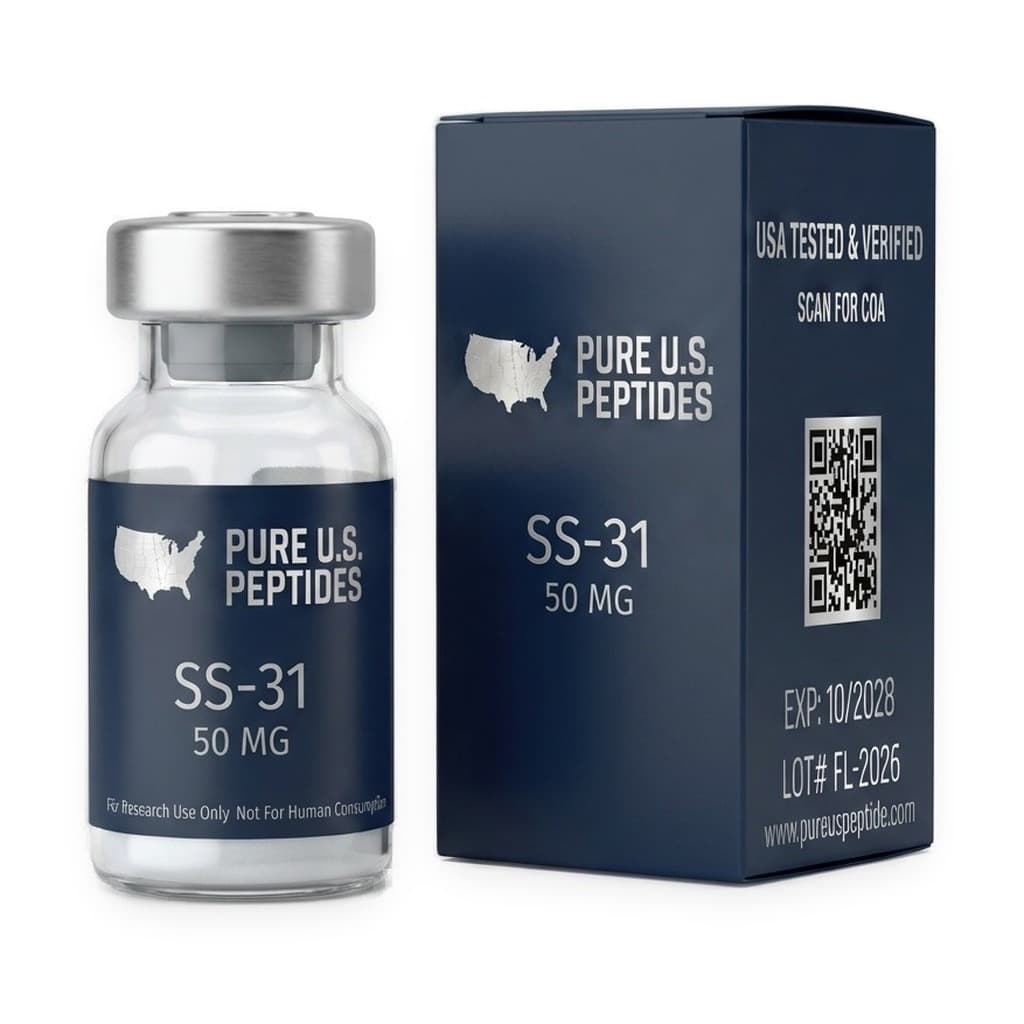
SS-31
50mg