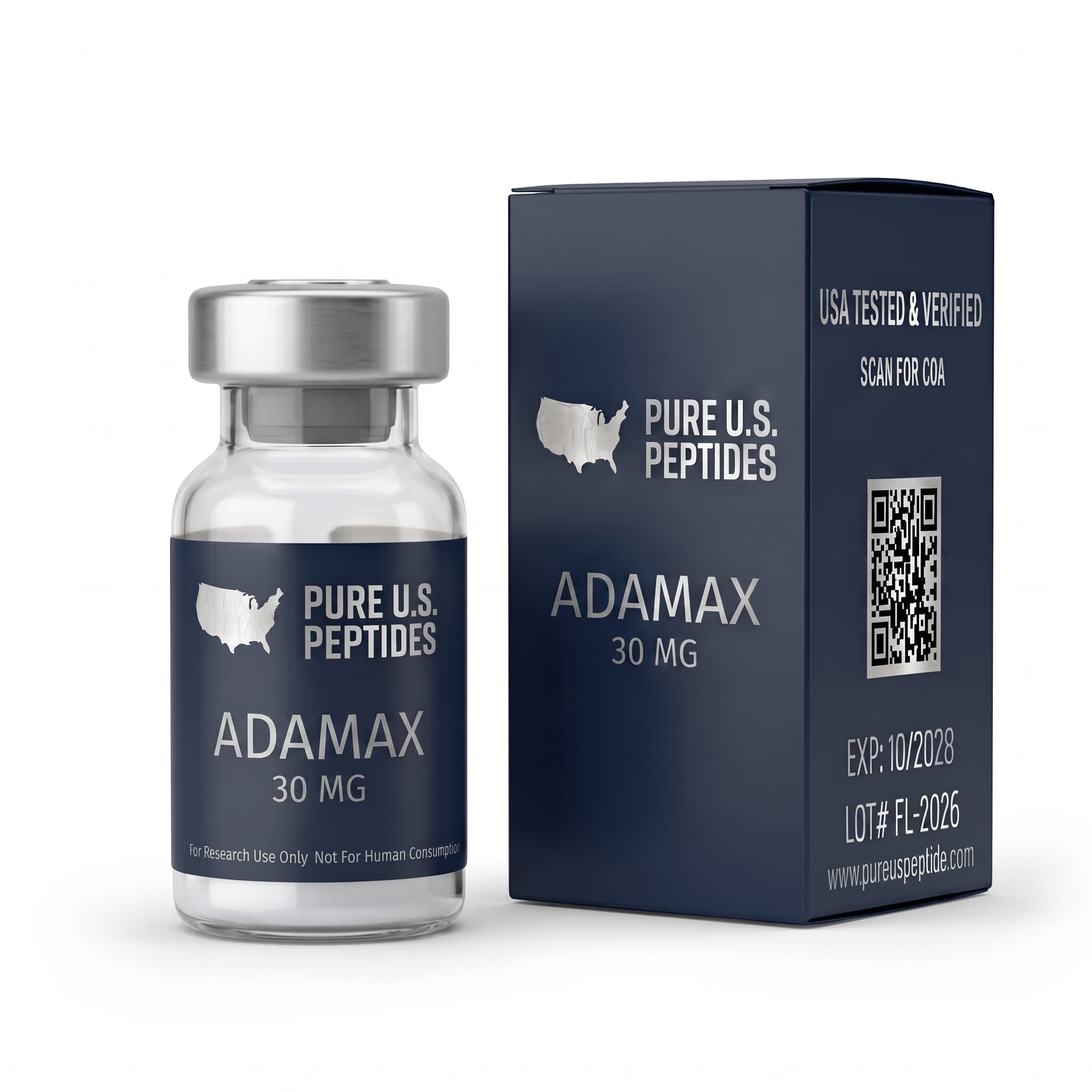
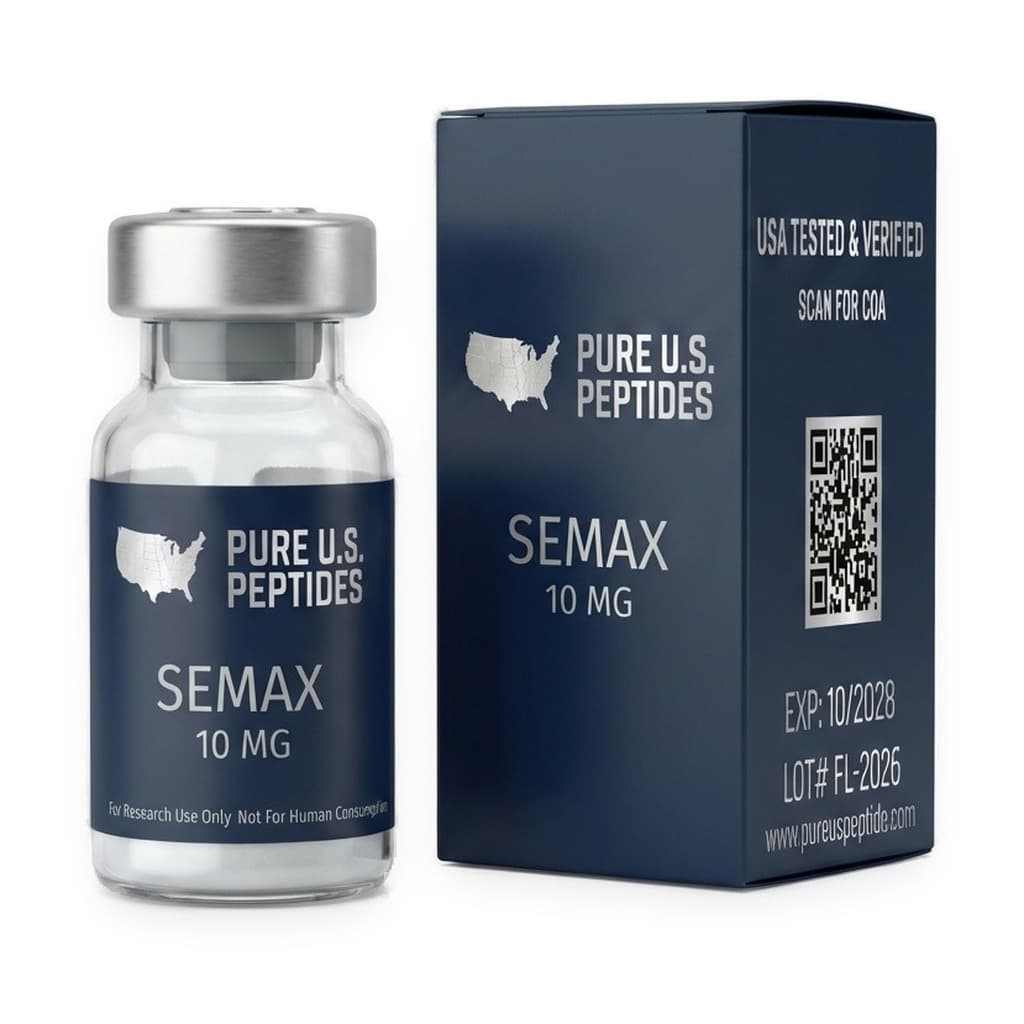
Semax 10mg
In Stock & Ready to Ship from USA
FREE shipping on every U.S. order
Secure checkout via encrypted payment processor


 +2.9k
+2.9kResearch Use Only
These products are for laboratory research only and not intended for medical use. They are not FDA-approved to diagnose, treat, cure, or prevent any disease. By purchasing, you certify they will be used solely for research and not for human or animal consumption.
Research Summary
23 PubMed CitationsOverview Semax (ACTH 4-7-PGP) is a synthetic heptapeptide with the sequence Met-Glu-His-Phe-Pro-Gly-Pro. It was designed by modifying the ACTH(4-7) fragment with a C-terminal Pro-Gly-Pro (PGP) tripeptide to enhance enzymatic stability.[2] This modification renders the compound approximately 20 times more resistant to peptidase degradation compared to the native ACTH(4-10) fragment, extending its experimental duration from minutes to 20–24 hours.[3] The compound is completely devoid of the hormonal corticotropic activity associated with full-length ACTH, meaning it does not stimulate adrenal cortisol production.[4] Regulatory records in the Russian Federation cite Semax's registration as a pharmaceutical on the "Vital and Essential Drugs" list for investigations related to stroke, cognitive disorders, and optic nerve conditions.[5] It is not registered by the U.S. FDA and has been flagged for immunogenicity concerns in compounding contexts.[6] Semax was originally developed by the Institute of Molecular Genetics of the Russian Academy of Sciences (IMG RAS).[4] Upon enzymatic degradation, the...
Semax — Research Data at a Glance
| Property | Value |
|---|---|
| PubMed Citations Referenced | 23 |
| Contributing Researchers | 3 |
| Storage Conditions | Store lyophilized powder at -20°C. |
| Purity Standard | Certificate pending |
| Research Use Only | Not for human consumption. RUO only. |
Compare Semax with Other Peptides
Research guide
What is Semax? Read the full research guideOverview
Overview
Semax (ACTH 4-7-PGP) is a synthetic heptapeptide with the sequence Met-Glu-His-Phe-Pro-Gly-Pro. It was designed by modifying the ACTH(4-7) fragment with a C-terminal Pro-Gly-Pro (PGP) tripeptide to enhance enzymatic stability.[2] This modification renders the compound approximately 20 times more resistant to peptidase degradation compared to the native ACTH(4-10) fragment, extending its experimental duration from minutes to 20–24 hours.[3]
The compound is completely devoid of the hormonal corticotropic activity associated with full-length ACTH, meaning it does not stimulate adrenal cortisol production.[4] Regulatory records in the Russian Federation cite Semax's registration as a pharmaceutical on the "Vital and Essential Drugs" list for investigations related to stroke, cognitive disorders, and optic nerve conditions.[5] It is not registered by the U.S. FDA and has been flagged for immunogenicity concerns in compounding contexts.[6]
Semax was originally developed by the Institute of Molecular Genetics of the Russian Academy of Sciences (IMG RAS).[4] Upon enzymatic degradation, the PGP tripeptide fragment possesses its own independent experimental activity, including neuroprotective and anti-ulcer effects, contributing to the overall profile of the compound.[8]
Discovery and design rationale
The Semax sequence was selected in the late 1980s after IMG RAS investigators systematically dissected the ACTH(4-10) fragment to identify the minimal sequence retaining the neurotropic activity of ACTH while shedding the steroidogenic function. The C-terminal Pro-Gly-Pro extension was added specifically to block aminopeptidase and prolyl-endopeptidase cleavage at the carboxyl terminus, raising stability roughly twentyfold over native ACTH(4-10) without altering the receptor-binding face of the molecule. [2]
Research framework
Within the regulatory-peptide research family, Semax is most directly compared with Selank (a tuftsin analog also developed by IMG RAS, used to interrogate GABA/serotonin and BDNF endpoints), DSIP (delta-sleep-inducing peptide, used in stress and sleep research), and BPC-157 (gastric pentadecapeptide investigated for parallel BDNF and brain-gut axis crosstalk). These cross-comparisons inform research designs interrogating whether short regulatory peptides act through a single integrative receptor system or recruit independent monoaminergic, neurotrophic, and inflammatory pathways. [8]
Mechanism of Action
Mechanism of Action
Receptor Targets and Binding
Specific binding sites for Semax have been identified in basal forebrain membranes. Binding is reversible, specific, and time-dependent, with a dissociation constant (Kd) of 2.4 ± 1.0 nM and maximal binding capacity (Bmax) of 33.5 ± 7.9 fmol/mg protein.[9] This binding strictly requires calcium ions (Ca²⁺) and is blocked by manganese ions (Mn²⁺), characteristic of G-protein-coupled receptor interactions.[9]
In receptor assays, Semax acts as a competitive antagonist of α-melanocyte-stimulating hormone (α-MSH) at the MC4 and MC5 melanocortin receptors. No antagonism was observed at MC3.[11]
BDNF/TrkB Signaling Cascade
Semax stimulates tyrosine phosphorylation of TrkB receptors (the high-affinity receptor for BDNF), producing a 1.5–1.6-fold increase in TrkB phosphorylation in the hippocampus within 3 hours of administration.[9] In glial cell cultures, BDNF mRNA increased 8-fold and NGF mRNA 5-fold within 30 minutes.[12] In vivo, Semax increased hippocampal BDNF protein by 1.4-fold and exon III BDNF mRNA by 3-fold.[10]
Neurotransmitter Modulation
Semax activates the dopaminergic and serotonergic systems. It increases extracellular levels of 5-HIAA (a serotonin metabolite) in the striatum by approximately 25%.[1] While it does not alter basal dopamine levels alone, it significantly potentiates dopamine release induced by D-amphetamine.[1] Semax also regulates intracellular calcium homeostasis, preventing Ca²⁺ deregulation under glutamate excitotoxicity conditions.[11]
Gene Expression and Transcription
Genome-wide transcriptional analysis following ischemia-reperfusion demonstrated that Semax modulates 394 differentially expressed genes. It upregulates neurotransmission-related genes including Gpr6, Drd2, Hes5, and Gpr88, while downregulating pro-inflammatory genes such as Il1b, Il6, and Ccl6.[13][14]
Pharmacokinetic Paradox
Despite a relatively short plasma elimination half-life of approximately 1–2 hours, the experimental effects of a single exposure persist for 20–24 hours.[16] Rapid CNS penetration across the blood-brain barrier.[4]
Active-Metabolite Pro-Drug Architecture
Once Semax enters circulation, peptidase activity progressively releases the C-terminal PGP tripeptide and intermediate fragments. Independent research has documented that the PGP fragment itself displays neuroprotective and anti-ulcer activity, providing a research framework in which the parent heptapeptide functions as both an active ligand and as a slow-release source of bioactive metabolites that prolong the apparent in-vivo signature beyond what plasma elimination kinetics would predict.[8]
Research Applications
Research Applications
In laboratory research, Semax is utilized in multiple experimental paradigms:
- Ischemic Stroke and TIA Models — Registered in the Russian Federation for investigations related to acute ischemic stroke. Experimental readouts involve suppression of inflammatory genes and activation of neurotransmitter gene networks in the penumbra zone.[13][14]
- Cognitive Enhancement / Nootropic Paradigms — Studied for effects on memory consolidation and selective attention. In published studies, a single exposure produced measurable cognitive effects lasting 20–24 hours.[16]
- Optic Nerve Investigations — Experimental readouts involving optic nerve atrophy and glaucomatous neuropathy models demonstrate improved visual acuity, expanded visual field, and increased optic nerve electric sensitivity.[17]
- Neuroprotection and Oxidative Stress — In neuronal cultures, Semax demonstrated anti-apoptotic effects, protecting against glutamate neurotoxicity and oxidative stress. It contributes to mitochondrial stability and upregulates neurotrophin expression (BDNF, NGF).[9][12]
- Stress and Anxiety Models — In rodent models of chronic stress, Semax exhibited anxiolytic effects linked to modulation of dopaminergic and serotonergic systems and normalization of hippocampal BDNF levels. Corticosterone levels decreased 28–34%.[18]
- Alzheimer's Disease Models — In APP/PS1 transgenic mice, Semax reduced amyloid plaque count in cortex by 2.8-fold and hippocampus by 2.6-fold (p<0.0001), with restored cognitive function.[19]
- Spinal Cord Injury Models — Improved functional recovery scores via μ-opioid receptor (Oprm1) / USP18 / FTO pathway, inhibiting lysosomal membrane permeabilization and pyroptosis.[20]
- Gastric Ulcer Investigations — A comparative study reported ulcer-healing endpoints at day 14.[21]
- Immune System Modulation — Transcriptional analyses indicate Semax influences immunoglobulin and chemokine gene expression, with potential antiviral activity observed in experimental influenza models.[14]
Biochemical Characteristics
| Property | Value |
|---|---|
| Molecular Formula | C₃₇H₅₁N₉O₁₀S |
| Molecular Weight | 813.93 Da |
| CAS Number | 80714-61-0 |
| Sequence (3-Letter) | Met-Glu-His-Phe-Pro-Gly-Pro |
| Sequence (1-Letter) | MEHFPGP |
| Amino Acids | 7 (heptapeptide) |
| Parent Molecule | ACTH(4-7) + Pro-Gly-Pro stabilizer |
| Stability | 20× more stable than native ACTH(4-10) |
| Hormonal Activity | None — devoid of corticotropic activity |
| Structural Type | Linear heptapeptide, all L-amino acids |
Identifiers
| PubChem CID | |
|---|---|
| InChI Key | |
| Canonical SMILES | |
| IUPAC Name |
Preclinical Research Summary
Preclinical Research Summary
Animal Studies
| Model | Species | Key Findings | Ref |
|---|---|---|---|
| Alzheimer's (APP/PS1) | Transgenic mice | Plaque reduction 2.8× cortex, 2.6× hippocampus; cognitive restoration (p<0.0001) | [19] |
| Ischemic Stroke (tMCAO) | Wistar rats | 394 DEGs modulated; vascularization ↑1.25×, neuroglial proliferation ↑1.4× | [13][22] |
| Chronic Stress | Wistar rats | Corticosterone ↓28–34%; anxiety reduced at 50–150 μg/kg | [18] |
| Spinal Cord Injury | C57BL/6 mice | Improved Basso scores; μ-opioid / USP18 / FTO pathway | [20] |
| Cognitive Enhancement | Wistar rats | 1.4× hippocampal BDNF protein; 3× exon III BDNF mRNA; accelerated learning | [10] |
| Dopaminergic System | C57BL/6 mice | +25% striatal 5-HIAA; potentiated amphetamine-induced DA release | [1] |
| Maternal Deprivation | White rats | Normalized anxiety from early-life stress; body-weight deficit normalized | [23] |
Clinical Studies / Human Data
| Study | Design | n= | Key Outcome | Ref |
|---|---|---|---|---|
| Kaplan 1996 | Volunteers | — | Memory and attention endpoints over 20–24 hours | [16] |
| Russian Patent 1995 | Multi-condition | 303 | Selective-attention, motivation and adaptive-capability endpoints | [4] |
| Gusev 2005 | Clinical | 187 | Stroke/TIA and disease-progression endpoints | [5] |
| Gusev 1997/2018 | Clinical | — | Functional-recovery and inflammation (IL-10, CRP) endpoints | [7] |
| Polunin 2000 | Comparative | — | Visual-acuity and visual-field endpoints | [17] |
| Ivanikov 2002 | Comparative | — | Ulcer-healing endpoint at day 14 | [21] |
Pharmacokinetic Parameters
| Parameter | Value | Ref |
|---|---|---|
| Plasma Half-life | ~1–2 hours | [2] |
| Duration of Experimental Effects | 20–24 hours | [16] |
| BBB Penetration | Rapid CNS distribution | [4] |
| Receptor Binding (Kd) | 2.4 ± 1.0 nM (basal forebrain) | [9] |
| MC4/MC5 Activity | Competitive antagonist (α-MSH) | [11] |
Comparison with Related Compounds
| Feature | Semax | Selank |
|---|---|---|
| Parent Molecule | ACTH(4-7) | Tuftsin |
| Sequence | MEHFPGP (7 aa) | TKPRPGP (7 aa) |
| Primary Focus | Nootropic / neuroprotection | Anxiolytic / immunomodulation |
| BDNF Induction | Strong (8× mRNA) | Moderate |
| Hormonal Activity | None | None |
| PGP Stabilizer | Yes | Yes |
| Russian Registration | Yes — stroke, cognition, optic nerve | Yes — anxiety disorders |
The products offered on this website are furnished for in-vitro studies only. In-vitro studies (Latin: in glass) are performed outside of the body. These products are not medicines or drugs and have not been approved by the FDA to prevent, treat or cure any medical condition, ailment or disease. Bodily introduction of any kind into humans or animals is strictly forbidden by law.
For Laboratory Research Only. Not for human use, medical use, diagnostic use, or veterinary use.
ALL ARTICLES AND PRODUCT INFORMATION PROVIDED ON THIS WEBSITE ARE FOR INFORMATIONAL AND EDUCATIONAL PURPOSES ONLY.
Authors & Attribution
✍️ Article Author
Dr. Nikolay F. Myasoedov
Nikolay F. Myasoedov is affiliated with the Institute of Molecular Genetics, Russian Academy of Sciences, and the National Research Center Kurchatov Institute. He is credited with the synthesis of Semax and has conducted extensive research into its neuroprotective mechanisms, specifically its ability to affect the dopaminergic and serotonergic systems and its role in increasing BDNF and NGF levels. His foundational work spans over 15 years of designing and studying ACTH(4-10) analogs. Nikolay F. Myasoedov is being referenced as one of the leading scientists involved in the research and development of Semax. In no way is this doctor/scientist endorsing or advocating the purchase, sale, or use of this product for any reason. There is no affiliation or relationship, implied or otherwise, between Pure US Peptide and this doctor.
View Full Researcher Profile →🎓 Scientific Journal Author
Academician Igor P. Ashmarin
Igor P. Ashmarin was an Academician of the Russian Academy of Medical Sciences, affiliated with the Department of Human and Animal Physiology at Moscow State University. He was a lead figure in the design and investigation of ACTH(4-10) analogs, including Semax, directing the research on neurotropic activity of regulatory peptides that resulted in the creation of Semax as a medicine. He also investigated the compound's effects on hemostatic reactions and ulcer healing. Igor P. Ashmarin is being referenced as one of the leading scientists involved in the research and development of Semax. In no way is this doctor/scientist endorsing or advocating the purchase, sale, or use of this product for any reason. There is no affiliation or relationship, implied or otherwise, between Pure US Peptide and this doctor.
View Full Researcher Profile →Academician Igor P. Ashmarin is being referenced as one of the leading scientists involved in the research and development of Semax. In no way is this doctor/scientist endorsing or advocating the purchase, sale, or use of this product for any reason. There is no affiliation or relationship, implied or otherwise, between Pure US Peptide and this doctor. The purpose of citing the doctor is to acknowledge, recognize, and credit the exhaustive research and development efforts conducted by the scientists studying this peptide.
🔬 Contributing Researcher
Dr. Lyudmila V. Dergunova
Lyudmila V. Dergunova is affiliated with the Institute of Molecular Genetics, Russian Academy of Sciences, and the National Research Center Kurchatov Institute. She has conducted genome-wide transcriptional analyses that uncovered the molecular mechanisms of Semax, highlighting its effects on immune and vascular gene expression during ischemia. Her work established that Semax activates the transcription of neurotrophins and their receptors in the brain following cerebral occlusion. Lyudmila V. Dergunova is being referenced as one of the leading scientists involved in the research and development of Semax. In no way is this doctor/scientist endorsing or advocating the purchase, sale, or use of this product for any reason. There is no affiliation or relationship, implied or otherwise, between Pure US Peptide and this doctor.
View Full Researcher Profile →Dr. Lyudmila V. Dergunova is being referenced as one of the leading scientists involved in the research and development of Semax. In no way is this doctor/scientist endorsing or advocating the purchase, sale, or use of this product for any reason. There is no affiliation or relationship, implied or otherwise, between Pure US Peptide and this doctor. The purpose of citing the doctor is to acknowledge, recognize, and credit the exhaustive research and development efforts conducted by the scientists studying this peptide.
Referenced Citations
Eremin KO, Kudrin VS, Saransaari P, Oja SS, Grivennikov IA, Myasoedov NF, Rayevsky KS. Semax, an ACTH(4-10) Analogue with Nootropic Properties, Activates Dopaminergic and Serotoninergic Brain Systems in Rodents. Neurochemical Research. 2005;30(12):1493–1500.
PubMedPotaman VN, Alfeeva LY, Kamensky AA, Levitzkaya NG, Nezavibatko VN. N-terminal degradation of ACTH(4-10) and its synthetic analog semax by the rat blood enzymes. Biochem Biophys Res Commun. 1991;176(2):741–746.
PubMedAshmarin IP, Nezavibatko VN, Levitskaya NG, Koshelev VB, Kamensky AA. Design and investigation of an ACTH(4-10) analogue lacking D-amino acids and hydrophobic radicals. Neuroscience Research Communications. 1995;16(2):105–112.
Ashmarin IP, Nezavibatko VN, Myasoedov NF, et al. A nootropic adrenocorticotropin analog 4-10-semax (15 years experience in its design and study). Zhurnal Vysshei Nervnoi Deiatelnosti. 1997;47(2):420–430.
PubMedGusev EI, Skvortsova VI, Chukanova EI. Zhurnal Nevrologii i Psikhiatrii. 2005;105(2):35–40.
PubMedU.S. Food and Drug Administration. Bulk Drug Substances Used in Compounding Under Section 503B. FDA Compounding Database. 2023.
FDA.govGusev EI, Skvortsova VI, Myasoedov NF, et al. Zhurnal Nevrologii i Psikhiatrii. 1997;97(6):26–34.
PubMedKolomin TA, Shadrina M, Slominsky P, Limborska SA, Myasoedov NF. A New Generation of Drugs: Synthetic Peptides Based on Natural Regulatory Peptides. Neuroscience and Medicine. 2013;4(4):223–252.
DOIDolotov OV, Karpenko EA, Seredenina TS, et al. Semax, an analogue of adrenocorticotropin (4-10), binds specifically and increases levels of BDNF protein in rat basal forebrain. J Neurochem. 2006;97(Suppl 1):82–86.
PubMedDolotov OV, Karpenko EA, Inozemtseva LS, et al. Semax, an analog of ACTH(4-10) with cognitive effects, regulates BDNF and trkB expression in the rat hippocampus. Brain Research. 2006;1117(1):54–60.
PubMedLevitskaya NG, Glazova NY, Sebentsova EA, et al. Investigation of the Spectrum of Physiological Activities of the Heptapeptide Semax. Neurochemical Journal. 2008;2(1–2):95–101.
DOIShadrina MI, Dolotov OV, Grivennikov IA, et al. Rapid induction of neurotrophin mRNAs in rat glial cell cultures by Semax. Neuroscience Letters. 2001;308(2):115–118.
PubMedFilippenkov IB, Stavchansky VV, Denisova AE, et al. Novel Insights into the Protective Properties of ACTH(4-7)PGP (Semax) Following Cerebral Ischaemia–Reperfusion in Rats. Genes. 2020;11(6):681.
PubMedMedvedeva EV, Dmitrieva VG, Povarova OV, et al. The peptide semax affects the expression of genes related to the immune and vascular systems in rat brain focal ischemia: genome-wide transcriptional analysis. BMC Genomics. 2014;15:228.
PubMedStavchansky VV, Yuzhakov VV, Botsina AY, et al. The Effect of Semax and Its C-End Peptide PGP on the Morphology and Proliferative Activity of Rat Brain Cells During Experimental Ischemia. J Mol Neurosci. 2011;45(2):177–185.
PubMedKaplan AY, Kochetova AG, Nezavibatko VN, Ryasina TV, Ashmarin IP. Neuroscience Research Communications. 1996;19(2):115–123.
DOIPolunin GS, Nurieva SM, Bayandin DL, Sheremet NL. Vestnik Oftalmologii. 2000;116(1):15–18.
PubMedVorvul AO, Bobyntsev II, Medvedeva OA, et al. Effects of Semax in conditions of acute and chronic social stress. Zhurnal Vysshei Nervnoi Deiatelnosti. 2021;71(4):560–570.
Radchenko AI, Kuzubova EV, Apostol AA, et al. The Potential of the Peptide Drug Semax and Its Derivative for Correcting Pathological Impairments in the Animal Model of Alzheimer's Disease. Acta Naturae. 2025;17(4):110–120.
PubMedLiu R, Chen Y, Huang H, et al. Semax peptide targets the μ opioid receptor gene Oprm1 to promote deubiquitination and functional recovery after spinal cord injury in female mice. British Journal of Pharmacology. 2025;182(22):5489-5516.
PubMedIvanikov IO, Brekhova ME, Samonina GE, et al. Bulletin of Experimental Biology and Medicine. 2002;134(1):73-74.
PubMedStavchansky VV, Yuzhakov VV, Sevan'kaeva LE, et al. Melanocortin Derivatives Induced Vascularization and Neuroglial Proliferation in the Rat Brain under Conditions of Cerebral Ischemia. Curr Issues Mol Biol. 2024;46(3):2071–2092.
PubMedVolodina MA, Sebentsova EA, Glazova NY, et al. Semax Attenuates the Influence of Neonatal Maternal Deprivation on the Behavior of Adolescent White Rats. Bull Exp Biol Med. 2012;152(5):560–563.
PubMedRUO Disclaimer
For Research Use Only (RUO). Not intended for human consumption, clinical use, or as a drug, food, cosmetic, or medical device. This product has not been evaluated by the FDA and is supplied solely for in-vitro laboratory research by qualified professionals.
Certificate of Analysis
Published certificates come from third-party laboratories. If this listing's certificate is still pending, the card below says so.
Latest Lab Report
Storage & Handling
Summary
Store lyophilized powder at -20°C. Protect from light.
Recommended Laboratory Storage Conditions
Lyophilized Powder: Stable for up to 2 years refrigerated (2–8°C) or up to 3 years frozen (-20°C). Protect from light and moisture.
“Bodily introduction of any kind into humans or animals is strictly forbidden by law.”
Related Research Compounds
MOTS-C 40mg + SS-31 50mg Bundle
Selank
10mg
SS-31
50mg