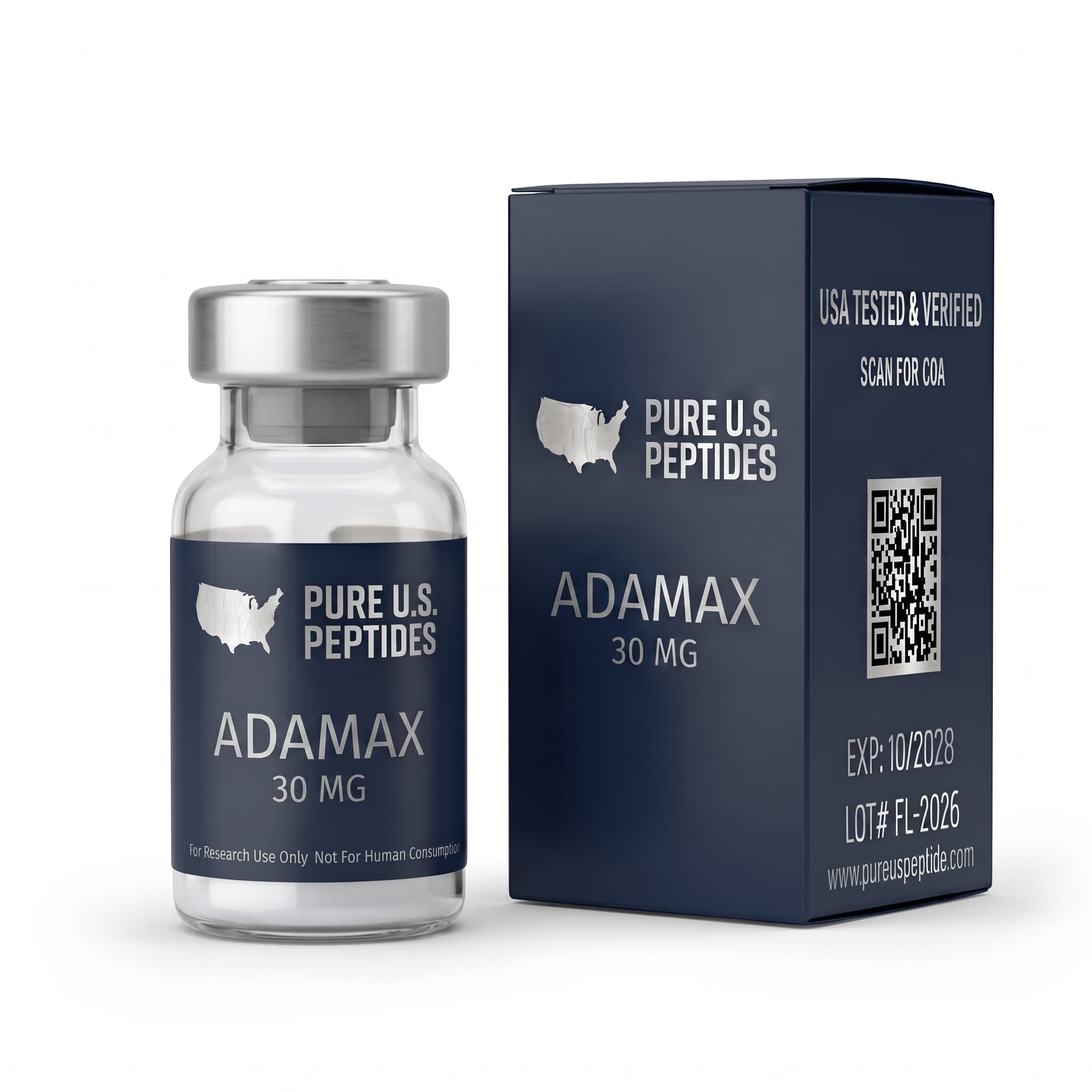
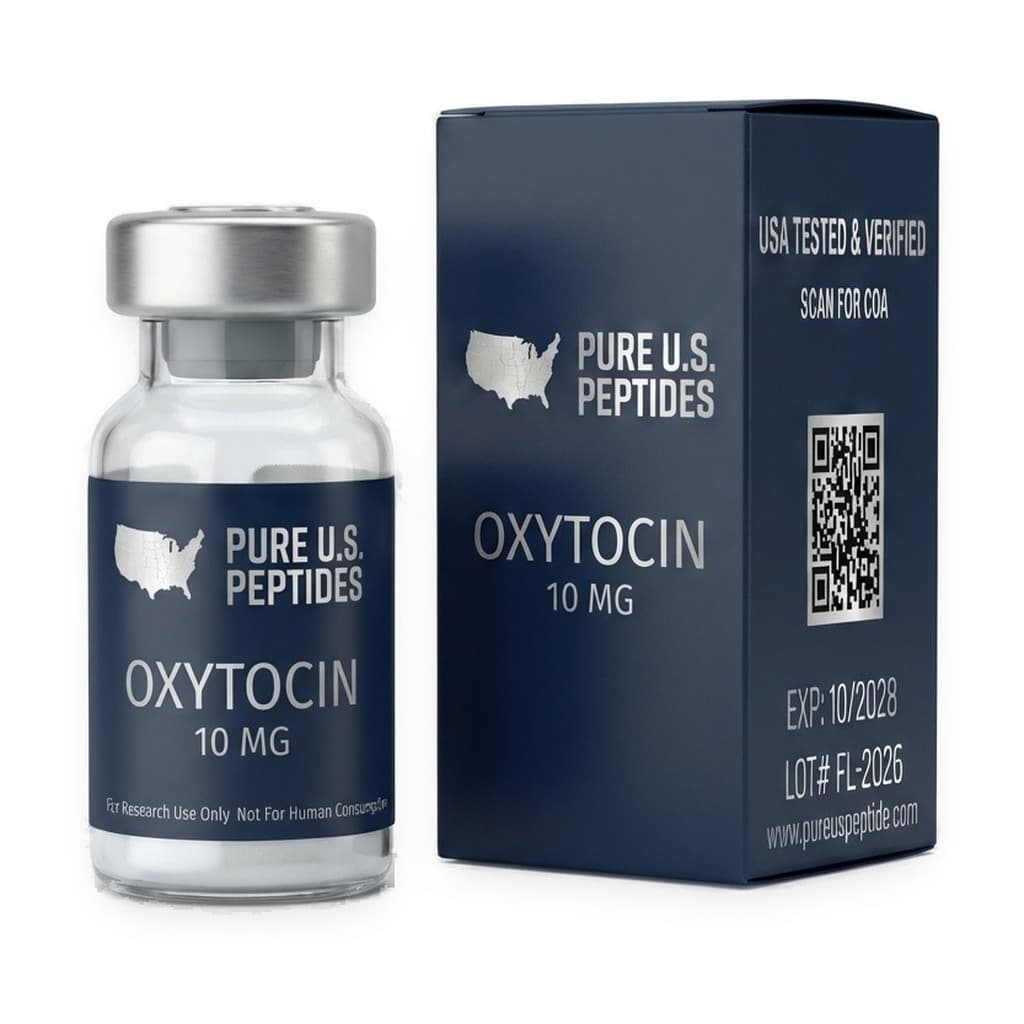
Oxytocin 10mg
Em Estoque e Pronto para Envio dos EUA
Frete GRÁTIS em todos os pedidos nos EUA
Checkout seguro via processador de pagamento criptografado


 +2.9k
+2.9kApenas para Uso em Pesquisa
Estes produtos sao destinados exclusivamente a pesquisa laboratorial e nao se destinam ao uso medico. Nao sao aprovados pela FDA para diagnosticar, tratar, curar ou prevenir qualquer doenca. Ao adquirir, voce certifica que os produtos serao utilizados exclusivamente para pesquisa e nao para consumo humano ou animal.
Resumo da Pesquisa
24 Citacoes PubMedVisao Geral Oxytocin (OXT) is a cyclic nonapeptide hormone and neuropeptide with a sequencia Cys-Tyr-Ile-Gln-Asn-Cys-Pro-Leu-Gly-NH₂, featuring a ponte dissulfeto between Cys¹ and Cys⁶ e um(a) C-terminal amide (MW 1007.19 Da).[1] Historical significance: The uterine-contracting properties of pituitary extracts were descoberto(a) por Sir Henry Dale in 1906. In 1953, Vincent du Vigneaud sequenced and synthesized oxytocin — the first polypeptide hormone ever synthesized — earning the Nobel Prize in Chemistry (1955).[2] Oxytocin is sintetizado(a) em magnocellular and parvocellular neurons do(a) paraventricular (PVN) and supraoptic (SON) nuclei do(a) hypothalamus, derivado(a) de the OXT gene (chromosome 20) como um(a) inactive prepro-oxytocin incluindo carrier protein neurophysin I, and stored no(a) posterior pituitary.[3] Structurally, oxytocin differs from arginine vasopressin (AVP) by apenas 2 aminoacidos (Ile³/Leu⁸ in OXT vs Phe³/Arg⁸ in AVP), driving significant cross-reactivity at vasopressin receptors.[3]
Oxytocin — Dados de Pesquisa em Resumo
| Propriedade | Valor |
|---|---|
| Citacoes PubMed Referenciadas | 24 |
| Pesquisadores Colaboradores | 3 |
| Condicoes de Armazenamento | Refrigere 2–8°C. |
| Padrao de Pureza | Certificado pendente |
| Apenas para Uso em Pesquisa | Nao destinado ao consumo humano. Apenas para uso em pesquisa. |
Research guide
What is Oxytocin? Read the full research guideVisao Geral
Visao Geral
Oxytocin (OXT) is a cyclic nonapeptide hormone and neuropeptide with a sequencia Cys-Tyr-Ile-Gln-Asn-Cys-Pro-Leu-Gly-NH₂, featuring a ponte dissulfeto between Cys¹ and Cys⁶ e um(a) C-terminal amide (MW 1007.19 Da).[1]
Historical significance: The uterine-contracting properties of pituitary extracts were descoberto(a) por Sir Henry Dale in 1906. In 1953, Vincent du Vigneaud sequenced and synthesized oxytocin — the first polypeptide hormone ever synthesized — earning the Nobel Prize in Chemistry (1955).[2]
Oxytocin is sintetizado(a) em magnocellular and parvocellular neurons do(a) paraventricular (PVN) and supraoptic (SON) nuclei do(a) hypothalamus, derivado(a) de the OXT gene (chromosome 20) como um(a) inactive prepro-oxytocin incluindo carrier protein neurophysin I, and stored no(a) posterior pituitary.[3]
Structurally, oxytocin differs from arginine vasopressin (AVP) by apenas 2 aminoacidos (Ile³/Leu⁸ in OXT vs Phe³/Arg⁸ in AVP), driving significant cross-reactivity at vasopressin receptors.[3]
Mecanismo de Acao
Mecanismo de Acao
Primary Target: Oxytocin Receptor (OXTR)
The OXTR is a Class-I rhodopsin-type GPCR (chromosome 3p25). High-affinity binding requer Mg²⁺ and cholesterol (cholesterol stabilizes high-affinity state). Ile³ and Leu⁸ confer selectivity over AVP receptors.[3][5]
1. Gαq/11 Pathway (Contractile — Primary)
O(a) principal via de sinalizacao in myometrium and mammary glands:[3]
- OXTR → Gαq/11 → Phospholipase C (PLC)
- PLC → PIP₂ hidrolise → IP₃ + DAG
- IP₃ → Ca²⁺ release from sarcoplasmic reticulum
- DAG → PKC ativacao
- Ca²⁺/calmodulin → MLCK → musculo liso contraction
2. MAPK/Rho-Kinase (Sustained Contractions)
ERK1/2 ativacao → cPLA2/COX-2 → prostaglandin production → sustained contractions. RhoA/ROK → myosin phosphatase inibicao → calcium sensibilizacao.[3]
3. PI3K/Akt/eNOS (Cardiovascular)
In celulas endoteliais and cardiomiocitos: PI3K → Akt → eNOS ativacao → nitric oxide (NO) release → vasodilatacao, proliferacao celular, cardioprotecao.[6]
4. Inhibitory (Gi/Go)
p38 MAPK ativacao; Ca²⁺-dependent K⁺ channel hyperpolarization — enables anxiolytic effects in CNS.[3]
Receptor Dimerization & Cross-Reactivity
OXTR forms heterodimers with V1a, V2, ghrelin, and dopamine D2 receptors. OXTR-D2 complexes in nucleus accumbens/amygdala modulate anxiety and social behavior. At alto(a) concentrations, OXT binds V1a receptors (vasoconstricao) and V2 receptors (antidiuresis/water retention) — relevant to reported hyponatremia.[3][5]
Dose-Response
- Vascular biphasic: Low dose → vasodilatacao (PI3K/eNOS/NO); alto(a) dose → vasoconstricao (V1a cross-reactivity)[6]
- Behavioral inverted U: In behavioral studies, intermediate concentrations effective; higher concentrations ineffective or inhibitory[7]
- Uterine sensitivity: Increases from 20–30 wk gestation, plateaus at 34 wk, rises sharply at term (estrogen-induziu OXTR upregulacao)[3]
vs. Analogs
| Compound | Mecanismo | Half-Life |
|---|---|---|
| Oxytocin | Full OXTR agonist + V1a/V2 cross-reactivity | 3–5 min (IV plasma) |
| Carbetocin | Synthetic agonist, higher OXTR selectivity | ~40 min |
| Atosiban | Peptide antagonist (OXTR + V1a blockade) | ~18 min |
Aplicacoes de Pesquisa
Aplicacoes de Pesquisa
Oxytocin research spans obstetrics, neuropsychiatry, metabolic disease, and cardiovascular health with extensive clinical and predados clinicos across 5+ indication categories:
- Autism Spectrum Disorder — Meta-analysis of 12 RCTs (n=498) and a large trial (Sikich 2021, NEJM) report social-function endpoints.[7][8]
- Obesity & Metabolism — Plessow 2024 (NEJM Evidence): weight and caloric-intake endpoints. Espinoza 2021: sarcopenic-obesity pilot with lean-mass and lipid endpoints.[9][10]
- Neuropsychiatric Disorders — Schizophrenia, anxiety, BPD; modula amygdala activity, reduz fear responses; context-dependent in BPD (may exacerbate hypermentalization).[11]
- Protecao Cardiovascular — ANP release, NO-mediated vasodilatacao, anti-inflamatorio(a) in aterosclerose; Petersson 1996: 21 mmHg SBP reduction in SHR rats.[6][12]
- Prader-Willi Syndrome — CARE-PWS Phase 3: carbetocin hyperphagia endpoints; Hollander 2021 (n=35, 8 weeks): hyperphagia and repetitive-behavior endpoints reported.[13]
- Addiction & Substance Use — Opioid/alcohol/stimulant craving reduction via nucleus accumbens reward circuitry modulacao.[3]
- Pain Management — Positive allosteric modulator of mu-opioid receptors; spinal nociceptive inibicao.[3]
- Sarcopenia & Aging — OXT necessario(a) para muscle stem cell regeneration; Oxt-/- mice develop premature sarcopenia/osteoporose, reversible with OXT.[14]
- Postpartum Depression — Observational study (n=904) of intrapartum synOT examined postpartum-depression endpoints.[15]
Caracteristicas Bioquimicas
| Propriedade | Valor |
|---|---|
| Molecular Formula | C₄₃H₆₆N₁₂O₁₂S₂ |
| Molecular Weight | 1007.19 g/mol |
| CAS Number | 50-56-6 |
| PubChem CID | 439302 |
| Sequence | Cys-Tyr-Ile-Gln-Asn-Cys-Pro-Leu-Gly-NH₂ |
| Structure | Cyclic nonapeptide; ponte dissulfeto Cys¹-Cys⁶; C-terminus primary amide |
| InChI Key | XNOPRXBHLZRZKH-DSZYJQQASA-NY |
| Synonyms | 'love hormone' |
| Gene | OXT (chromosome 20) |
| Precursor | Prepro-oxytocin (inclui neurophysin I carrier) |
| Activity | 1 USP Unit ≈ 1.68 µg pure peptide |
| Plasma Half-Life | ~3–5 min IV; ~28 min CSF; ~2.25–4h IN (central) |
Identificadores
| Identity Confirmation | |
|---|---|
| Counter-Ion | |
| Preservatives |
Resumo da Pesquisa Pre-clinica
Resumo da Pesquisa Pre-clinica
Key Preclinical Studies
| Estudo | Modelo | Principais Achados | Ref |
|---|---|---|---|
| Shin et al. (2025) | 12-mo C57BL/6J mice — 0.5 mg/kg, 13-wk design | Discrimination Index ↑ (p<0.01); hipocampal DCX+ cells ↑; GluR1 133%↑, NMDAR2B 101.7%↑ | [16] |
| Chavez et al. (2024) | Fmr1-KO mice (Fragile X/ASD) — IN OXT postnatal wk 2 | Fully restaurou episodic memory and hipocampal LTP in adulthood via NMDAR recovery | [17] |
| Elabd et al. (2014) | Oxt-/- mice — sistemico(a) OXT rescue | Premature sarcopenia/osteoporose confirmou; reversible with OXT; necessario(a) para muscle stem cell regeneration | [14] |
| Petersson et al. (1996) | SHR rats — 1 mg/kg × 5 days | 21 mmHg SBP reduction (p<0.01); effect persisted 3 days post-treatment; males only | [12] |
| Blevins et al. (2015) | Obese rhesus monkeys — 4-wk design | Body-weight endpoint reported (significant); ↑free fatty acids/glycerol; ↓triglycerides | [18] |
| Kobayashi et al. (2009) | Rat isquemia-reperfusao | ↑Bcl-2, ↓Caspase-3/Bax → cardiomiocito survival; melhorou cardiac remodeling | [6] |
| Marlin et al. (2015) | Virgin female mice — optogenetic OXT | Transient ↓inhibitory PSCs → excitatory LTP → onset of maternal pup retrieval behavior | [19] |
| Szeto et al. (2013) | Watanabe Hyperlipidemic Rabbits | Attenuated aterosclerose and tecido adiposo inflamacao | [20] |
Human Clinical Data: Obstetrics
| Ensaio | Population | Key Results | Ref |
|---|---|---|---|
| Pathak et al. (2025) | n=150 vaginal delivery | Blood-loss endpoint | [4] |
| Suryawanshi et al. (2025) | n=120 C-section | Uterine-tone and hemodynamic endpoints | [4] |
| HOLDS Trial (2025) | n=118 nulliparous | Cesarean-rate endpoint; inconclusive (recruitment) | [4] |
| Onuc et al. (2025) | n=904 observational | Postpartum-depression endpoint | [15] |
Human Clinical Data: Metabolic / ASD / Psychiatric / PWS
| Ensaio | Indication | Population | Key Results | Ref |
|---|---|---|---|---|
| Plessow et al. (2024) | Obesity (NEJM Evidence) | n=61; 8 wk | Weight and caloric-intake endpoints | [9] |
| Espinoza et al. (2021) | Sarcopenic obesidade | n=21; 8 wk | Lean-mass and lipid endpoints | [10] |
| Zhang et al. (2025) | ASD meta-analise | 12 RCTs, n=498 | Social-function endpoints (pooled) | [7] |
| Sikich et al. (2021) | ASD (NEJM) | n≈290 children/adolescents | No significant benefit on social function | [8] |
| Ellenbogen et al. (2024) | MDD adjunctive | n=23; adjunct to psychotherapy | Working-alliance and depression endpoints | [11] |
| CARE-PWS Phase 3 | Prader-Willi | Carbetocin | Hyperphagia endpoints | [13] |
| Hollander et al. (2021) | Pediatric PWS | n=35; 8 wk | Hyperphagia and repetitive-behavior endpoints | [13] |
Safety Summary
| Parametro | Finding |
|---|---|
| Classification | NIOSH Group 3 hazardous drug — double chemotherapy gloves + protective gown |
| BBB Penetration | <1% crosses BBB |
Os produtos oferecidos neste site são fornecidos apenas para estudos in vitro. Estudos in vitro (do latim: em vidro) são realizados fora do corpo. Estes produtos não são medicamentos ou fármacos e não foram aprovados pelo FDA dos EUA para prevenir, tratar ou curar qualquer condição médica, enfermidade ou doença. A introdução corporal de qualquer tipo em humanos ou animais é estritamente proibida por lei.
Apenas para Pesquisa Laboratorial. Não se destina ao uso humano, uso médico, uso diagnóstico ou uso veterinário.
TODOS OS ARTIGOS E INFORMAÇÕES SOBRE PRODUTOS FORNECIDOS NESTE SITE SÃO APENAS PARA FINS INFORMATIVOS E EDUCACIONAIS.
Autores e Atribuicao
✍️ Autor do Artigo
Prof. Vincent du Vigneaud
Vincent du Vigneaud was an American biochemist awarded the Nobel Prize in Chemistry in 1955. He identificado(a) the aminoacido sequence of oxytocin and, in 1953, alcancou its primeiro(a) synthesis — making oxytocin the primeiro(a) polypeptide hormone ever sequenced or synthesized. His landmark publications include 'The synthesis of an octapeptide amide com o(a) hormonal activity of oxytocin' (1953) and 'The sequence of aminoacidos in oxytocin' (1953). Vincent du Vigneaud is being referenced as one do(a) foundational scientists in oxytocin research. De forma alguma este(a) médico(a)/cientista endossa ou defende a compra, venda ou uso deste produto por qualquer motivo. Não existe afiliação ou relação, implícita ou de outra forma, entre a Pure US Peptide e este(a) médico(a).
Ver Perfil Completo do Pesquisador →🎓 Autor de Revista Cientifica
Prof. Larry J. Young
Larry J. Young, PhD, directs the Silvio O. Conte Center for Oxytocin and Social Cognition at Emory University e o(a) Center for Translational Social Neuroscience at Yerkes National Primate Research Center. He is affiliated com o(a) Department of Psychiatry and Behavioral Sciences at Emory University School of Medicine e o(a) Center for Social Neural Networks no(a) University of Tsukuba, Japan. Prof. Young has extensively investigated neural mechanisms of oxytocin in social behavior through prairie vole studies and proposed universal nomenclature for oxytocin/vasotocin ligand families. Key publications: 'Oxytocin, Neural Plasticity, and Social Behavior' (2021) and 'The neurobiology of pair bonding' (2004, Nature Neuroscience). Larry J. Young is being referenced as one do(a) leading scientists envolveu in oxytocin research. De forma alguma este(a) médico(a)/cientista endossa ou defende a compra, venda ou uso deste produto por qualquer motivo. Não existe afiliação ou relação, implícita ou de outra forma, entre a Pure US Peptide e este(a) médico(a).
Ver Perfil Completo do Pesquisador →Prof. Larry J. Young is being referenced as one of the leading scientists involved in the research and development of Oxytocin. In no way is this doctor/scientist endorsing or advocating the purchase, sale, or use of this product for any reason. There is no affiliation or relationship, implied or otherwise, between Pure US Peptide and this doctor. The purpose of citing the doctor is to acknowledge, recognize, and credit the exhaustive research and development efforts conducted by the scientists studying this peptide.
🔬 Pesquisador Colaborador
Dr. Thomas R. Insel
Thomas R. Insel, MD, conducted seminal research beginning no(a) late 1980s establishing oxytocin's role in social cognition. His group demonstrated que oxytocin desempenha um papel critico no(a) monogamous partner preferences of prairie voles comparado(a) a montane voles, showing que oxytocin receptor distribuicao in specific brain regions is necessario(a) para social attachment. Key publications: 'Oxytocin is necessario(a) para nursing but nao e essencial para parturition or reproductive behavior' (1996) and 'Is social attachment an addictive disorder?' (2003). Thomas R. Insel is being referenced as one do(a) pioneering scientists envolveu in oxytocin research. De forma alguma este(a) médico(a)/cientista endossa ou defende a compra, venda ou uso deste produto por qualquer motivo. Não existe afiliação ou relação, implícita ou de outra forma, entre a Pure US Peptide e este(a) médico(a).
Ver Perfil Completo do Pesquisador →Dr. Thomas R. Insel is being referenced as one of the leading scientists involved in the research and development of Oxytocin. In no way is this doctor/scientist endorsing or advocating the purchase, sale, or use of this product for any reason. There is no affiliation or relationship, implied or otherwise, between Pure US Peptide and this doctor. The purpose of citing the doctor is to acknowledge, recognize, and credit the exhaustive research and development efforts conducted by the scientists studying this peptide.
Citacoes Referenciadas
du Vigneaud V, Ressler C, Trippett S. The sequence of aminoacidos in oxytocin, with a proposal for a estrutura of oxytocin. Journal of Biological Chemistry. 1953;205(2):949-957.
DOIdu Vigneaud V, Ressler C, Swan JM, Roberts CW, Katsoyannis PG, Gordon S. The synthesis of an octapeptide amide com o(a) hormonal activity of oxytocin. Journal do(a) American Chemical Society. 1953;75(19):4879-4880.
DOIGimpl G, Fahrenholz F. The oxytocin receptor system: structure, function, and regulacao. Physiological Reviews. 2001;81(2):629-683.
DOISalati JA, Leathersich SJ, Williams MJ, Cuthbert A, Tolosa JE. Cochrane Database of Systematic Reviews. 2019;4(4):CD001808.
DOIYoung LJ, Wang Z. The neurobiology of pair bonding. Nature Neuroscience. 2004;7(10):1048-1054.
DOIGutkowska J, Jankowski M. Oxytocin revisited: its role in cardiovascular regulacao. Journal of Neuroendocrinology. 2012;24(4):599-608.
DOIZhang Y, Zhang X, Huang L. Frontiers in Psychiatry. 2025;15:1477076.
DOISikich L, Kolevzon A, King BH, et al. New England Journal of Medicine. 2021;385(16):1462-1473.
DOIPlessow F, Kerem L, Wronski ML, et al. NEJM Evidence. 2024;3:EVIDoa2300349.
DOIEspinoza SE, Lee JL, Wang CP, et al. Journal do(a) American Medical Directors Association. 2021;22(9):1877-1882.e2.
DOIGiannoulis E, Andreini E, Santambrogio J, et al. The interplay between borderline personality disorder and oxytocin. Brain Sciences. 2025.
DOIPetersson M, Alster P, Lundeberg T, Uvnäs-Moberg K. Oxytocin causes a longo prazo decrease of pressao arterial in female and male rats. Physiology & Behavior. 1996;60(5):1311-1315.
DOIHollander E, Jacob S, Engel A, et al. Journal of Psychiatric Research. 2021;142:311-318.
DOIElabd C, Cousin W, Upadhyayula P, et al. Oxytocin e um(a) age-specific circulating hormone que is necessario(a) para muscle maintenance and regeneration. Nature Communications. 2014;5:4082.
DOIOnuc ME, et al. Psychiatry International. 2025.
PubMedShin H, et al. Chronic periferico(a) oxytocin administration aprimora neurogenese and spatial memory in camundongos idosos. 2025.
PubMedChavez CM, et al. Early-life oxytocin restaura sinaptico(a) plasticity and memory in Fmr1-KO mice. 2024.
PubMedBlevins JE, Graham JL, Morton GJ, et al. American Journal of Physiology. 2015;308(5):R431-R438.
DOIMarlin BJ, Mitre M, D'amour JA, Chao MV, Bhatt D, Bhatt R, Bhatt DL, Bhatt DL, Froemke RC. Oxytocin enables maternal behaviour by balancing cortical inibicao. Nature. 2015;520(7548):499-504.
DOISzeto A, Nation DA, Mendez AJ, et al. Oxytocin atenua NADPH-dependent superoxide activity and IL-6 secretion in macrofagos and vascular cells. American Journal of Physiology. 2008;295(6):E1495-E1501.
DOIRajamannar P, Blechman J, Raz O, Levkowitz G. Neuropeptide oxytocin facilita its own brain-to-periphery uptake. Cell Reports. 2025;44(4):115491.
DOILawson EA. Nature Reviews Endocrinology. 2017;13(12):700-709.
DOIBlevins JE, Baskin DG. Physiology & Behavior. 2015;152(Pt B):438-449.
DOIInsel TR. Is social attachment an addictive disorder? Physiology & Behavior. 2003;79(3):351-357.
DOIAviso de Uso em Pesquisa
Apenas para Uso em Pesquisa (RUO). Nao destinado ao consumo humano, uso clinico, ou como medicamento, alimento, cosmetico ou dispositivo medico. Este produto nao foi avaliado pelo FDA e e fornecido exclusivamente para pesquisa laboratorial in vitro por profissionais qualificados.
Certificado de Analise
Published certificates come from third-party laboratories. If this listing's certificate is still pending, the card below says so.
Ultimo Relatorio de Laboratorio
Armazenamento e Manuseio
Resumo
Refrigere 2–8°C. Significativa perda de atividade após 24h à temperatura corporal. NIOSH Group 3 fármaco perigoso — EPI necessário.
Condições Recomendadas de Armazenamento Laboratorial
Storage: Refrigeration 2–8°C recommended.
Stability: Significant activity loss after 24 hours at body temperature.
Handling: NIOSH 2016 Group 3 hazardous drug — double chemotherapy gloves + protective gown during preparation. Must be free from vasopressin contamination.
“Resumo da Pesquisa Pre-clinica Key Preclinical Studies Estudo Modelo Principais Achados Ref Shin et al.”
Compostos de Pesquisa Relacionados
PT-141
10mg
Melanotan 2
10mg
Kisspeptin
10mg