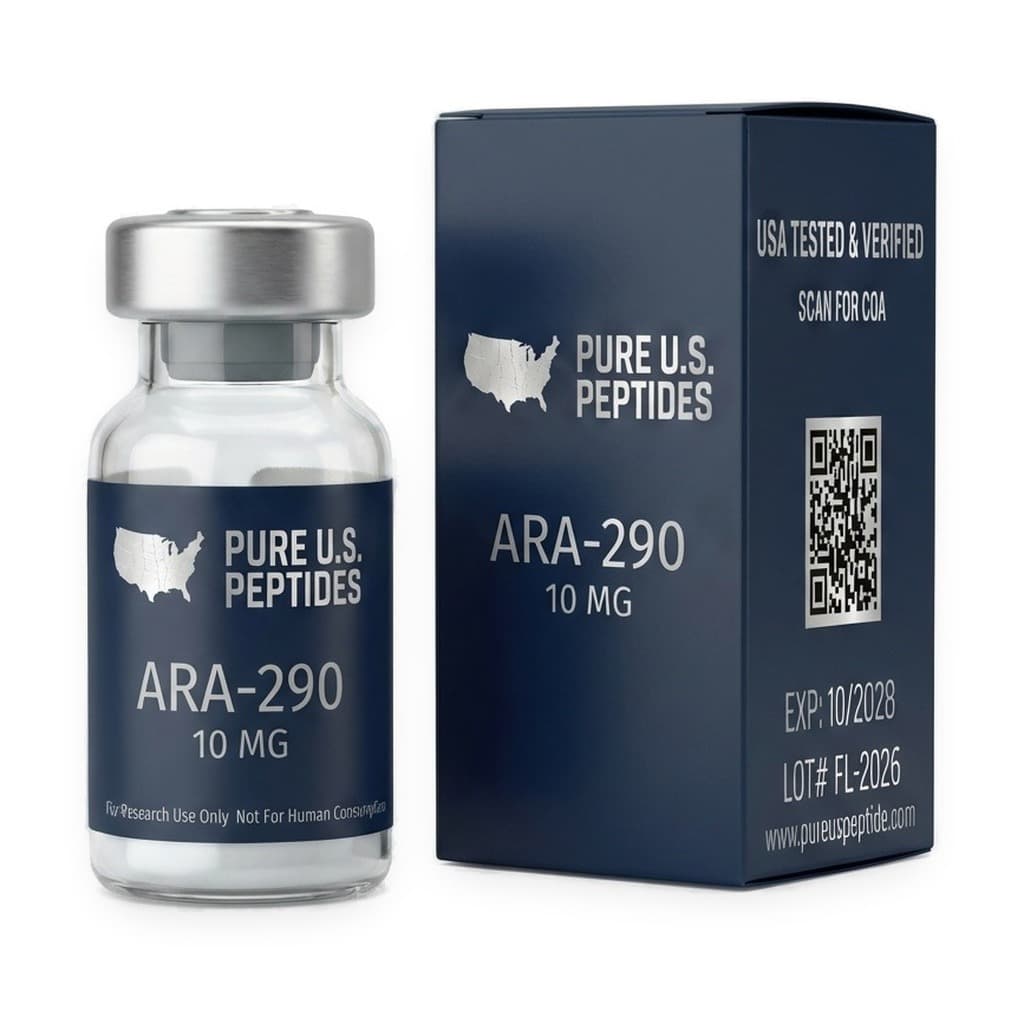
ARA-290 10mg
In Stock & Ready to Ship from USA
FREE shipping on every U.S. order
Secure checkout via encrypted payment processor


 +2.9k
+2.9kResearch Use Only
These products are for laboratory research only and not intended for medical use. They are not FDA-approved to diagnose, treat, cure, or prevent any disease. By purchasing, you certify they will be used solely for research and not for human or animal consumption.
Research Summary
21 PubMed CitationsARA-290 (also known as cibinetide) is a synthetic 11-amino acid peptide derived from the three-dimensional structure of erythropoietin (EPO), specifically modeled after the helix-B surface domain of the EPO molecule. [2] Unlike full-length EPO, ARA-290 is non-hematopoietic — it does not stimulate red blood cell production (erythropoiesis), thereby avoiding the cardiovascular and thrombotic risks associated with EPO experimental protocol such as hypertension and thromboembolic events. [3] ARA-290 was developed by Araim Pharmaceuticals (Tarrytown, NY), co-founded by Dr. Michael Brines and Dr. Anthony Cerami, to harness the potent tissue-protective and anti-inflammatory properties of EPO without triggering its hematological reported observations in study populations. [18] The peptide selectively activates the Innate Repair Receptor (IRR), a heterocomplex of the EPO receptor (EPOR) and the CD131 beta-common receptor (βcR). The IRR is typically not expressed in healthy tissue but is rapidly upregulated in response to cellular stress, hypoxia, or inflammation. [4] ARA-290 has received...
ARA-290 — Research Data at a Glance
| Property | Value |
|---|---|
| Molecular Formula | C51H84N16O21 |
| Molecular Weight | 1257.3 g/mol |
| CAS Number | 1208244-03-8 |
| Amino Acid Sequence | Pyr-Glu-Gln-Leu-Glu-Arg-Ala-Leu-Asn-Ser-Ser-OH |
| PubMed Citations Referenced | 21 |
| Contributing Researchers | 2 |
| Storage Conditions | Store lyophilized at −20°C (up to 3 years) or 2–8°C (up to 2 years). |
| Purity Standard | Certificate pending |
| Research Use Only | Not for human consumption. RUO only. |
Research guide
What is ARA-290? Read the full research guideOverview
ARA-290 (also known as cibinetide) is a synthetic 11-amino acid peptide derived from the three-dimensional structure of erythropoietin (EPO), specifically modeled after the helix-B surface domain of the EPO molecule. [2] Unlike full-length EPO, ARA-290 is non-hematopoietic — it does not stimulate red blood cell production (erythropoiesis), thereby avoiding the cardiovascular and thrombotic risks associated with EPO experimental protocol such as hypertension and thromboembolic events. [3]
ARA-290 was developed by Araim Pharmaceuticals (Tarrytown, NY), co-founded by Dr. Michael Brines and Dr. Anthony Cerami, to harness the potent tissue-protective and anti-inflammatory properties of EPO without triggering its hematological reported observations in study populations. [18] The peptide selectively activates the Innate Repair Receptor (IRR), a heterocomplex of the EPO receptor (EPOR) and the CD131 beta-common receptor (βcR). The IRR is typically not expressed in healthy tissue but is rapidly upregulated in response to cellular stress, hypoxia, or inflammation. [4]
ARA-290 has received FDA Orphan compound Designation and Fast Track status for the investigation of sarcoidosis-associated neuropathy, and also holds EMA Orphan compound Designation for sarcoidosis. [16] It is currently an investigational compound not registered for experimental use. ARA-290 is not listed on the WADA Prohibited List, although its EPO-related origin could be subject to future review. [6]
Discovery and design rationale
ARA-290 was rationally designed in the mid-2000s after Brines and Cerami’s laboratory mapped the surface of the EPO molecule and identified that the helix-B aqueous-face residues were responsible for tissue-protective signaling, distinct from the receptor-dimerization face responsible for erythropoiesis. The eleven-residue pyroglutamate-capped sequence was selected to mimic the helix-B surface conformation while maintaining proteolytic stability suitable for systemic research administration in animal models. [2]
Research framework
Within the tissue-protective and innate-repair peptide research domain, ARA-290 is most directly compared with BPC-157 (gastric pentadecapeptide investigated for endothelial NO crosstalk and angiogenic repair), thymosin alpha-1 (TLR-modulating immunopeptide), and TB-500 (G-actin sequestering tissue-repair fragment). These cross-comparisons inform research designs interrogating whether non-hematopoietic EPO-mimetic signaling converges with, or operates independently of, classical actin/cytoskeletal and growth-factor repair pathways. [4]
Mechanism of Action
1. Primary Receptor Target — The Innate Repair Receptor (IRR)
ARA-290 selectively binds to the Innate Repair Receptor (IRR), a heteromeric complex consisting of the erythropoietin receptor (EPOR) and the CD131 beta-common receptor (βcR). [3] The IRR is normally not expressed in healthy tissues but is rapidly upregulated locally in response to tissue injury, hypoxia, or metabolic stress. [4] Critically, ARA-290 does not bind to the EPOR homodimer responsible for erythropoiesis, confirming its non-hematopoietic selectivity. [2]
Swartjes et al. (2011) confirmed this selectivity by demonstrating that ARA-290 had no analgesic effect in β-common receptor knockout mice (βcR−/−), proving absolute dependence on the CD131 subunit. [3]
2. Downstream Signaling — JAK2 / STAT / PI3K / MAPK
Binding to the IRR initiates phosphorylation of Janus kinase 2 (JAK2), which propagates signal transduction through three principal pathways: [18]
- STAT Pathway: Activates STAT transcription factors to promote anti-apoptotic gene expression.
- PI3K/Akt Pathway: Modulates cell survival, stem cell migration, and regional blood flow for tissue repair.
- MAPK Pathway: Reduces inflammation, edema, and mediates anti-apoptosis.
ARA-290 also significantly inhibits NF-κB nuclear translocation, reducing pro-inflammatory cytokine production (TNF-α, IL-6, IL-1β) and increasing anti-inflammatory IL-10. [1]
3. Anti-Inflammatory and Neuroprotective Effects
In spinal cord tissue following nerve injury, ARA-290 suppresses microglia activation (reduced Iba-1 immunoreactivity) and astrocyte reactivity (reduced GFAP expression), shifting activated macrophages back to a resting phenotype. [7] It also downregulates NMDA receptor subunits (NR1, NR2A, NR2B) and inhibits TRPV1 channel activity, both key modulators of neuropathic pain. [7]
4. Cytoprotection and Mitochondrial Health
ARA-290 desensitizes the mitochondrial permeability transition pore (mPTP) to oxidant stress, significantly elevating the threshold for ROS-induced mPTP opening in cardiomyocytes. [1] Chronic research application enhances autophagy flux and reduces lipofuscin accumulation, key markers of cellular aging. [1]
5. "Molecular Switch" — Short Half-Life, Sustained Effects
Despite a very short plasma half-life (on the order of minutes), ARA-290 triggers a "molecular switch" upon IRR activation. [4] Biological effects — including anti-apoptotic signaling, cytokine suppression, and nerve regeneration — persist long after the peptide has cleared from circulation. Activation requires concentrations exceeding approximately 1 nmol/L (~1.3 ng/mL). [5]
Research Applications
🧠 Neuropathic Pain & Small Fiber Neuropathy (SFN)
ARA-290 has been extensively studied for its ability to relieve neuropathic pain and repair small nerve fibers. In a spared nerve injury model, Swartjes et al. demonstrated a dose-dependent, long-term relief of both mechanical and cold allodynia lasting up to 20 weeks (30–60 µg/kg, p < 0.001 vs vehicle) coupled with suppression of spinal microglia activation. [7]
In the NERVARA trial (n=38, 28 days), corneal nerve fiber area, SFNSL symptom score and 6-Minute Walk Test endpoints were reported. [4]
🩺 Type 2 Diabetes & Metabolic Control
In a Phase 2 study (28 days) in study subjects with type 2 diabetes and neuropathy, HbA1c, lipid-profile and PainDetect endpoints were reported. [5]
In preclinical models, ARA-290 (30 µg/kg) ameliorated diet-induced insulin resistance in mice, reducing hepatic lipid deposition, normalizing serum glucose, and enhancing mitochondrial biogenesis in skeletal muscle. [12]
❤️ Cardiovascular Protection & Aging
Chronic ARA-290 research application (100 µg/kg, tri-weekly for 15 months) in aging rats mitigated the age-associated increase in left ventricular end-systolic volume by ~75% (p < 0.05), blunted ejection fraction decline by almost half (p < 0.0001), and significantly reduced blood pressure elevation (p < 0.008). [1] Treated rats showed significantly lower cardiac inflammation (CD45 leukocytes p < 0.001, CD68 monocytes p < 0.001), reduced NF-κB activity, and lower frailty index scores at 33 months of age (p < 0.001). [1]
See also: BPC-157 and TB-500 for related tissue repair research.
Biochemical Characteristics
| Property | Value |
|---|---|
| Formula | C51H84N16O21 |
| Molecular Weight | 1257.3 g/mol |
| Synonyms | Cibinetide, ARA290, pHBSP (Pyroglutamate Helix B Surface Peptide) |
| Cas Number | 1208244-03-8 |
| Sequence | Pyr-Glu-Gln-Leu-Glu-Arg-Ala-Leu-Asn-Ser-Ser-OH |
| Pubchem Cid | 91810664 |
| Monoisotopic Mass | 1256.6 Da |
| Polar Area | N/A |
| Complexity | N/A |
| X Log P | N/A |
| Heavy Atom Count | 88 |
| H Bond Donor Count | 21 |
| H Bond Acceptor Count | 27 |
| Rotatable Bond Count | 44 |
Identifiers
| Pubchem Cid | |
|---|---|
| Inchi | |
| Inchi Key | |
| Smiles Isomeric | |
| Smiles Canonical | |
| Iupac Name |
Preclinical Research Summary
Animal Studies
- Neuropathic Pain (Rats): 30–60 µg/kg produced dose-dependent, long-term (20-week) relief of mechanical and cold allodynia with suppressed spinal microglia activation. [7]
- Cardiovascular Aging (Rats): 100 µg/kg tri-weekly for 15 months preserved cardiac function (ejection fraction, LV volume), reduced cardiac inflammation (NF-κB, CD45, CD68), improved frailty index, enhanced autophagy flux. No significant lifespan extension (p = 0.182). [1]
- Insulin Resistance (Mice): 30 µg/kg ameliorated diet-induced metabolic dysfunction, normalized glucose/lipid profiles, enhanced mitochondrial biogenesis. [12]
- Islet Transplantation (Rats): 120 µg/kg/day protected islets from cytokine-induced apoptosis in vitro (75.2% vs. 54.6% viability, p < 0.05). [14]
- Depression (Mice): Daily ARA-290 ameliorated chronic stress-induced depression-like behavior comparable to fluoxetine, reversing microglia activation. [7]
- Wound Healing (Rats): Topical application in diabetic rats accelerated wound closure, reduced re-epithelialization period, and increased collagen content. [17]
Human Clinical Trials
- Sarcoidosis SFN Pilot (n=22): 4-week design; SFNSL and SF-36 physical-functioning endpoints reported. [6]
- NERVARA Trial (n=38): 28-day design; corneal nerve fiber area, SFNSL and 6MWT endpoints reported. [4]
- T2D Neuropathy (n=48): 28-day design; HbA1c, PainDetect and corneal nerve fiber density endpoints reported. [5]
- Diabetic Macular Edema (Phase 2): 12-week design; retinal-thickness, tear-production and metabolic endpoints reported. [10]
Regulatory Status
FDA: Investigational compound. Orphan compound + Fast Track designation for sarcoidosis-associated neuropathy. [16]
EMA: Orphan compound Designation for sarcoidosis.
WADA: Not currently on the Prohibited List, but EPO-related origin may be subject to future review.
reported tolerability profile: No anti-ARA-290 antibodies detected after 28 days of repeat exposure. No increase in hematocrit, hemoglobin, or platelet counts. Preclinical toxicology showed no adverse effects even at high multiples of active concentrations. [5]
ALL ARTICLES AND PRODUCT INFORMATION PROVIDED ON THIS WEBSITE ARE FOR INFORMATIONAL AND EDUCATIONAL PURPOSES ONLY.
Authors & Attribution
✍️ Article Author
Dr. Michael Brines
Michael Brines, MD, PhD, is an endocrinologist and co-founder of Araim Pharmaceuticals, Inc. (Tarrytown, NY). A graduate of Rockefeller University, Dr. Brines identified that the tissue-protective properties of erythropoietin (EPO) were mediated by a specific receptor (the Innate Repair Receptor) distinct from the erythropoietic receptor. He played a lead role in engineering ARA-290 based on the three-dimensional structure of EPO’s helix B to selectively activate the IRR without stimulating red blood cell production. He also served at The Feinstein Institutes for Medical Research (Manhasset, NY) and has authored over 40 publications on EPO-derived tissue protection. Michael Brines is being referenced as one of the leading scientists involved in the research and development of ARA-290. In no way is this doctor/scientist endorsing or advocating the purchase, sale, or use of this product for any reason. There is no affiliation or relationship, implied or otherwise, between Pure US Peptide and this doctor.
View Full Researcher Profile →🎓 Scientific Journal Author
Dr. Albert Dahan
Albert Dahan, MD, PhD, is a Professor of Anesthesiology at Leiden University Medical Center (LUMC), The Netherlands. Dr. Dahan is a key clinical investigator who identified the unmet medical need of painful neuropathy in sarcoidosis study subjects and initiated the pivotal clinical trials testing ARA-290 for this condition, including the NERVARA Trial (NCT02039687). His trials reported small-fiber-neuropathy symptom, corneal nerve fiber density and quality-of-life endpoints in study subjects with sarcoidosis and type 2 diabetes. He is the lead author on several foundational ARA-290 clinical publications in Molecular research compound. Albert Dahan is being referenced as one of the leading scientists involved in the research and development of ARA-290. In no way is this doctor/scientist endorsing or advocating the purchase, sale, or use of this product for any reason. There is no affiliation or relationship, implied or otherwise, between Pure US Peptide and this doctor.
View Full Researcher Profile →Dr. Albert Dahan is being referenced as one of the leading scientists involved in the research and development of ARA-290. In no way is this doctor/scientist endorsing or advocating the purchase, sale, or use of this product for any reason. There is no affiliation or relationship, implied or otherwise, between Pure US Peptide and this doctor. The purpose of citing the doctor is to acknowledge, recognize, and credit the exhaustive research and development efforts conducted by the scientists studying this peptide.
Referenced Citations
Winicki NM, Nanavati AP, Morrell CH, et al. A small erythropoietin derived non-hematopoietic peptide reduces cardiac inflammation, attenuates age associated declines in heart function and prolongs healthspan. Front Cardiovasc Med, 9, 1096887, 2023.
DOIBrines M, Patel NS, Villa P, et al. Nonerythropoietic, tissue-protective peptides derived from the tertiary structure of erythropoietin. PNAS USA, 105(31), 10925–10930, 2008.
PubMedSwartjes M, Morariu A, Niesters M, et al. Anesthesiology, 115(5), 1084–1092, 2011.
PubMedDahan A, Dunne A, Swartjes M, et al. Mol Med, 19(1), 334–345, 2013.
PubMedBrines M, Dunne AN, van Velzen M, et al. Mol Med, 20(1), 658–666, 2015.
PubMedHeij L, Niesters M, Swartjes M, et al. Mol Med, 18(1), 1430–1436, 2012.
PubMedSwartjes M, van Velzen M, Niesters M, et al. Mol Pain, 10, 13, 2014.
PubMedMcVicar CM, Hamilton R, Colhoun LM, et al. Intervention with an erythropoietin-derived peptide protects against neuroglial and vascular degeneration during diabetic retinopathy. Diabetes, 60(11), 2995–3005, 2011.
PubMedCulver DA, Dahan A, Bajorunas D, et al. Invest Ophthalmol Vis Sci, 58(6), BIO52–BIO60, 2017.
PubMedLois N, Gardner E, McFarland M, et al. J Clin Med, 9(7), 2225, 2020.
PubMedNairz M, Haschka D, Dichtl S, et al. Cibinetide dampens innate immune cell functions thus ameliorating the course of experimental colitis. Sci Rep, 7(1), 13012, 2017.
PubMedCollino M, Benetti E, Rogazzo M, et al. A non-erythropoietic peptide derivative of erythropoietin decreases susceptibility to diet-induced insulin resistance in mice. Br J Pharmacol, 171(24), 5802–5815, 2014.
PubMedTokodai K, Brines M, Ericzon BG, et al. Improvement of Islet Allograft Function Using Cibinetide, an Innate Repair Receptor Ligand. Transplantation, 104(10), 2020.
PubMedKumagai-Braesch M, Cerami A, Ericzon BG, et al. Cell Transplantation, 30, 2021.
PubMedSchmidt RE, Feng D, Wang Q, et al. Effect of insulin and an erythropoietin-derived peptide (ARA290) on established neuritic dystrophy in Akita diabetic mouse sympathetic ganglia. Exp Neurol, 232(2), 126–135, 2011.
PubMedNiesters M, Swartjes M, Heij L, et al. Expert Opin Orphan Drugs, 1, 77–87, 2013.
DOIPulman KG, Smith M, Mengozzi M, et al. The erythropoietin-derived peptide ARA290 reverses mechanical allodynia in the neuritis model. Neuroscience, 233, 174–183, 2013.
PubMedBrines M. Discovery of a Master Regulator of Injury and Healing: Tipping the Outcome from Damage toward Repair. Mol Med, 20(Suppl 1), S10–S16, 2014.
PubMedAhmet I, Tae H, Brines M, et al. J Pharmacol Exp Ther, 345(3), 446–456, 2013.
PubMedColdewey SM, Khan AI, Kapoor A, et al. Kidney Int, 84(3), 482–490, 2013.
PubMedMuller C, Yassin K, Li LS, et al. ARA290 Improves Insulin Release and Glucose Tolerance in Type 2 Diabetic Goto-Kakizaki Rats. Mol Med, 21(1), 969–978, 2016.
PubMedRUO Disclaimer
For Research Use Only (RUO). Not intended for human consumption, clinical use, or as a drug, food, cosmetic, or medical device. This product has not been evaluated by the FDA and is supplied solely for in-vitro laboratory research by qualified professionals.
Certificate of Analysis
Published certificates come from third-party laboratories. If this listing's certificate is still pending, the card below says so.
Latest Lab Report
Storage & Handling
Summary
Store lyophilized at −20°C (up to 3 years) or 2–8°C (up to 2 years). Protect from light.
❄️ Lyophilized Powder Storage
Lyophilized ARA-290 is stable at room temperature during shipping but should be stored long-term at −20°C (−4°F) or lower where it remains stable for up to 3 years, or at 2–8°C (36–46°F) for up to 2 years. Protect from light at all times.
🧴 Handling Precautions
Standard laboratory tolerability practices apply. ARA-290 is for research use only (RUO). The lot certificate for this listing is pending.
“Animal Studies Neuropathic Pain (Rats): 30–60 µg/kg produced dose-dependent, long-term (20-week) relief of mechanical and cold allodynia with suppressed spinal microglia activation.”
Related Research Compounds
Adamax
30mg
Long Shot Research Kit
Grand Slam Research Kit