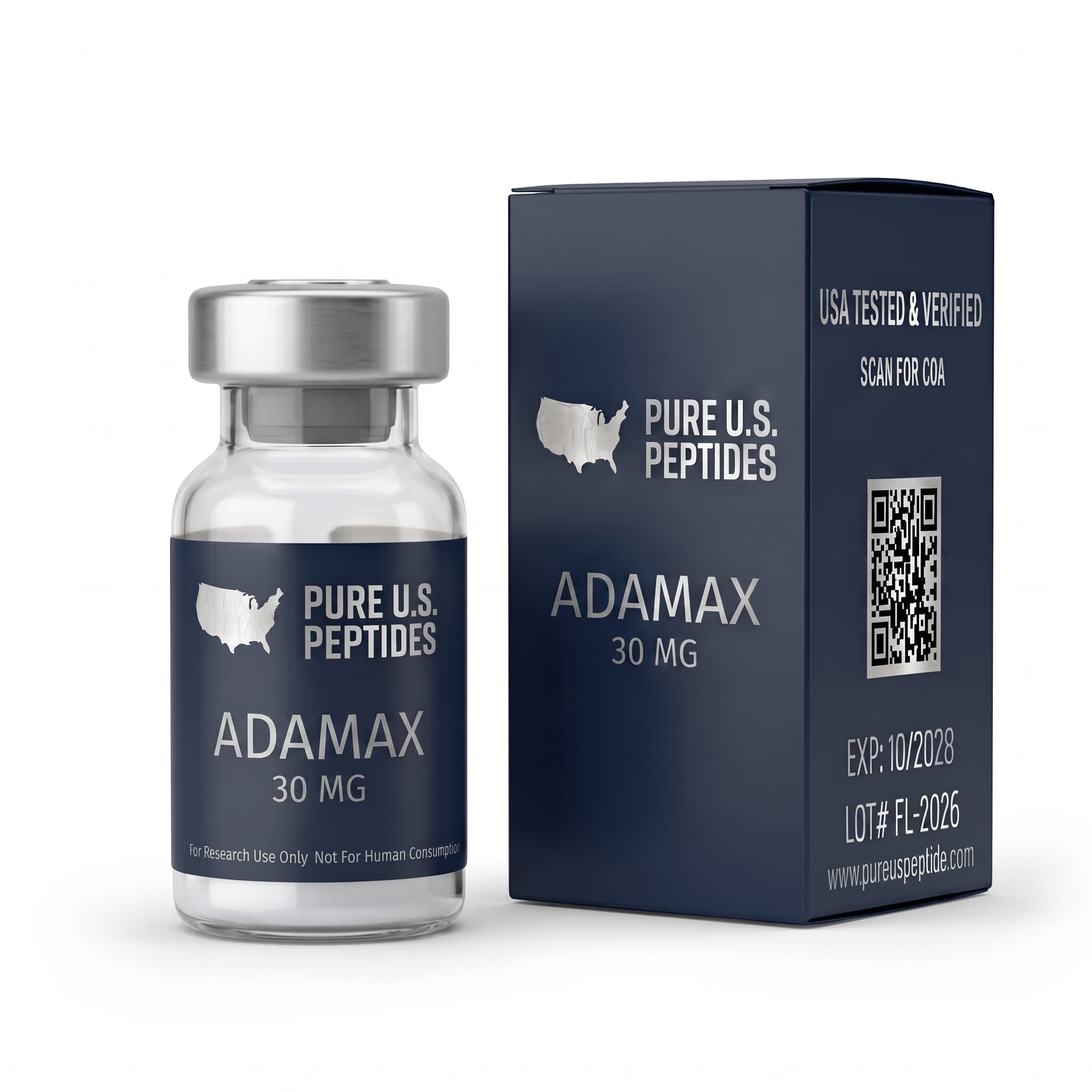
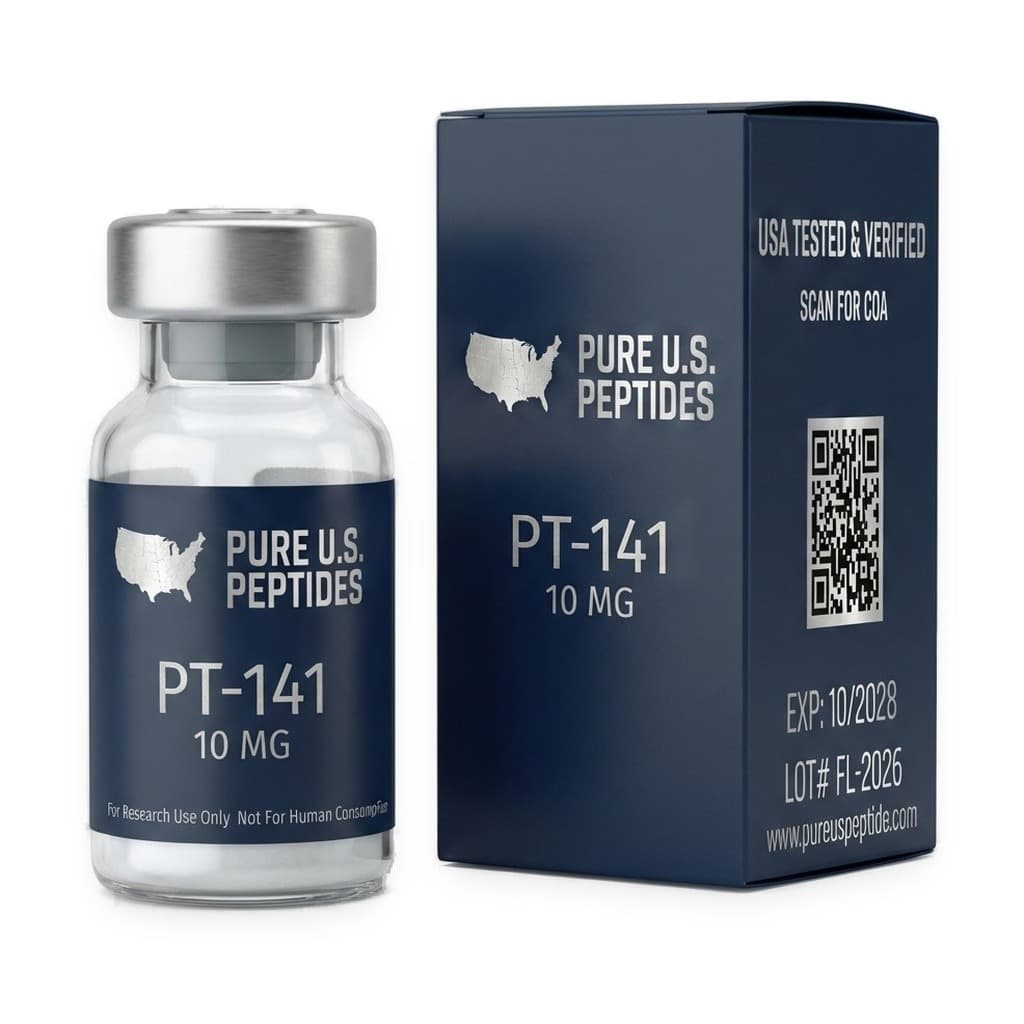
PT-141 10mg
Em Estoque e Pronto para Envio dos EUA
Frete GRÁTIS em todos os pedidos nos EUA
Checkout seguro via processador de pagamento criptografado


 +2.9k
+2.9kApenas para Uso em Pesquisa
Estes produtos sao destinados exclusivamente a pesquisa laboratorial e nao se destinam ao uso medico. Nao sao aprovados pela FDA para diagnosticar, tratar, curar ou prevenir qualquer doenca. Ao adquirir, voce certifica que os produtos serao utilizados exclusivamente para pesquisa e nao para consumo humano ou animal.
Resumo da Pesquisa
24 Citacoes PubMedOverview PT-141 is the catalog designation for bremelanotide, a synthetic cyclic heptapeptide lactam described in the peer-reviewed literature as a non-selective agonist at the melanocortin receptor family.[1] Molinoff and colleagues published the original characterization of the compound as a melanocortin agonist in Annals of the New York Academy of Sciences.[1] The molecule derives from the melanotropin structure-activity programme conducted at the University of Arizona, reviewed by Hadley and Dorr, which produced a series of superpotent α-MSH analogues including Melanotan II.[2] Bremelanotide is the deaminated derivative of that parent compound, carrying a C-terminal free acid where Melanotan II carries an amide — a single terminal change that alters the receptor-engagement profile while retaining the cyclic scaffold.[1][2] Why the compound appears in the literature Melanocortin receptors are a five-member family of class A G-protein-coupled receptors with distinct tissue distributions. Because bremelanotide engages several of these subtypes rather than one, it is used...
PT-141 — Dados de Pesquisa em Resumo
| Propriedade | Valor |
|---|---|
| Citacoes PubMed Referenciadas | 24 |
| Pesquisadores Colaboradores | 3 |
| Condicoes de Armazenamento | Store lyophilized desiccated at -20 °C, protected from light. |
| Padrao de Pureza | Certificado pendente |
| Apenas para Uso em Pesquisa | Nao destinado ao consumo humano. Apenas para uso em pesquisa. |
Research guide
What is PT-141? Read the full research guideVisao Geral
Overview
PT-141 is the catalog designation for bremelanotide, a synthetic cyclic heptapeptide lactam described in the peer-reviewed literature as a non-selective agonist at the melanocortin receptor family.[1] Molinoff and colleagues published the original characterization of the compound as a melanocortin agonist in Annals of the New York Academy of Sciences.[1]
The molecule derives from the melanotropin structure-activity programme conducted at the University of Arizona, reviewed by Hadley and Dorr, which produced a series of superpotent α-MSH analogues including Melanotan II.[2] Bremelanotide is the deaminated derivative of that parent compound, carrying a C-terminal free acid where Melanotan II carries an amide — a single terminal change that alters the receptor-engagement profile while retaining the cyclic scaffold.[1][2]
Why the compound appears in the literature
Melanocortin receptors are a five-member family of class A G-protein-coupled receptors with distinct tissue distributions. Because bremelanotide engages several of these subtypes rather than one, it is used in receptor pharmacology as a non-selective tool ligand — typically alongside subtype-selective antagonists — to separate the contributions of individual melanocortin receptors in a given model system.[5][7] Van der Ploeg et al. established MC4R as the receptor subtype of interest for centrally mediated melanocortin pharmacology, and Cone and colleagues have reviewed the central melanocortin system in energy homeostasis.[3][6]
Regulatory status, reported factually
A pharmaceutical formulation of bremelanotide received U.S. FDA approval in 2019; Dhillon and Keam summarized that approval in Drugs.[13] That approval attaches to a specific manufactured pharmaceutical product under defined clinical conditions. The research-grade material supplied here is not that product, and nothing on this page describes or implies a clinical use for it.
A note on the published record
Investigators working with this compound should be aware that the bremelanotide clinical literature contains flagged records. One randomized trial of the compound was subsequently retracted, and a second study by the same author group carries a formal Expression of Concern issued by The Journal of Urology in 2023.[23] Separately, Spielmans published a re-analysis of the phase 3 programme contesting the magnitude of the reported effects.[22] Neither retracted nor Expression-of-Concern-flagged studies are cited as evidence anywhere on this page.
Research framework
Within the melanocortin research domain, PT-141 is most directly compared with Melanotan II for the amide-versus-free-acid terminal distinction and with KPV for the receptor-engagement versus PepT1-uptake distinction. The compound is supplied here strictly as a research reference standard for in vitro and animal-model investigation, and is not intended for human or veterinary use.
Mecanismo de Acao
Reported Mechanism
1. Melanocortin Receptor Engagement
Bremelanotide is described as a non-selective agonist across the melanocortin receptor family — MC1R, MC3R, MC4R and MC5R — all members of the rhodopsin-like (class A) GPCR superfamily.[1][5] Reported potency is graded rather than subtype-selective, which is the property that makes the compound useful as a broad-spectrum reference ligand and, equally, the property that requires selective antagonists to be co-applied when a single subtype is under investigation.[5]
2. Structural Pharmacophore
The peptide retains the His-Phe-Arg-Trp core message sequence common to endogenous melanocortins, which is the determinant of receptor molecular recognition in this family.[2][5] Two engineered features distinguish it from the native hormone: a lactam bridge that constrains the backbone into the bioactive turn conformation, and a D-phenylalanine substitution that blocks proteolysis at the corresponding peptide bond.[2] Merlino et al. have since applied macrocycle design of this kind to engineer subtype selectivity across human melanocortin receptors.[20]
3. Receptor-Level Structural Biology
Zhang et al. reported cryo-EM structures resolving ligand recognition and activation at the melanocortin-4 receptor, defining the orthosteric pocket architecture and the conformational transitions that accompany agonist binding in this receptor family.[4] This structural work provides the framework for interpreting agonist behaviour at MC4R.
4. Downstream Signalling
Melanocortin receptor agonism couples principally through Gαs to adenylyl cyclase, elevating intracellular cAMP. Reported secondary events include calcium mobilization and β-arrestin recruitment with subsequent receptor internalization.[4][5]
5. Neuroanatomical Localization
Preclinical work localizes the compound's central activity using c-Fos immunoreactivity, a standard marker of neuronal activation. Systemic administration in animal models produces c-Fos labelling in the paraventricular nucleus and medial preoptic area of the hypothalamus, identifying these as sites of central engagement.[9][11] Giuliano reviewed the experimental basis for melanocortinergic signalling in the central nervous system.[7]
6. Receptor Cross-Reactivity Profile
Binding studies summarized in the melanocortin literature report no significant affinity at opioid, GABA, dopamine, serotonin or NMDA receptors, nor at the dopamine transporter — the compound's pharmacology is confined to the melanocortin family rather than extending across the classical neurotransmitter receptor panel.[10][12] MC2R, the ACTH receptor, is not engaged by melanocortin analogues of this class.[5]
Structural Comparison
| Compound | C-Terminus | Scaffold | Distinguishing Feature |
|---|---|---|---|
| PT-141 (bremelanotide) | Free acid (-OH) | Cyclic heptapeptide lactam | Deaminated derivative of Melanotan II |
| Melanotan II | Amide (-NH₂) | Cyclic heptapeptide lactam | Parent compound of the pair |
| α-MSH (native) | Amide | Linear tridecapeptide | Endogenous ligand; rapidly degraded |
Receptor-level and clinical findings summarized here were obtained with defined laboratory preparations or with the pharmaceutical formulation under controlled study conditions. No conclusions about research-grade material are implied.
Aplicacoes de Pesquisa
Research Applications
Published investigations involving bremelanotide fall into the following areas of laboratory and clinical research. These describe the subject matter of the published record and are not statements of effect.
- Melanocortin receptor pharmacology — Molinoff et al. published the original characterization of the compound as a melanocortin agonist, and Yuan and Tao reviewed the broader ligand landscape for these receptors.[1][5]
- MC4R structural biology — Zhang et al. resolved ligand recognition and activation mechanisms at the melanocortin-4 receptor.[4]
- Central melanocortin system research — Van der Ploeg et al. defined an MC4R role in centrally mediated melanocortin pharmacology; Sweeney, Cone and colleagues reviewed the central melanocortin system in metabolic regulation.[3][6]
- Preclinical CNS neuroscience — Pfaus and colleagues published rodent studies and a review of central nervous system effects in animal models; Borland et al. reported analyses in a female Syrian hamster model.[8][9][19]
- Melanocortin neurobiology reviews — Shadiack et al. and Pfaus et al. reviewed the melanocortin literature in this receptor family.[10][11][12]
- Oncology cell-line research — Suzuki et al. reported that the compound induces cell death and growth inhibition in glioblastoma cells in vitro via suppression of survivin expression, an application entirely separate from the melanocortin neuroscience literature.[18]
- Cardiovascular pharmacology — White et al. reported the use of ambulatory blood-pressure monitoring to assess this melanocortin receptor agonist.[14]
- Analytical chemistry and peptide stability — Sauter et al. developed UHPLC-MS/MS quantification of the cyclic peptide; Yuvaraaj and Sharma characterized the acetate salt and its degradants by LC-HRMS/MS with computational modelling of epimerization.[15][16]
- Forensic and supply-chain analysis — Mestria et al. applied LC-HRMS to characterize melanotan II and bremelanotide material obtained outside regulated supply chains, work directly relevant to material-identity verification.[17]
- Receptor genetics — Bardhan et al. reviewed melanocortin receptor gene polymorphism and its association with inflammatory traits.[21]
- Macrocycle design and subtype selectivity — Merlino et al. reported mid-size macrocycle design for selective targeting of human melanocortin receptors.[20]
Comparative Research Context
Within the melanocortin research literature, PT-141 is most directly compared with Melanotan II for the terminal amide-versus-free-acid distinction, and with KPV, an α-MSH fragment that enters cells through the PepT1 transporter rather than engaging melanocortin receptors at all.[2]
Caracteristicas Bioquimicas
| Propriedade | Valor |
|---|---|
| Molecular Formula | C₅₀H₆₈N₁₄O₁₀ |
| Molecular Weight | 1025.2 g/mol |
| CAS Number | 189691-06-3 |
| PubChem CID | 9941379 |
| Sequence | Ac-Nle-cyclo[Asp-His-D-Phe-Arg-Trp-Lys]-OH |
| Structure | Cyclic heptapeptide; lactam bridge between Asp and Lys side chains; D-Phe substitution; N-acetylated norleucine; C-terminal free acid |
| Parent Molecule | α-MSH analogue; deaminated derivative of Melanotan II |
| Synonyms | Bremelanotide, PT-141, PT-141 free base |
| Class | Synthetic cyclic peptide; non-selective melanocortin receptor agonist |
| Regulatory Status | Research-grade material supplied for laboratory use only; a separate pharmaceutical formulation of bremelanotide holds FDA approval |
Identificadores
| InChI Key | |
|---|---|
| Isomeric SMILES | |
| Exact Mass | |
| Identity Confirmation | |
| Detection Methods |
Resumo da Pesquisa Pre-clinica
Research Summary
Foundational and Mechanistic Studies
| Study | Type | Subject of Report | Ref |
|---|---|---|---|
| Molinoff et al. (2003) | Compound characterization | Original description of PT-141 as a melanocortin agonist | [1] |
| Van der Ploeg et al. (2002) | Receptor genetics / pharmacology | Identification of an MC4R role in centrally mediated melanocortin pharmacology | [3] |
| Hadley & Dorr (2006) | Historical review | Melanocortin peptide development programme and its milestones | [2] |
| Zhang et al. (2021) | Structural biology (cryo-EM) | Ligand recognition and activation mechanism at MC4R | [4] |
| Pfaus et al. (2004) | Preclinical (rodent) | Behavioural pharmacology of a melanocortin receptor agonist in the female rat | [8] |
| Borland et al. (2025) | Preclinical (hamster) | Analyses of the compound in a female Syrian hamster model | [19] |
| Suzuki et al. (2024) | In vitro (oncology) | Cell death and growth inhibition in glioblastoma cells via survivin suppression | [18] |
| White et al. (2017) | Clinical pharmacology | Ambulatory blood-pressure monitoring applied to a melanocortin receptor agonist | [14] |
Analytical and Material-Identity Studies
| Study | Method | Subject of Report | Ref |
|---|---|---|---|
| Sauter et al. (2020) | UHPLC-MS/MS | Ultra-sensitive quantification of the cyclic peptide | [15] |
| Yuvaraaj & Sharma (2026) | LC-HRMS/MS + modelling | Characterization of bremelanotide acetate and its degradants; epimerization prediction | [16] |
| Mestria et al. (2021) | LC-HRMS | Characterization of melanotan II and bremelanotide material sold outside regulated supply chains | [17] |
Mechanistic Themes
- Non-selective melanocortin agonism — engages multiple receptor subtypes rather than one, which is why selective antagonists are co-applied in subtype-resolution experiments
- Conformationally constrained scaffold — a lactam bridge and D-amino acid substitution stabilize the bioactive turn and resist proteolysis
- Gαs / cAMP coupling — with reported calcium mobilization and β-arrestin-dependent receptor internalization
- Central localization — c-Fos mapping identifies hypothalamic sites of engagement in animal models
- Pharmacologically confined — no significant reported affinity across the classical neurotransmitter receptor panel
Literature Integrity
The published record for this compound contains flagged items. One randomized trial was subsequently retracted, and a further study by the same author group carries a formal Expression of Concern issued by The Journal of Urology.[23] A published re-analysis of the phase 3 programme contests the magnitude of the originally reported effects.[22] Neither the retracted study nor the study under Expression of Concern is relied upon as evidence anywhere on this page; the Expression of Concern is cited so that investigators can locate it directly.
The products offered on this website are furnished for in-vitro studies only. In-vitro studies (Latin: in glass) are performed outside of the body. These products are not medicines or drugs and have not been approved by the FDA to prevent, treat or cure any medical condition, ailment or disease. Bodily introduction of any kind into humans or animals is strictly forbidden by law.
For Laboratory Research Only. Not for human use, medical use, diagnostic use, or veterinary use.
ALL ARTICLES AND PRODUCT INFORMATION PROVIDED ON THIS WEBSITE ARE FOR INFORMATIONAL AND EDUCATIONAL PURPOSES ONLY.
Autores e Atribuicao
✍️ Autor do Artigo
Dr. Victor J. Hruby
Victor J. Hruby, PhD, is Regents Professor Emeritus of Chemistry and Biochemistry at the University of Arizona. His laboratory carried out the peptide design and synthesis work that produced the conformationally constrained, superpotent melanotropin analogues from which this compound class derives, establishing the lactam-bridge and D-amino acid substitutions that define the cyclic melanocortin scaffold. Victor J. Hruby is being referenced as one of the leading scientists involved in the research and development of melanocortin peptides. In no way is this doctor/scientist endorsing or advocating the purchase, sale, or use of this product for any reason. There is no affiliation or relationship, implied or otherwise, between Pure US Peptide and this doctor.
Ver Perfil Completo do Pesquisador →🎓 Autor de Revista Cientifica
Dr. Roger D. Cone
Roger D. Cone, PhD, is a molecular physiologist whose laboratory cloned the melanocortin receptors and defined the central melanocortin system, the receptor family that this compound engages. His work established the MC3R and MC4R signalling framework used throughout melanocortin pharmacology, and he co-authored a 2023 review of the central melanocortin system in Nature Reviews Endocrinology. Roger D. Cone is being referenced as one of the leading scientists in melanocortin receptor research relevant to this compound. In no way is this doctor/scientist endorsing or advocating the purchase, sale, or use of this product for any reason. There is no affiliation or relationship, implied or otherwise, between Pure US Peptide and this doctor.
Ver Perfil Completo do Pesquisador →Dr. Roger D. Cone is being referenced as one of the leading scientists involved in the research and development of PT-141. In no way is this doctor/scientist endorsing or advocating the purchase, sale, or use of this product for any reason. There is no affiliation or relationship, implied or otherwise, between Pure US Peptide and this doctor. The purpose of citing the doctor is to acknowledge, recognize, and credit the exhaustive research and development efforts conducted by the scientists studying this peptide.
🔬 Pesquisador Colaborador
Dr. James G. Pfaus
James G. Pfaus, PhD, is a behavioural neuroscientist whose group published preclinical central nervous system studies of this melanocortin receptor agonist, including a 2004 report in the Proceedings of the National Academy of Sciences and a subsequent review of preclinical CNS findings. His work characterized the hypothalamic sites of central engagement identified by c-Fos mapping in animal models. James G. Pfaus is being referenced as one of the leading scientists involved in the preclinical research on this compound. In no way is this doctor/scientist endorsing or advocating the purchase, sale, or use of this product for any reason. There is no affiliation or relationship, implied or otherwise, between Pure US Peptide and this doctor.
Ver Perfil Completo do Pesquisador →Dr. James G. Pfaus is being referenced as one of the leading scientists involved in the research and development of PT-141. In no way is this doctor/scientist endorsing or advocating the purchase, sale, or use of this product for any reason. There is no affiliation or relationship, implied or otherwise, between Pure US Peptide and this doctor. The purpose of citing the doctor is to acknowledge, recognize, and credit the exhaustive research and development efforts conducted by the scientists studying this peptide.
Citacoes Referenciadas
Molinoff PB, Shadiack AM, Earle D, Diamond LE, Quon CY. Ann N Y Acad Sci. 2003;994:96-102.
PubMedHadley ME, Dorr RT. Peptides. 2006;27(4):921-930.
PubMedVan der Ploeg LH, Martin WJ, Howard AD, et al. Proc Natl Acad Sci U S A. 2002;99(17):11381-11386.
PubMedZhang H, Chen LN, Yang D, et al. Structural insights into ligand recognition and activation of the melanocortin-4 receptor. Cell Res. 2021;31(11):1163-1175.
PubMedYuan XC, Tao YX. Ligands for Melanocortin Receptors: Beyond Melanocyte-Stimulating Hormones and Adrenocorticotropin. Biomolecules. 2022;12(10):1407.
PubMedSweeney P, Gimenez LE, Hernandez CC, Cone RD. Nat Rev Endocrinol. 2023;19(9):507-519.
PubMedGiuliano F. J Androl. 2004;25(5):683-691.
PubMedPfaus JG, Shadiack A, Van Soest T, Tse M, Molinoff P. Proc Natl Acad Sci U S A. 2004;101(27):10201-10204.
PubMedPfaus J, Giuliano F, Gelez H. J Sex Med. 2007;4 Suppl 4:269-279.
PubMedShadiack AM, Sharma SD, Earle DC, Spana C, Hallam TJ. Curr Top Med Chem. 2007;7(11):1137-1144.
PubMedShadiack AM, Althof S. Int J Impot Res. 2008;20 Suppl 1:S11-S16.
PubMedPfaus JG, Sadiq A, Spana C, Clayton AH. CNS Spectr. 2022;27(3):281-289.
PubMedDhillon S, Keam SJ. Drugs. 2019;79(14):1599-1606.
PubMedWhite WB, Myers MG, Jordan R, Lucas J. Usefulness of ambulatory blood pressure monitoring to assess the melanocortin receptor agonist bremelanotide. J Hypertens. 2017;35(4):761-768.
PubMedSauter M, Uhl P, Burhenne J, Haefeli WE. J Pharm Biomed Anal. 2020;186:113276.
PubMedYuvaraaj VK, Sharma N. Comprehensive characterization of bremelanotide acetate and its degradants by LC-HRMS/MS and predicting epimerization through computational modelling. Anal Methods. 2026.
PubMedMestria S, Odoardi S, Frison G, Strano Rossi S. Drug Test Anal. 2021;13(4):876-882.
PubMedSuzuki S, Kitanaka C, Okada M. Melanocortin Receptor Agonist Bremelanotide Induces Cell Death and Growth Inhibition in Glioblastoma Cells via Suppression of Survivin Expression. Anticancer Res. 2024;44(9):3875-3883.
PubMedBorland JM, Kohut-Jackson AL, Peyla AC, Hall MA, Mermelstein PG, Meisel RL. Neuropharmacology. 2025;267:110299.
PubMedMerlino F, Jia L, Boccino I, et al. J Med Chem. 2026.
PubMedBardhan M, Anand A, Javed A, et al. Polymorphism of Melanocortin Receptor Genes-Association with Inflammatory Traits and Diseases. Diseases. 2025;13(9):305.
PubMedSpielmans GI. J Sex Res. 2021;58(9):1085-1105.
PubMedJ Urol. 2023 Jan 10.
PubMedNational Center for Biotechnology Information. PubChem Compound Summary for CID 9941379, Bremelanotide. PubChem. Accessed 2026-07-31.
SourceAviso de Uso em Pesquisa
Apenas para Uso em Pesquisa (RUO). Nao destinado ao consumo humano, uso clinico, ou como medicamento, alimento, cosmetico ou dispositivo medico. Este produto nao foi avaliado pelo FDA e e fornecido exclusivamente para pesquisa laboratorial in vitro por profissionais qualificados.
Certificado de Analise
Published certificates come from third-party laboratories. If this listing's certificate is still pending, the card below says so.
Ultimo Relatorio de Laboratorio
Armazenamento e Manuseio
Resumo
Store lyophilized desiccated at -20 °C, protected from light.
Lyophilized Peptide Storage
Store the lyophilized powder desiccated at -20°C or below for long-term stability, protected from light and moisture. The material is supplied as a white lyophilized powder and is hygroscopic — keep tightly sealed and allow vials to reach room temperature before opening to limit condensation.
Stability
Published stability work on this compound characterizes its degradants and epimerization behaviour by LC-HRMS/MS, underscoring the importance of controlled storage for analytical reproducibility.
Handling Precautions
Handle using standard laboratory technique with appropriate personal protective equipment. Published certificates report HPLC purity and endotoxin where tested.
“Research Summary Foundational and Mechanistic Studies Study Type Subject of Report Ref Molinoff et al.”
Compostos de Pesquisa Relacionados
Oxytocin
10mg
Melanotan 2
10mg
Kisspeptin
10mg