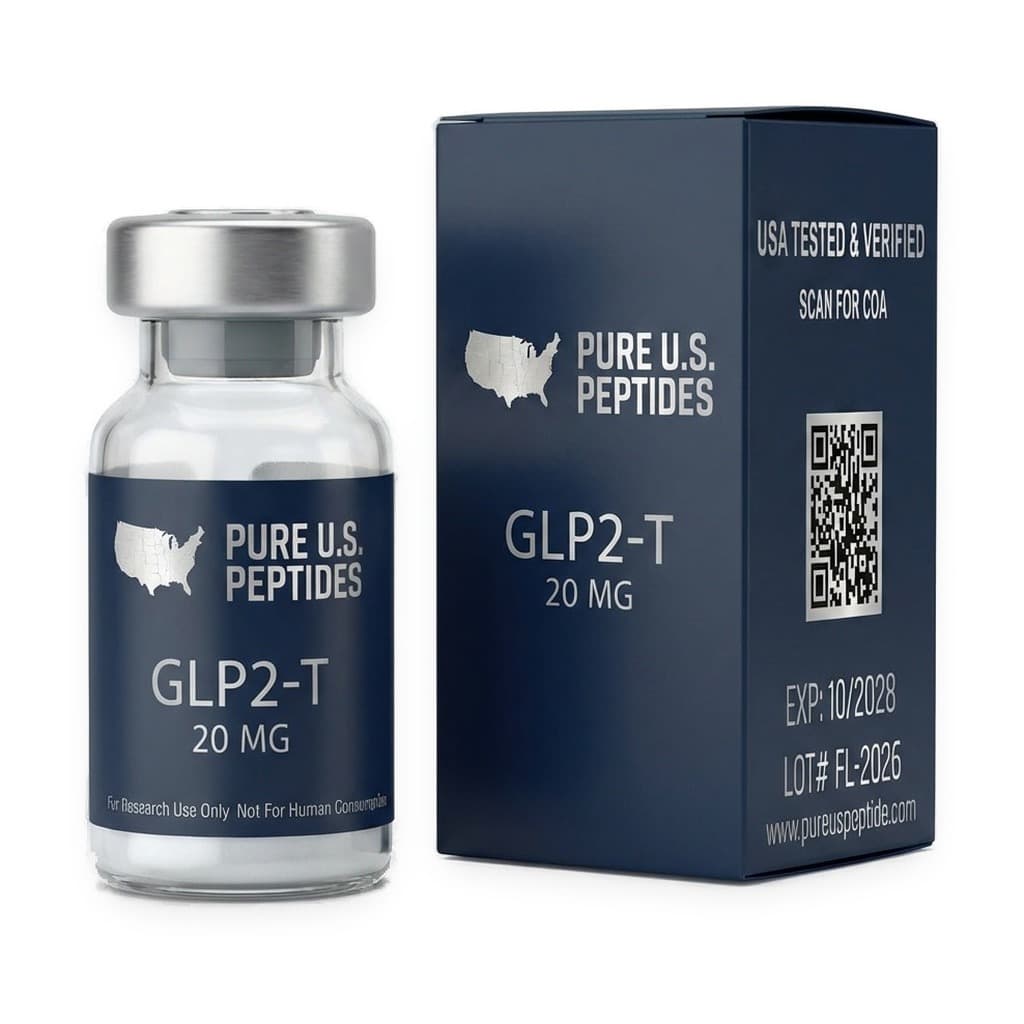
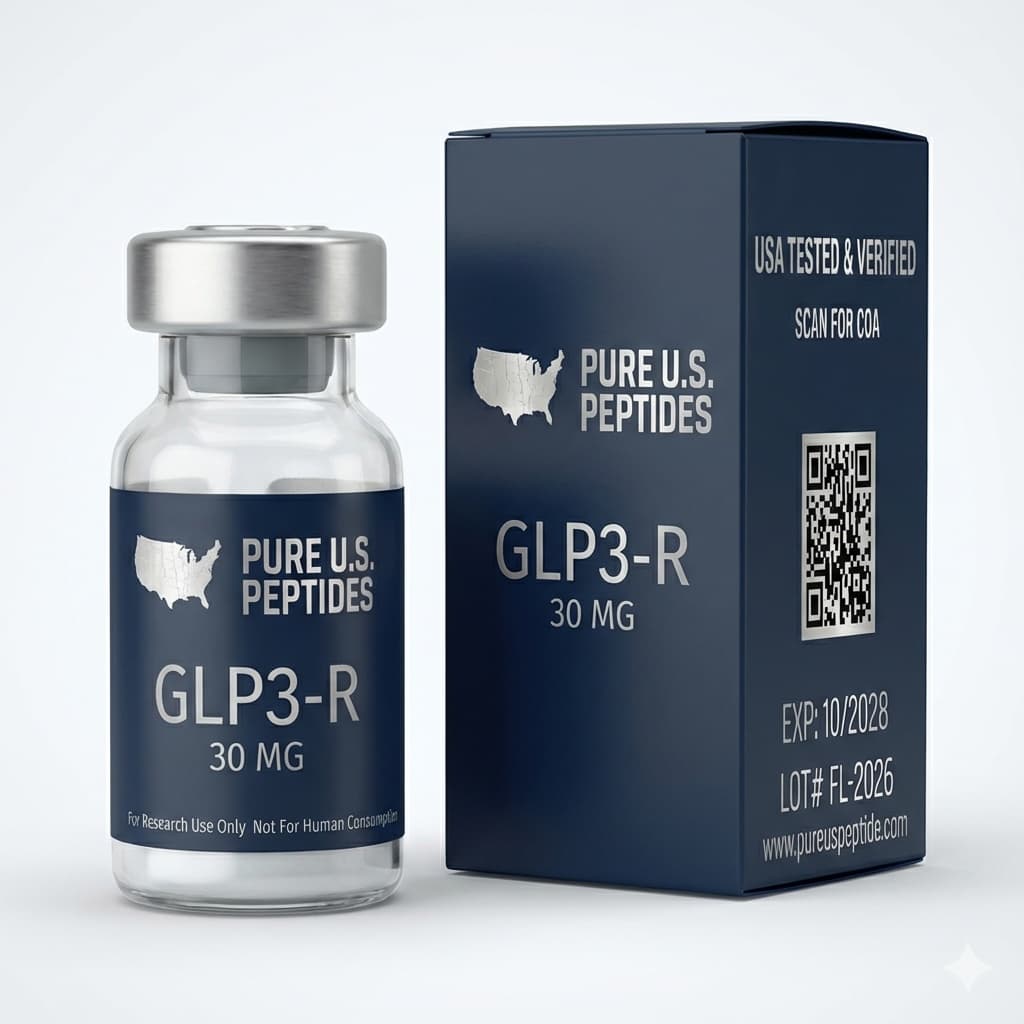
GLP3-R 30mg
En Stock y Listo para Envío desde EE.UU.
Envío GRATIS en todos los pedidos de EE.UU.
Pago seguro mediante procesador de pagos encriptado


 +2.9k
+2.9kSolo para Uso en Investigación
Estos productos son exclusivamente para investigación de laboratorio y no están destinados para uso médico. No están aprobados por la FDA para diagnosticar, tratar, curar o prevenir ninguna enfermedad. Al realizar su compra, usted certifica que serán utilizados exclusivamente para investigación y no para consumo humano o animal.
Resumen de Investigación
10 Citas PubMedOverview GLP3-R is the catalog designation for retatrutide (LY3437943), a synthetic peptide characterized in the peer-reviewed literature as a single-molecule agonist at three receptors: GIP, GLP-1, and glucagon.[1] Coskun and colleagues published the discovery-to-proof-of-concept characterization in Cell Metabolism, and Urva et al. reported the first multiple-ascending-dose clinical pharmacology study in The Lancet.[1][2] What distinguishes this compound within the incretin literature is the third receptor. GLP-1-selective agonists engage one receptor and dual agonists such as tirzepatide engage GIP and GLP-1; retatrutide adds glucagon-receptor agonism to that pair.[1][8] Because the three receptors couple to overlapping but non-identical downstream pathways, the compound is used in research settings as the comparator that isolates the contribution of glucagon-receptor engagement. Hammoud and Drucker have reviewed the contrasting cardiometabolic actions of GIP and GLP-1 that motivate this class of comparison, and Samms et al. set out the mechanistic framework for combining incretin receptor activities.[9][10] The published clinical...
GLP3-R 30mg at a glance
| Specification | Detail |
|---|---|
| Identity | GLP3-R, a synthetic research peptide |
| Research classification | GIP / GLP-1 / glucagon receptor triple agonist |
| Listed amount | 30mg per vial |
| Lot certificate | Published for each listed size: 10mg, 20mg, 30mg, and 60mg; confirm the lot match |
| Price | $132.30 |
| Price per mg | $4.41 per mg |
| Dispatch | Same business day for orders before 2:00 PM EST Monday through Friday |
| U.S. shipping | Free on every order |
| Included with every order | Free BAC water vial; Research Use Only |
| Product status | This listing is not an FDA-approved drug. Strictly for laboratory Research Use Only. |
Current price and availability are shown in the purchase panel at the top of this page.
GLP3-R — Datos de Investigación de un Vistazo
| Propiedad | Valor |
|---|---|
| Citas PubMed Referenciadas | 10 |
| Investigadores Colaboradores | 2 |
| Condiciones de Almacenamiento | Store lyophilized at -20°C for long-term storage, or 2-8°C short-term. |
| Estándar de Pureza | >99.80% por HPLC (certificado publicado) |
| Solo para Uso en Investigación | No destinado al consumo humano. Solo para uso en investigación. |
Research guide
What is GLP3-R? Read the full research guideDescripción General
Overview
GLP3-R is the catalog designation for retatrutide (LY3437943), a synthetic peptide characterized in the peer-reviewed literature as a single-molecule agonist at three receptors: GIP, GLP-1, and glucagon.[1] Coskun and colleagues published the discovery-to-proof-of-concept characterization in Cell Metabolism, and Urva et al. reported the first multiple-ascending-dose clinical pharmacology study in The Lancet.[1][2]
What distinguishes this compound within the incretin literature is the third receptor. GLP-1-selective agonists engage one receptor and dual agonists such as tirzepatide engage GIP and GLP-1; retatrutide adds glucagon-receptor agonism to that pair.[1][8] Because the three receptors couple to overlapping but non-identical downstream pathways, the compound is used in research settings as the comparator that isolates the contribution of glucagon-receptor engagement. Hammoud and Drucker have reviewed the contrasting cardiometabolic actions of GIP and GLP-1 that motivate this class of comparison, and Samms et al. set out the mechanistic framework for combining incretin receptor activities.[9][10]
The published clinical record for retatrutide consists of phase 1 and phase 2 investigations of the pharmaceutical formulation: phase 1b, phase 2 and phase 2a trials.[2][3][4][5] Urva et al. separately reported effects on gastric emptying, and Katsi et al. published a review of the compound.[6][7]
Retatrutide remains an investigational compound and is not approved by any regulatory authority. The studies cited above evaluated a pharmaceutical formulation under clinical trial conditions; the research-grade material supplied here is not that product and is intended for laboratory research use only.
Mecanismo de Acción
Reported Mechanism
1. Triple Receptor Engagement
Retatrutide is described as engaging three class-B G-protein-coupled receptors with a single peptide sequence: the GIP receptor, the GLP-1 receptor, and the glucagon receptor.[1] This distinguishes it from dual GIP/GLP-1 agonism and from GLP-1-selective agonism, and it is the structural feature that defines the compound's research role.[8]
2. Incretin-Axis Signalling
GLP-1 and GIP receptor agonism act on the incretin axis, where insulinotropic activity is conditioned on ambient glucose. Hammoud and Drucker reviewed how the cardiometabolic actions of GIP and GLP-1 differ beyond the pancreas, and Samms et al. examined the mechanistic rationale for engaging GIP alongside GLP-1.[9][10]
3. Gastrointestinal Transit
Urva et al. reported that retatrutide delays gastric emptying, a pharmacodynamic readout shared across the incretin-agonist class and one of the standard endpoints used to characterize these compounds.[6]
4. Comparator Positioning
Coskun et al. previously characterized LY3298176 (tirzepatide) as the first unimolecular dual GIP/GLP-1 receptor agonist.[8] Placing the triple agonist alongside that dual agonist and a GLP-1-selective agonist gives investigators a graded series — one, two, or three receptors engaged by a single molecule — which is why this compound appears frequently as a reference arm in incretin pharmacology.[7]
Receptor-level and clinical findings summarized here were obtained with the pharmaceutical formulation under controlled study conditions. No conclusions about research-grade material are implied.
Aplicaciones de Investigación
Research Applications
Published literature (all studies used the pharmaceutical formulation), organised by mechanism:
- Receptor pharmacology — Coskun et al. reported the discovery-to-proof-of-concept work defining triple GIP/GLP-1/glucagon agonism.[1]
- Clinical pharmacology — phase 1b and phase 2 trials of the pharmaceutical formulation are listed under References.[2][3][4][5]
- Gastric-emptying pharmacodynamics — Urva et al. reported effects on gastric emptying.[6]
- Comparative incretin pharmacology — the compound serves as the triple-agonist arm in comparisons against dual and selective agonists.[7][8]
Características Bioquímicas
| Propiedad | Valor |
|---|---|
| Synonyms | Retatrutide, LY3437943, GLP3-R |
| Class | Synthetic acylated peptide; triple GIP / GLP-1 / glucagon receptor agonist |
| Structural Basis | Single peptide sequence engineered from an incretin backbone with a fatty-diacid conjugate supporting albumin binding, as described by Coskun et al. (2022) |
| Appearance | White-to-off-white lyophilized powder |
| Regulatory Status | Investigational — not approved by FDA or EMA for any indication |
| Classification | Research peptide |
Identificadores
| Development Code | |
|---|---|
| Identity Confirmation | |
| Detection Methods |
Resumen de Investigación Preclínica
Research Summary
Foundational Studies
| Study | Type | Subject of Report | Ref |
|---|---|---|---|
| Coskun et al. (2022) | Discovery / proof of concept | Characterization of LY3437943 as a triple glucagon, GIP, and GLP-1 receptor agonist | [1] |
| Urva et al. (2022) | Phase 1b multiple-ascending-dose trial | Clinical pharmacology | [2] |
| Jastreboff et al. (2023) | Phase 2 | Triple-hormone-receptor agonist evaluated in a phase 2 trial | [3] |
| Rosenstock et al. (2023) | Phase 2 | Placebo- and active-controlled parallel-group trial | [4] |
| Sanyal et al. (2024) | Phase 2a (MASLD) | Randomized trial in metabolic dysfunction-associated steatotic liver disease | [5] |
| Urva et al. (2023) | Pharmacodynamics | Reported delay in gastric emptying | [6] |
Mechanistic Themes
- Triple receptor agonism - one peptide engages the GIP, GLP-1, and glucagon receptors
- Graded comparator series - selective, dual, and triple agonists allow receptor contributions to be separated
- Glucose-dependent incretin action - insulinotropic activity in this class is conditioned on ambient glucose
- Investigational status - no regulatory approval in any jurisdiction
For Laboratory Research Only. Not for human use, medical use, diagnostic use, or veterinary use.
ALL ARTICLES AND PRODUCT INFORMATION PROVIDED ON THIS WEBSITE ARE FOR INFORMATIONAL AND EDUCATIONAL PURPOSES ONLY.
Autores y Atribución
✍️ Autor del Artículo
Dr. Daniel J. Drucker
Daniel J. Drucker, OC, MD, FRSC, is a Senior Investigator at the Lunenfeld-Tanenbaum Research Institute, Mount Sinai Hospital, and Professor of Medicine at the University of Toronto. Dr. Drucker is one of the world's foremost authorities on incretin biology and the GIP and GLP-1 hormone systems that underlie multi-receptor incretin agonists, with over 800 publications and numerous awards including the Canada Gairdner International Award and the Banting Medal for Scientific Achievement. Daniel J. Drucker is being referenced as one of the leading scientists in the field of incretin (GIP/GLP-1) research relevant to this compound. In no way is this doctor/scientist endorsing or advocating the purchase, sale, or use of this product for any reason. There is no affiliation or relationship, implied or otherwise, between Pure US Peptide and this doctor.
Ver Perfil Completo del Investigador →🎓 Autor de Revista Científica
Dr. Tamer Coskun
Tamer Coskun, MD, PhD, is a research scientist whose group published the discovery-to-clinical-proof-of-concept characterization of LY3437943 (retatrutide) in Cell Metabolism in 2022, and previously the corresponding characterization of the dual GIP/GLP-1 receptor agonist LY3298176. His work defines the receptor pharmacology that distinguishes triple agonism from dual and selective incretin agonism. Tamer Coskun is being referenced as one of the leading scientists involved in the research and development of retatrutide. In no way is this doctor/scientist endorsing or advocating the purchase, sale, or use of this product for any reason. There is no affiliation or relationship, implied or otherwise, between Pure US Peptide and this doctor.
Ver Perfil Completo del Investigador →Dr. Tamer Coskun is being referenced as one of the leading scientists involved in the research and development of GLP3-R. In no way is this doctor/scientist endorsing or advocating the purchase, sale, or use of this product for any reason. There is no affiliation or relationship, implied or otherwise, between Pure US Peptide and this doctor. The purpose of citing the doctor is to acknowledge, recognize, and credit the exhaustive research and development efforts conducted by the scientists studying this peptide.
Citas Referenciadas
Coskun T, Urva S, Roell WC, et al. Cell Metab. 2022;34(9):1234-1247.e9.
PubMedUrva S, Coskun T, Loh MT, et al. Lancet. 2022;400(10366):1869-1881.
PubMedJastreboff AM, Kaplan LM, Frías JP, et al. N Engl J Med. 2023;389(6):514-526.
PubMedRosenstock J, Frias J, Jastreboff AM, et al. Lancet. 2023;402(10401):529-544.
PubMedSanyal AJ, Kaplan LM, Frias JP, et al. Nat Med. 2024;30(7):2037-2048.
PubMedUrva S, O'Farrell L, Du Y, et al. The novel GIP, GLP-1 and glucagon receptor agonist retatrutide delays gastric emptying. Diabetes Obes Metab. 2023;25(9):2784-2788.
PubMedKatsi V, Koutsopoulos G, Fragoulis C, Dimitriadis K, Tsioufis K. Biomolecules. 2025;15(6):796.
PubMedCoskun T, Sloop KW, Loghin C, et al. Mol Metab. 2018;18:3-14.
PubMedHammoud R, Drucker DJ. Beyond the pancreas: contrasting cardiometabolic actions of GIP and GLP1. Nat Rev Endocrinol. 2023;19(4):201-216.
PubMedSamms RJ, Coghlan MP, Sloop KW. Trends Endocrinol Metab. 2020;31(6):410-421.
PubMedAviso de Uso en Investigación
Solo para Uso en Investigación (RUO). No destinado al consumo humano, uso clínico, ni como medicamento, alimento, cosmético o dispositivo médico. Este producto no ha sido evaluado por la FDA y se suministra exclusivamente para investigación de laboratorio in vitro por profesionales calificados.
Certificado de Análisis
Published certificates come from third-party laboratories. If this listing's certificate is still pending, the card below says so.
Último Informe de Laboratorio
Almacenamiento y Manejo
Resumen
Store lyophilized at -20°C for long-term storage, or 2-8°C short-term. Keep tightly sealed, protected from light and moisture.
Lyophilized Peptide Storage
Store lyophilized vials at -20°C for long-term stability, protected from light and moisture. Short-term storage at 2°C to 8°C is acceptable. The powder is hygroscopic — keep tightly sealed.
Handling Precautions
Handle with standard laboratory PPE. Consult the SDS. Published certificates report HPLC purity and endotoxin where tested.
“Research Summary Foundational Studies Study Type Subject of Report Ref Coskun et al.”
Frequently Asked Questions
Common research questions about GLP3-R — purity, handling, COA documentation, and published-research context.
Compuestos de Investigación Relacionados
GLP2-T
60mg
Cagriniltide
10mg
GLP2-T
30mg