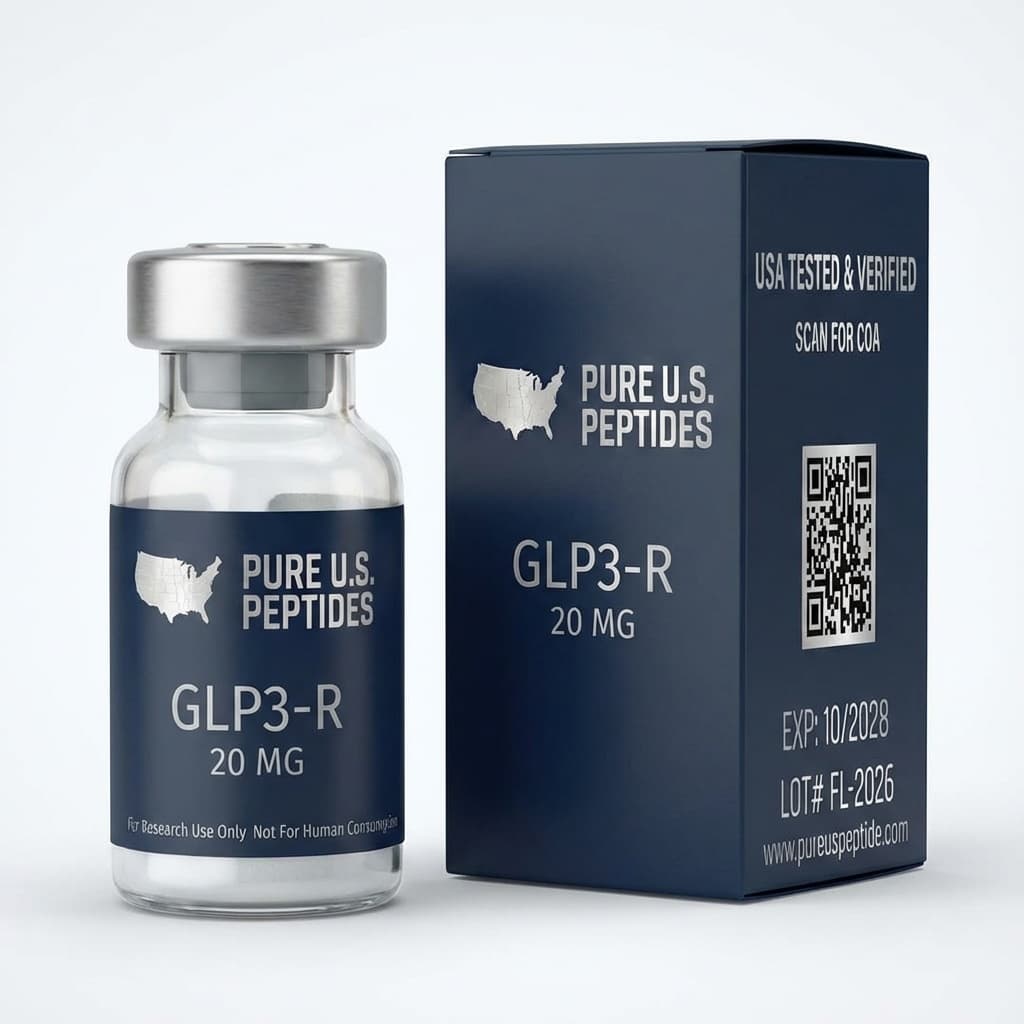
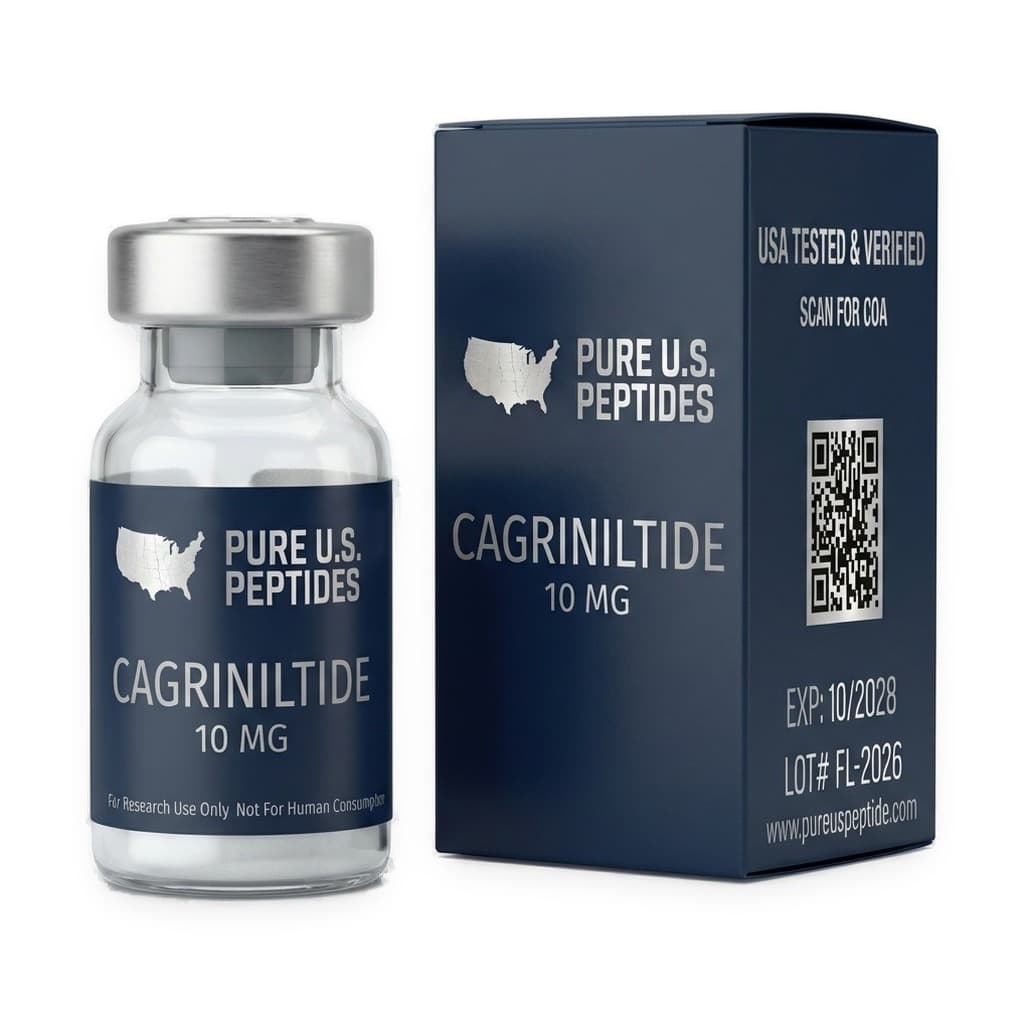
Cagriniltide 10mg
En Stock y Listo para Envío desde EE.UU.
Envío GRATIS en todos los pedidos de EE.UU.
Pago seguro mediante procesador de pagos encriptado


 +2.9k
+2.9kSolo para Uso en Investigación
Estos productos son exclusivamente para investigación de laboratorio y no están destinados para uso médico. No están aprobados por la FDA para diagnosticar, tratar, curar o prevenir ninguna enfermedad. Al realizar su compra, usted certifica que serán utilizados exclusivamente para investigación y no para consumo humano o animal.
Resumen de Investigación
19 Citas PubMedDescripción General de la Investigación Cagriniltide (AM833/NN1213) es un análogo acilado de acción prolongada de la amilina humana — una hormona pancreática de 37 aminoácidos cosecretada con la insulina que regula la saciedad y la homeostasis de la glucosa. La amilina humana nativa es inestable, propensa a la formación de fibrillas amiloides y tiene una vida media muy corta. El análogo de primera generación, pramlintida, tiene una vida media corta.[2] Cagriniltide supera estas limitaciones mediante la acilación con diácido graso C20 (a través del espaciador de ácido γ-glutámico en la Lisina 1), que se une a la albúmina sérica, extendiendo la vida media a 159–195 horas. Las sustituciones de prolina (Pro21, Pro27) y cambios específicos de aminoácidos (N14E, V17R) previenen la formación de fibrillas y estabilizan la hélice alfa del péptido.[3] Cagriniltide (AM833) es un análogo de amilina acilado de acción prolongada y un agonista no selectivo de los receptores...
Cagriniltide — Datos de Investigación de un Vistazo
| Propiedad | Valor |
|---|---|
| Citas PubMed Referenciadas | 19 |
| Investigadores Colaboradores | 3 |
| Condiciones de Almacenamiento | Liofilizado: -80°C (2 años) o -20°C (1 año); proteger de la humedad y la luz. |
| Estándar de Pureza | >99.80% por HPLC (certificado publicado) |
| Solo para Uso en Investigación | No destinado al consumo humano. Solo para uso en investigación. |
Research guide
What is Cagriniltide? Read the full research guideDescripción General
Descripción General de la Investigación
Cagriniltide (AM833/NN1213) es un análogo acilado de acción prolongada de la amilina humana — una hormona pancreática de 37 aminoácidos cosecretada con la insulina que regula la saciedad y la homeostasis de la glucosa. La amilina humana nativa es inestable, propensa a la formación de fibrillas amiloides y tiene una vida media muy corta. El análogo de primera generación, pramlintida, tiene una vida media corta.[2]
Cagriniltide supera estas limitaciones mediante la acilación con diácido graso C20 (a través del espaciador de ácido γ-glutámico en la Lisina 1), que se une a la albúmina sérica, extendiendo la vida media a 159–195 horas. Las sustituciones de prolina (Pro21, Pro27) y cambios específicos de aminoácidos (N14E, V17R) previenen la formación de fibrillas y estabilizan la hélice alfa del péptido.[3]
Cagriniltide (AM833) es un análogo de amilina acilado de acción prolongada y un agonista no selectivo de los receptores de amilina/calcitonina (Kruse 2021). Está en investigación y no está aprobado. Consulte las Referencias.[3]
Mecanismo de Acción
Mecanismo de Acción
Cagriniltide funciona como un agonista dual no selectivo tanto de los receptores de calcitonina (CTR) como de los receptores de amilina (AMY1R, AMY2R, AMY3R) — heterodímeros de CTR con RAMPs 1, 2 o 3.[3][12]
Objetivos Receptoriales y Unión
| Objetivo | Interacción | Evidencia |
|---|---|---|
| Receptor de Calcitonina (CTR) | Agonista no selectivo; GPCR de clase B1; EC50 62 pM | Kruse et al. (2021); Cao et al. (2025) cryo-EM[3][9] |
| AMY1R (CTR+RAMP1) | Agonista potente; unión en conformación de "bypass" | El KO de RAMP1/3 anula la respuesta anoréxica (ratones)[8] |
| AMY3R (CTR+RAMP3) | Agonista potente; EC50 49 pM (hAMY3R) | Carvas et al. (2025): necesario para la respuesta en ratones[8][13] |
| CGRPR / AM1R / AM2R | Actividad nula o muy baja — selectivo para el eje amilina/calcitonina | Fletcher et al. (2021)[12] |
Señalización Descendente
| Vía | Efecto | Consecuencia |
|---|---|---|
| Gs / Adenilil Ciclasa / cAMP | Activación de la proteína Gs → adenilil ciclasa → acumulación intracelular de cAMP | Cascada de señalización primaria para la saciedad[9] |
| cFos Neuronal (AP/NTS/LPBN) | Induce la expresión de cFos en el área postrema, el núcleo del tracto solitario y el núcleo parabraquial lateral | Señalización de saciedad; 57% menos neuronas del AP en KO de RAMP1/3[8] |
| Vaciamiento Gástrico | Retrasa el vaciamiento gástrico | Criterios de valoración de vaciamiento gástrico |
| Supresión de Glucagón | Suprime el glucagón posprandial de las células α pancreáticas | Criterios de valoración glucémicos posprandiales[6] |
Características Únicas de Unión
| Propiedad | Cagriniltide | Calcitonina de Salmón |
|---|---|---|
| Conformación del Receptor | "Bypass" (estabilizada por bloqueo iónico N14E–V17R) | Conformación "tipo CT" |
| Tiempo de Residencia | 3–6 minutos (disociación rápida) | 45–60 minutos (disociación lenta) |
| Desensibilización | Previene la regulación a la baja del receptor | Causa regulación a la baja del receptor |
Dependencia de RAMP: Carvas et al. (2025) demostraron que las respuestas de ingesta alimentaria a cagriniltide en ratones son estrictamente dependientes de AMY1R y AMY3R — la eliminación de RAMP1 y RAMP3 anuló la respuesta, con un 57% menos de neuronas activadas en el área postrema.[8]
Aplicaciones de Investigación
Aplicaciones de Investigación
La literatura publicada (los ensayos clínicos usaron la formulación farmacéutica; ver Referencias) abarca:
Características Bioquímicas
| Propiedad | Valor |
|---|---|
| Molecular Formula | C₁₉₄H₃₁₂N₅₄O₅₉S₂ |
| Molecular Weight | 4409.01 Da |
| CAS Number | 1415456-99-3 |
| PubChem CID | 171397054 |
| Sequence (1-Letter) | K(Eicosanedioic acid-γ-Glu)-CNTATCATQRLAEFLRHSSNNFGPILPPTNVGSNTP-NH₂ |
| Sequence (3-Letter) | {Eicosanedioic acid-γ-Glu}-Lys-Cys-Asn-Thr-Ala-Thr-Cys-Ala-Thr-Gln-Arg-Leu-Ala-Glu-Phe-Leu-Arg-His-Ser-Ser-Asn-Asn-Phe-Gly-Pro-Ile-Leu-Pro-Pro-Thr-Asn-Val-Gly-Ser-Asn-Thr-Pro-NH₂ |
| Structure | Análogo de amilina lipidado de 37 aminoácidos; diácido graso C20 mediante espaciador γ-Glu en Lys1; puente disulfuro Cys2–Cys7; sustituciones anti-fibrilación Pro21/Pro27; bloqueo iónico N14E/V17R |
| Origin | Diseñado a partir del esqueleto de la amilina humana por Novo Nordisk A/S |
| Classification | Análogo de Amilina de Acción Prolongada / DACRA / Péptido de Investigación |
| Half-Life | ~159–195 horas (humano); ~24h (rata), ~50h (conejo), ~76h (perro), ~115h (minicerdo) |
Identificadores
| Synonyms | |
|---|---|
| InChI Key | |
| Developer |
Resumen de Investigación Preclínica
Resumen de la Investigación Preclínica
Estudios Preclínicos Clave
| Estudio | Modelo | Hallazgos Clave | Ref |
|---|---|---|---|
| Carvas et al. (2025) | Ratones 129S2/SvEv — WT vs KO de RAMP1/3; 3–300 nmol/kg | 30 nmol/kg: ingesta alimentaria a 24h ↓51%; 57% menos neuronas del AP activadas en KO | [8] |
| Kruse et al. (2021) | Ratas SD macho — 0,1–30 nmol/kg; FC: 10 nmol/kg | Ingesta alimentaria reducida durante varios días a 1–10 nmol/kg; T½ 20–27h | [3] |
| Dahl et al. (2024) | Ratas — 30 nmol/kg, administración única | Ingesta alimentaria reducida 85% a 0–24h y 84% a 24–48h; EC50: hAMY3R 49 pM, hCTR 62 pM | [13] |
Ensayos Clínicos Publicados (solo diseño)
| Ensayo | Diseño | Ref |
|---|---|---|
| REDEFINE 1 NCT05567796 | Fase 3; n=3.417; ECA de 68 semanas; CagriSema vs sema vs cagri vs placebo | [5] |
| REDEFINE 2 NCT05394519 | Fase 3; n=1.206; ECA de 68 semanas; CagriSema vs placebo | [6] |
| REIMAGINE 2 NCT06065540 | Fase 3; n=2.728; 68 semanas con control activo; CagriSema vs sema | |
| Fase 2, estudio de combinación | n=92; 32 semanas; CagriSema vs sema vs cagri | [4] |
| Fase 2, estudio de monoterapia | n=706; 26 semanas de búsqueda de dosis; cagri (varios niveles) vs liraglutida vs placebo | [2] |
| Fase 1b | n=95; 20 semanas; cagri + sema | [1] |
Los productos ofrecidos en este sitio web se proporcionan exclusivamente para estudios in vitro. Los estudios in vitro (del latín: en vidrio) se realizan fuera del cuerpo. Estos productos no son medicamentos ni fármacos y no han sido aprobados por la FDA para prevenir, tratar o curar ninguna condición médica, dolencia o enfermedad. La introducción corporal de cualquier tipo en humanos o animales está estrictamente prohibida por la ley.
Solo para Investigación de Laboratorio. No para uso humano, uso médico, uso diagnóstico ni uso veterinario.
TODOS LOS ARTÍCULOS E INFORMACIÓN DE PRODUCTOS PROPORCIONADOS EN ESTE SITIO WEB SON SOLO PARA FINES INFORMATIVOS Y EDUCATIVOS.
Autores y Atribución
✍️ Autor del Artículo
Thomas Kruse
Thomas Kruse es un científico principal en Novo Nordisk A/S en Måløv, Dinamarca. Desempeñó un papel central en el desarrollo químico y la ingeniería estructural de cagriniltide, liderando los esfuerzos de relación estructura-actividad (REA) para crear un análogo de amilina de acción prolongada y estable que activa tanto los receptores de amilina como el receptor de calcitonina, superando la inestabilidad y los problemas de fibrilación de la amilina humana nativa. Sus publicaciones clave incluyen "Development of Cagrilintide, a Long-Acting Amylin Analogue" (2021, Journal of Medicinal Chemistry) y "NN1213 – A Potent, Long-Acting, and Selective Analog of Human Amylin" (2024, Journal of Medicinal Chemistry). Thomas Kruse es referenciado como uno de los científicos líderes involucrados en la investigación de cagriniltide. De ninguna manera este doctor/científico respalda ni promueve la compra, venta o uso de este producto por ningún motivo. No existe afiliación ni relación, implícita o de otro tipo, entre Pure US Peptide y este doctor.
Ver Perfil Completo del Investigador →🎓 Autor de Revista Científica
W. Timothy Garvey, MD
W. Timothy Garvey, MD es profesor en el Departamento de Ciencias de la Nutrición de la Universidad de Alabama en Birmingham. Se desempeñó como investigador principal del programa pivotal de Fase 3 REDEFINE que evaluó cagriniltide combinado con semaglutida (CagriSema) en ensayos clínicos. Es autor de publicaciones del programa REDEFINE. W. Timothy Garvey es referenciado como uno de los científicos líderes involucrados en la investigación de cagriniltide. De ninguna manera este doctor/científico respalda ni promueve la compra, venta o uso de este producto por ningún motivo. No existe afiliación ni relación, implícita o de otro tipo, entre Pure US Peptide y este doctor.
Ver Perfil Completo del Investigador →W. Timothy Garvey, MD is being referenced as one of the leading scientists involved in the research and development of Cagriniltide. In no way is this doctor/scientist endorsing or advocating the purchase, sale, or use of this product for any reason. There is no affiliation or relationship, implied or otherwise, between Pure US Peptide and this doctor. The purpose of citing the doctor is to acknowledge, recognize, and credit the exhaustive research and development efforts conducted by the scientists studying this peptide.
🔬 Investigador Colaborador
David C.W. Lau, MD, PhD
David C.W. Lau, MD, PhD trabaja en la Cumming School of Medicine de la Universidad de Calgary. Dirigió el estudio de búsqueda de dosis de Fase 2 y los ensayos de seguridad/tolerabilidad de Fase 1b que caracterizaron la monoterapia con cagriniltide y su perfil de seguridad cuando se coadministra con semaglutida. Sus publicaciones clave incluyen "Safety, tolerability, pharmacokinetics, and pharmacodynamics of concomitant administration of cagrilintide with semaglutide" (2021, The Lancet). David C.W. Lau es referenciado como uno de los científicos líderes involucrados en la investigación de cagriniltide. De ninguna manera este doctor/científico respalda ni promueve la compra, venta o uso de este producto por ningún motivo. No existe afiliación ni relación, implícita o de otro tipo, entre Pure US Peptide y este doctor.
Ver Perfil Completo del Investigador →David C.W. Lau, MD, PhD is being referenced as one of the leading scientists involved in the research and development of Cagriniltide. In no way is this doctor/scientist endorsing or advocating the purchase, sale, or use of this product for any reason. There is no affiliation or relationship, implied or otherwise, between Pure US Peptide and this doctor. The purpose of citing the doctor is to acknowledge, recognize, and credit the exhaustive research and development efforts conducted by the scientists studying this peptide.
Citas Referenciadas
Enebo LB, et al. Lancet, 397(10286), 1736-1748, 2021.
PubMedLau DCW, et al. Lancet, 398(10317), 2160-2172, 2021.
PubMedKruse T, et al. Development of Cagrilintide, a Long-Acting Amylin Analogue. Journal of Medicinal Chemistry, 64(15), 11183-11194, 2021.
PubMedFrias JP, et al. Lancet, 402(10403), 720-730, 2023.
PubMedGarvey WT, et al. New England Journal of Medicine, 393(7), 635-647, 2025.
PubMedDavies MJ, et al. New England Journal of Medicine, 393(7), 648-659, 2025.
PubMedVerma S, et al. Hypertension, 83(2), e26055, 2026.
PubMedCarvas AO, et al. Cagrilintide lowers bodyweight through brain amylin receptors 1 and 3. EBioMedicine, 118, 105836, 2025.
PubMedCao J, et al. Structural and dynamic features of cagrilintide binding to calcitonin and amylin receptors. Nature Communications, 16, 3389, 2025.
PubMedGu YM, et al. Structural and mechanistic insights into dual activation of cagrilintide in amylin and calcitonin receptors. Acta Pharmacologica Sinica, 47(1), 162-172, 2026.
PubMedWang Y, Feng Z, Yu L. The Innovation Medicine, 3(3), 100150, 2025.
PubMedFletcher MM, et al. AM833 Is a Novel Agonist of Calcitonin Family G Protein-Coupled Receptors: Pharmacological Comparison with Six Selective and Nonselective Agonists. JPET, 377(3), 417-440, 2021.
PubMedDahl K, et al. Journal of Medicinal Chemistry, 67(14), 11688–11700, 2024.
PubMedBecerril S, Frühbeck G. Lancet, 397(10286), 1687-1689, 2021.
PubMedD'Ascanio AM, et al. Cardiology in Review, 32(1), 83-90, 2024.
PubMedMikhail N, Wali S. Clinical Trials and Clinical Research, 2(5), 2023.
PubMedHales CM. New England Journal of Medicine, 393(7), 712-714, 2025.
PubMedGadde KM, Allison DB. Lancet, 398(10317), 2132-2134, 2021.
PubMedDehestani B, et al. Journal of Obesity & Metabolic Syndrome, 30(4), 320-325, 2021.
PubMedAviso de Uso en Investigación
Solo para Uso en Investigación (RUO). No destinado al consumo humano, uso clínico, ni como medicamento, alimento, cosmético o dispositivo médico. Este producto no ha sido evaluado por la FDA y se suministra exclusivamente para investigación de laboratorio in vitro por profesionales calificados.
Certificado de Análisis
Published certificates come from third-party laboratories. If this listing's certificate is still pending, the card below says so.
Último Informe de Laboratorio
Almacenamiento y Manejo
Resumen
Liofilizado: -80°C (2 años) o -20°C (1 año); proteger de la humedad y la luz.
Polvo Liofilizado
Almacenar a -80°C hasta 2 años o a -20°C hasta 1 año. Mantener sellado, protegido de la humedad y la luz, preferiblemente bajo gas inerte (N₂).
Manipulación
Polvo de blanco a blanquecino. Los certificados publicados informan la pureza por HPLC y las endotoxinas cuando se analizaron. Estabilidad física: el ensayo de Tioflavina T (ThT) confirma >40 horas sin fibrillas bajo condiciones de estrés.
“Resumen de la Investigación Preclínica Estudios Preclínicos Clave Estudio Modelo Hallazgos Clave Ref Carvas et al.”
Compuestos de Investigación Relacionados
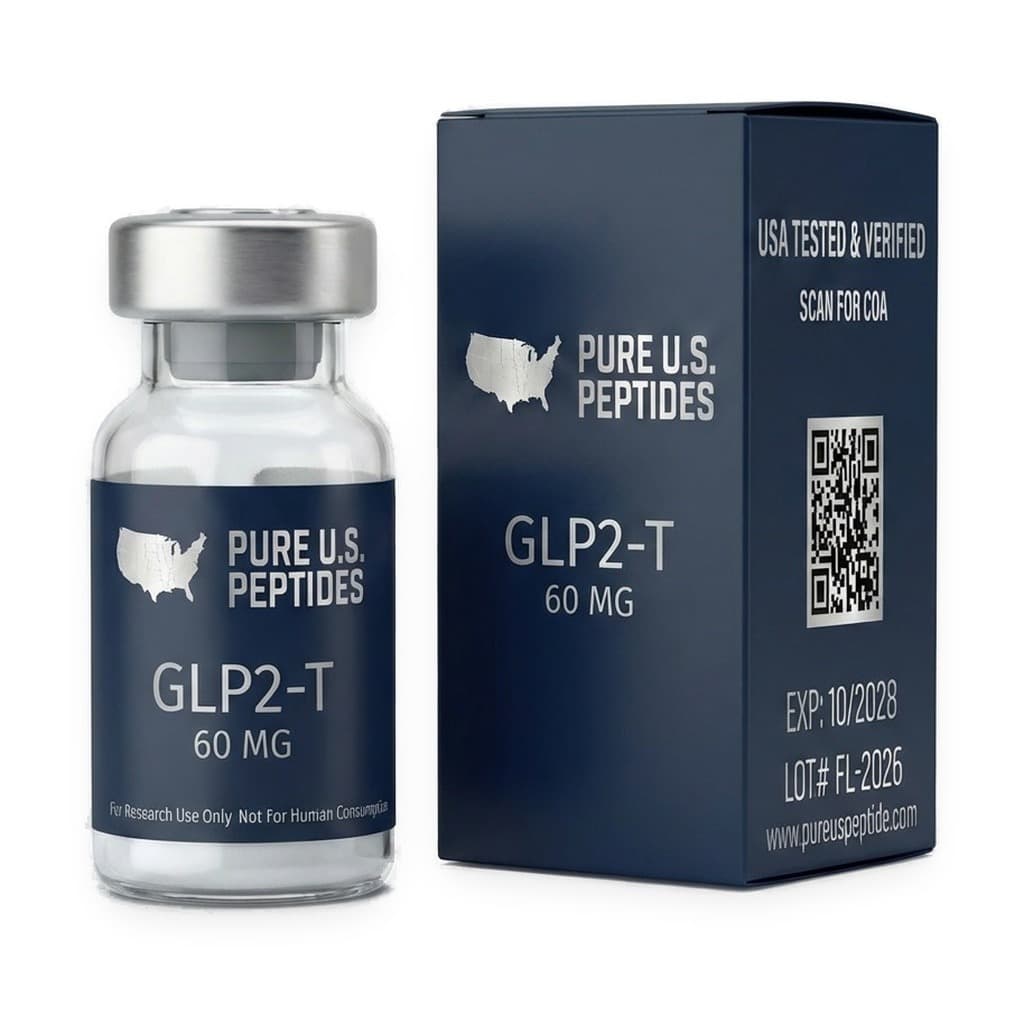
GLP2-T
60mg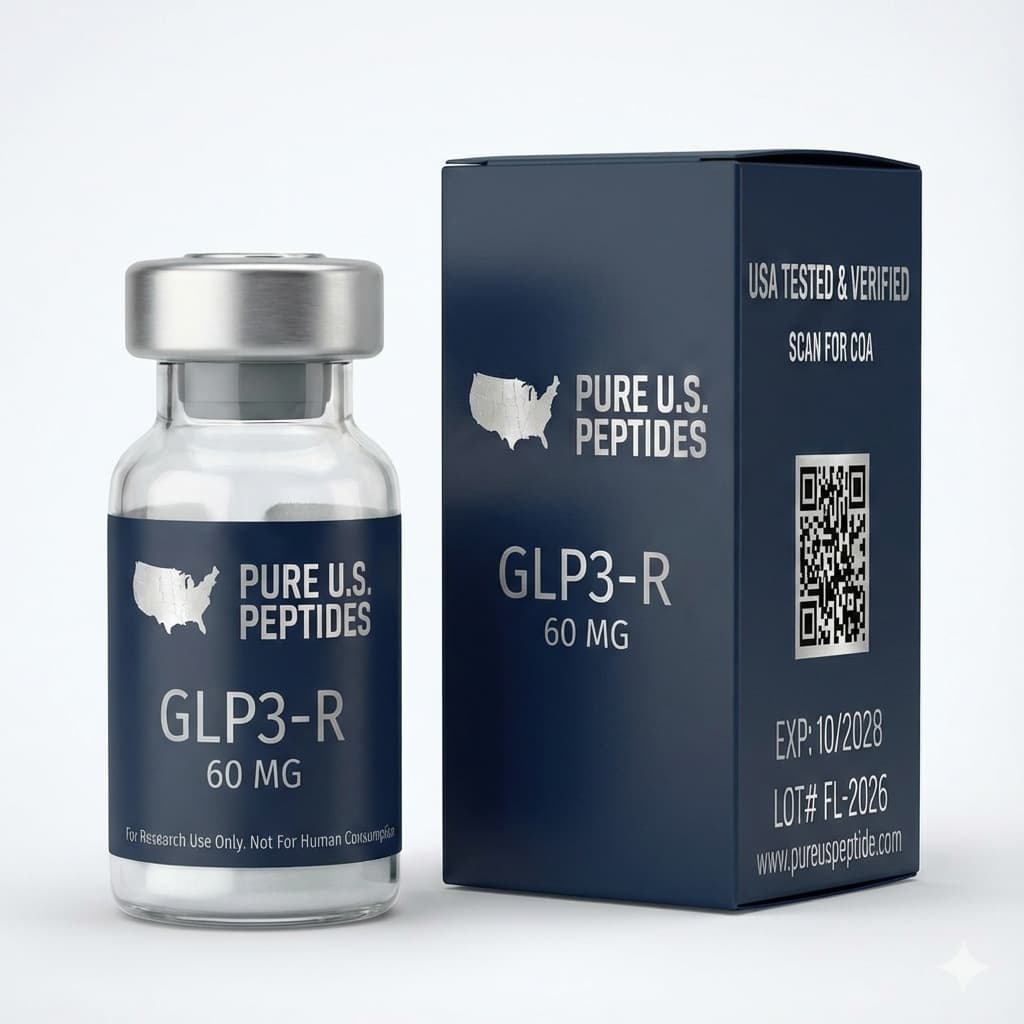
GLP3-R
60mg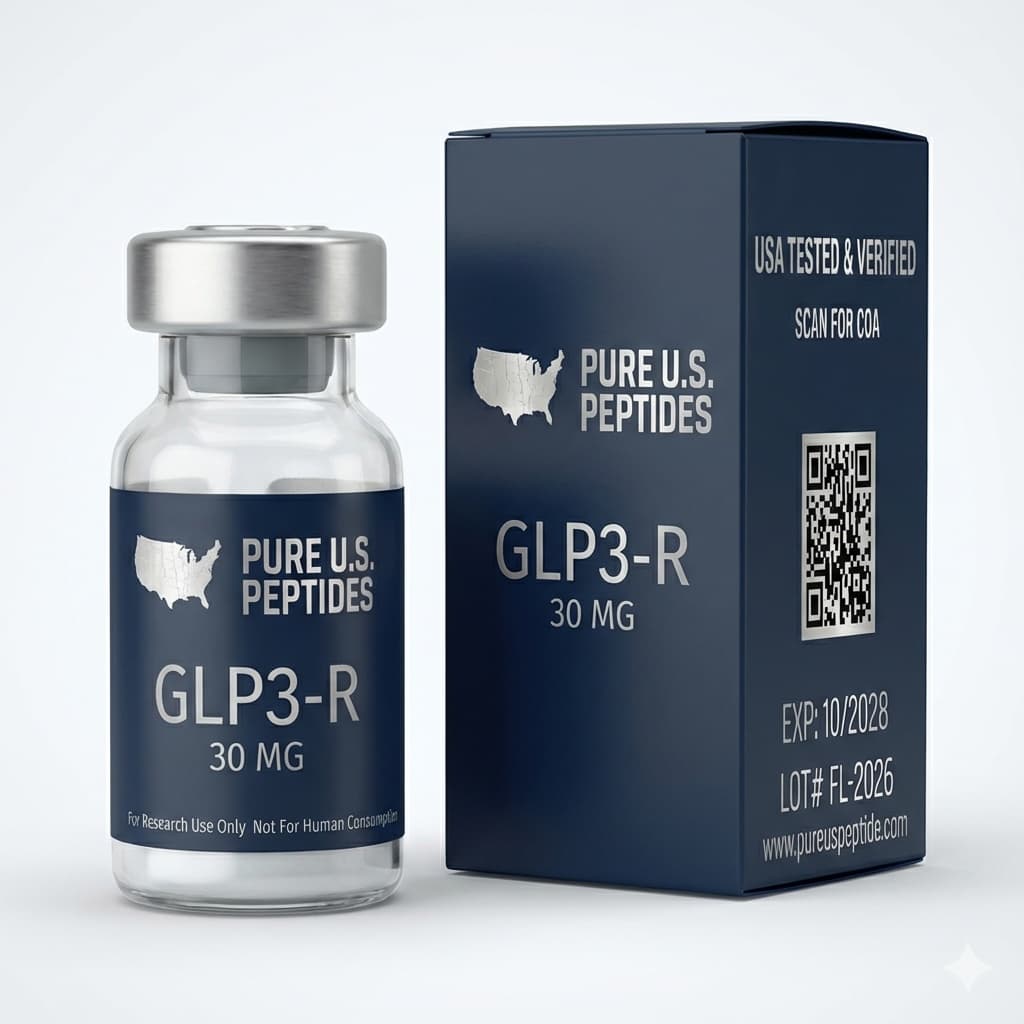
GLP3-R
30mg