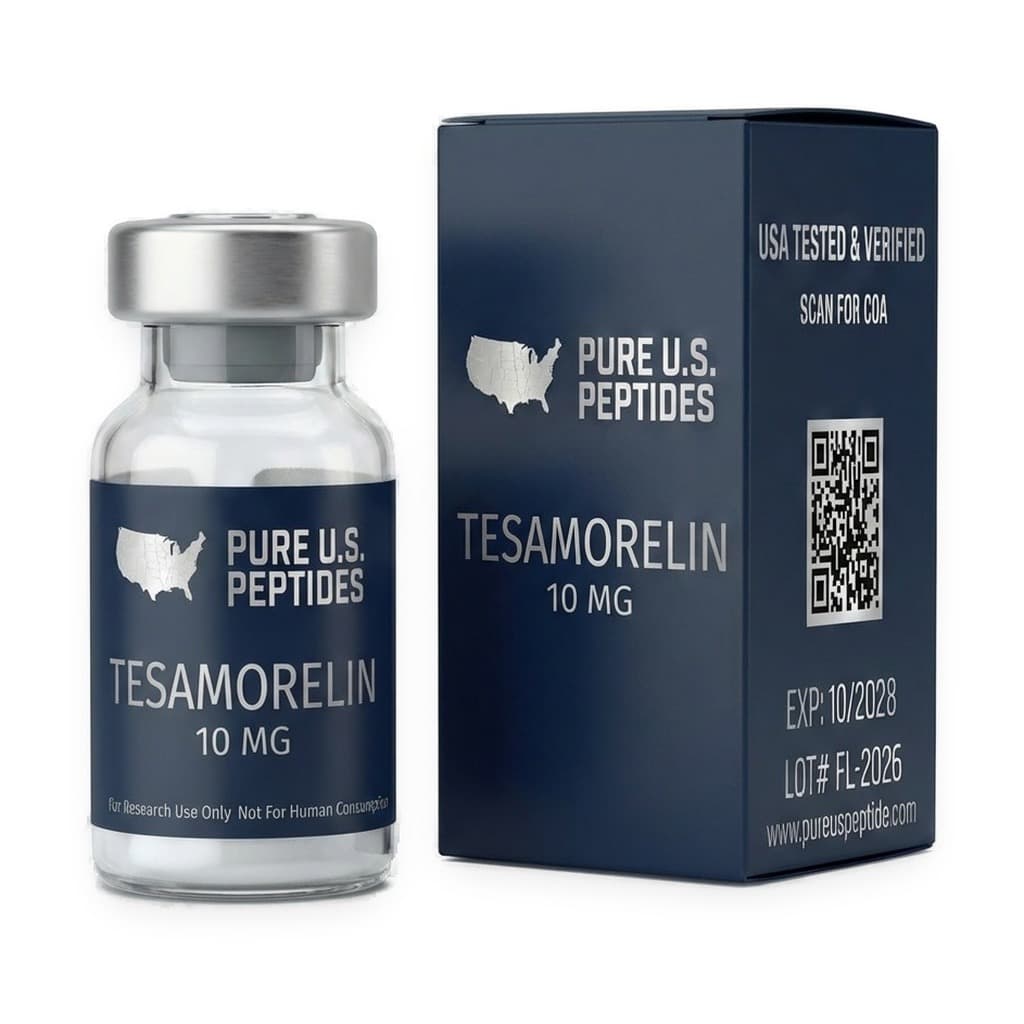
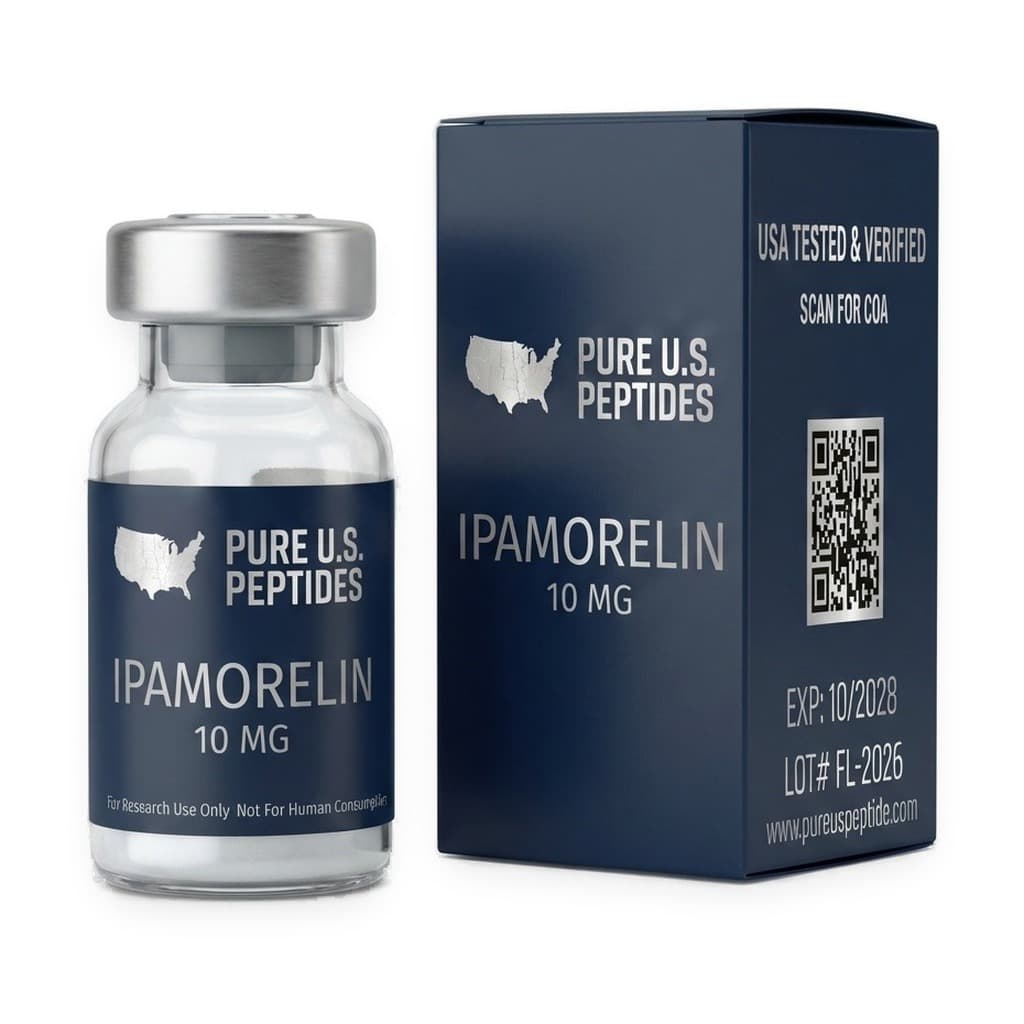
Ipamorelin 10mg
Em Estoque e Pronto para Envio dos EUA
Frete GRÁTIS em todos os pedidos nos EUA
Checkout seguro via processador de pagamento criptografado


 +2.9k
+2.9kApenas para Uso em Pesquisa
Estes produtos sao destinados exclusivamente a pesquisa laboratorial e nao se destinam ao uso medico. Nao sao aprovados pela FDA para diagnosticar, tratar, curar ou prevenir qualquer doenca. Ao adquirir, voce certifica que os produtos serao utilizados exclusivamente para pesquisa e nao para consumo humano ou animal.
Resumo da Pesquisa
21 Citacoes PubMedVisao Geral da Pesquisa Ipamorelin (NNC 26-0161) is a synthetic pentapeptide hormonio do crescimento secretagogue with a sequencia Aib-His-D-2-Nal-D-Phe-Lys-NH₂, developed by Novo Nordisk no(a) mid-1990s by systematic modification of GHRP-1. It acts como um(a) highly selective agonist do(a) GHS-R1a receptor (ghrelin receptor), stimulating potent, pulsatile hormonio do crescimento release sem affecting ACTH, cortisol, FSH, LH, TSH, or prolactin — even at 200× o efeitoive dose.[1][2] Ipamorelin research spans 8+ indication categories incluindo selective GH secretion, postoperative ileus, bone growth, composicao corporal, secrecao de insulina, pain modulacao, and cancer caquexia. A Phase II ensaio clinico for POI (n=114, NCT00672074) failed to reach significancia estatistica, and desenvolvimento clinico was discontinued.[6][4] Key distinguishing features include: (1) first selective GHS with GHRH-like specificity, (2) no somatotroph dessensibilizacao upon cronico(a) administration, (3) linear pharmacokinetics in humans (T½ ~2h), and (4) GH-independent adipogenic effects.[1][9]
Ipamorelin — Dados de Pesquisa em Resumo
| Propriedade | Valor |
|---|---|
| Citacoes PubMed Referenciadas | 21 |
| Pesquisadores Colaboradores | 3 |
| Condicoes de Armazenamento | Liofilizado: -18°C to -20°C (estável vários anos); proteja da luz. |
| Padrao de Pureza | 98.58% por HPLC (certificado publicado) |
| Apenas para Uso em Pesquisa | Nao destinado ao consumo humano. Apenas para uso em pesquisa. |
Compare Ipamorelin com Outros Peptideos
Research guide
What is Ipamorelin? Read the full research guideVisao Geral
Visao Geral da Pesquisa
Ipamorelin (NNC 26-0161) is a synthetic pentapeptide hormonio do crescimento secretagogue with a sequencia Aib-His-D-2-Nal-D-Phe-Lys-NH₂, developed by Novo Nordisk no(a) mid-1990s by systematic modification of GHRP-1. It acts como um(a) highly selective agonist do(a) GHS-R1a receptor (ghrelin receptor), stimulating potent, pulsatile hormonio do crescimento release sem affecting ACTH, cortisol, FSH, LH, TSH, or prolactin — even at 200× o efeitoive dose.[1][2]
Ipamorelin research spans 8+ indication categories incluindo selective GH secretion, postoperative ileus, bone growth, composicao corporal, secrecao de insulina, pain modulacao, and cancer caquexia. A Phase II ensaio clinico for POI (n=114, NCT00672074) failed to reach significancia estatistica, and desenvolvimento clinico was discontinued.[6][4]
Key distinguishing features include: (1) first selective GHS with GHRH-like specificity, (2) no somatotroph dessensibilizacao upon cronico(a) administration, (3) linear pharmacokinetics in humans (T½ ~2h), and (4) GH-independent adipogenic effects.[1][9]
Mecanismo de Acao
Mecanismo de Acao
Ipamorelin ativa the GHS-R1a (ghrelin receptor) on pituitary somatotroph cells with an in vitro EC₅₀ of 1.3 ± 0.4 nmol/L e em vivo ED₅₀ of 2.3 nmol/kg (swine). Binding desencadeia phospholipase C (PLC) ativacao via Gα₁₁/q → IP3 → intracellular Ca²⁺ release → GH vesicle exocytosis — a pathway distinto(a) de GHRH's cAMP signaling.[1][2]
Receptor & Signaling Profile
| Target | Action | Downstream Effect |
|---|---|---|
| GHS-R1a (Ghrelin Receptor) | Selective agonist | PLC → IP3 → Ca²⁺ → GH vesicle exocytosis |
| cAMP (co-stimulation) | Enhances pre-estimulou adenylyl cyclase | Co-stimulation of GHS-R1a and GHRH-R has been studied in pituitary-cell and rodent models |
| Enteric Cholinergic Neurons | Activates excitatory neurons (atropine/TTX-sensitive) | Accelerates gastric motility and emptying |
Ipamorelin's selectivity is exceptional: it does NOT stimulate ACTH, cortisol, FSH, LH, prolactin, or TSH — even at 200× the ED₅₀. Adicionalmente, cronico(a) administration nao desensitize somatotrophs, diferentemente de GHRH que induz homologous down-regulacao.[1][7]
Half-life ~2 h (published PK).[2]
vs. Related Compounds
| Caracteristica | Ipamorelin | GHRP-6 / GHRP-2 | GHRH |
|---|---|---|---|
| Selectivity | HIGH — GH only | LOW — GH + ACTH + cortisol + prolactin | Selective for GH |
| Desensibilizacao | NO | Partial | YES (homologous) |
| Primary Signaling | PLC / Ca²⁺ | PLC / Ca²⁺ | cAMP |
| Half-Life (Human) | ~2 hours | Shorter (5× faster depuracao) | Minutes |
Aplicacoes de Pesquisa
Aplicacoes de Pesquisa
Ipamorelin research spans 8+ indication categories across GH physiology, GI motility, musculoskeletal biology, and pain:
- Selective GH Secretion — Pulsatile GH release sem ACTH/cortisol effects; potency comparable to GHRP-6 but with GHRH-like selectivity.[1]
- Postoperative Ileus (POI) — Accelerates gastric emptying via GHS-R1a on cholinergic neurons; reduz stomach retention to <25% (vs 78% vehicle). The Phase II trial did not meet its primary endpoint.[4][6]
- Bone Growth & Metabolism — Dose-dependent longitudinal bone growth (42→52 µm/day, p<0.0001); aumentou tibial/vertebral BMC in adult rats.[3][8]
- Glucocorticoid-Induced Catabolism — Counteracts GC-induziu diminui: periosteal bone formation rate aumentou 4-fold; aumentou maximum tetanic muscle tension.[12]
- Body Composition & Adiposity — GH-independent adipogenic effects; aumenta food intake and serum leptin in ambos(as) GH-deficient and GH-intact mice.[9]
- Insulin Secretion — Stimulates insulin release via calcium channels and adrenergic receptor pathways in normal and diabetic pancreatic tissue.[10]
- Pain Modulation / Nociception — Attenuates visceral and somatic nociception via periferico(a) ghrelin receptors; dose-dependente reduction in visceromotor response.[17]
- Cancer Cachexia / Emesis — Ferret cisplatin model: body-weight and emesis endpoints reported.[14]
Caracteristicas Bioquimicas
| Propriedade | Valor |
|---|---|
| Molecular Formula | C₃₈H₄₉N₉O₅ |
| Molecular Weight | 711.85 Da |
| CAS Number | 170851-70-4 |
| PubChem CID | 9831659 |
| Sequence (1-Letter) | XHXFK (X = non-proteinogenic aminoacidos) |
| Sequence (3-Letter) | Aib-His-D-2-Nal-D-Phe-Lys-NH₂ |
| Structure | Linear pentapeptide; contem Aib (α-methylalanine) and D-2-naphthylalanine; C-terminal amide |
| InChI Key | NEHWBYHLYZGBNO-BVEPWEIPSA-N |
| Origin | Synthetic — derivado(a) de GHRP-1 (Novo Nordisk) |
| Classification | Growth Hormone Secretagogue / Ghrelin Mimetic / Research Peptide |
| Plasma Half-Life | ~2 hours (human); ~30–60 min (rat) |
Identificadores
| IUPAC Name | |
|---|---|
| SMILES | |
| UNII Code | |
| Monoisotopic Mass | |
| Solubility |
Resumo da Pesquisa Pre-clinica
Resumo da Pesquisa Pre-clinica
Key Preclinical Studies
| Estudo | Modelo | Principais Achados | Ref |
|---|---|---|---|
| Raun et al. (1998) | Rats/Swine | ED₅₀ = 80 nmol/kg (rats), 2.3 nmol/kg (swine); NO ACTH/cortisol even at >200× ED₅₀; primeiro(a) selective GHS | [1] |
| Johansen et al. (1999) | Adult female rats — 15-day study | Longitudinal bone growth 42→52 µm/day (p<0.0001); dose-dependente | [3] |
| Andersen et al. (2001) | Rats — GC-induziu catabolism — 100 µg/kg TID × 3mo | Periosteal bone formation rate aumentou 4-fold; aumentou maximum tetanic muscle tension | [12] |
| Venkova et al. (2009) | Rats with POI — 0.014–1.0 mg/kg | Gastric retention reduziu to <25% (vs 78% vehicle, p<0.05); acelerou colonic transit | [4] |
| Svensson et al. (2000) | Female rats — 0.5 mg/kg/day × 12 wk | Increased tibial and vertebral BMC; bone dimensions aumentou (not density) | [8] |
| Jiménez-Reina et al. (2002) | Female Wistar rats — 100 µg/kg × 21d | 67% increase in basal GH release; NO somatotroph dessensibilizacao; significant weight gain | [7] |
| Lall et al. (2001) | GH-deficient (lit/lit) mice — 250 µg/kg × 2–9 wk | Body weight +15–17%; aumentou adiposity via GH-independent mechanism | [9] |
| Adeghate & Ponery (2004) | Normal/diabetic rat tissue — 10⁻¹² to 10⁻⁶ M in vitro | Significant insulin release (p<0.04); via calcium channels and adrenergic pathways | [10] |
| Mohammadi et al. (2020) | Rat visceral hypersensitivity — 0.01–1.0 mg/kg | Dose-dependent reduction in visceromotor response; bloqueou by ghrelin antagonista do receptor | [17] |
| Lu et al. (2024) | Ferrets — cisplatin-induziu wasting | Cisplatin model: body-weight endpoint reported (non-rodent caquexia model) | [14] |
Safety Summary
| Parametro | Finding |
|---|---|
| Selectivity | No ACTH, cortisol, FSH, LH, PRL, or TSH estimulacao — even at 200× ED₅₀ |
| Receptor Pharmacology | Reverses morphine-induziu GI slowing; bloqueou by GHS antagonista do receptors; not affected by GHRH antagonists |
| Farmacocinetica | Renally excreted; 60–80% unchanged in urine (rat/human PK literature) |
Handle with standard laboratory PPE. Consult the SDS.
Os produtos oferecidos neste site são fornecidos apenas para estudos in vitro. Estudos in vitro (do latim: em vidro) são realizados fora do corpo. Estes produtos não são medicamentos ou fármacos e não foram aprovados pelo FDA dos EUA para prevenir, tratar ou curar qualquer condição médica, enfermidade ou doença. A introdução corporal de qualquer tipo em humanos ou animais é estritamente proibida por lei.
Apenas para Pesquisa Laboratorial. Não se destina ao uso humano, uso médico, uso diagnóstico ou uso veterinário.
TODOS OS ARTIGOS E INFORMAÇÕES SOBRE PRODUTOS FORNECIDOS NESTE SITE SÃO APENAS PARA FINS INFORMATIVOS E EDUCACIONAIS.
Autores e Atribuicao
✍️ Autor do Artigo
Kirsten Raun
Kirsten Raun is a researcher at Novo Nordisk (Health Care Discovery, Department of GH Biology). Raun foi o(a) lead researcher no(a) original characterization of Ipamorelin, identifying it como o(a) primeiro(a) hormonio do crescimento secretagogue with alto(a) selectivity for GH release sem significantly stimulating ACTH or cortisol — distinguishing it from all earlier GHS compounds incluindo GHRP-6 and GHRP-2. Her foundational 1998 paper 'Ipamorelin, the primeiro(a) selective hormonio do crescimento secretagogue' no(a) European Journal of Endocrinology estabeleceu o composto's pharmacological uniqueness. She also co-authored 'Highly Potent Growth Hormone Secretagogues: Hybrids of NN703 and Ipamorelin' (2001). Kirsten Raun é referenciado(a) como um(a) cientista líder na pesquisa de Ipamorelin. De forma alguma este(a) cientista endossa ou defende a compra, venda ou uso deste produto por qualquer motivo. Não existe afiliação ou relação, implícita ou de outra forma, entre a Pure US Peptide e este(a) cientista.
Ver Perfil Completo do Pesquisador →🎓 Autor de Revista Cientifica
Dr. Beverley Greenwood-Van Meerveld, Ph.D.
Dr. Beverley Greenwood-Van Meerveld is a Professor no(a) University of Oklahoma Health Sciences Center (Oklahoma Center for Neuroscience; Department of Physiology) and VA Medical Center. She conducted extensive research no(a) gastrointestinal pharmacology of Ipamorelin, studying it como um(a) ghrelin-receptor agonist in rodent models of postoperative ileus (POI). Her work demonstrated que Ipamorelin acelera gastric emptying via a mechanism involving cholinergic excitatory neurons (atropine- and TTX-sensitive). Key publications include 'Efficacy of ipamorelin, um(a) novo(a) ghrelin mimetic, in a rodent model of postoperative ileus' (JPET, 2009) and 'Efficacy of ipamorelin on gastric dysmotility in a rodent model of postoperative ileus' (J Exp Pharmacol, 2012). Beverley Greenwood-Van Meerveld é referenciado(a) como um(a) cientista líder na pesquisa de Ipamorelin. De forma alguma este(a) médico(a)/cientista endossa ou defende a compra, venda ou uso deste produto por qualquer motivo. Não existe afiliação ou relação, implícita ou de outra forma, entre a Pure US Peptide e este(a) médico(a).
Ver Perfil Completo do Pesquisador →Dr. Beverley Greenwood-Van Meerveld, Ph.D. is being referenced as one of the leading scientists involved in the research and development of Ipamorelin. In no way is this doctor/scientist endorsing or advocating the purchase, sale, or use of this product for any reason. There is no affiliation or relationship, implied or otherwise, between Pure US Peptide and this doctor. The purpose of citing the doctor is to acknowledge, recognize, and credit the exhaustive research and development efforts conducted by the scientists studying this peptide.
🔬 Pesquisador Colaborador
Peter B. Johansen
Peter B. Johansen is a researcher at Novo Nordisk (Department of Pharmacological Research). Johansen's research focused no(a) pharmacokinetics of Ipamorelin, including comparative biodisponibilidade studies. He demonstrated que Ipamorelin induz dose-dependente longitudinal bone growth in adult rats (42→52 µm/day, p<0.0001 over 15 days of treatment). Key publications include 'Pharmacokinetic evaluation of ipamorelin e outros(as) peptidyl hormonio do crescimento secretagogues with emphasis on nasal absorcao' (Xenobiotica, 1998) and 'Ipamorelin, a novo(a) growth-hormone-releasing peptide, induz longitudinal bone growth in rats' (Growth Hormone & IGF Research, 1999). Peter B. Johansen é referenciado(a) como um(a) cientista líder na pesquisa de Ipamorelin. De forma alguma este(a) cientista endossa ou defende a compra, venda ou uso deste produto por qualquer motivo. Não existe afiliação ou relação, implícita ou de outra forma, entre a Pure US Peptide e este(a) cientista.
Ver Perfil Completo do Pesquisador →Peter B. Johansen is being referenced as one of the leading scientists involved in the research and development of Ipamorelin. In no way is this doctor/scientist endorsing or advocating the purchase, sale, or use of this product for any reason. There is no affiliation or relationship, implied or otherwise, between Pure US Peptide and this doctor. The purpose of citing the doctor is to acknowledge, recognize, and credit the exhaustive research and development efforts conducted by the scientists studying this peptide.
Citacoes Referenciadas
Raun K, Hansen BS, Johansen NL, et al. Ipamorelin, the primeiro(a) selective hormonio do crescimento secretagogue. European Journal of Endocrinology. 1998;139(5):552-561.
DOIGobburu JVS, Agersø H, Jusko WJ, Ynddal L. Pharmaceutical Research. 1999;16(9):1412-1416.
PubMedJohansen PB, Nowak J, Skjaerbaek C, et al. Ipamorelin, a novo(a) growth-hormone-releasing peptide, induz longitudinal bone growth in rats. Growth Hormone & IGF Research. 1999;9(2):106-113.
DOIVenkova K, Mann W, Nelson R, Greenwood-Van Meerveld B. JPET. 2009;329(3):1110-1116.
DOIGreenwood-Van Meerveld B, Tyler K, Mohammadi E, Pietra C. Journal of Experimental Pharmacology. 2012;4:149-155.
DOIBeck DE, Sweeney WB, McCarter MD. Int J Colorectal Dis. 2014;29(12):1527-1534.
DOIJiménez-Reina L, Cañete R, de la Torre MJ, Bernal G. European Journal of Anatomy. 2002;6(1):37-45.
PubMedSvensson J, Lall S, Dickson SL, Jansson JO. Journal of Endocrinology. 2000;165:569-577.
PubMedLall S, Tung LY, Ohlsson C, Jansson JO, Dickson SL. Growth hormone (GH)-independent estimulacao of adiposity by GH secretagogues. BBRC. 2001;280(1):132-138.
DOIAdeghate E, Ponery AS. Mechanism of ipamorelin-evoked insulin release do(a) pancreas of normal and ratos diabeticos. Neuro Endocrinology Letters. 2004;25(6):403-406.
PubMedJohansen PB, Hansen KT, Andersen JV, Johansen NL. Xenobiotica. 1998;28(11):1083-1092.
DOIAndersen NB, Malmlöf K, Johansen PB, Oxlund H. Growth Hormone & IGF Research. 2001;11(5):266-272.
PubMedHansen TK, Ankersen M, Raun K, Hansen BS. Highly Potent Growth Hormone Secretagogues: Hybrids of NN703 and Ipamorelin. Bioorganic & Medicinal Chemistry Letters. 2001;11(14):1915-1918.
PubMedLu Z, Ngan MP, Liu JYH, Rudd JA. Physiology & Behavior. 2024.
PubMedSinha DK, Balasubramanian A, Tatem AJ, et al. Translational Andrology and Urology. 2020;9(Suppl 2):S149-S159.
DOIThøgersen H, Johansen NL, Lau J, et al. A New Series of Highly Potent Growth Hormone-Releasing Peptides Derived from Ipamorelin. Journal of Medicinal Chemistry. 1998;41.
PubMedMohammadi E, Bhatt V, Bhatt AB, Pietra C, Greenwood-Van Meerveld B. Ipamorelin atenua visceral and somatic nociception through periferico(a) ghrelin receptor mechanisms. 2020.
PubMedU.S. Food & Drug Administration. FDA Evaluation of Ipamorelin-Related Substancia Farmaceutica a Granels. FDA Pharmacy Compounding Advisory Committee. 2024.
FDA.govWorld Anti-Doping Agency. WADA Lista de Substancias Proibidas — S2: Hormonios Peptidicos, Fatores de Crescimento, Substancias Relacionadas e Mimeticos. 2024.
WADAPolvino WJ. US Patent 8,039,456 B2.
SourceThøger Nielsen K, et al. Validated screening method for GH-releasing peptides using UHPLC-HRMS on dried blood spots. Drug Testing and Analysis. 2021.
PubMedAviso de Uso em Pesquisa
Apenas para Uso em Pesquisa (RUO). Nao destinado ao consumo humano, uso clinico, ou como medicamento, alimento, cosmetico ou dispositivo medico. Este produto nao foi avaliado pelo FDA e e fornecido exclusivamente para pesquisa laboratorial in vitro por profissionais qualificados.
Certificado de Analise
Published certificates come from third-party laboratories. If this listing's certificate is still pending, the card below says so.
Ultimo Relatorio de Laboratorio
Armazenamento e Manuseio
Resumo
Liofilizado: -18°C to -20°C (estável vários anos); proteja da luz.
Pó Liofilizado
Store desiccated at -18°C to -20°C, estável por varios(as) years. Estável à temperatura ambiente por até 3 weeks. Proteja da luz e da umidade.
Solubilidade
Free base: 0.0032 mg/mL (water) — use acetate salt for aqueous preparations (5 mg/mL water).
“Resumo da Pesquisa Pre-clinica Key Preclinical Studies Estudo Modelo Principais Achados Ref Raun et al.”
Compostos de Pesquisa Relacionados
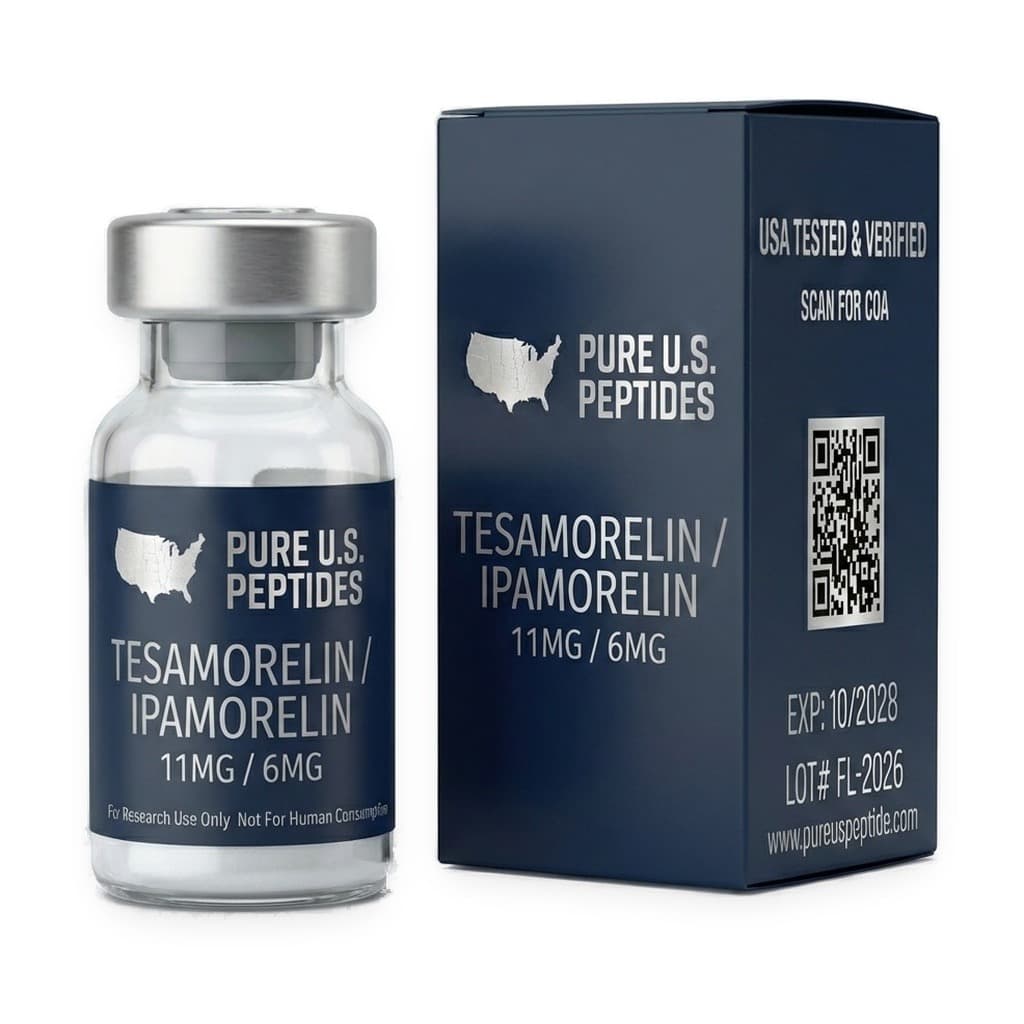
Tesamorelin/Ipamorelin Blend 11mg/6mg
Tesamorelin 10mg + Ipamorelin 10mg Bundle
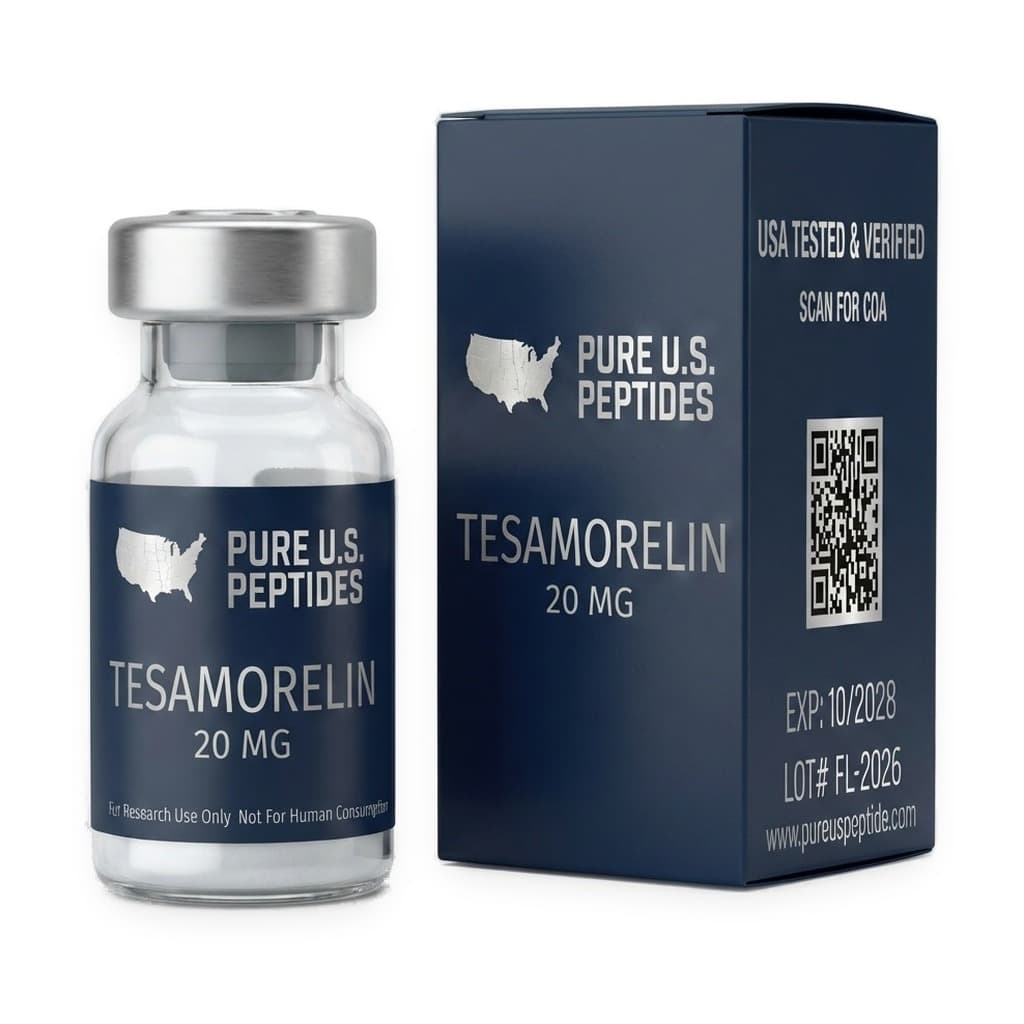
Tesamorelin
20mg