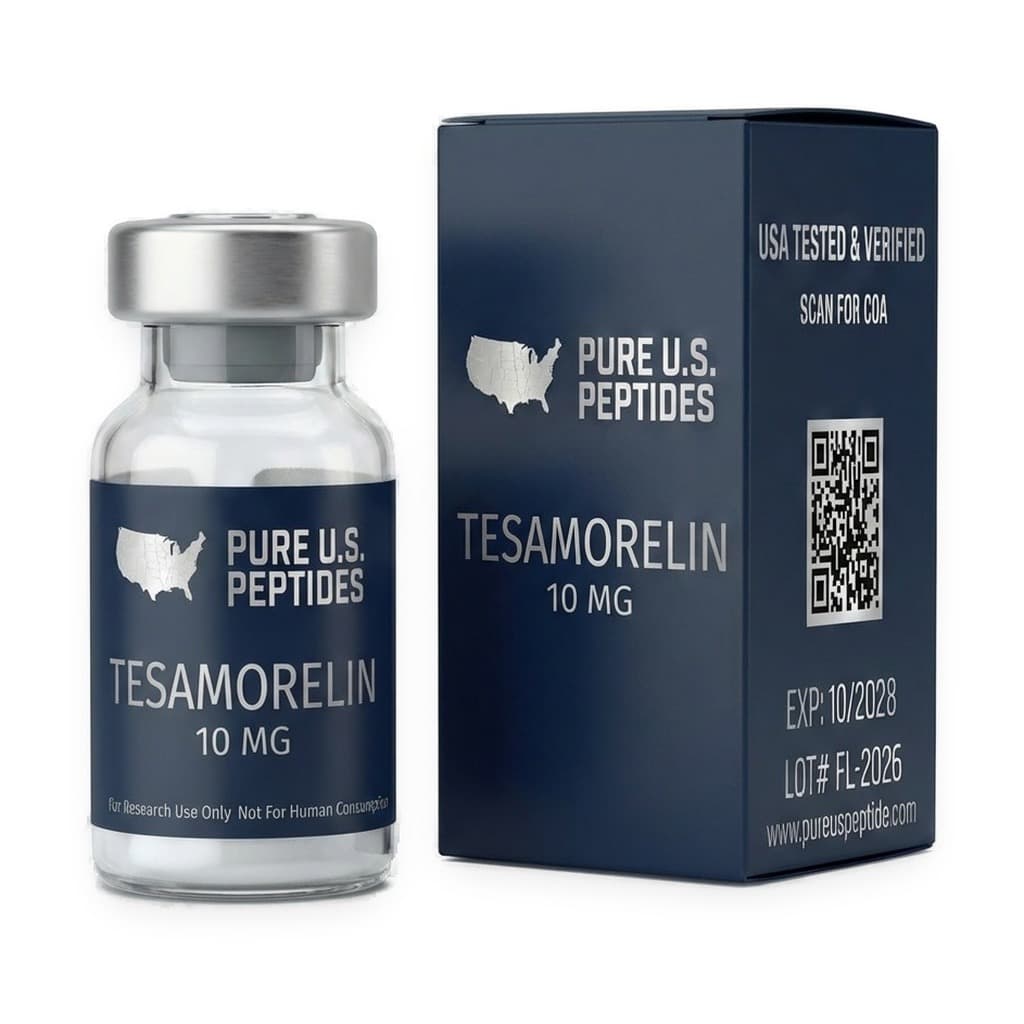
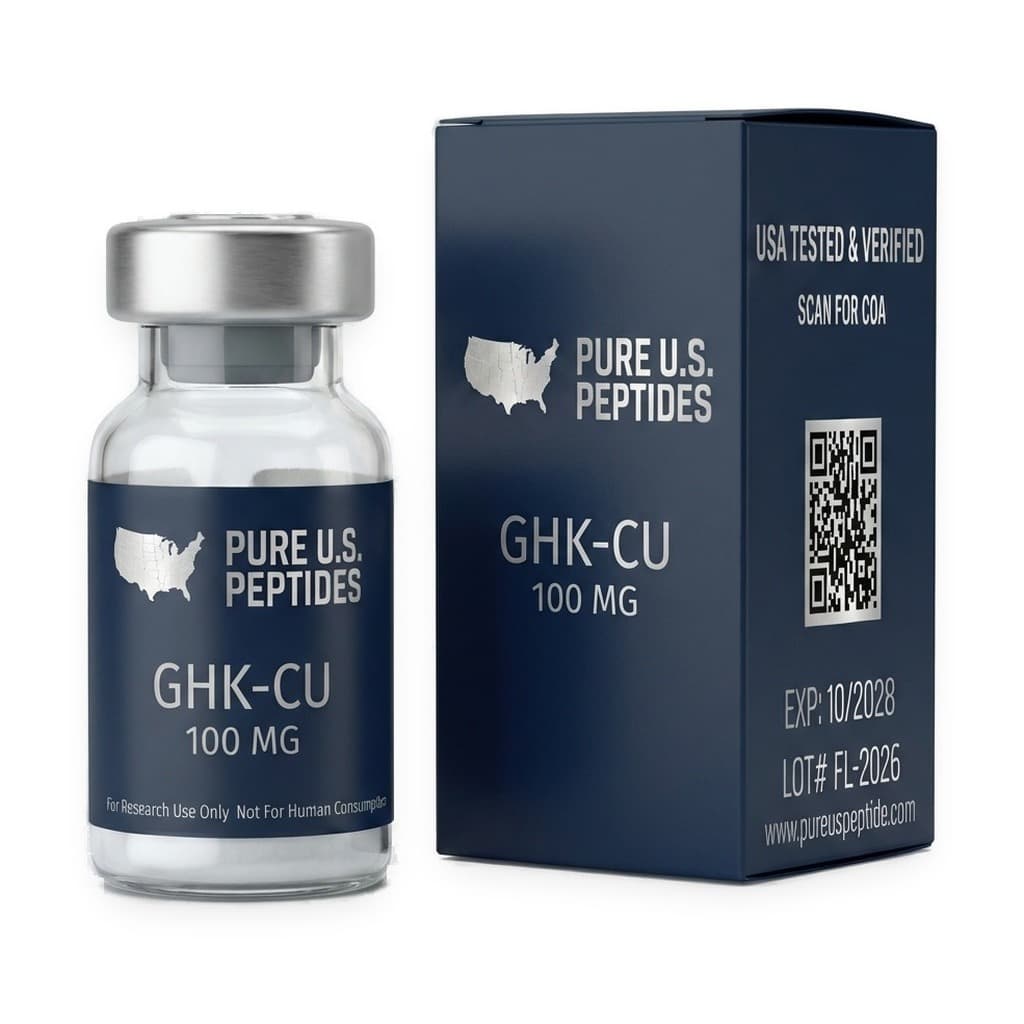
GHK-CU 100mg
En Stock y Listo para Envío desde EE.UU.
Envío GRATIS en todos los pedidos de EE.UU.
Pago seguro mediante procesador de pagos encriptado


 +2.9k
+2.9kSolo para Uso en Investigación
Estos productos son exclusivamente para investigación de laboratorio y no están destinados para uso médico. No están aprobados por la FDA para diagnosticar, tratar, curar o prevenir ninguna enfermedad. Al realizar su compra, usted certifica que serán utilizados exclusivamente para investigación y no para consumo humano o animal.
Resumen de Investigación
24 Citas PubMedDescripción general GHK-Cu (Copper Tripeptide-1) es un complejo tripeptídico de origen natural compuesto por los aminoácidos Glicil-L-Histidil-L-Lisina quelados con un ion de cobre(II). Fue aislado por primera vez de la albúmina plasmática humana en 1973 por el Dr. Loren Pickart en UCSF.[1] Origen: GHK es un péptido endógeno presente en el plasma, la saliva y la orina humanos. Se libera de la matriz extracelular durante la lesión tisular — específicamente escindido de SPARC (Proteína Secretada Ácida y Rica en Cisteína) y de la cadena alfa 2(I) del colágeno tipo I.[2] Disminución relacionada con la edad: La concentración plasmática disminuye de aproximadamente 200 ng/mL (10⁻⁷ M) a los 20 años a aproximadamente 80 ng/mL a los 60 años. Esta disminución se correlaciona con una capacidad reducida de regeneración tisular.[2][3] Estructuralmente, GHK-Cu presenta un ion Cu(II) coordinado en una pirámide planar cuadrada distorsionada por cuatro átomos de nitrógeno: el amino-N de la...
GHK-CU — Datos de Investigación de un Vistazo
| Propiedad | Valor |
|---|---|
| Citas PubMed Referenciadas | 24 |
| Investigadores Colaboradores | 3 |
| Condiciones de Almacenamiento | Polvo liofilizado a -20°C (hasta 3 años). |
| Estándar de Pureza | Certificado pendiente |
| Solo para Uso en Investigación | No destinado al consumo humano. Solo para uso en investigación. |
Compare GHK-CU con Otros Péptidos
Research guide
What is GHK-CU? Read the full research guideDescripción General
Descripción general
GHK-Cu (Copper Tripeptide-1) es un complejo tripeptídico de origen natural compuesto por los aminoácidos Glicil-L-Histidil-L-Lisina quelados con un ion de cobre(II). Fue aislado por primera vez de la albúmina plasmática humana en 1973 por el Dr. Loren Pickart en UCSF.[1]
Origen: GHK es un péptido endógeno presente en el plasma, la saliva y la orina humanos. Se libera de la matriz extracelular durante la lesión tisular — específicamente escindido de SPARC (Proteína Secretada Ácida y Rica en Cisteína) y de la cadena alfa 2(I) del colágeno tipo I.[2]
Disminución relacionada con la edad: La concentración plasmática disminuye de aproximadamente 200 ng/mL (10⁻⁷ M) a los 20 años a aproximadamente 80 ng/mL a los 60 años. Esta disminución se correlaciona con una capacidad reducida de regeneración tisular.[2][3]
Estructuralmente, GHK-Cu presenta un ion Cu(II) coordinado en una pirámide planar cuadrada distorsionada por cuatro átomos de nitrógeno: el amino-N de la glicina, el amido-N del enlace peptídico Gly-His, el imidazol-N de la histidina y un oxígeno del agua o de un grupo carboxilo. El complejo tiene un color característico azul-púrpura y un peso molecular de ~401,9 Da.[1]
GHK-Cu funciona como un vehículo seguro de entrega de cobre mediante el "silenciamiento redox" del ion Cu(II) — previniendo la toxicidad por reacción de Fenton que causaría el cobre libre. Su constante de unión (pKa 16,44) es similar al sitio de transporte de cobre de la albúmina (log₁₀ = 16,2), lo que permite a GHK intercambiar cobre con la albúmina para la entrega intracelular.[3]
Mecanismo de Acción
Mecanismo de acción
Transporte de cobre y "silenciamiento redox"
GHK-Cu actúa como un péptido transportador con alta afinidad por los iones de cobre(II) (pKa = 16,44). El complejo "silencia" la actividad redox del cobre, previniendo el daño por reacción de Fenton mientras entrega cobre de forma segura a las células — esencial para enzimas como la lisil oxidasa (entrecruzamiento de colágeno) y la superóxido dismutasa (defensa antioxidante).[3]
Vías de señalización clave
| Vía | Mecanismo | Efecto |
|---|---|---|
| NF-κB/p38 MAPK | Inhibe la fosforilación de NF-κB p65 y p38 MAPK | Bloquea la translocación nuclear → suprime TNF-α, IL-6 (Park et al., 2016)[4] |
| Nrf2/Keap1 | Promueve la disociación de Nrf2 de Keap1 → translocación nuclear | Transcripción de HO-1 → defensa antioxidante (Zhang et al., 2022)[5] |
| SIRT1/STAT3 | Sobrerregula SIRT1 → deacetila STAT3 → suprime RORγt | Reduce la inflamación Th17; ↑ uniones estrechas ZO-1/Occludina (Mao et al., 2025)[6] |
| TGF-β | Modulación dependiente del contexto | Restaura en pulmones con EPOC (Campbell et al., 2012); suprime en cicatrización/fibrosis[7] |
Bloqueo de hierro de la ferritina
GHK-Cu se une a los canales de ferritina → previene la liberación de Fe(II) → reduce la peroxidación lipídica catalizada por hierro en un 87% (Miller et al., 1990).[8]
Modulación génica
GHK-Cu induce un cambio superior al 50% en la expresión del 31,2% de los genes humanos. Se ha reportado que modifica la expresión génica, suprimiendo genes inflamatorios y metastásicos mientras activa genes de reparación y remodelación. El análisis mediante el Connectivity Map del Broad Institute confirmó que GHK modula más de 4.000 genes.[2][9]
Síntesis de MEC
Estimula colágeno I/III, elastina, GAGs y decorina; modula MMPs y TIMPs para una remodelación tisular equilibrada.[10]
Actividad anticancerígena
Reactiva la apoptosis (caspasas 3/7) en líneas celulares de neuroblastoma, leucemia y cáncer de mama. Revierte el 70% de 54 genes metastásicos en cáncer de colon mediante análisis del Connectivity Map.[9]
Respuesta dosis-efecto bifásica
La estimulación de la síntesis de colágeno comienza a 10⁻¹² M, alcanza su máximo a 10⁻⁹ M (1 nanomolar) y desaparece a concentraciones más altas. Se reportó cicatrización de heridas en animales a ~1,1 mg/kg, muy por debajo del umbral tóxico en modelos animales.[10][3]
GHK vs. GHK-Cu
| Forma | Diferencia clave |
|---|---|
| GHK (péptido solo) | Cierta eficacia (neutraliza subproductos de peroxidación lipídica); se requiere el complejo de cobre para la mayoría de los efectos de cicatrización/génicos |
| GHK-Cu | Perfil regenerativo completo; "silencia el potencial redox" del cobre para entrega segura; los quelantes fuertes anulan los efectos |
| HGK:Cu (análogo) | Actividad mimética de SOD 223 veces superior a la del GHK-Cu nativo |
Aplicaciones de Investigación
Aplicaciones de investigación
La investigación sobre GHK-Cu abarca dermatología, cicatrización de heridas, neumología, oncología y neurociencia en más de 10 categorías de indicaciones:
- Cicatrización de heridas y regeneración tisular — Acelera la contracción, reepitelización y acumulación de colágeno; reduce TNF-α y MMPs. Reducción del tamaño de la herida del 64,5% vs 28,2% en el control (Canapp et al., 2003).[11]
- Dermatología — Se reportaron criterios de valoración de firmeza, elasticidad/densidad/grosor de la piel y arrugas (-55%); comparado con la vitamina C y el ácido retinoico en producción de colágeno (70% vs 50% vs 40%).[12]
- Estimulación del crecimiento capilar — Agranda el tamaño del folículo, prolonga la fase anágena; comparable al 5% de minoxidil. Enfoque MDCT: puntuación SALT 40%→7,5%.[13]
- EPOC/Enfisema — Revierte la expresión génica enfisematosa; restaura la vía de TGF-β en fibroblastos pulmonares.[7]
- Anticáncer y supresión de metástasis — El Connectivity Map identifica a GHK como un inversor de la firma génica del cáncer de colon metastásico; reactiva la apoptosis en neuroblastoma/leucemia/cáncer de mama.[9]
- Reparación del ADN y recuperación por radiación — Restaura la vitalidad replicativa en fibroblastos irradiados; ↑ bFGF, VEGF.[14]
- Antioxidante y antiinflamatorio — Neutraliza acroleína/4-HNE; bloquea la liberación de hierro de la ferritina (↓ 87% peroxidación lipídica); suprime NF-κB.[8]
- Neuroprotección — Promueve el crecimiento neurítico; ↑ NGF, NT-3, NT-4; reduce ansiedad/dolor/agresión a 0,5 µg/kg.[15]
- Regeneración ósea — Promueve la osteogénesis reparadora en modelos de fractura a 0,5 µg/kg.[16]
- Cicatrización gastrointestinal — Criterios de valoración de actividad de la EII (n=16); vía SIRT1/STAT3 estudiada en modelos de colitis.[6]
Características Bioquímicas
| Propiedad | Valor |
|---|---|
| Molecular Formula | C₁₄H₂₂CuN₆O₄ |
| Molecular Weight | ~401.9 Da |
| CAS Number | 89030-95-5 |
| PubChem CID | 378611 |
| Sequence (1-Letter) | GHK |
| Sequence (3-Letter) | Gly-His-Lys |
| Structure | Tripéptido lineal quelado con Cu(II) en pirámide planar cuadrada distorsionada; polvo cristalino azul-púrpura |
| InChI Key | DIWZQABMLHSNJR-UHFFFAOYSA-N |
| SMILES | C1=C(NC=N1)CC(C(=O)NC(CCCCN)C(=O)O)NC(=O)CN.[Cu] |
| Origin | Endógeno — plasma humano, escindido de SPARC y cadena α2 del colágeno tipo I |
| Classification | Complejo Peptídico de Cobre / Cosmecéutico / Péptido de Investigación |
| Appearance | Polvo cristalino azul-púrpura (GHK sin cobre es blanco) |
Identificadores
| Identity Confirmation | |
|---|---|
| Counter-Ion | |
| Detection Methods |
Resumen de Investigación Preclínica
Resumen de investigación preclínica
Estudios preclínicos clave
| Estudio | Modelo | Hallazgos clave | Ref |
|---|---|---|---|
| Canapp et al. (2003) | Ratas — heridas abiertas isquémicas, 13 días | Tamaño de herida ↓ 64,5% vs 28,2% control; ↓ TNF-α, MMP-2, MMP-9 | [11] |
| Maquart et al. (1993) | Ratas Sprague-Dawley — cámaras de herida | ↑ dosis-dependiente de colágeno I/III, GAGs, contenido de ADN (días 3–14) | [10] |
| Zhang et al. (2022) | Ratones C57BL/6J — enfisema inducido por humo de cigarrillo, 0,2–20 µg/g, 12 sem | ↓ significativo del agrandamiento de espacios aéreos; revirtió el desequilibrio MMP-9/TIMP-1; activación de Nrf2/Keap1 | [5] |
| Mao et al. (2025) | Ratones BALB/c — colitis inducida por DSS, 20 mg/kg × 14d | ↓ puntuación DAI; mitigó el acortamiento del colon; mecanismo SIRT1/STAT3; ↑ ZO-1/Occludina | [6] |
| Dou et al. (2020) | Ratones C57BL/6 de 28 meses — 10 mg/kg 5x/sem × 3 sem | Completamiento del laberinto significativamente más rápido; ↓ inflamación; ↑ histona deacetilasa 2 | [15] |
| Bobyntsev et al. (2015) | Ratas — 0,5 µg/kg | Efectos analgésicos y ansiolíticos; agresión reducida 5 veces | [15] |
| Gul et al. (2008) | Conejos — heridas de espesor total × 21–28d | Granulación más rápida, contracción mejorada, mayor neovascularización | [17] |
| Cherdakov et al. (2010) | Ratas — fracturas óseas, 0,5 µg/kg × 10d | Marcado ↑ de osteogénesis reparadora; ↑ actividad antioxidante | [16] |
Estudios clínicos / en humanos
| Estudio | Población | Resultados clave | Ref |
|---|---|---|---|
| Piel fotoenvejecida (12 sem) | n=71 mujeres | Criterios de valoración de laxitud, claridad, firmeza, líneas finas y densidad cutánea | [12] |
| vs. vitamina C y ácido retinoico | n=20 mujeres | Criterio de valoración de colágeno frente a vitamina C y ácido retinoico | [12] |
| Arrugas periorbitales (12 sem) | n=41 mujeres | Criterios de valoración de arrugas frente a placebo y crema de vitamina K | [12] |
| Portador nanolipídico (ECA, 8 sem) | Voluntarias femeninas | Criterios de valoración de volumen y profundidad de arrugas frente a control y Matrixyl® 3000 | [18] |
| Hidratación de la piel (8 sem) | n=30 | Criterios de valoración de hidratación y grosor epidérmico/dérmico | [18] |
| Pérdida de cabello — MDCT | n=7 hombres | Criterios de valoración SALT y TSAR | [13] |
| EII (12 sem) | n=16 | Criterio de valoración de gravedad de la enfermedad | [2] |
Resumen de seguridad
| Parámetro | Hallazgo |
|---|---|
| Seguridad general | Excelente registro de seguridad; no tóxico y no irritante; décadas de uso cosmético sin problemas adversos |
| DL50 | Alta en modelos animales (efectos sobre la presión arterial) |
| Manipulación | Manipular con el equipo de protección personal (EPP) estándar de laboratorio. Consulte la hoja de datos de seguridad (SDS). |
| Vida media | ~0,5–1 hora en plasma; susceptible a degradación por carboxipeptidasa |
Los productos ofrecidos en este sitio web se suministran únicamente para estudios in vitro. Los estudios in vitro (del latín: en vidrio) se realizan fuera del cuerpo. Estos productos no son medicamentos ni fármacos y no han sido aprobados por la FDA para prevenir, tratar o curar ninguna condición médica, dolencia o enfermedad. La introducción corporal de cualquier tipo en humanos o animales está estrictamente prohibida por ley.
Solo para investigación de laboratorio. No para uso humano, uso médico, uso diagnóstico ni uso veterinario.
TODOS LOS ARTÍCULOS E INFORMACIÓN SOBRE PRODUCTOS PROPORCIONADOS EN ESTE SITIO WEB SON ÚNICAMENTE CON FINES INFORMATIVOS Y EDUCATIVOS.
Autores y Atribución
✍️ Autor del Artículo
Dr. Loren Pickart, PhD (1938–2023)
Loren Pickart, PhD, fue un bioquímico de la Universidad de California, San Francisco (UCSF), y el descubridor de GHK-Cu. Aisló GHK de la albúmina plasmática humana en 1973 e identificó su capacidad para hacer que el tejido hepático envejecido sintetizara perfiles proteicos más jóvenes. Fundó ProCyte Corporation (1985–1991) y Skin Biology, Inc. para comercializar productos de péptidos de cobre. En años posteriores, utilizó el Connectivity Map del Broad Institute para demostrar que GHK modula más de 4.000 genes humanos. Publicaciones clave: 'Tripeptide in human serum which prolongs survival of normal liver cells' (1973), 'Growth-modulating plasma tripeptide may function by facilitating copper uptake into cells' (1980, Nature), 'The human tri-peptide GHK and tissue remodeling' (2008), 'GHK Peptide as a Natural Modulator of Multiple Cellular Pathways in Skin Regeneration' (2015), 'Regenerative and Protective Actions of the GHK-Cu Peptide' (2018). Loren Pickart es referenciado como el científico fundacional en la investigación de GHK-Cu. De ninguna manera este doctor/científico respalda ni promueve la compra, venta o uso de este producto por ningún motivo. No existe afiliación ni relación, implícita o de otro tipo, entre Pure US Peptide y este doctor.
Ver Perfil Completo del Investigador →🎓 Autor de Revista Científica
Dr. François-Xavier Maquart
François-Xavier Maquart es investigador/profesor en el Laboratorio de Bioquímica, Facultad de Medicina, Universidad de Reims, Francia, colaborador de Jacques-Paul Borel. Su grupo realizó estudios fundamentales en las décadas de 1980–1990 estableciendo que GHK-Cu a concentraciones nanomolares estimula la síntesis de colágeno, dermatán sulfato y decorina. Demostró que GHK-Cu modula metaloproteinasas y TIMPs para una remodelación tisular equilibrada, y probó que la actividad de unión al cobre es esencial para los efectos regenerativos. Publicaciones clave: 'Stimulation of collagen synthesis in fibroblast cultures by GHK-Cu²⁺' (1988, FEBS Letters), 'In vivo stimulation of connective tissue accumulation by GHK-Cu²⁺' (1993), 'GHK-Cu²⁺ stimulates matrix metalloproteinase-2 expression' (2000). François-Xavier Maquart es referenciado como uno de los científicos líderes en la investigación de GHK-Cu. De ninguna manera este doctor/científico respalda ni promueve la compra, venta o uso de este producto por ningún motivo. No existe afiliación ni relación, implícita o de otro tipo, entre Pure US Peptide y este doctor.
Ver Perfil Completo del Investigador →Dr. François-Xavier Maquart is being referenced as one of the leading scientists involved in the research and development of GHK-CU. In no way is this doctor/scientist endorsing or advocating the purchase, sale, or use of this product for any reason. There is no affiliation or relationship, implied or otherwise, between Pure US Peptide and this doctor. The purpose of citing the doctor is to acknowledge, recognize, and credit the exhaustive research and development efforts conducted by the scientists studying this peptide.
🔬 Investigador Colaborador
Dr. Anna Margolina, PhD
Anna Margolina, PhD, trabajó en el Departamento de Investigación y Desarrollo de Skin Biology, Inc. Colaboradora de largo plazo del Dr. Pickart, fue instrumental en el análisis de los efectos de GHK sobre la expresión génica. Su investigación se centra en el potencial de GHK para revertir los cambios epigenéticos asociados con el envejecimiento, la metástasis cancerosa y la EPOC. Publicaciones clave: 'GHK-Cu may Prevent Oxidative Stress in Skin' (2015, Cosmetics), 'GHK and DNA: Resetting the Human Genome to Health' (2014), 'The Human Tripeptide GHK-Cu in Prevention of Oxidative Stress and Degenerative Conditions of Aging' (2012). Anna Margolina es referenciada como una científica clave en la investigación de GHK-Cu. De ninguna manera esta doctora/científica respalda ni promueve la compra, venta o uso de este producto por ningún motivo. No existe afiliación ni relación, implícita o de otro tipo, entre Pure US Peptide y esta doctora.
Ver Perfil Completo del Investigador →Dr. Anna Margolina, PhD is being referenced as one of the leading scientists involved in the research and development of GHK-CU. In no way is this doctor/scientist endorsing or advocating the purchase, sale, or use of this product for any reason. There is no affiliation or relationship, implied or otherwise, between Pure US Peptide and this doctor. The purpose of citing the doctor is to acknowledge, recognize, and credit the exhaustive research and development efforts conducted by the scientists studying this peptide.
Citas Referenciadas
Pickart L, Vasquez-Soltero JM, Margolina A. Cosmetics. 2015;2(3):236-247.
DOIPickart L. Journal of Biomaterials Science, Polymer Edition. 2008;19(8):969-988.
DOIPickart L, Margolina A. Regenerative and Protective Actions of the GHK-Cu Peptide in the Light of the New Gene Data. International Journal of Molecular Sciences. 2018;19(7):1987.
DOIPark JR, Lee H, Kim SI, Yang SR. The tri-peptide GHK-Cu complex ameliorates lipopolysaccharide-induced acute lung injury in mice. Oncotarget. 2016;7(36):58405-58417.
DOIZhang Q, Yan L, Lu J, Zhou X. Glycyl-L-histidyl-L-lysine-Cu2+ attenuates cigarette smoke-induced pulmonary emphysema and inflammation by reducing oxidative stress pathway. Frontiers in Molecular Biosciences. 2022;9:925700.
DOIMao S, Huang J, Li J, et al. Exploring the beneficial effects of GHK-Cu on an experimental model of colitis and the underlying mechanisms. Frontiers in Pharmacology. 2025;16:1551843.
DOICampbell JD, McDonough JE, Zeskind JE, et al. A gene expression signature of emphysema-related lung destruction and its reversal by the tripeptide GHK. Genome Medicine. 2012;4(8):67.
DOIMiller DM, DeSilva D, Pickart L, Aust SD. Effects of glycyl-histidyl-lysyl chelated Cu(II) on ferritin dependent lipid peroxidation. Advances in Experimental Medicine and Biology. 1990;264:79-84.
PubMedPickart L, Vasquez-Soltero JM, Margolina A. BioMed Research International. 2014;2014:151479.
DOIMaquart FX, Pickart L, Laurent M, et al. Stimulation of collagen synthesis in fibroblast cultures by the tripeptide-copper complex glycyl-L-histidyl-L-lysine-Cu2+. FEBS Letters. 1988;238(2):343-346.
DOICanapp SO Jr, Farese JP, Schultz GS, et al. Veterinary Surgery. 2003;32(6):515-523.
DOIAbdulghani AA, Sherr A, Shirin S, et al. Disease Management and Clinical Outcomes. 1998;1(4):136-141.
PubMedKuceki G, Coppinger AJ, Ragi SD, et al. JAAD International. 2025;20:38-40.
DOIPollard JD, Quan S, Kang T, Koch RJ. Effects of copper tripeptide on the growth and expression of growth factors by normal and irradiated fibroblasts. Archives of Facial Plastic Surgery. 2005;7(1):27-31.
DOIDou Y, Lee A, Zhu L, et al. Aging Pathobiology and Therapeutics. 2020;2(1):58-61.
DOICherdakov VYu, et al. Peptide combination (GHK, Dalargin, Thymogen) promotes reparative osteogenesis in rats with bone fractures. Bulletin of Experimental Biology and Medicine. 2010.
PubMedGul NY, Topal A, Cangul IT, Yanik K. Veterinary Dermatology. 2008;19(1):7-14.
DOIBadenhorst T, Svirskis D, Merrilees M, et al. Journal of Aging Science. 2016;4(3):166.
DOIPickart L, Vasquez-Soltero JM, Margolina A. GHK Peptide as a Natural Modulator of Multiple Cellular Pathways in Skin Regeneration. BioMed Research International. 2015;2015:648108.
DOIHong Y, Downey T, Eu KW, et al. Clinical & Experimental Metastasis. 2010;27(2):83-90.
DOIPickart L, Freedman JH, Loker WJ, et al. Growth-modulating plasma tripeptide may function by facilitating copper uptake into cells. Nature. 1980;288(5792):715-717.
DOISimeon A, Emonard H, Hornebeck W, Maquart FX. The tripeptide-copper complex glycyl-L-histidyl-L-lysine-Cu2+ stimulates matrix metalloproteinase-2 expression by fibroblast cultures. Life Sciences. 2000;67(18):2257-2265.
DOIKang YA, Choi HR, Na JI, et al. Copper-GHK increases integrin expression and p63 positivity by keratinocytes. Archives of Dermatological Research. 2009;301(4):301-306.
DOIPickart L, Vasquez-Soltero JM, et al. Brain Sciences. 2017;7(2):20.
DOIAviso de Uso en Investigación
Solo para Uso en Investigación (RUO). No destinado al consumo humano, uso clínico, ni como medicamento, alimento, cosmético o dispositivo médico. Este producto no ha sido evaluado por la FDA y se suministra exclusivamente para investigación de laboratorio in vitro por profesionales calificados.
Certificado de Análisis
Published certificates come from third-party laboratories. If this listing's certificate is still pending, the card below says so.
Último Informe de Laboratorio
Almacenamiento y Manejo
Resumen
Polvo liofilizado a -20°C (hasta 3 años). Estable a pH 5,0–7,0; se disocia por debajo de pH 4 o por encima de pH 9. Mantener alejado de la humedad bajo gas inerte.
Condiciones de almacenamiento de laboratorio recomendadas
Polvo liofilizado: Almacenar en un congelador a -20°C o menos para estabilidad a largo plazo (hasta 3 años). Aspecto de polvo cristalino azul-púrpura.
Atmósfera: Mantener alejado de la humedad bajo gas inerte (N₂ o argón).
Estabilidad de pH: Estable en el rango de pH 5,0–7,0. Puede disociarse y liberar cobre libre por debajo de pH 4 o por encima de pH 9.
Incompatibilidades: No mezclar con oxidantes fuertes, agentes quelantes (EDTA, carnosina) ni vitamina C — aplicar en momentos diferentes.
Pureza: El certificado de lote de este producto está pendiente.
Manipulación: Permitir que los viales alcancen la temperatura ambiente antes de abrirlos para prevenir la condensación de humedad. Material higroscópico.
“Resumen de investigación preclínica Estudios preclínicos clave Estudio Modelo Hallazgos clave Ref Canapp et al.”
Compuestos de Investigación Relacionados
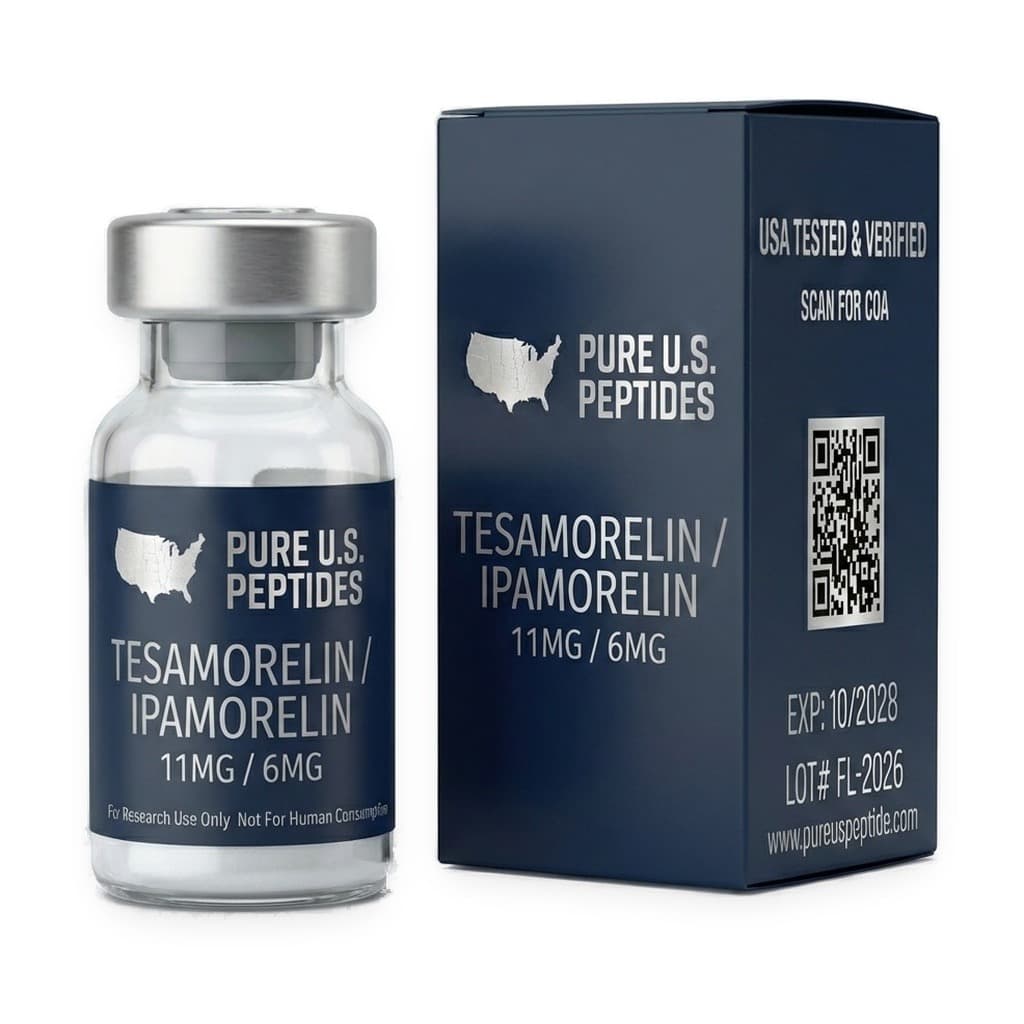
Tesamorelin/Ipamorelin Blend 11mg/6mg
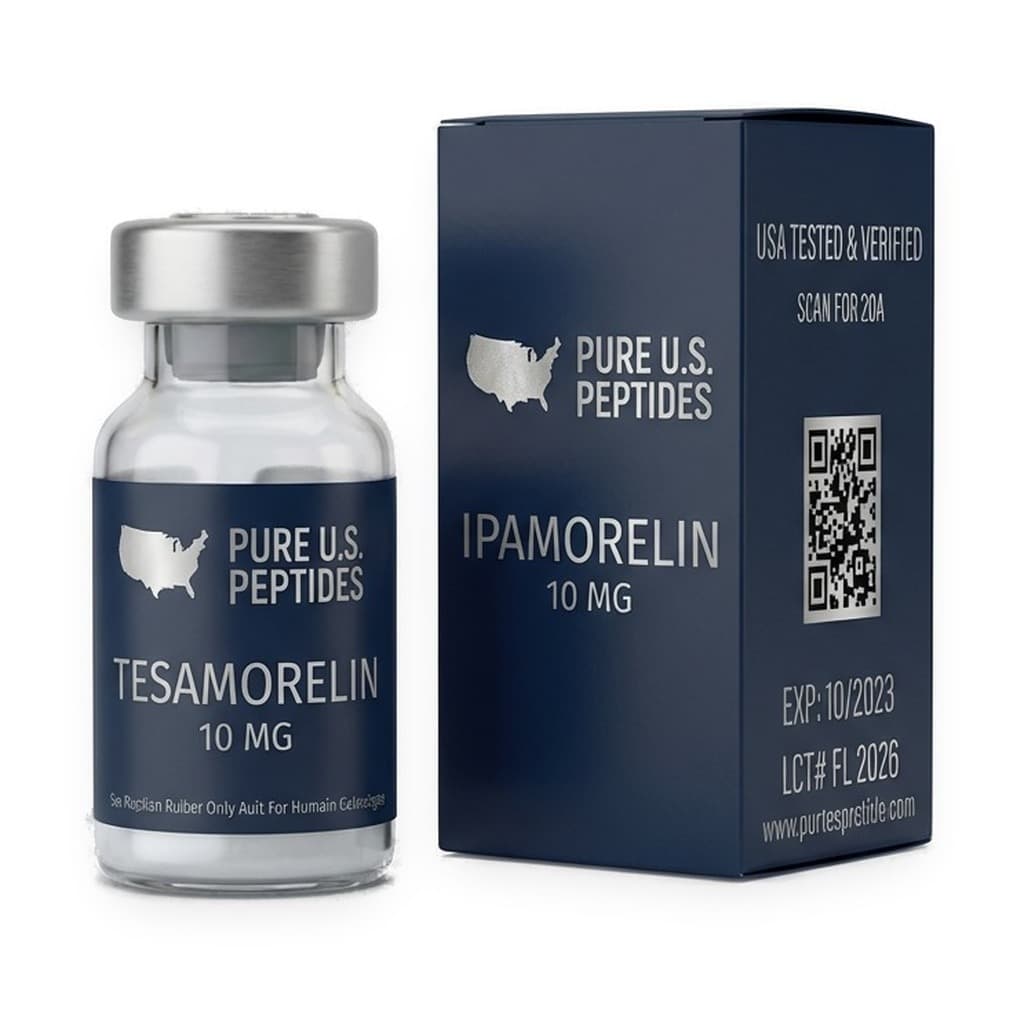
Tesamorelin 10mg + Ipamorelin 10mg Bundle
Tesamorelin
20mg